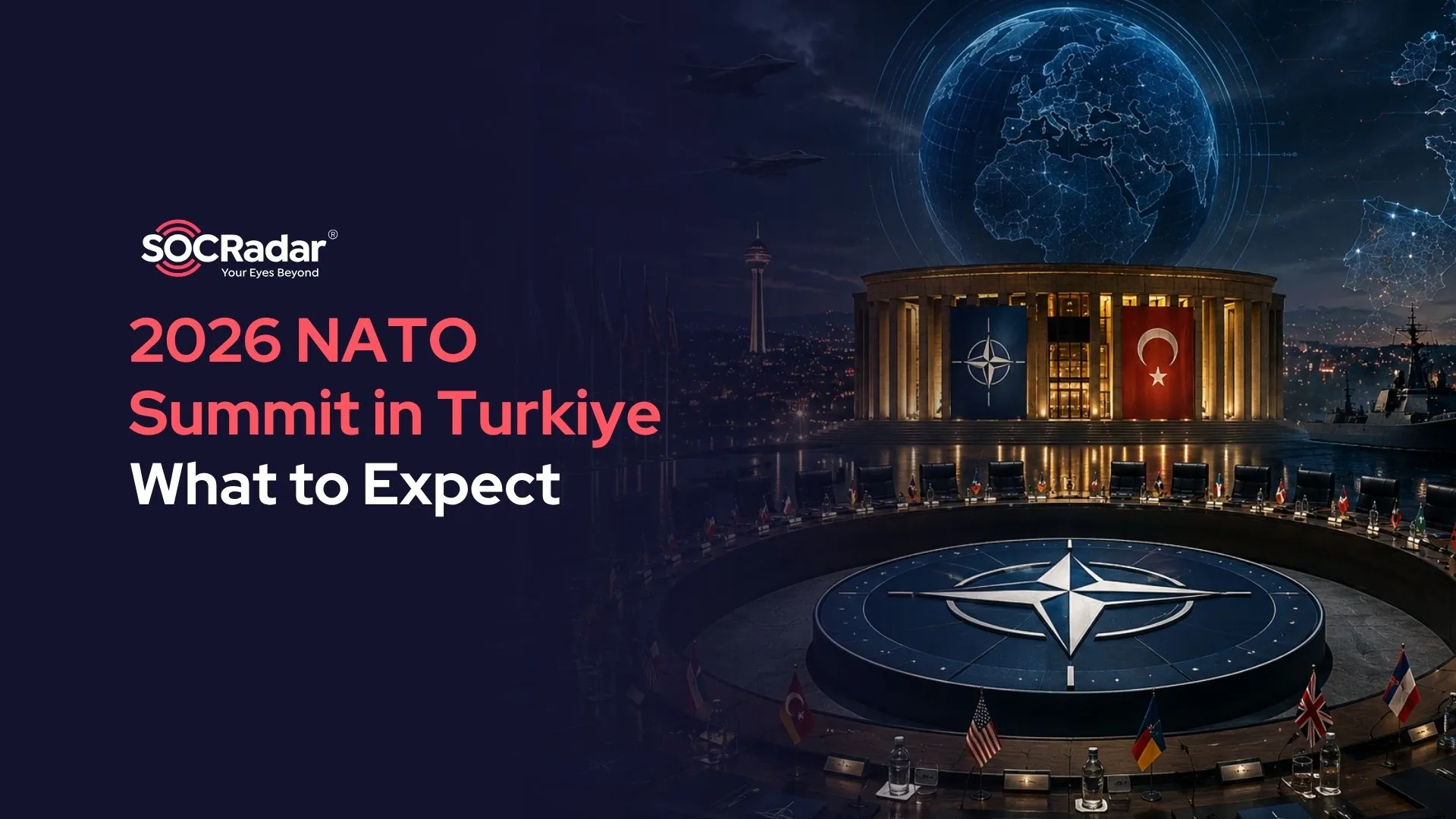
What to Expect From the 2026 NATO Summit in Turkiye
NATO leaders meet in Ankara, Turkiye on July 7–8 for what Secretary General Mark Rutte has called “maybe even more important than The Hague.” The Hague summit last year produced the most ambitious defense spending pledge in NATO’s history: 5% of GDP by 2035. What would make a follow-up matter more than the original commitment?
Rutte has branded this transition “NATO 3.0,” a rebalanced alliance where European members assume greater responsibility for conventional defense. His three stated priorities for the summit are defense investment, defense-industrial production, and Ukraine.
The opening day features a Defence Industry Forum where NATO expects to announce tens of billions of dollars in new contracts, with Turkiye’s roughly 3,000 defense companies as the backdrop. That is the official agenda. But the industrial deals are the most straightforward part of a summit that sits on top of serious unresolved tensions, and those tensions are what will determine whether Ankara actually matters. What follows is a look at the security threats driving the summit, the internal strains that could undermine it, and what is likely to come out of it.
The Security Environment Facing NATO Members
Russia remains the alliance’s primary threat, and the war in Ukraine keeps reminding that threat. A brief truce around Victory Day in May collapsed within days, and Russia still occupies about 20% of Ukraine’s territory. Ukraine has been escalating its long-range drone campaign against Russian oil infrastructure, hitting the Moscow Oil Refinery twice in one week in mid-June and striking refineries in Krasnodar and Yaroslavl on June 28 while Russia retaliates with mass drone and missile barrages.
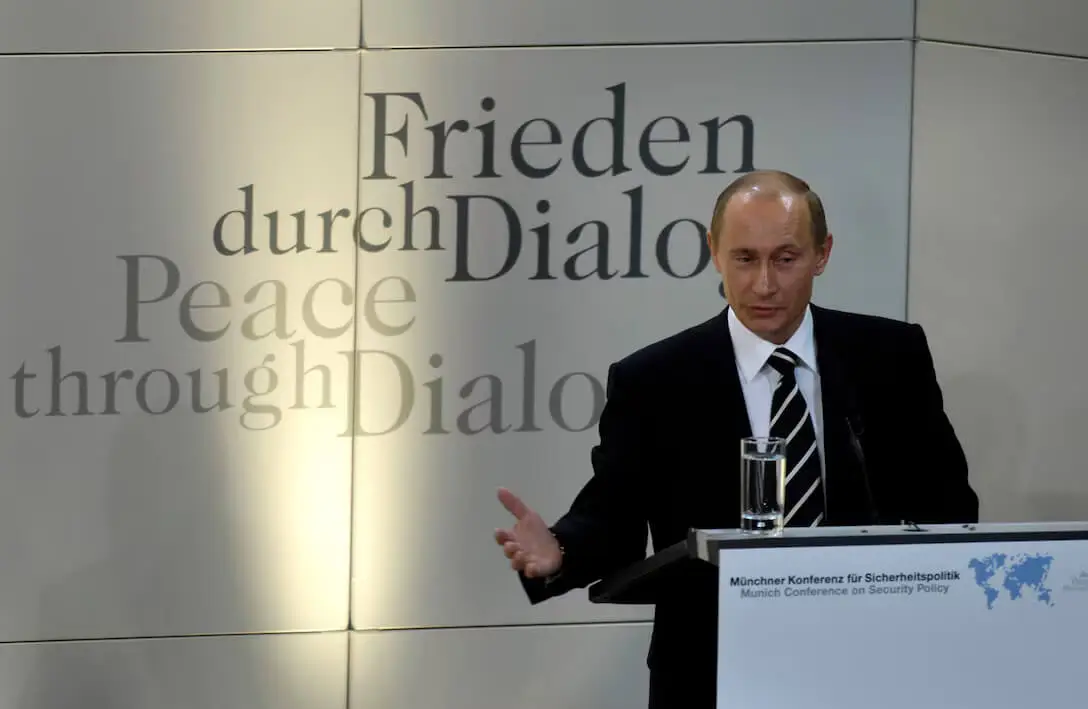
Russian president Vladimir Putin delivers his remarks, 43rd Annual Conference on Security Policy in Munich, Germany, Feb. 10, 2007 – Source
What concerns NATO planners more than the current war, though, is what Russian military capacity will look like once the war ends or freezes.
Multiple allied intelligence services, including German defense officials and Nordic agencies, now assess that Russia could have the capability to attack a NATO country by 2029.
In the previous years Rutte warned in Berlin that Russia is producing around 2,900 attack drones per month and manufactured about 2,000 land-attack cruise and ballistic missiles in 2025, Danish intelligence has mapped Russian plans to deploy up to 115,000 troops along NATO’s northern and Baltic borders and German army inspector Christian Freuding has stated that “all 32 NATO partners agree” on this timeline.
Due to all these developments, the 2029 assessment is the planning baseline now, and it means NATO has roughly three years to turn its spending into deployable capability. That is a very short runway.
Russia is already testing NATO’s responses well before that deadline through an escalating hybrid campaign across the eastern flank. Sabotage, GPS jamming, airspace violations, threats to undersea cables, and cyberattacks have become a persistent backdrop.
NATO launched Operation Eastern Sentry in response, while Lithuania was pushing for a formal drone-incursion response protocol. But these incidents are new in kind, and the alliance does not yet have standing procedures for them, which is a problem when they are happening monthly.
Beyond Russia, China presents a different kind of challenge. NATO’s 2022 Strategic Concept names China’s military buildup and coercive behavior as a challenge to allied security.
The concerns are familiar such as nuclear and missile expansion, counter-space weapons, maritime claims, and the deepening alignment between China, Russia, Iran, and North Korea (sometimes grouped as the “CRINK” alignment).
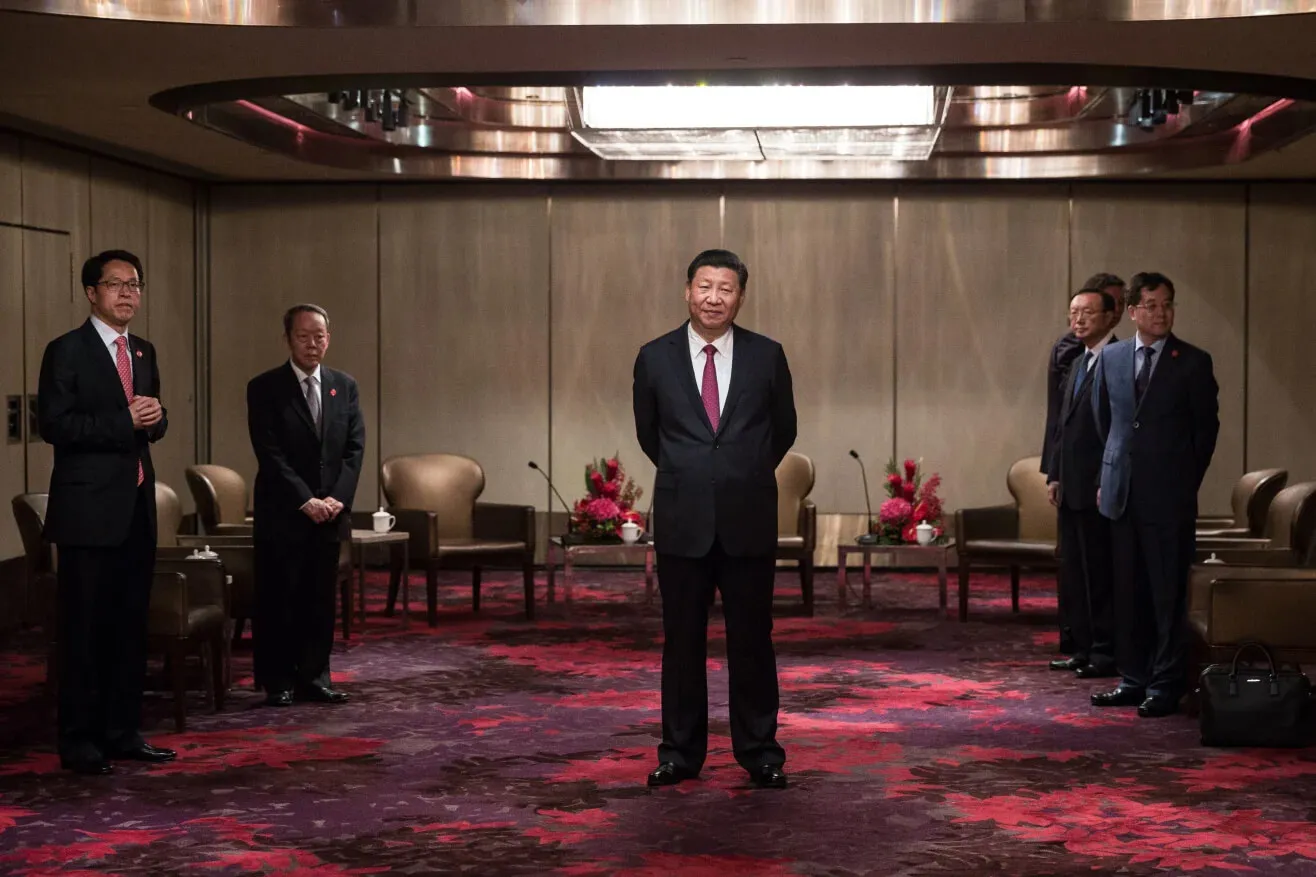
Xi Jinping (C) waits to meet with Hong Kong’s chief executive Leung Chun-ying – Source
NATO has been building ties with its four Indo-Pacific partners (Japan, South Korea, Australia, New Zealand), but the practical constraints are significant for the Organization.
European militaries cannot project power into Asia while simultaneously deterring Russia, and most European governments want to preserve their economic relationship with Beijing. The result is a gap between allied rhetoric on China and the military and political capacity to act on it.
NATO’s southern flank receives less sustained attention but the risks there are growing. NATO’s Special Representative for the Southern Neighbourhood has described the Sahel as “undoubtedly the most fragile region in the world,” with Wagner and Africa Corps mercenaries operating throughout, ISIS and al-Qaeda affiliates active.
The 2024 Washington summit produced a Southern Neighborhood Action Plan, but the Hague summit added nothing new for the south. The pattern is that eastern-flank urgency keeps crowding out southern-flank planning, and Ankara is unlikely to break that pattern.
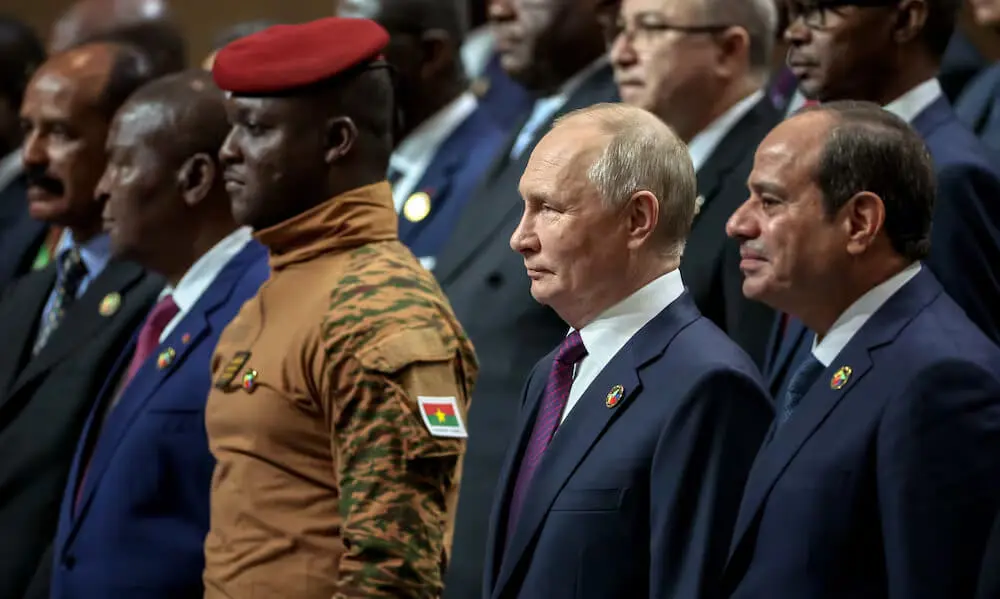
Captain Ibrahim Traoré, president of Burkina Faso, and Russian leader Vladimir Putin, together with the Egyptian leader Abdel Fattah El-Sisi – Source
Two other areas share a common problem: the Arctic and space are both domains where NATO has declared red lines but has not yet built the infrastructure to enforce them.
The Greenland crisis in January 2026 brought Arctic security into public view, and NATO established Arctic Sentry in early 2026, though it remains thin on operational detail. In space, NATO has said that an attack on allied satellites could trigger Article 5, but there is no tested framework for that response.
The Iran war, meanwhile, created direct spillover onto NATO territory. The US-Israel campaign, launched without allied consultation, saw Iranian ballistic missiles reportedly enter Turkish airspace and a drone of Iranian origin struck the British base in Cyprus.
Additionally, Iran’s temporary closure of the Strait of Hormuz pressured global shipping and energy markets, with consequences for already-strained European economies.
The Iran war is outside NATO’s formal scope, but its consequences feed directly into the most difficult question at Ankara: what allies owe each other, and what the US expects from partners it did not consult.
What About Cyber?
Cyber sits underneath all of this in a way that is easy to understate. Russia and China are both using cyber access as preparation for something larger.
Russia: From Ukraine to NATO Territory
On the Russian side, the operations that used to target Ukraine exclusively have started reaching into NATO territory. The clearest example is Sandworm, Russia’s GRU-linked hacking unit, which in December 2025 deployed destructive wiper malware against Poland’s energy grid. The attack was stopped, but the intent was to cause physical disruption to a NATO member’s power supply in the middle of winter.
Microsoft’s October 2025 analysis found Russian cyberattacks against NATO countries up 25% year-on-year, with the UK, Germany, Poland, and the Baltics among the heaviest targets. Dutch intelligence assessed that Russia is combining cyber operations with sabotage, disinformation, and espionage into what amounts to a single destabilization campaign, and warned that direct military confrontation with NATO is “no longer unthinkable.”
That assessment next to the 2029 threat timeline makes the cyber activity look less like harassment and more like preparation for a conflict that Russian military planners now consider plausible.
China’s Low Profile Efforts
China’s approach is a little different. US Northern Command told the Senate in early 2025 that Chinese state-sponsored actors have pre-positioned themselves inside IT networks across multiple American sectors, sitting quietly with access they could activate during a future crisis.
The most likely trigger would be a confrontation over Taiwan. If that happens, the ability to disrupt logistics, communications, or energy infrastructure across NATO countries would give Beijing leverage it could not achieve militarily.
The alliance-level problem is that cyber defense is still mostly national. Each ally defends its own networks. But a successful attack on one country’s energy grid or transport system during a crisis would damage the whole alliance.
NATO has declared that cyberattacks can trigger Article 5, but every operation so far has been calibrated to stay below that threshold, adversaries appear to understand exactly where the line sits.
The 1.5% resilience spending tier in the new 5% target is supposed to address some of this, but without a measurement framework it is hard to tell whether allies are actually building the capacity to absorb and recover from a serious cyber campaign during a conventional conflict.
NATO ran its largest-ever cyber exercise last December in Estonia, with 1,300 participants defending against simulated attacks on power plants, satellites, and military networks. But there is a gap between exercises and the ability to respond at speed under real pressure, and Ankara is not the place to close it.
Institutional Risks to the Alliance
That question about US expectations leads to what is arguably the most consequential set of issues at this summit. The United States is reducing fighter jets in Europe by about a third, pulling drones and warships, and in early June cancelled a planned Tomahawk missile deployment to Germany.
The Pentagon has launched a six-month review of US forces in Europe, framed as ensuring Europe takes the lead in its own defense. Defense Secretary Pete Hegseth, speaking at the June 18 ministerial meeting, described NATO as having been “a paper tiger and a one-way street” for too long.
The formal risk of US withdrawal from NATO is low. But the practical drawdowns are real, and for allies on the eastern flank, the distinction between a legal commitment and an operational presence matters a great deal.
Rutte has been publicly insisting that “the US is fully committed to NATO,” while the 2025 US National Security Strategy told European allies their efforts and resources are best focused on Europe and set a goal of “ending the perception, and preventing the reality of, NATO as a perpetually expanding alliance.”
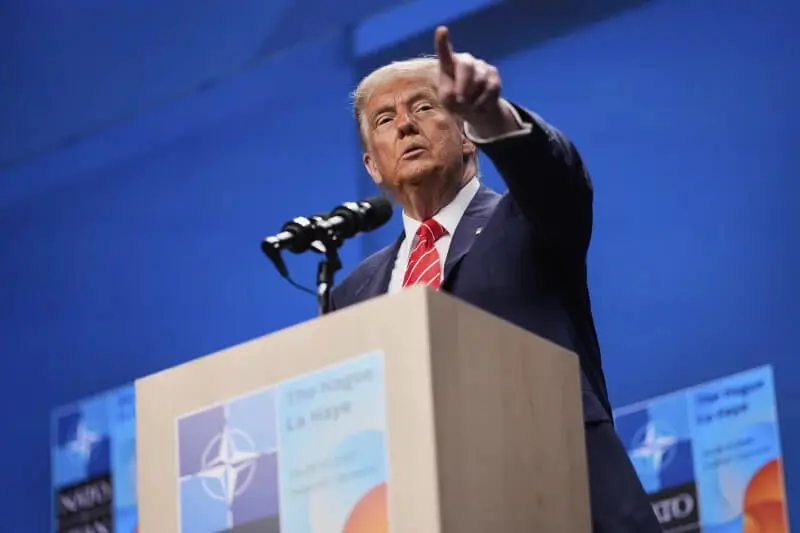
President Trump speaks during a media conference at the NATO summit in The Hague, Netherlands on June 25 – Matthias Schrader/AP
The Iran war deepened this existing strain. The UK and Germany provided basing and overflight access while publicly opposing the campaign and Spain and Italy refused, drawing sharp US criticism and warnings of “consequences.”
Allies note that out-of-area operations require consensus and that the US never invoked Article 4 consultations, meaning there was no NATO obligation to participate. But the episode raised a question that will be present at Ankara even if no one voices it directly: if the United States does not consult allies before launching a military campaign, can it then impose costs on those who decline to join?
Greenland remains an unresolved irritant for the members. The crisis was defused partly through Rutte’s intervention at Davos, and Denmark has offered additional base access. But suspicions persist that the US will push for some form of sovereign rights, and the issue could resurface.
On burden-sharing, the 5% target is the most ambitious in NATO’s history, and also the most difficult to enforce.
The formula is 3.5% on core defense plus 1.5% on defense-related resilience, all by 2035 with a review in 2029. Poland, at 4.3–4.7% of GDP, is well ahead of the rest but many allies carry high public debt (France is at about 115.6% of GDP), and Spain has already negotiated a capability-based exemption that caps its contribution at around 2.1%.
The Spain exemption is a worry for the organization because it sets a precedent: if one ally can negotiate a carve-out, others facing similar fiscal constraints will seek the same treatment, and the target’s credibility will erode.
Another worry is the 1.5% resilience tier because it lacks a clear measurement framework, making compliance difficult to assess.
What the Summit is Likely to Produce
Expectations should be calibrated according to the problems countries and the organization itself faces.
The most probable outcome is a short, scripted summit with limited public disagreement. The Hague communiqué was a record-short five paragraphs, and Ankara is expected to follow the same template.
The Conference Board’s assessment is direct: “one should not expect major advances at the Ankara Summit; success will simply involve smoothing over transatlantic tensions and reinforcing the principle of collective defense.” That is a low bar, but given the current level of internal friction, clearing it still requires careful management.
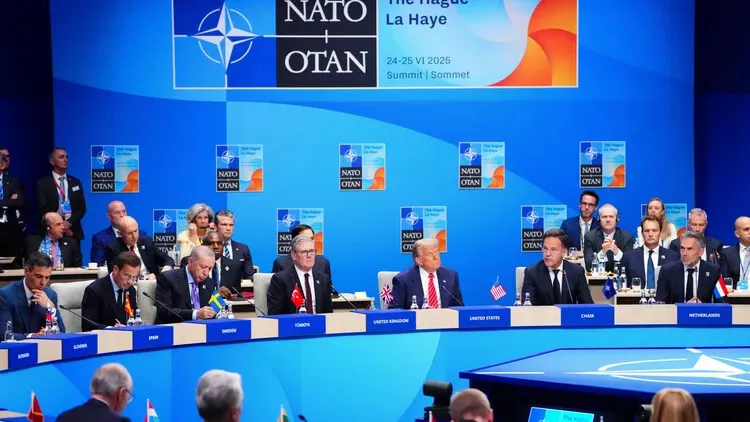
NATO Secretary General Mark Rutte, center right, gives the opening speech as he sits next to US President Donald Trump during a meeting of the North Atlantic Council at the NATO summit in The Hague – Source
The expected deliverables are a package of defense-industrial contracts and MOUs from the industry forum, a reaffirmation of the 5% spending trajectory and Article 5, continued Ukraine support with new air-defense pledges and Zelensky’s attendance, and progress on revising the NATO Force Model to account for US drawdowns. Steps on Arctic Sentry and the Strait of Hormuz maritime operation are possible but far from certain.
A more positive scenario would see the post-G7 momentum carry into Ankara.
At the June 2026 G7 in Évian, French President Macron described “a very deep change in the US approach” after Trump backed a joint Ukraine statement and raised the possibility of renewed Russia sanctions.
If that shift in tone holds, allies could use Ankara to lock in US commitment, agree on a capability-delivery roadmap with timelines, and possibly create a structured planning mechanism for the US drawdown.
A negative scenario would involve a public confrontation over Greenland or Iran, a disorderly US drawdown that opens capability gaps before Europe can fill them, or a visible split over Ukraine’s future that adversaries could exploit. Russia has staged provocations before past NATO summits and is likely to do so again, through drone incursions, disinformation, or both.
The Difference of This Summit
Every major NATO summit since Russia invaded Ukraine in 2022 was about deciding what the alliance should do.
Madrid produced a new Strategic Concept. Vilnius gave Ukraine its “irreversible path” language. Washington launched the Southern Neighborhood Action Plan. The Hague set the 5% spending target.
Each one added a commitment. Ankara is the first one where the central question is whether anyone kept their commitments. Rutte has been saying this for months, that the summit is about “delivery,” about turning “cash into combat-ready capabilities.”
At every previous post-2022 summit, Washington was pressuring allies to spend more, but it was also visibly invested in European defense. American forces were being added, not subtracted.
Ankara is the first summit where the US is simultaneously demanding more from allies and pulling its own assets out: a third of its fighter jets, the Tomahawk deployment, refueling tankers, naval assets.
The Iran war split the alliance over basing and overflight in a way nothing has since Iraq in 2003. So the question hanging over previous summits was always how much the US would lead. At Ankara it is closer to how much the US will stay.
This also brings another question: The question is whether NATO will produce a new leader for the alliance or drift toward a more fragmented structure. There are four possible futures for the alliance:
- A single leading power
- A directorate of leading countries
- Fragmented but cooperative, with allies coordinating without clear hierarchy
- Fragmented and non-cooperative, with coordination breaking down
The threat timeline has tightened too. Previous summits treated a Russian attack on NATO territory as a background risk, something to deter in theory. Ankara is the first one where the alliance has a shared intelligence baseline saying Russia could have the capability to do it by 2029.
Three years is a planning constraint, and it changes the urgency of everything else on the agenda.
Rutte is also trying to change what a summit physically produces. Day one in Ankara is the NATO Summit Defence Industry Forum, which is designed to generate “tens of billions” in signed contracts and MOUs between governments and defense firms.
The goal for this year’s Defence Industry Forum is to make the output measurable in production lines and hardware rather than in paragraphs of diplomatic language. Whether that works or just adds a trade-show feel to the proceedings is an open question, but the intent is to create an official environment to push the industry.
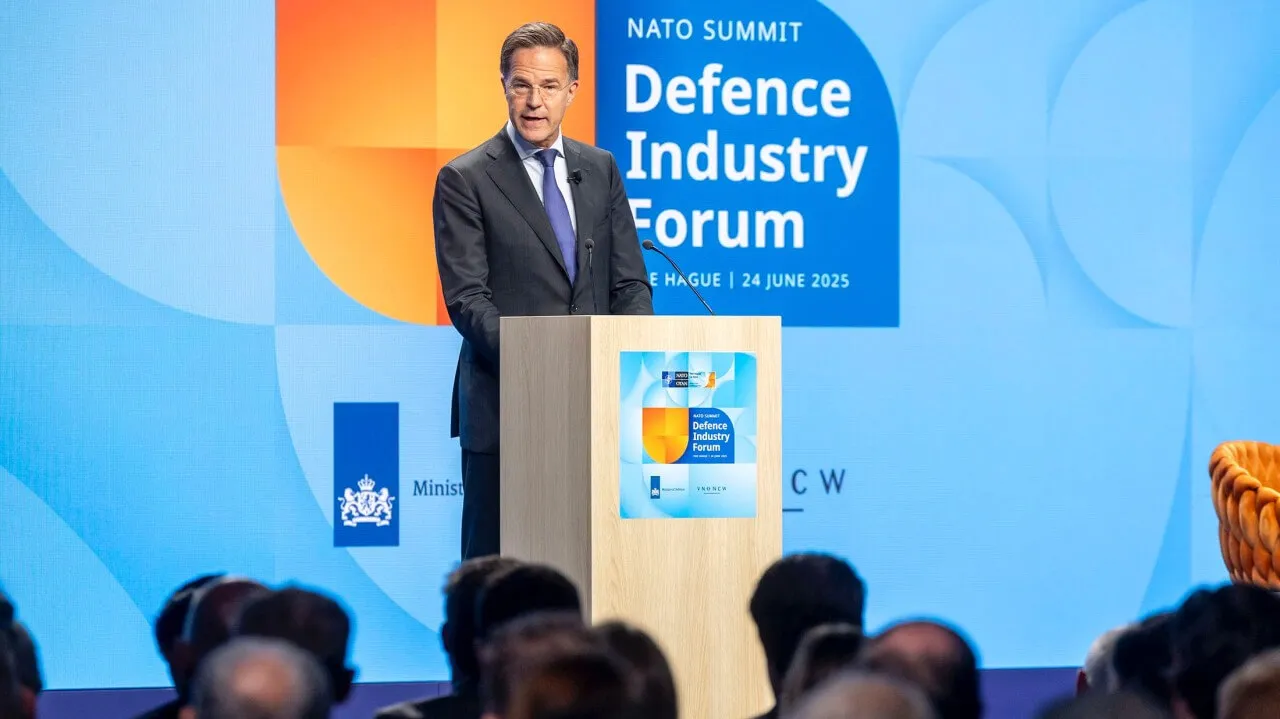
The 2025 forum at The Hague was structured as an official side event of the summit. It brought together about 400 guests: defense ministers, industry executives, and experts. Ankara’s forum is positioned differently. It is Day 1 of the summit itself, not a side event.
And then there is the host. Turkiye is NATO’s most geographically strategic and politically difficult member at the same time. It has the alliance’s second-largest army, it sits at the intersection of the Black Sea, the Eastern Mediterranean, the Middle East, and the Caucasus, and it controls the Turkish Straits.
Turkiye’s geographic position is more relevant than it has been in years, given the Iran war, the Hormuz question, and the Black Sea theater. That adds another dimension to the summit that previous hosts (The Hague, Washington, Vilnius) did not bring.
All of this adds up to something that feels structurally different from what came before. The underlying assumption at every NATO summit since 1949 was that the US leads European defense and allies contribute.
Europeans are expected to take primary responsibility for conventional defense but the time frame for possible threats is too short for these countries to meaningfully prepare themselves.
This brings us to the four possibilities we mentioned earlier. If the US actually withdraws itself and leaves the European countries alone, we assess that NATO’s future will be shaped by a small group of leading countries.
No previous summit had to absorb a shift like that while also staring down a three-year threat window and an active war on the alliance’s border.
What This Means for Organizations
Everything discussed above sounds like it belongs in the domain of governments and militaries. In practice, a large share of it lands on organizations that have nothing to do with defense.
The hybrid warfare campaigns that NATO is trying to address at Ankara do not respect the line between military and civilian.
When Sandworm deployed wiper malware against Poland’s energy grid in December 2025, the targets were power plants run by energy companies, not military installations.
When Chinese state-sponsored groups pre-positioned themselves inside US networks, the access points were in telecommunications, transportation, water systems, and other civilian sectors.
When pro-Russian hacktivist groups like NoName057(16) launched over 8,000 DDoS attacks against Spain in a single week in February 2026, they hit metro operators, bus companies, government portals, and financial institutions.
This is what makes the NATO spending conversation relevant beyond defense ministries. The 1.5% resilience tier in the new 5% target is supposed to cover critical infrastructure protection, network defense, and civil preparedness.
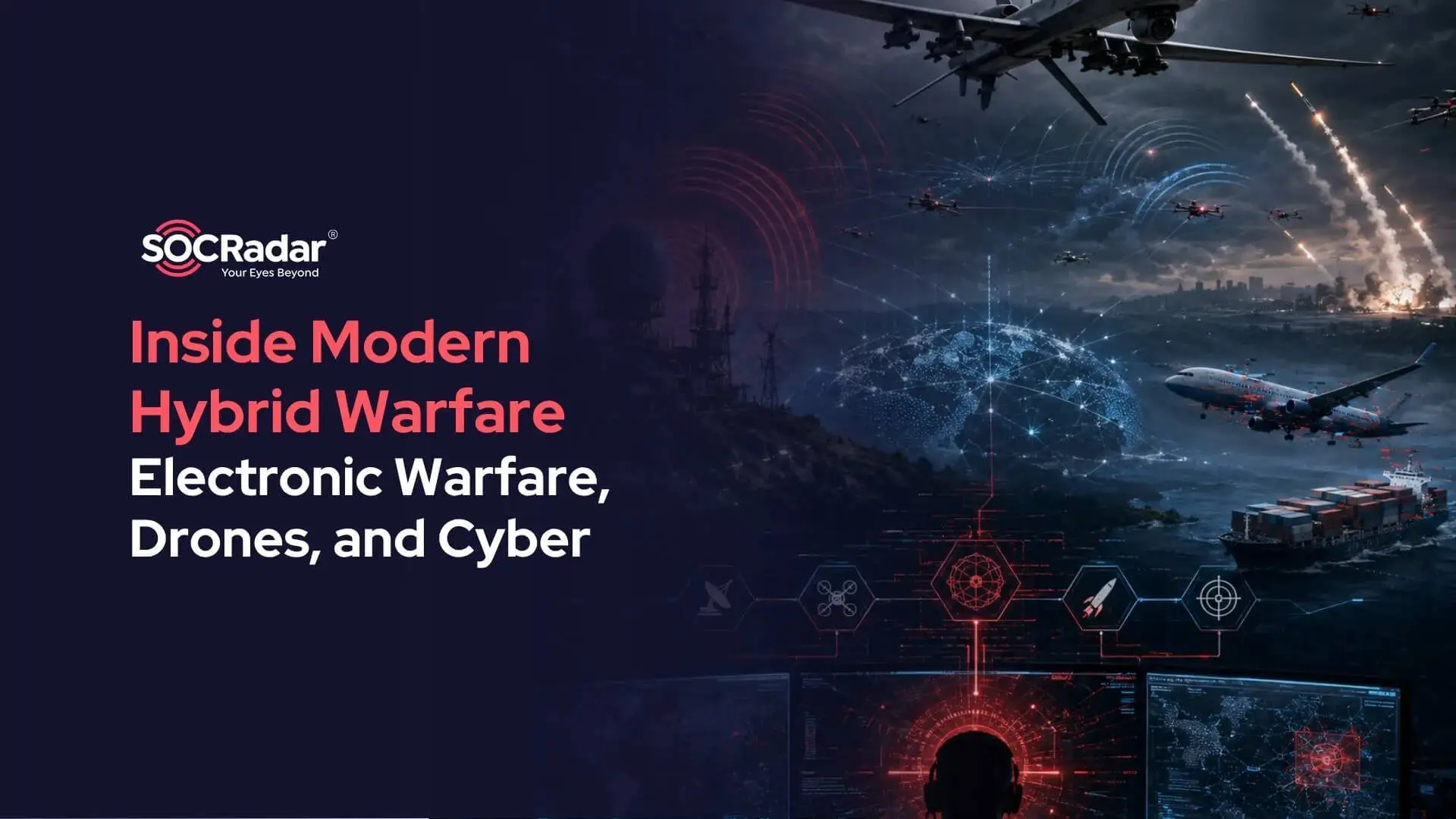
Electronic Warfare, Drones, and Cyber: Inside Modern Hybrid Warfare – Source
If that spending actually materializes and gets directed well, it could improve the security baseline for entire sectors. If it does not, or if the measurement framework stays vague, organizations in NATO countries will continue absorbing the spillover from state-level conflicts with limited institutional support.
The broader reality is that modern hybrid warfare treats civilian infrastructure as a legitimate surface for disruption, coercion, and pre-positioning.
Energy, logistics, telecommunications, finance, and healthcare are all part of the battlespace now, whether or not the organizations operating in those sectors think of themselves that way.
The decisions made at Ankara about how NATO handles cyber defense, hybrid threat response, and resilience spending will shape the threat environment that organizations in allied countries operate in for years.
SOCRadar’s recent analysis on how hybrid warfare affects organizations provides a detailed breakdown of what this means in operational terms and how to start building a defense posture around it.
Indicators to Watch
Several signals will determine whether this summit carries weight or fades into the background.
First, whether the US commits to any floor on its European troop levels. Even a general commitment would reassure eastern-flank allies; an open-ended review with no stated minimum leaves deterrence credibility in question.
Second, whether the Spain spending exemption spreads. If other allies negotiate similar carve-outs, the 5% target loses its force.
Third, whether Arctic Sentry and the Hormuz operation produce operational specifics or remain at the planning stage.
Fourth, how Zelensky is received and what language surrounds Ukraine. The tone will signal whether the alliance is still genuinely united on the war or beginning to quietly diverge.
Every NATO summit since 2022 has been choreographed to minimize the risk of the kind of public disagreement that defined London in 2019. Whether that discipline holds at Ankara, with this much tension running underneath, is the one variable that cannot be scripted in advance.