
What Is a CNAPP?
A Cloud-Native Application Protection Platform (CNAPP) combines cloud security capabilities across development, deployment, posture, identities, workloads, and runtime.
CNAPP commonly brings together CSPM, workload protection, infrastructure-as-code scanning, entitlement management, vulnerability context, container and Kubernetes security, and application or data insights. Product coverage varies, so buyers should evaluate actual capabilities and integrations.
Key Takeaways
- Cloud security posture management is a central category or capability.
- Reliable assessment requires identity, timing, source, and operational context.
- Detection should correlate external, identity, device, network, and cloud evidence.
- Response should preserve evidence and remove every reusable access path.
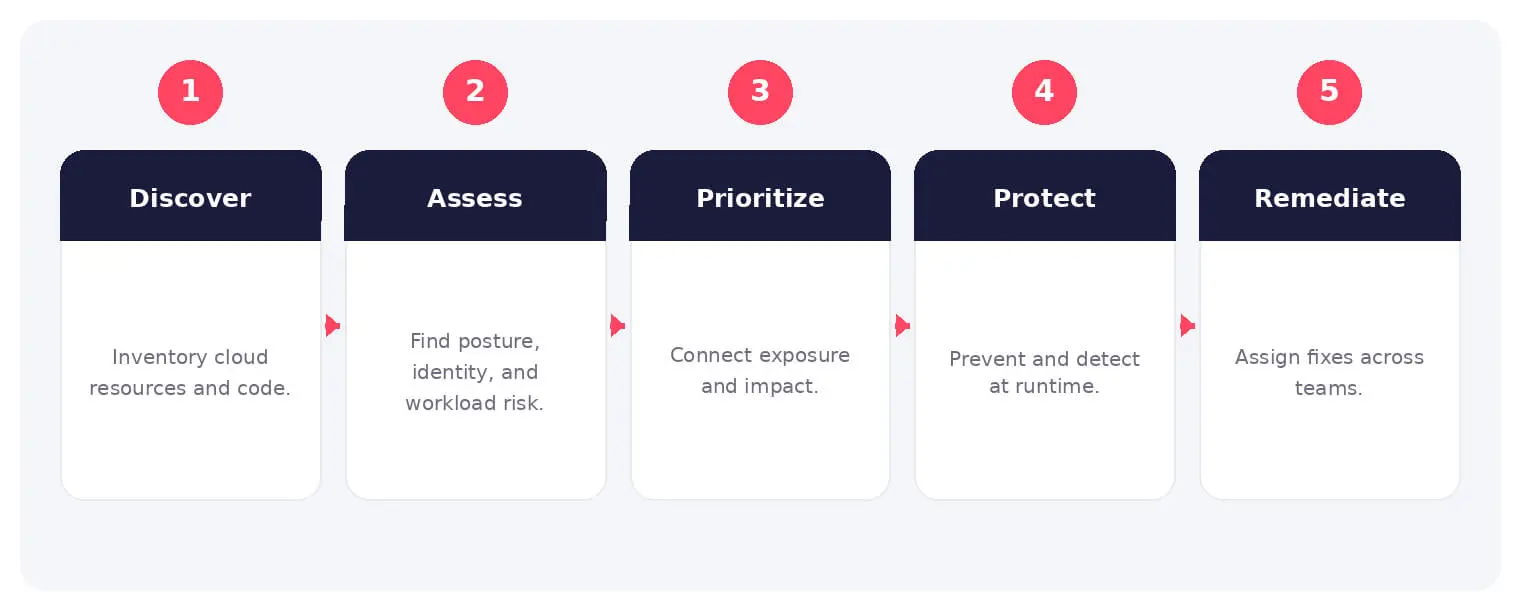
How a CNAPP Works
The sequence above provides a practical operating model. Individual stages may overlap, repeat, or involve different people and services, so analysts should validate each step against the available evidence.
CNAPP commonly brings together CSPM, workload protection, infrastructure-as-code scanning, entitlement management, vulnerability context, container and Kubernetes security, and application or data insights. Product coverage varies, so buyers should evaluate actual capabilities and integrations.
Common Types and Techniques
- Cloud security posture management
- Cloud workload and runtime protection
- Infrastructure-as-code and pipeline scanning
- Entitlement, identity, data, and vulnerability context
Security and Business Risks
- Fragmented cloud findings and duplicated alerts
- Misconfiguration and excessive permission
- Vulnerable workloads and exposed secrets
- Coverage gaps across multicloud environments
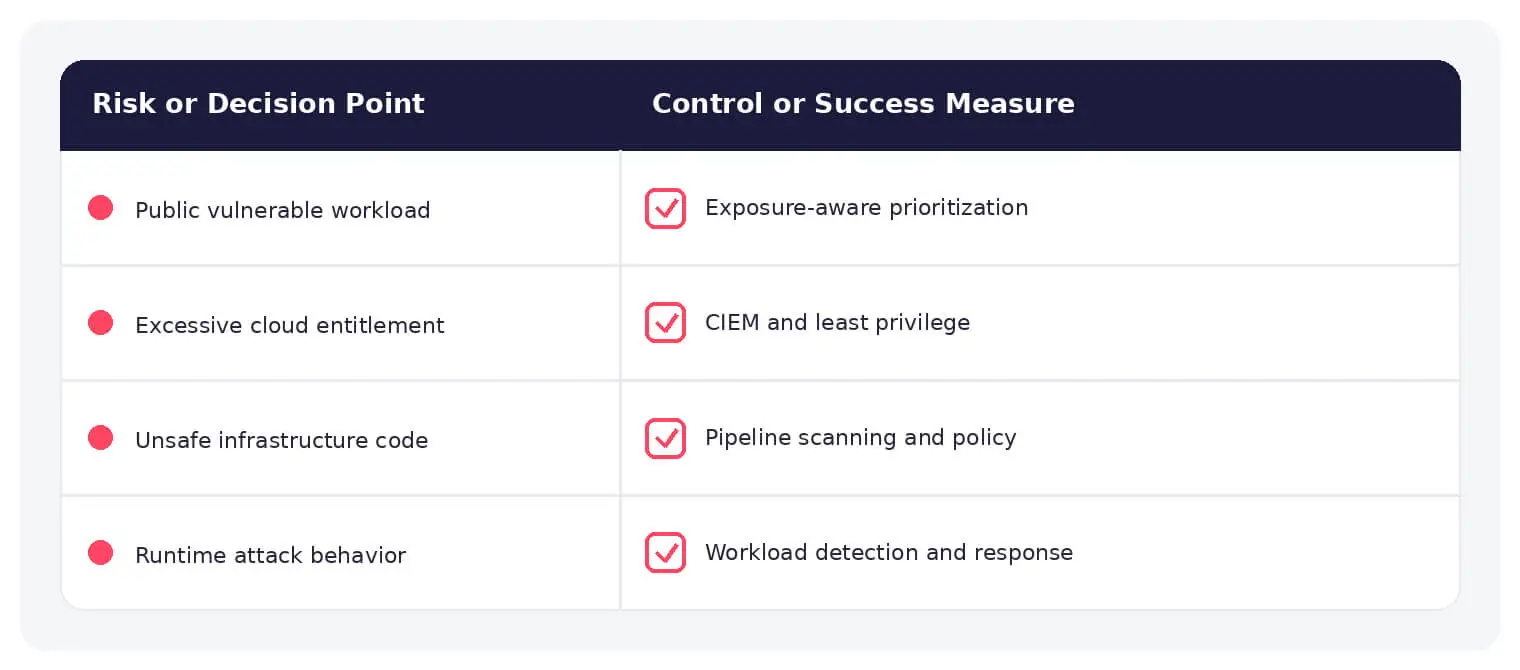
Warning Signs and Detection
Correlate configuration, identity, vulnerability, reachability, data sensitivity, runtime behavior, and internet exposure rather than ranking findings in isolation.
Prevention and Response
Define cloud ownership, integrate development and runtime data, prioritize exploitable paths, enforce secure baselines, protect workloads, and measure remediation outcomes and coverage.
How SOCRadar Can Help
SOCRadar combines external visibility, threat intelligence, Dark Web monitoring, brand protection, vulnerability context, and indicator enrichment to help teams investigate exposure connected to CNAPP.
Explore SOCRadar Attack Surface Management or request a demo to strengthen threat-informed prevention and response.
Frequently Asked Questions
What Is a Cloud-Native Application Protection Platform (CNAPP)?
A CNAPP is a platform that consolidates cloud security across development, deployment, posture, identities, workloads, and runtime. It commonly combines CSPM, workload protection, infrastructure-as-code scanning, entitlement management, vulnerability context, and container or Kubernetes security. Exact coverage varies between products, so buyers should evaluate actual capabilities and integrations.
What Capabilities Does a CNAPP Typically Combine?
Most CNAPPs draw from several established categories:
- Cloud security posture management (CSPM) for configuration and compliance
- Workload and runtime protection for virtual machines, containers, and serverless
- Infrastructure-as-code and pipeline scanning for pre-deployment checks
- Entitlement management for cloud identities and permissions
- Vulnerability, data, and application context for correlating risk
Because coverage differs by vendor, teams should map required use cases against each product’s actual feature set.
How Is a CNAPP Different From CSPM and CWPP Tools?
CSPM focuses on cloud configuration and posture, while CWPP protects workloads such as virtual machines, containers, and serverless functions. A CNAPP aims to merge these disciplines with identity, code scanning, and vulnerability context so findings are correlated instead of isolated. In practice, depth varies, and some organizations still run specialized tools alongside a CNAPP.
What Risks Come From Fragmented Cloud Security Tooling?
Disconnected tools produce duplicated alerts and inconsistent severity rankings, which slows triage and buries exploitable paths that span misconfigurations, excessive permissions, and vulnerable workloads. Coverage gaps across multicloud environments add blind spots. Exposed secrets and over-privileged identities often persist because no single team owns the complete finding.
How Does a CNAPP Prioritize Cloud Findings?
A CNAPP correlates configuration, identity, vulnerability, reachability, data sensitivity, runtime behavior, and internet exposure rather than scoring each finding in isolation. This context surfaces attack paths that are practically exploitable, such as a public storage bucket tied to an over-privileged role. Teams can then remediate the paths that matter first instead of chasing raw alert volume.
Do CNAPPs Use Agents or Agentless Monitoring?
Many platforms use agentless, API-based scanning for broad posture visibility and optional agents for deeper runtime telemetry such as process, network, and file activity. Agentless coverage deploys quickly across accounts, while agents provide richer runtime detection for critical workloads. Most CNAPPs support both models, so review which approach applies to each cloud service you run.
What Warning Signs Point to Gaps in Cloud Security Coverage?
Recurring misconfiguration alerts without a clear owner, permissions that remain excessive after reviews, vulnerable workloads or exposed secrets in production, and inconsistent security between cloud providers all indicate gaps. A growing backlog of findings that lack identity or exposure context is another sign that correlation is missing.
How Should Teams Respond to High-Priority CNAPP Findings?
Assign each finding to an owner and validate it with identity, timing, source, and operational context before acting. Remediate the full exploitable path rather than one symptom, and preserve evidence if an incident is suspected. Track remediation outcomes so recurring findings drive changes to baselines and policies.
How Can Organizations Reduce Misconfigurations Before Deployment?
Shift checks left by scanning infrastructure-as-code and pipeline changes before resources reach production. Enforce secure baselines through policy-as-code guardrails and assign clear ownership for every cloud account and service. Connecting development findings with runtime data helps confirm that deployed environments match the intended baseline.
Does a CNAPP Support Multicloud Environments?
Most CNAPPs support major providers such as AWS, Azure, and Google Cloud, but depth varies by service, region, and integration quality. Verify API coverage, agent or agentless options for workloads, and how consistently findings are normalized across providers. Uniform coverage matters because attackers look for the weakest connected environment, not the best-protected one.
What Is a Common Misconception About CNAPPs?
That a CNAPP automatically covers every cloud security need. Product capabilities differ, and consolidation does not replace defined cloud ownership, secure baselines, or incident response processes. Treat a CNAPP as a way to correlate and contextualize findings, not as a substitute for those fundamentals.

Oct 16, 2026
CVE-2026-102764: BeyondTrust Zero-Day Exploited
BeyondTrust has disclosed CVE-2026-102764, a critical Remote Support vulnerability exploited as a zero-day weeks before customers received a patch. The attack began…
Oct 15, 2026
Cisco Secure Email & PAN-OS Zero-Days Exploited
Cisco Secure Email & PAN-OS Zero-Days Exploited Cisco and Palo Alto Networks have patched two actively exploited zero-day vulnerabilities that can lead…
Oct 15, 2026
SOCRadar Splunk Integration: New MSSP and Vulnerability Apps
SOCRadar Splunk Integration: New MSSP and Vulnerability Apps Your analysts live in Splunk. Your external risk does not: SOCRadar alarms for dozens…
Intelligence in your inbox every Thursday.
Join 30,000+ security professionals reading SOCRadar research.
Subscribe