
What Is Doxxing?
Doxxing is the collection and publication of personal or identifying information without consent, typically to harass, intimidate, shame, threaten, or enable further harm. Exposed material may include addresses, phone numbers, family details, employment, travel patterns, financial records, or identity documents.
Information used in doxxing may come from public records, social media, data brokers, breached databases, account compromise, image metadata, domain records, or cross-platform identity matching. Individual facts become more dangerous when aggregated and paired with malicious intent.
Key Takeaways
- Public-record and data-broker aggregation is a central category or technique.
- Reliable assessment requires source, ownership, timing, and operational context.
- Detection should connect external evidence with identity, device, network, and business signals.
- Response should protect affected people and remove reusable access paths.
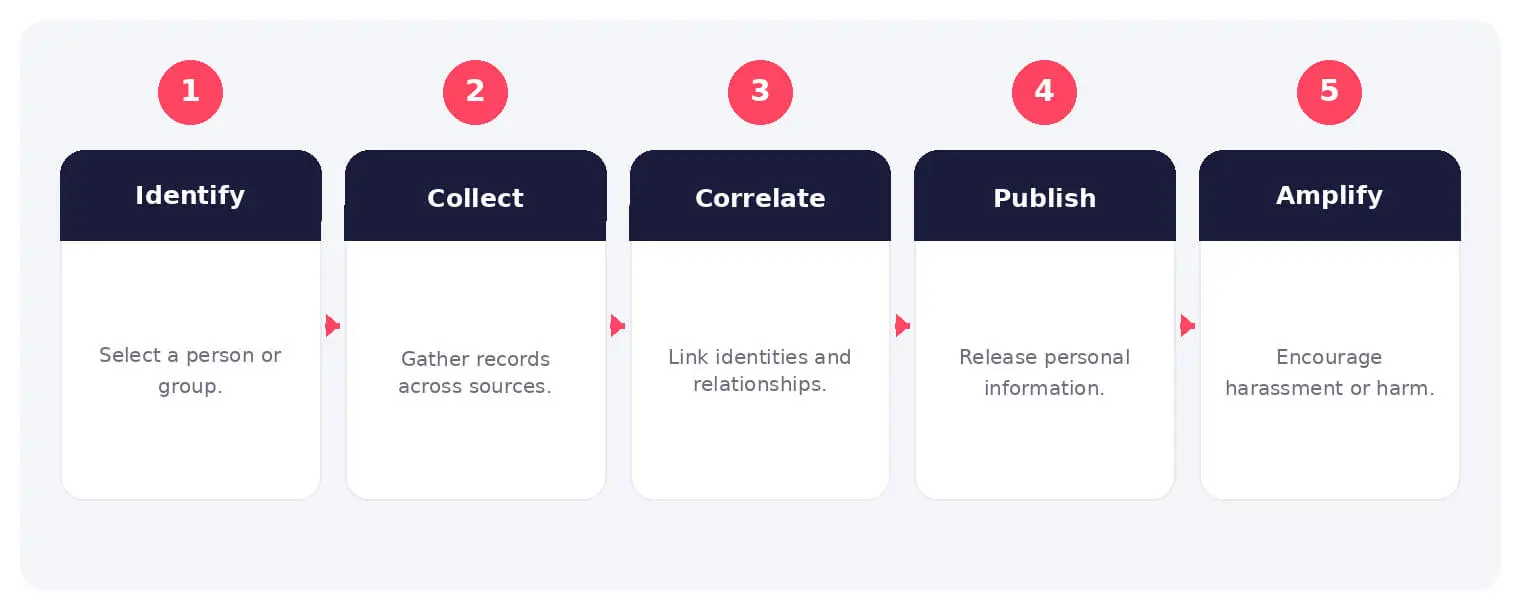
How Doxxing Works
The sequence above provides a practical operating model. Individual steps can overlap, repeat, or involve different people and services, so each stage should be validated against available evidence.
Information used in doxxing may come from public records, social media, data brokers, breached databases, account compromise, image metadata, domain records, or cross-platform identity matching. Individual facts become more dangerous when aggregated and paired with malicious intent.
Common Types and Techniques
- Public-record and data-broker aggregation
- Account compromise and leaked-data use
- Location, family, and workplace exposure
- Swatting support, threats, and coordinated harassment
Security, Privacy, and Business Risks
- Physical safety risks and stalking
- Identity theft and account recovery abuse
- Workplace disruption and reputational harm
- Threats against family members and associates
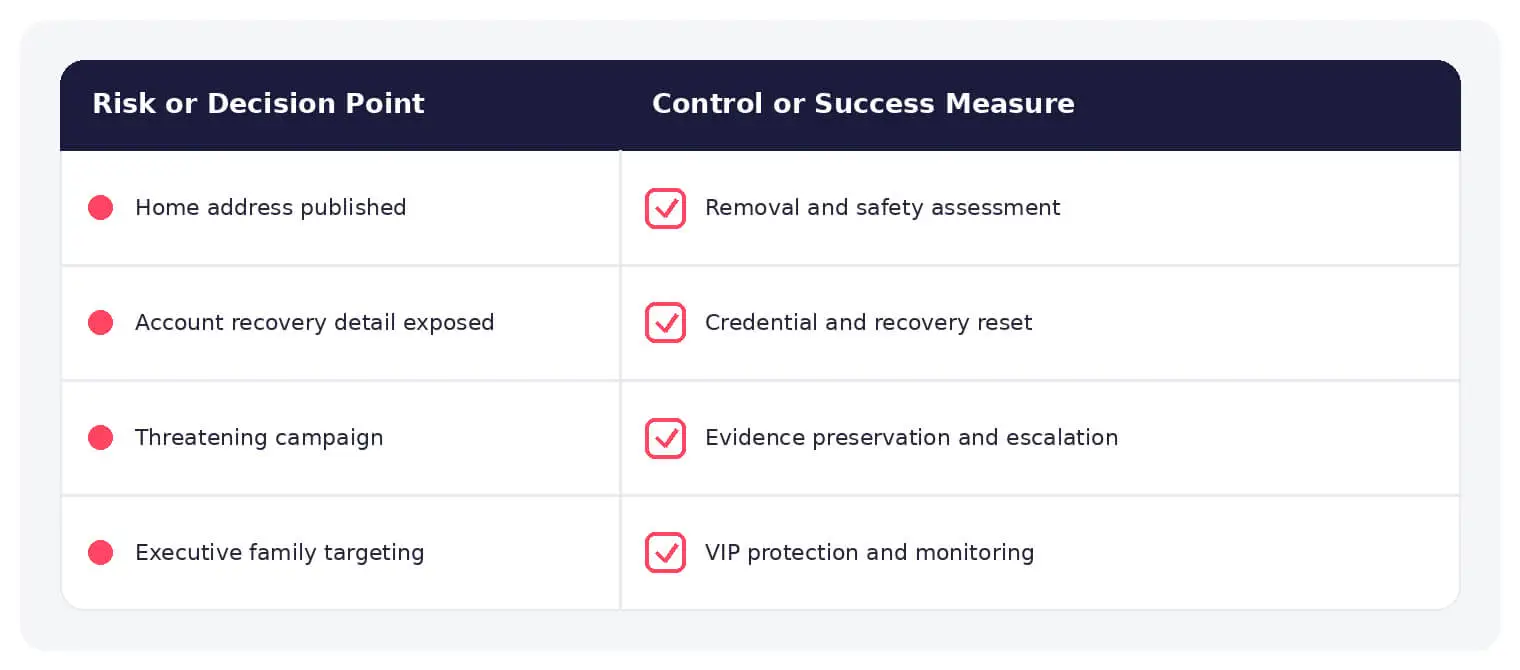
Warning Signs and Validation
Monitor executive and employee exposure, new posts containing sensitive identifiers, impersonation, threats, leaked records, and sudden harassment. Preserve evidence without redistributing sensitive data.
Prevention and Response
Minimize public details, remove broker listings where possible, use domain privacy and secure account recovery, protect home and travel information, maintain escalation contacts, and coordinate security, legal, HR, and law enforcement.
How SOCRadar Can Help
SOCRadar combines external intelligence, Dark Web visibility, brand monitoring, attack-surface discovery, and contextual enrichment to help teams identify exposure and investigate activity connected to doxxing.
Explore SOCRadar VIP Protection or request a demo to strengthen external threat detection and response.
Frequently Asked Questions
What Information Do Doxxers Typically Expose?
Exposed material can include home addresses, phone numbers, family members’ names, employers, travel routines, financial records, and copies of identity documents. What gets published usually depends on the attacker’s goal, whether that is harassment, stalking, identity theft, or triggering a physical response.
Where Do Doxxers Get Personal Information?
Doxxers typically combine public records, social media posts and photos, data broker listings, breached databases, compromised accounts, image metadata, and domain registration records. Cross-platform identity matching ties these fragments to a single person. No single source is usually sufficient on its own.
Why Is Publicly Available Information Still a Doxxing Risk?
An address, employer name, or photo in isolation may seem harmless. When aggregated, these details reveal home locations, daily routines, family composition, and security gaps that make harassment, stalking, or physical attacks practical. Targeting and intent are what turn ordinary records into a safety problem.
What Role Do Data Breaches Play in Doxxing?
Breached databases can supply addresses, phone numbers, and personal identifiers that doxxers merge with public information. Leaked credentials can also lead to account takeovers that expose private messages, photos, and contact lists for publication.
What Is the Connection Between Doxxing and Swatting?
Doxxing often precedes swatting, in which someone makes a false emergency report to send armed police to a victim’s address. A published, verified home address is generally what makes this attack feasible, which is why exposed home addresses are treated as high-severity findings.
What Are the Warning Signs That Someone Is Being Targeted for Doxxing?
Common indicators include new posts containing sensitive identifiers, impersonation accounts, unsolicited questions about location or family, leaked records naming the person, and a sudden rise in harassment from strangers. Escalating hostile contact frequently appears shortly before publication.
What Should You Do First After Being Doxxed?
Assess immediate physical safety before anything else, then preserve evidence with screenshots and URLs without redistributing the exposed data. Secure affected accounts, request removals from hosting platforms and data brokers, notify your employer, and contact law enforcement when threats or physical risk exist.
How Can You Reduce Doxxing Exposure Before an Incident?
Reducing the raw material available for aggregation lowers the likelihood and impact of a doxxing incident, although no measure removes all risk. Practical steps include:
- Limiting personal details in public profiles, posts, and professional bios
- Requesting removals from data broker and people-search sites
- Enabling domain privacy on personal registrations
- Stripping location metadata from photos before sharing
- Locking down account recovery options and keeping home and travel information offline
How Does Doxxing Affect Organizations?
When executives or employees are targeted, organizations face workplace disruption, staff impersonation, account recovery abuse that can reach corporate systems, and reputational harm. Threats against family members also raise duty-of-care considerations that typically require coordination between security, legal, and HR teams.
Is Doxxing Illegal?
It depends on the conduct and the jurisdiction. Publication alone may fall into a legal gray area in some places, but doxxing frequently overlaps with harassment, stalking, threat, identity theft, or data-protection offenses, especially when it enables violence or fraud.
How Is Doxxing Different From a Data Breach?
A data breach is unauthorized access to or disclosure of data held by an organization. Doxxing is the deliberate aggregation and publication of identifying information about a person, and it may draw on breached data, public records, or both.
Oct 23, 2026
CVE-2026-114625: Actively Exploited VeloCloud Orchestrator Flaw Grants Superuser Access
CVE-2026-114625 is an actively exploited SQL injection flaw in VeloCloud Orchestrator that lets authenticated users gain superuser operator privileges…

Oct 22, 2026
PHP2Shell Exploit Tooling Found on Exposed Attacker Server
SOCRadar Threat Intelligence Unit (STRU) researchers found PHP2Shell exploit tooling on an attacker-controlled server whose working directory was exposed…

Oct 22, 2026
New LiteLLM Supply Chain Attack Hits PyPI and Docker
A new LiteLLM supply chain attack has turned version 1.107.0, an official release of the popular open-source LLM gateway, into a credential…
Intelligence in your inbox every Thursday.
Join 30,000+ security professionals reading SOCRadar research.
Subscribe