Security: Threats, Risks, and Controls
Security: Threats, Risks, and Controls
MCP Servers are powerful, but with that power comes significant responsibility. Unlike passive APIs, MCP Servers actively execute tasks, orchestrate external tools, and handle sensitive context. This makes them a valuable asset for defenders and a tempting target for adversaries.
Why Security Matters in MCP Deployments
- Execution Power: MCP Servers can launch scans, trigger enrichment workflows, or interact with enterprise systems. If compromised, they can be abused as remote shells.
- Expanded Attack Surface: Every tool integration and context payload increases the entry points attackers can probe.
- Data Sensitivity: MCP outputs often contain credentials, logs, or classified threat intelligence that must be protected.
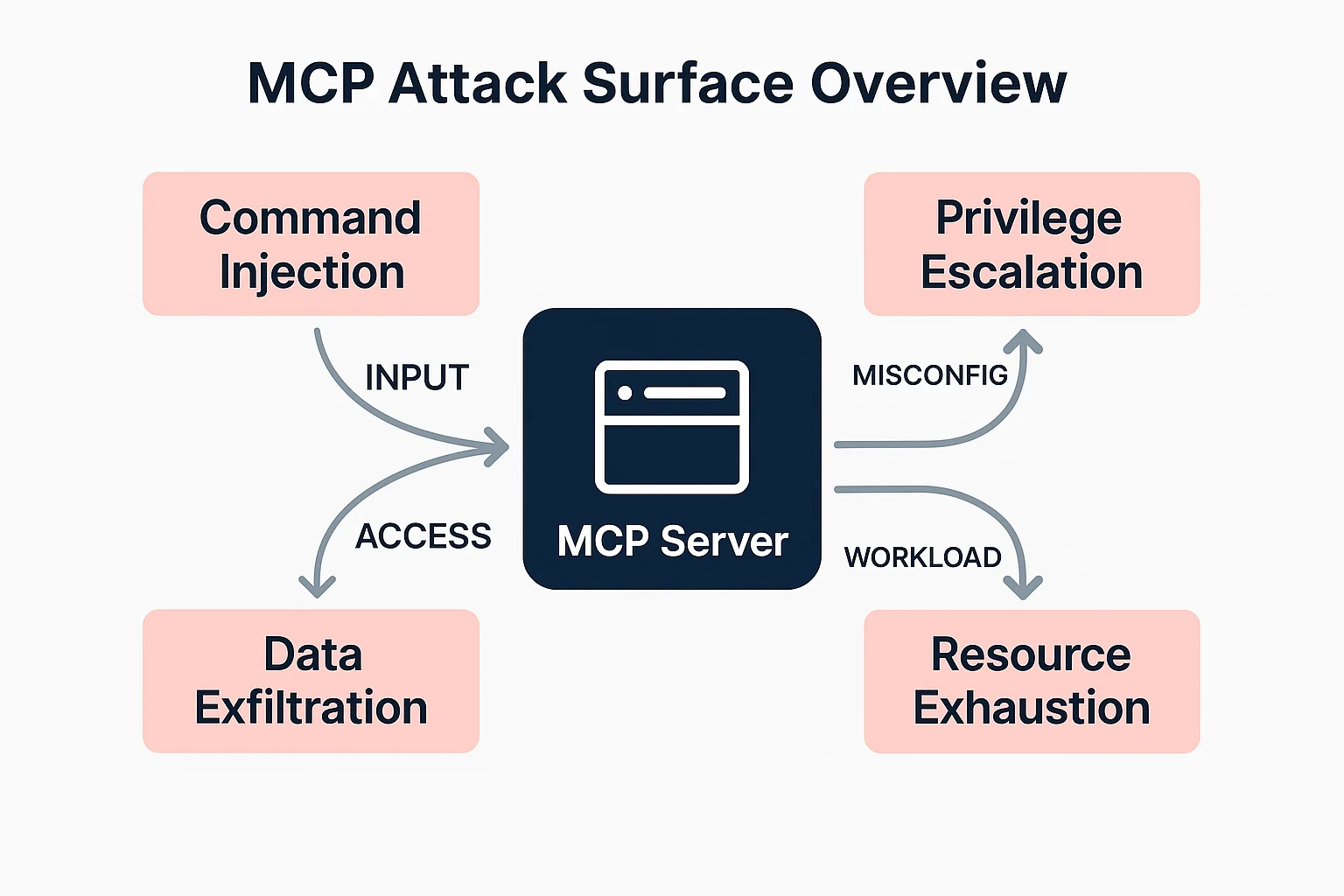
This diagram highlights the four primary attack vectors MCP Servers face: command injection, privilege escalation, data exfiltration, and resource exhaustion. Understanding these risks is the first step toward building a secure MCP deployment.