

Sep 25, 2026

Jun 12, 2025
4 Mins Read
Jul 08, 2026

Summarize with:
Operation Secure: INTERPOL’s Global Infostealer Crackdown Takes Down 20,000 Malicious IPs and Domains
In a sweeping victory against cybercrime, INTERPOL’s latest operation, codenamed Operation Secure, has dealt a significant blow to cybercriminal networks trafficking in stolen information. Between January and April 2025, authorities from 26 countries came together to dismantle 20,000 malicious IPs and domains, seizing 41 servers and arresting 32 suspects.
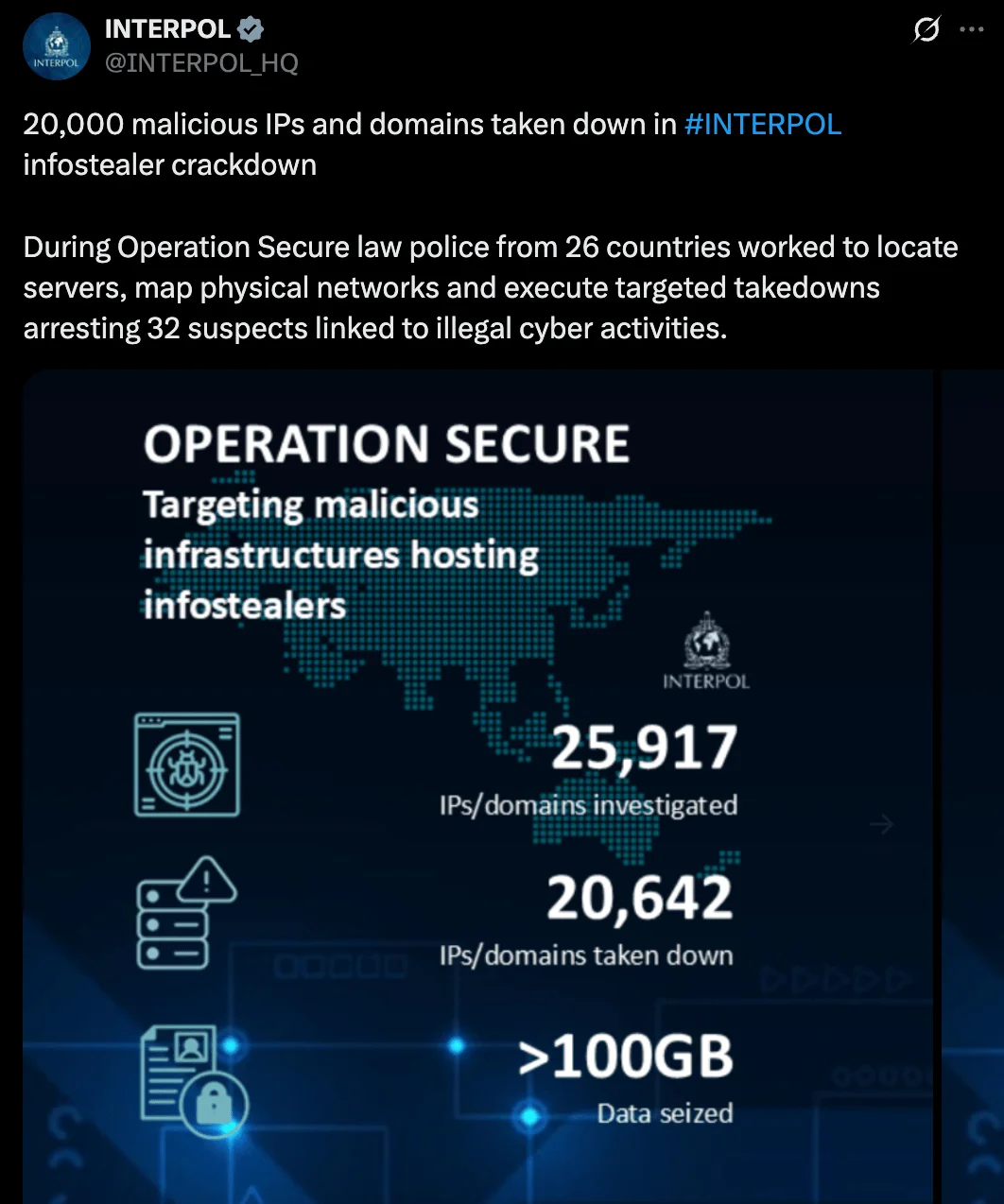
INTERPOL tweets about Operation Secure (X)
How Operation Secure Targeted Infostealer Networks
Operation Secure marks one of the most far-reaching takedowns of cybercriminal infrastructure this year. It involved months of intelligence gathering, analysis, and precise actions by law enforcement agencies across Asia and the South Pacific. With INTERPOL’s coordination, countries like Vietnam, Sri Lanka, and Nauru played critical roles in executing high-impact raids and arrests.

Law enforcement officers and INTERPOL personnel collaborating during Operation Secure (interpol.int)
In Vietnam, police arrested 18 suspects linked to fraudulent schemes involving corporate accounts. Investigators discovered cash, SIM cards, and business registration documents at the homes of these suspects, indicating a large-scale operation to steal and sell corporate identities.
Sri Lankan and Nauruan authorities also carried out house raids that led to 14 more arrests and the identification of 40 victims. Meanwhile, in Hong Kong, police analyzed over 1,700 intelligence leads shared by INTERPOL, pinpointing 117 Command and Control (C2) servers used to manage campaigns like phishing and online fraud. These servers formed the backbone of infostealer operations, enabling cybercriminals to control vast botnets and harvest sensitive data from infected devices.
What Are Infostealers and Why Do They Matter?
Infostealer malware is a key tool in the cybercriminal arsenal. Once it infects a device, it stealthily harvests login credentials, browser cookies, credit card details, and even cryptocurrency wallet data. This stolen data is then bundled into stealer logs – detailed records that enable cybercriminals to take over accounts, bypass authentication systems, and launch further attacks.
Our blog post, “Stealer Logs: Everything You Need to Know”, explores how these logs act as a launching pad for large-scale data breaches and targeted attacks like Business Email Compromise (BEC). In essence, infostealers don’t just compromise data; they open the door to further exploitation.
Operation Secure’s Immediate Impact, and the Ongoing Threat
Following the operation, over 216,000 victims and potential victims were notified so they could take immediate action, like resetting passwords and removing unauthorized access. While these actions are essential in the short term, the evolving nature of infostealer malware poses a persistent challenge.
Cybercriminals continuously adapt, creating new variants of infostealers and refining their tactics. This makes it critical for organizations and individuals to go beyond basic hygiene practices. Threat Hunting, Dark Web Monitoring, and advanced detection methods are key to staying ahead of these threats.
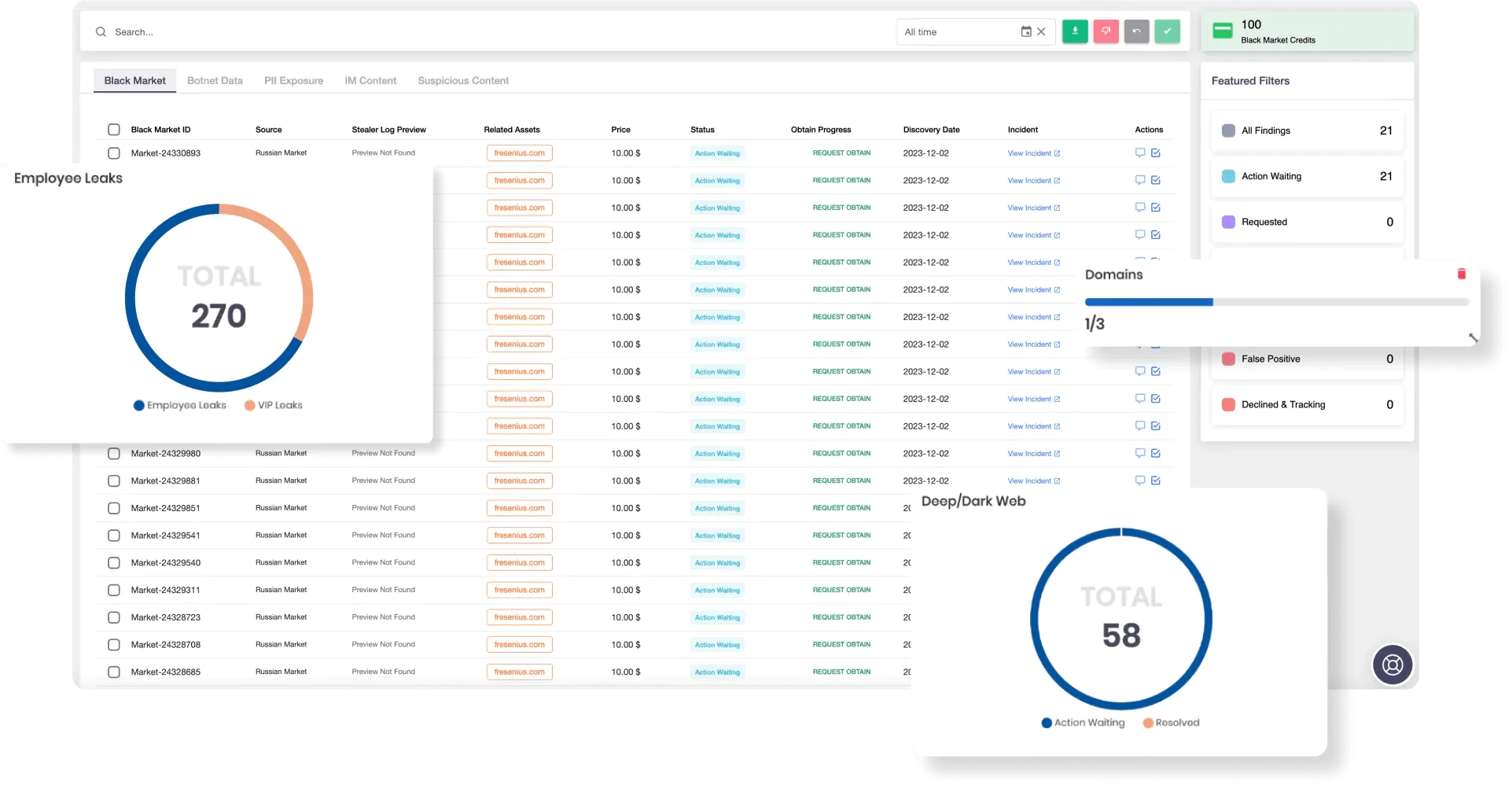
SOCRadar’s Dark Web Monitoring
Conclusion
The results of Operation Secure come on the heels of a broader trend of proactive law enforcement efforts worldwide. In 2024, several major cybercriminal networks were dismantled through coordinated international actions.
These operations not only take down infrastructure but also disrupt the financial and logistical networks that sustain cybercriminal enterprises. As Neal Jetton, INTERPOL’s Director of Cybercrime, stated, “Operation Secure has once again shown the power of intelligence sharing in disrupting malicious infrastructure and preventing large-scale harm to both individuals and businesses.”

Table Of Content
Related Articles

Roundcube SQLi (CVE-2026-48842) Exploited

Check Point Pre-Auth Flaws Under Attack
Sep 24, 2026


ShinyHunters Claims Access to FBI Systems
Sep 24, 2026

CVE-2026-87902 in WordPress Enables Conditional RCE
Sep 23, 2026