




SOCRadar Intelligence: From Chaos to Clarity
Turning raw data and endless alerts into actionable insights you can trust
- Cyber threats evolve faster than ever, overwhelming organizations with endless data and constant alerts. SOCRadar cuts through the noise, transforming raw intelligence into clear, reliable insights — giving you the confidence to act decisively and protect what matters most.
- Detects threats across hundreds of platforms — including dark web, social media, messaging apps, and cloud providers.
- Transforms raw data into actionable intelligence using AI-powered analysis and enrichment.
- Prioritizes risks with advanced scoring systems like ASES, SVRS, and Phishing Score.
- Delivers insights in real time via alerts, dashboards, reports, and integrated APIs.
- Every piece of intelligence delivered is distilled from raw data, shaped into valuable knowledge, and sharpened into a tool that strengthens your defenses.
The Data Alchemy: Data to Decisions
Behind the Scenes of How We Help You Spot Threats Faster and Make Smarter Security Moves
DAYS
HOURS
MINUTES
SECONDS

Turning Noise into Knowledge,
and Knowledge into Power for Your Security
Collecting
SOCRadar’s data-analyzing process begins with comprehensive data collection. The variety and diversity of our data sources allow us to uncover the unknown and access the hard-to-reach.
SOCRadar systematically gathers data from a wide array of sources, including the dark and deep web, threat feeds, social media, and underground forums. This extensive gathering process ensures that SOCRadar maintains a robust and dynamic database that accurately reflects the evolving threat landscape.

| Datasource | Source Breakdown | Data Profile |
|---|---|---|
| Deep & Dark Web | ||
| Deep & Dark Web |
|
Leaked data, brand mentions, account credentials, black-market activities, fraud schemes, stolen credentials, compromised personal or organizational data |
| Social Media Platforms | ||
| Social Media Platforms |
|
Brand mentions, impersonation accounts, malicious content, phishing attempts, customer sentiment. |
| Messaging Platforms | ||
| Messaging Platforms |
|
Malicious or fraudulent messages, phishing schemes, brand impersonation, suspicious content, shared credentials, leaked data |
| Code Repository & Paste Sites | ||
| Code Repository & Paste Sites |
|
Leaked credentials, hard coded secrets, exposed API keys, malware or malicious code, unauthorized access to repositories. |
| Cloud Providers | ||
| Cloud Providers |
|
Data breaches, unauthorized access to cloud services, compromised credentials, abnormal usage patterns. |
| API Collection Platforms | ||
| API Collection Platforms |
|
API vulnerabilities, sensitive data leaks, unauthorized access attempts, data scraping. |
| Threat Feeds | ||
| Threat Feeds |
|
Known threats, attack vectors, vulnerabilities. |
| In-house Research Team |
|
| Automated Updates and Feedback |
|
AnalysingData Processing and Enrichment
Once the raw intelligence is collected, the following phase is to process and enrich the data to enhance its value for both automated systems and human analysts. SOCRadar employs various automated techniques to clean and enrich the data, ensuring its reliability.
SOCRadar leverages various machine learning algorithms, including clustering, anomaly detection, and NLP (natural language processing)-based methods (for text data), throughout the enrichment process. These diverse algorithms help identify anomalies, detect novel attack patterns, and learn from past incidents to improve future threat assessments.

Assessment and Scoring
After data is enriched and normalized, it is ready to be prioritized for actionable insights. SOCRadar uses a comprehensive, systematic approach to assessment, applying diverse scoring metrics to strengthen its threat intelligence capabilities. This assessment process enables organizations to better understand their security posture and prioritize responses effectively.
SOCRadar offers a variety of scoring metrics to evaluate threats;
ASES (Attack/ Asset Surface Exposure Score)
Evaluates the exposure of an organization's assets to potential attacks. The score prioritizes actions for organizations by indicating which assets may be more vulnerable or critical in the context of potential threats.
Cyber Exposure Level
Evaluates the potential exposure risks of an organization's assets identified on both the surface and dark web. By measuring the visibility and accessibility of these assets in the digital landscape, the Cyber Exposure Level score provides insight into the organization's vulnerability potential.
Popularity Score
Assesses a company's cyber standing based on various factors, including its size, mention in dark web contexts, audience reach, and overall visibility. The Popularity Score can help indicate which organizations may attract more attention from threat actors based on their prominence in the industry.
Phishing Score
Assesses the risk associated with phishing threats, considering factors like the organization's targeting, the sophistication of the phishing attempts, and historical data on successful phishing incidents. It allows organizations to strengthen their defenses against social engineering attacks.
SVRS (SOCRadar Vulnerability Risk Score)
Provides in-depth risk assessments by evaluating vulnerabilities within the context of their potential impact, the likelihood of exploitation, and practical scenarios in which threat actors could leverage those vulnerabilities.
Sharing
After the long journey from raw data to actionable intelligence, SOCRadar delivers insights through various channels designed to enhance cybersecurity operations and help organizations respond to threats effectively. These channels facilitate the timely dissemination of relevant threat intelligence among security teams, empowering them to make informed decisions based on real-time data.
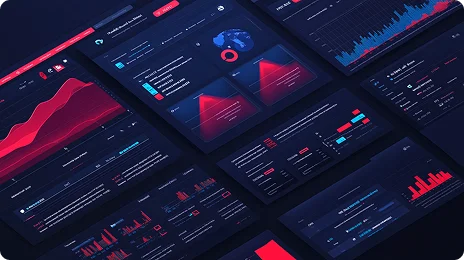
Reports and Dashboards
Comprehensive reporting features provide valuable insights into threat landscapes, allowing organizations to analyze trends and patterns over time. Visualizing this data through dashboards aids in strategic decision-making.
Threat Intelligence Feeds
SOCRadar provides continuous threat intelligence feeds that deliver updates on emerging threats, vulnerabilities, and indicators of compromise (IOCs).
Real-Time Alerts
Automated notifications are a key feature, allowing organizations to receive immediate alerts about potential breaches, compromised credentials, or relevant threats.
APIs for Integration
The platform offers robust Application Programming Interfaces (APIs) that allow organizations to integrate SOCRadar’s threat intelligence into their security frameworks. This ensures that threat intelligence can be shared seamlessly across different systems, enabling a more coordinated response to incidents.
Community Sharing
SOCRadar encourages information sharing through newsletters, threatshare emails, blog posts, webinars, training, and etc. This collaborative approach enables organizations to benefit from shared insights and experiences, enhancing overall collective defense against cyber threats.
PROTECTION OF PERSONAL DATA COOKIE POLICY FOR THE INTERNET SITE
Protecting your personal data is one of the core principles of our organization, SOCRadar, which operates the internet site (www.socradar.com). This Cookie Usage Policy (“Policy”) explains the types of cookies used and the conditions under which they are used to all website visitors and users.
Cookies are small text files stored on your computer or mobile device by the websites you visit.
Cookies are commonly used to provide you with a personalized experience while using a website, enhance the services offered, and improve your overall browsing experience, contributing to ease of use while navigating a website. If you prefer not to use cookies, you can delete or block them through your browser settings. However, please be aware that this may affect your usage of our website. Unless you change your cookie settings in your browser, we will assume that you accept the use of cookies on this site.
1. WHAT KIND OF DATA IS PROCESSED IN COOKIES?
Cookies on websites collect data related to your browsing and usage preferences on the device you use to visit the site, depending on their type. This data includes information about the pages you access, the services and products you explore, your preferred language choice, and other preferences.
2. WHAT ARE COOKIES AND WHAT ARE THEIR PURPOSES?
Cookies are small text files stored on your device or web server by the websites you visit through your browsers. These small text files, containing your preferred language and other settings, help us remember your preferences on your next visit and assist us in making improvements to our services to enhance your experience on the site. This way, you can have a better and more personalized user experience on your next visit.
The main purposes of using cookies on our Internet Site are as follows:
- Improve the functionality and performance of the website to enhance the services provided to you,
- Enhance and introduce new features to the Internet Site and customize the provided features based on your preferences,
- Ensure legal and commercial security for the Internet Site, yourself, and the Organization, and prevent fraudulent transactions through the Site,
- Fulfill legal and contractual obligations, including those arising from Law No. 5651 on the Regulation of Publications on the Internet and the Fight Against Crimes Committed Through These Publications, as well as the Regulation on the Procedures and Principles Regarding the Regulation of Publications on the Internet.
3. TYPES OF COOKIES USED ON OUR INTERNET SITE 3.1. Session Cookies
Session cookies ensure the smooth operation of the internet site during your visit. They are used for purposes such as ensuring the security and continuity of our sites and your visits. Session cookies are temporary cookies and are deleted when you close your browser; they are not permanent.
3.2. Persistent Cookies
These cookies are used to remember your preferences and are stored on your device through browsers. Persistent cookies remain stored on your device even after you close your browser or restart your computer. These cookies are stored in your browser’s subfolders until deleted from your browser’s settings. Some types of persistent cookies can be used to provide personalized recommendations based on your usage purposes.
With persistent cookies, when you revisit our website with the same device, the website checks if a cookie created by our website exists on your device. If so, it is understood that you have visited the site before, and the content to be presented to you is determined accordingly, offering you a better service.
3.3. Mandatory/Technical Cookies
Mandatory cookies are essential for the proper functioning of the visited internet site. The purpose of these cookies is to provide necessary services by ensuring the operation of the site. For example, they allow access to secure sections of the internet site, use of its features, and navigation.
3.4. Analytical Cookies
These cookies gather information about how the website is used, the frequency and number of visits, and show how visitors navigate to the site. The purpose of using these cookies is to improve the operation of the site, increase its performance, and determine general trend directions. They do not contain data that can identify visitors. For example, they show the number of error messages displayed or the most visited pages.
3.5. Functional Cookies
Functional cookies remember the choices made by visitors within the site and recall them during the next visit. The purpose of these cookies is to provide ease of use to visitors. For example, they prevent the need to re-enter the user’s password on each page visited by the site user.
3.6. Targeting/Advertising Cookies
They measure the effectiveness of advertisements shown to visitors and calculate how many times ads are displayed. The purpose of these cookies is to present personalized advertisements to visitors based on their interests.
Similarly, they determine the specific interests of visitors’ navigation and present appropriate content. For example, they prevent the same advertisement from being shown again to the visitor in a short period.
4. HOW TO MANAGE COOKIE PREFERENCES?
To change your preferences regarding the use of cookies, block or delete cookies, you only need to change your browser settings.
Many browsers offer options to accept or reject cookies, only accept certain types of cookies, or receive notifications from the browser when a website requests to store cookies on your device.
Also, it is possible to delete previously saved cookies from your browser.
If you disable or reject cookies, you may need to manually adjust some preferences, and certain features and services on the website may not work properly as we will not be able to recognize and associate with your account. You can change your browser settings by clicking on the relevant link from the table below.
5. EFFECTIVE DATE OF THE INTERNET SITE PRIVACY POLICY
The Internet Site Privacy Policy is dated The effective date of the Policy will be updated if the entire Policy or specific sections are renewed. The Privacy Policy is published on the Organization’s website (www.socradar.com) and made accessible to relevant individuals upon request.
SOCRadar
Address: 651 N Broad St, Suite 205 Middletown, DE 19709 USA
Phone: +1 (571) 249-4598
Email: [email protected]
Website: www.socradar.com

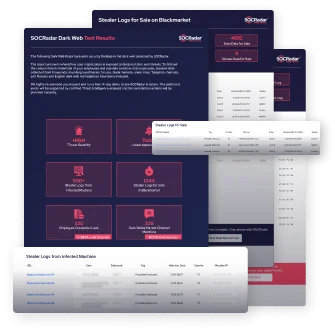
Advanced
Dark Web Report
