
Mastering Dark Web Intelligence for Cybersecurity Professionals
- Deep dive into dark web training,
- Applied intelligence gathering,
- AI-enhanced threat detection,
- Real-world scenario applications.
Companies Attended Trainings















AI-Driven Analysis and Threat PredictionCybersecurity Superpower
Leverage artificial intelligence to detect and anticipate future threats, using machine learning and NLP techniques for dark web monitoring and analysis.
Mastering Dark Web Intelligence for Cybersecurity Professionals
| Module | Curriculum |
|---|---|
|
1.1 Introduction to AI and Machine Learning in Cybersecurity
|
|
| Module 1 Foundations of AI & LLMs for Cybersecurity |
1.2 Understanding LLMs (Large Language Models)
|
|
1.3 Common Issues and Limitations
|
|
| Module 2 AI for Cybersecurity vs. Cybersecurity for AI |
2.1 Securing AI Systems
|
|
2.2 Applying AI for Security Operations
|
|
|
3.1 Offensive AI Techniques
|
|
| Module 3 Threat Actor Use of AI |
3.2 Real-World Scenarios and Labs
|
|
Hands-On Lab:
|
|
|
4.1 Practical AI Applications in SOC
|
|
| Module 4 Advanced SOC & IR Use Cases |
4.2 Extended Use Cases
|
|
Hands-On Lab:
|
|
|
5.1 Threat Intelligence with AI
|
|
| Module 5 Threat Actor Use of AI |
5.2 Compliance Monitoring and Reporting
|
|
5.3 Building AI Agents & Automated Workflows
|
Training Highlightss

Comprehensive Dark Web Overview

Actionable Threat Intelligence

Cutting-Edge Intelligence Gathering Techniques

Hands-On Labs and Real-World Case Studies

Stay Ahead of Emerging Threats on the Dark Web
Why SOCRadar’s Dark Web Intelligence Training?

Apply Now to Secure Your Spot – Limited Seats Available!

Frequently Asked Questions
All content from the live event, including hands-on exercises, video recordings, and downloadable resources.
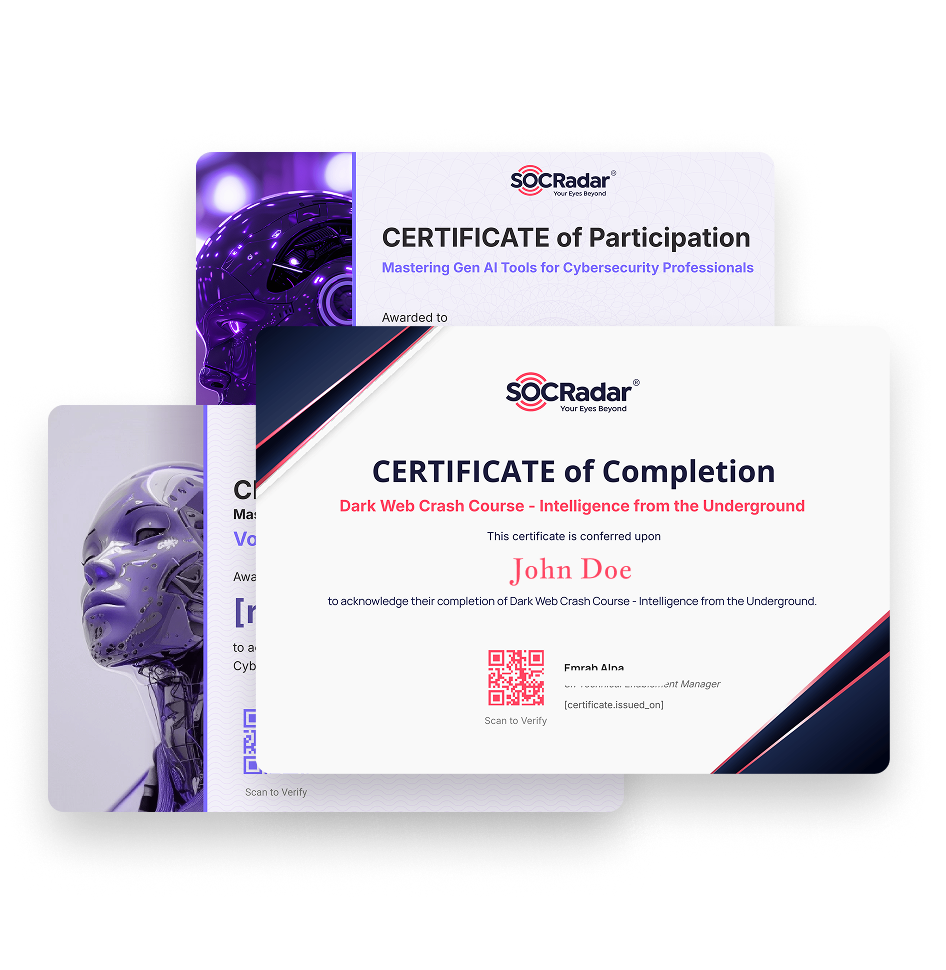
Yes, participants will receive a certificate validating their expertise in dark web intelligence.
While no formal prerequisites are required, a basic understanding of cybersecurity concepts will enhance your learning experience.
After enrollment, you will receive an email with instructions to access the training platform and materials.
The training is conducted in English.