

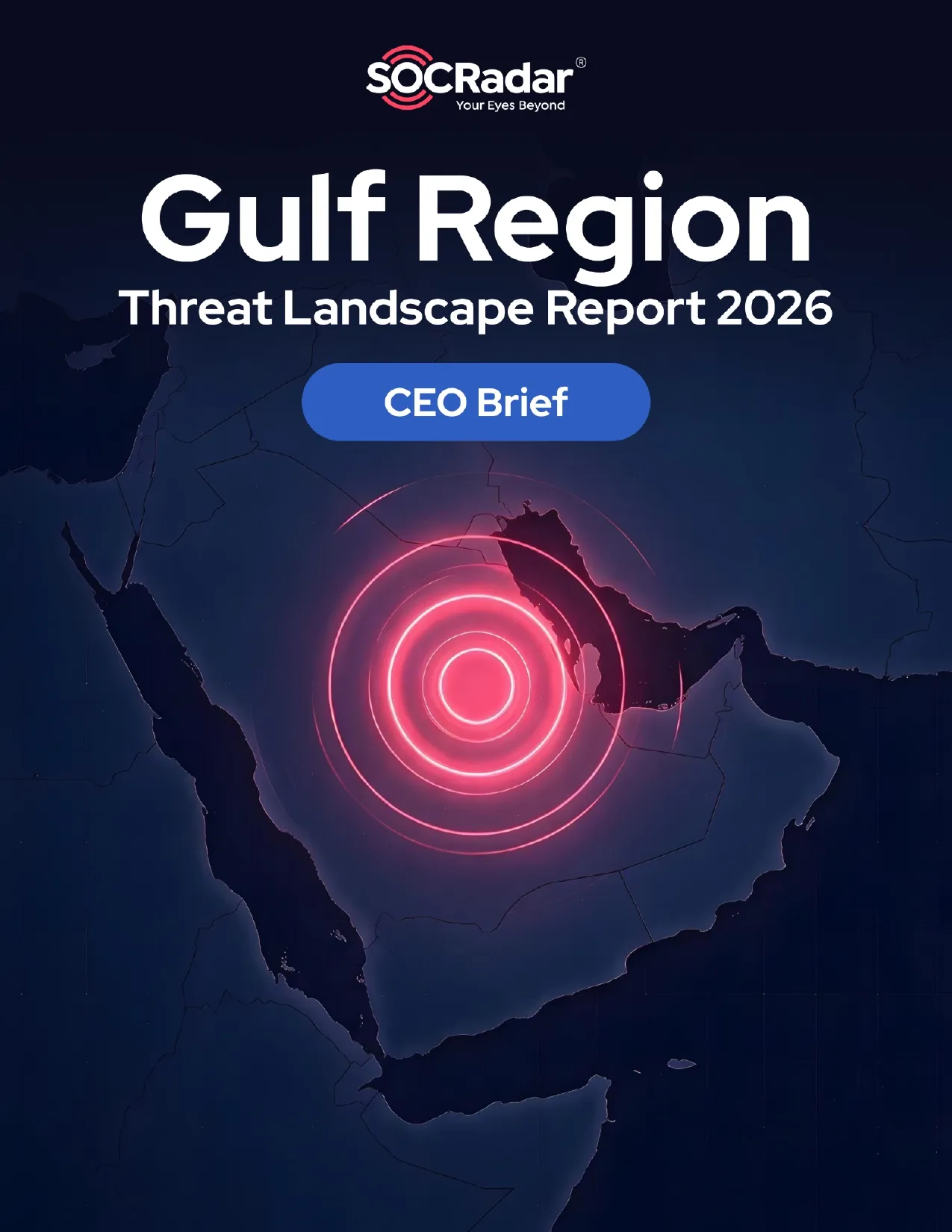
Welcome to SOCRadar’s Gulf Region Threat Landscape Report’s CEO Brief!
The Gulf region’s cyber threat landscape creates direct business and national resilience risks for government entities, financial institutions, information service providers, transportation operators, retail businesses, and critical infrastructure organizations. Threat actors target the region through data theft, espionage, ransomware, credential abuse, phishing, and access sales that can affect operations, customer trust, regulatory exposure, public services, and financial performance. SOCRadar’s Gulf Region Threat Landscape Report’s CEO Brief gives business leaders strategic visibility into these risks and their organizational impact.
Download the full report today to gain a clear understanding of cyber risks impacting organizations across the Gulf region.
Key Cybersecurity Insights for Business Leaders
- The UAE Is the Region’s Most Exposed Country: The UAE accounts for 33.70% of Dark Web threats, 56.36% of ransomware attacks, and 48.51% of phishing campaigns.
- Iran Faces a Different Threat Profile: Iran accounts for 29.09% of Dark Web targeting but only 3.81% of ransomware activity, showing a stronger link to geopolitical and intelligence-driven threats.
- Saudi Arabia Remains a Major Target: Saudi Arabia ranks third in Dark Web targeting at 16.09% and second in ransomware targeting at 17.80%.
- Public Administration Leads Dark Web Exposure: Public Administration accounts for 24.53% of Dark Web threats, reflecting the value of government data and national infrastructure.
- Finance and Insurance Carry High Business Risk: Finance and Insurance accounts for 18.50% of Dark Web threats and remains central to phishing activity.
- Data Theft Is the Defining Threat: Data Breach and Compromise accounts for 49.52% of Dark Web threat categories and 46.35% of threat types.
- Ransomware Is Concentrated but Fragmented: The UAE absorbs most ransomware targeting, while more than half of ransomware activity comes from groups outside the top three.
- Financial Services Face the Highest Phishing Pressure: Finance, Insurance, and Banking together account for over 36% of phishing attacks.
- Phishing Infrastructure Is Industrialized: Redirect and loading pages, including French-language titles, show that attackers reuse global phishing kits against Gulf targets.
- HTTPS Does Not Mean a Site Is Safe: 82.3% of phishing sites use HTTPS, weakening traditional visual trust signals for employees and customers.
Why This Report Matters for CEOs
Cyber risk in the Gulf region affects more than IT systems. Data breaches, espionage, ransomware, phishing, and credential compromise can disrupt operations, expose sensitive records, damage public trust, and create financial or regulatory consequences. The concentration of threats against the UAE reflects the region’s commercial and digital center of gravity, while Iran’s profile shows how geopolitical tensions shape cyber exposure.
Business leaders should treat cybersecurity as a strategic business and resilience priority. Strong cyber resilience, intelligence-driven visibility, identity protection, ransomware readiness, phishing defense, and business continuity planning are essential for protecting operations, customers, and long-term stability across the Gulf region.