

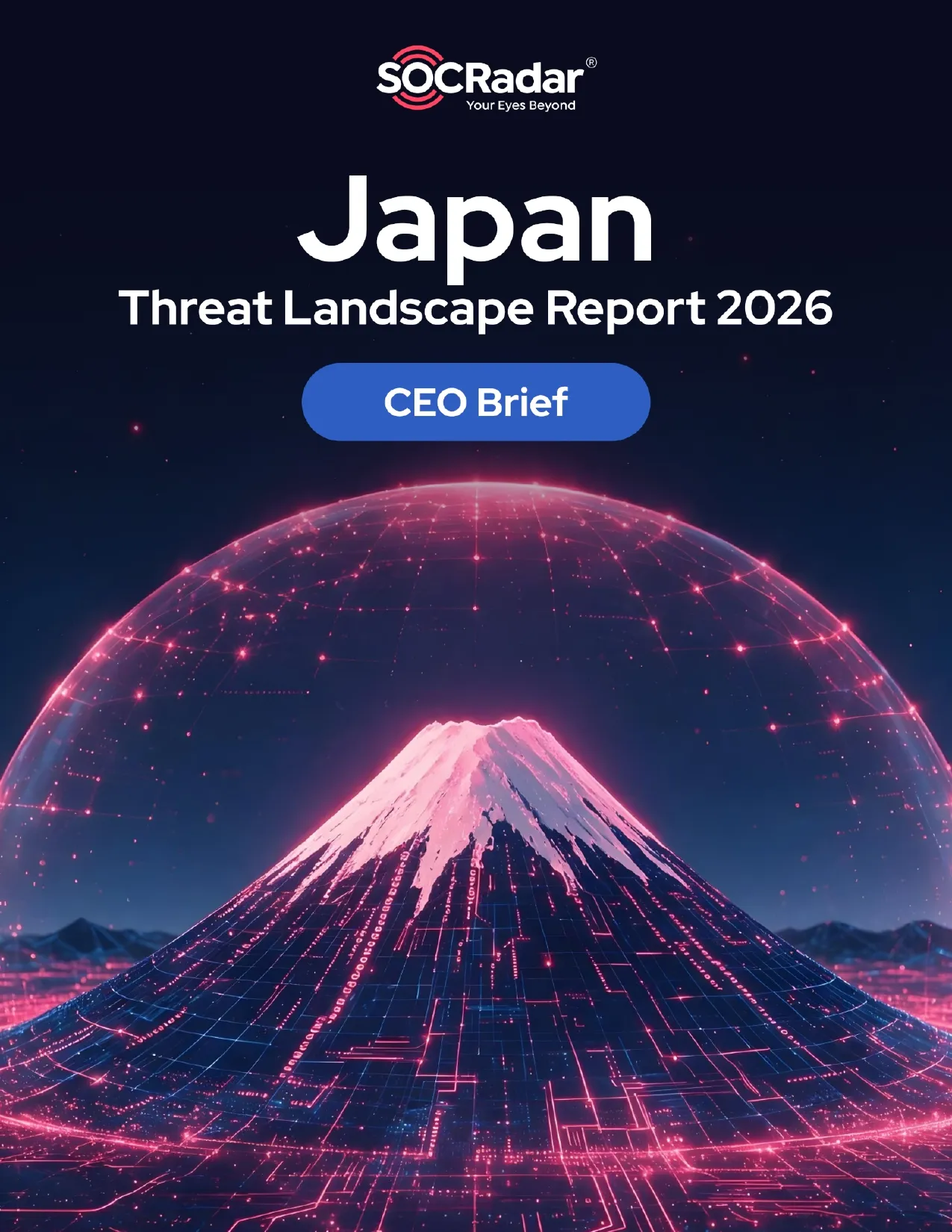
Welcome to SOCRadar’s Japan Threat Landscape Report’s CEO Brief!
Japan’s cyber threat landscape creates direct business risks for manufacturers, technology providers, financial institutions, government-related organizations, and digital service providers. Threat actors target Japanese entities through data theft, ransomware, credential abuse, phishing, and supply chain exposure that can affect operations, intellectual property, customer trust, regulatory exposure, and long-term competitiveness. SOCRadar’s Japan Threat Landscape Report’s CEO Brief gives business leaders strategic visibility into these risks and their organizational impact.
Download the full report today to gain a clear understanding of cyber risks impacting organizations across Japan.
Key Cybersecurity Insights for Business Leaders
- Manufacturing Is the Primary Target: Manufacturing accounts for 40.89% of Dark Web threats, reflecting Japan’s role as a global industrial and technology hub.
- Industrial Data Is a Major Business Risk: Data breach and compromise accounts for 66.24% of Dark Web threat categories, showing strong attacker interest in stolen or exposed data.
- Information and Finance Also Face High Exposure: Information represents 13.78% of Dark Web threats, while Finance and Insurance accounts for 13.56%.
- The Top Three Industries Carry Most Exposure: Manufacturing, Information, and Finance and Insurance together account for over 68% of Dark Web activity targeting Japan.
- Ransomware Is Highly Concentrated Around Qilin: Qilin accounts for 41.5% of ransomware incidents, making it the most visible ransomware threat to Japanese organizations.
- Smaller Ransomware Groups Still Create Risk: The “Others” category accounts for 46.5% of ransomware activity, showing that risk is not limited to one major group.
- Phishing Targets National Security and Finance: National Security and International Affairs leads phishing at 19.49%, while Banking and Finance together reach over 17%.
- Cryptocurrency and NFT Platforms Are Heavily Targeted: Cryptocurrency and NFT accounts for 17.33% of phishing activity, matching the combined traditional financial sector share.
- Phishing Is Not Always Localized: Only one of the top ten phishing page titles is Japan-specific, showing that Japanese users are also caught in broad global phishing campaigns.
- HTTPS Does Not Mean a Site Is Safe: 77.6% of phishing pages use HTTPS, weakening traditional visual trust signals for employees and customers.
Why This Report Matters for CEOs
Cyber risk in Japan affects more than IT systems. For executives, attacks against manufacturing, finance, information services, and national security-linked sectors can lead to operational disruption, intellectual property loss, supply chain impact, regulatory pressure, and reputational damage. The concentration of Dark Web threats against manufacturing shows that attackers are targeting the industrial base and the data that supports Japan’s competitive advantage.
Business leaders should treat cybersecurity as a strategic business risk. Strong cyber resilience, intelligence-driven visibility, identity protection, ransomware readiness, phishing defense, and supply chain security are essential for protecting operations, customer trust, and long-term business continuity in Japan’s evolving threat landscape.