

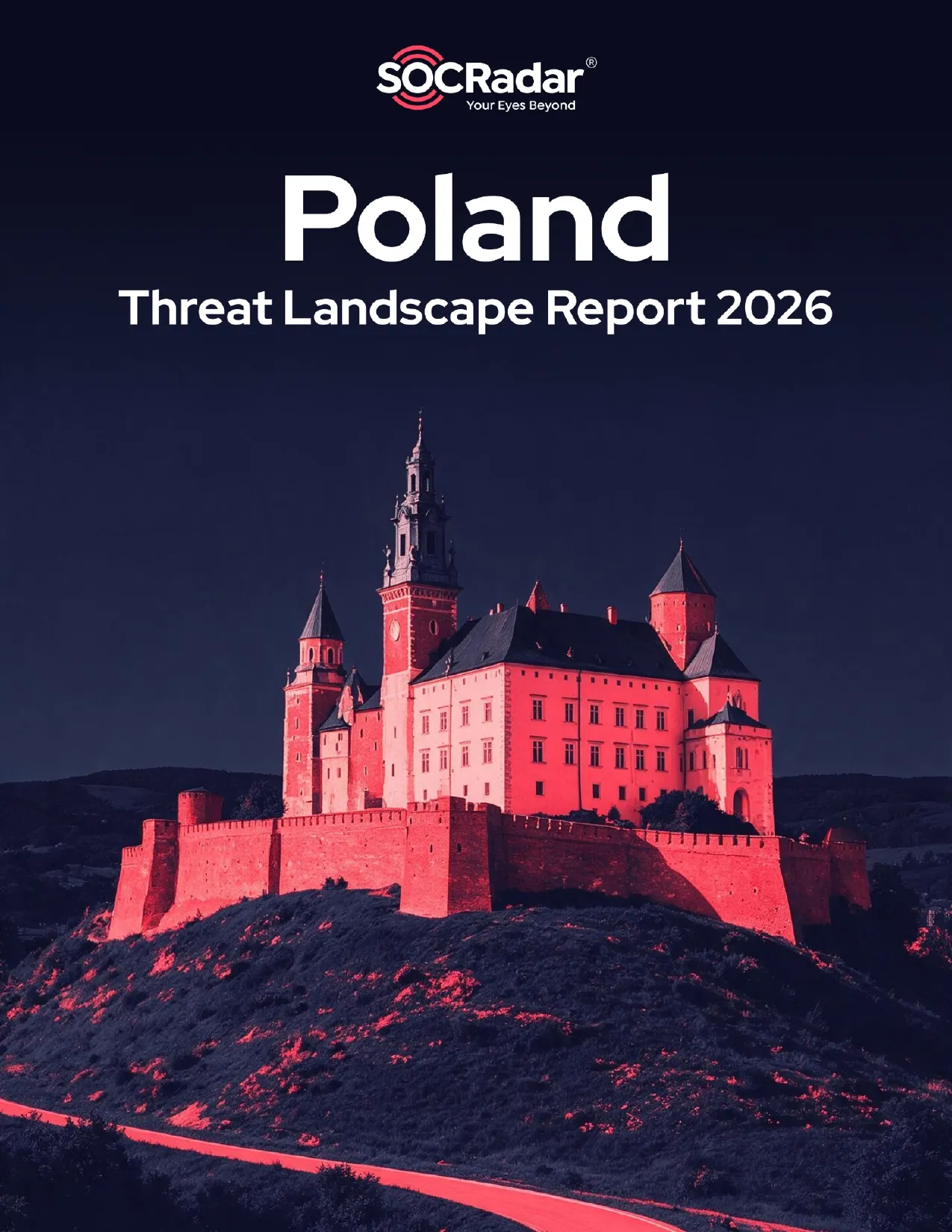
Welcome to SOCRadar’s Poland Threat Landscape Report 2026!
Explore the evolving cyber threats targeting Poland with SOCRadar’s Poland Threat Landscape Report 2026. This report highlights how threat actors focus on Poland’s utilities, public administration, retail, finance, information services, and manufacturing sectors through Dark Web exposure, espionage, data breaches, unauthorized access, ransomware activity, and phishing campaigns. With utilities leading Dark Web targeting and espionage closely tied to Poland’s geopolitical position, the country’s threat landscape shows a strong focus on critical infrastructure, government systems, and intelligence-driven cyber activity.
Download the full report today to gain strategic visibility into cyber risks affecting Poland and strengthen your organization’s defenses.
Key Insights from Poland’s Cyber Threat Landscape
- Utilities Face the Highest Dark Web Exposure: Utilities account for 35.08% of Dark Web threats, more than double the next closest sector.
- Critical Infrastructure and Government Are Priority Targets: Utilities and Public Administration together account for nearly half of Dark Web activity targeting Poland.
- Espionage and Data Breaches Dominate: Espionage and state-sponsored activity accounts for 29.55% of Dark Web threat categories, while data breach and compromise follows closely at 29.26%.
- Credential Abuse Enables Larger Operations: Unauthorized Access and Credentials accounts for 13.64% of threat categories and 20.81% of threat types.
- Disruption Is a Key Operational Tactic: Denial and Disruption rises to 13.01% by threat type, reflecting the use of disruptive attacks against critical infrastructure and strategic targets.
- Ransomware and Dark Web Threats Hit Different Sectors: Utilities lead Dark Web targeting, while Manufacturing rises from 1.61% in Dark Web activity to 32.50% in ransomware targeting.
- The Gentlemen Dominates Ransomware Activity: The Gentlemen accounts for 40.7% of ransomware incidents targeting Poland, far ahead of Nova at 10.2% and Qilin at 6.8%.
- Ransomware Risk Still Has a Long Tail: The “Others” category accounts for 42.4% of ransomware activity, showing that defenders cannot focus on one group alone.
- Finance Leads Phishing Targeting: Finance accounts for 38.10% of phishing activity, and together with Banking at 6.12%, the financial sector represents over 44% of phishing targets.
- Netflix Is a Major Phishing Lure: Netflix-related pages account for roughly 19% of phishing page titles, showing the effectiveness of subscription-service impersonation.
- HTTPS Is No Longer a Reliable Trust Signal: 82.2% of phishing sites targeting Poland use HTTPS, making the browser padlock unreliable as a safety indicator.
Why This Report Matters
Poland’s threat landscape shows that cyber risk differs sharply by attack type. Dark Web activity concentrates around utilities, public administration, espionage, data breaches, and credential access, reflecting Poland’s role as a NATO frontline state and the strategic value of its critical infrastructure. Ransomware follows a different pattern, shifting toward manufacturing and other sectors where downtime creates financial pressure.
Phishing follows yet another path, heavily targeting finance, banking, information services, and subscription-based consumer platforms. This means organizations in Poland need sector-specific defenses rather than one broad cyber risk model. Critical infrastructure operators require stronger monitoring for espionage, disruption, and access exposure, while financial and digital service providers need stronger phishing detection and brand protection.
Take Action Now
- Dark Web Monitoring: Detect leaked data, exposed credentials, unauthorized access listings, and infrastructure-related exposure tied to Polish organizations.
- Ransomware Intelligence: Track The Gentlemen, Nova, Qilin, and smaller ransomware groups targeting Poland.
- Phishing Detection & Response: Identify finance, banking, Netflix-themed, fake CAPTCHA, HTTPS-enabled, and subscription-service phishing campaigns.
- Critical Infrastructure Security: Monitor utilities, public administration, and strategic sectors for espionage, disruption, and credential-based threats.
- Access Security: Strengthen MFA, monitor privileged accounts, rotate exposed credentials, and reduce credential-based attack paths.