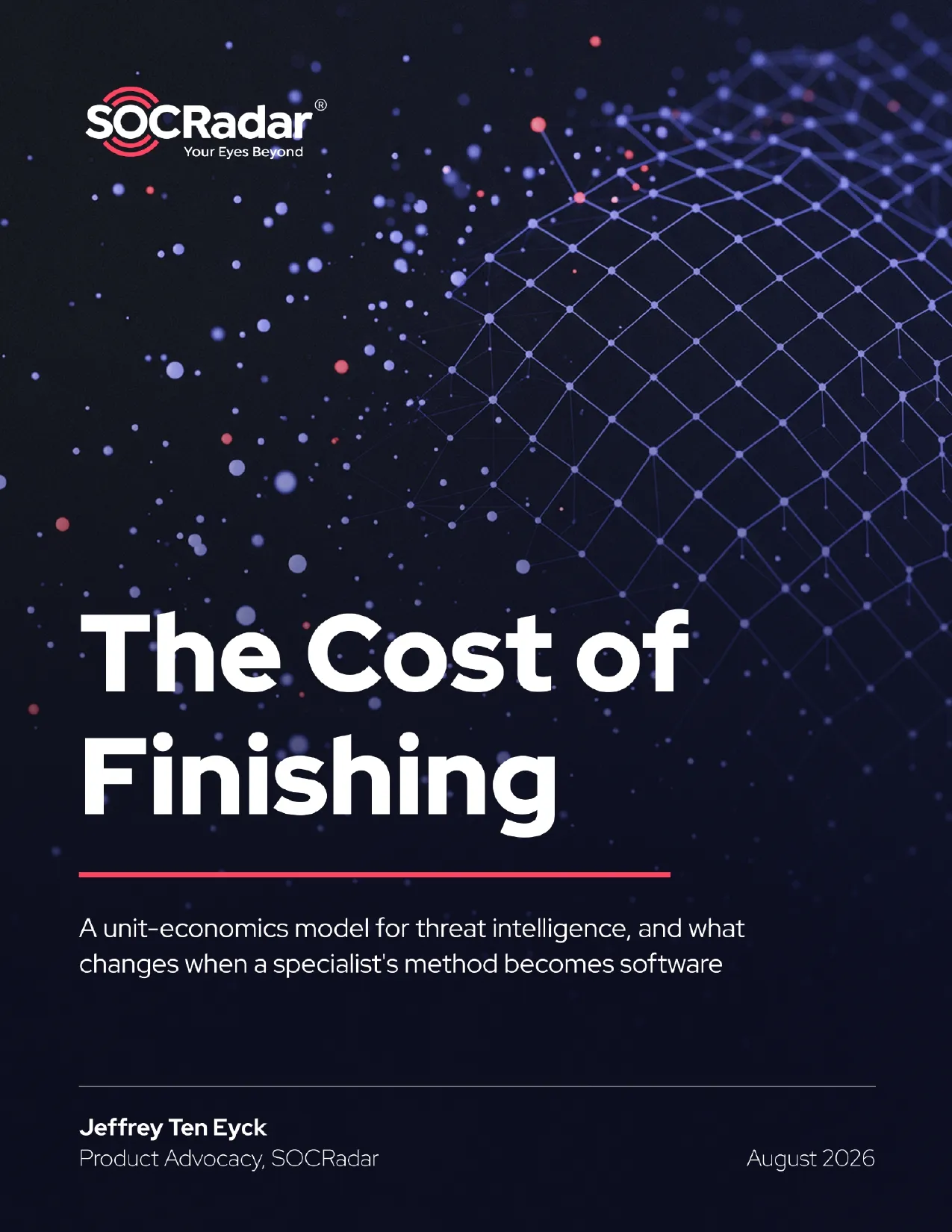
The Cost of Finishing: Measuring the True Cost of Threat Intelligence
Fill in your details to access the complete intelligence brief.
Thank you. Your download is ready.
Download PDFKey Highlights:
- A practical framework for measuring finish rate, cost per finished outcome, and coverage dependency
- Why traditional CTI metrics often measure activity and throughput rather than business impact
- How analyst labor and specialized knowledge shape the true economics of threat intelligence
- Three levers for improving efficiency: compress correlation, encode methodology, and remove manual triggers
- How to account for human oversight and governance when introducing agentic workflows
- A 90-day approach for establishing a baseline, testing one change, and building an evidence-based efficiency case
Whether you’re a CISO, threat intelligence leader, SOC manager, security operations professional, or decision-maker responsible for cybersecurity investment, this whitepaper provides a practical way to understand what intelligence outcomes actually cost and where automation can make a measurable difference.

Get started today
Experience the power of comprehensive
Experience the power of comprehensive
cybersecurity firsthand.
See SOCRadar in Action. Join 30,000+ security professionals who trust SOCRadar to protect their organizations.
150+
Countries
316
Partners
86M+
IPs Monitored
50K+
Brands Protected