

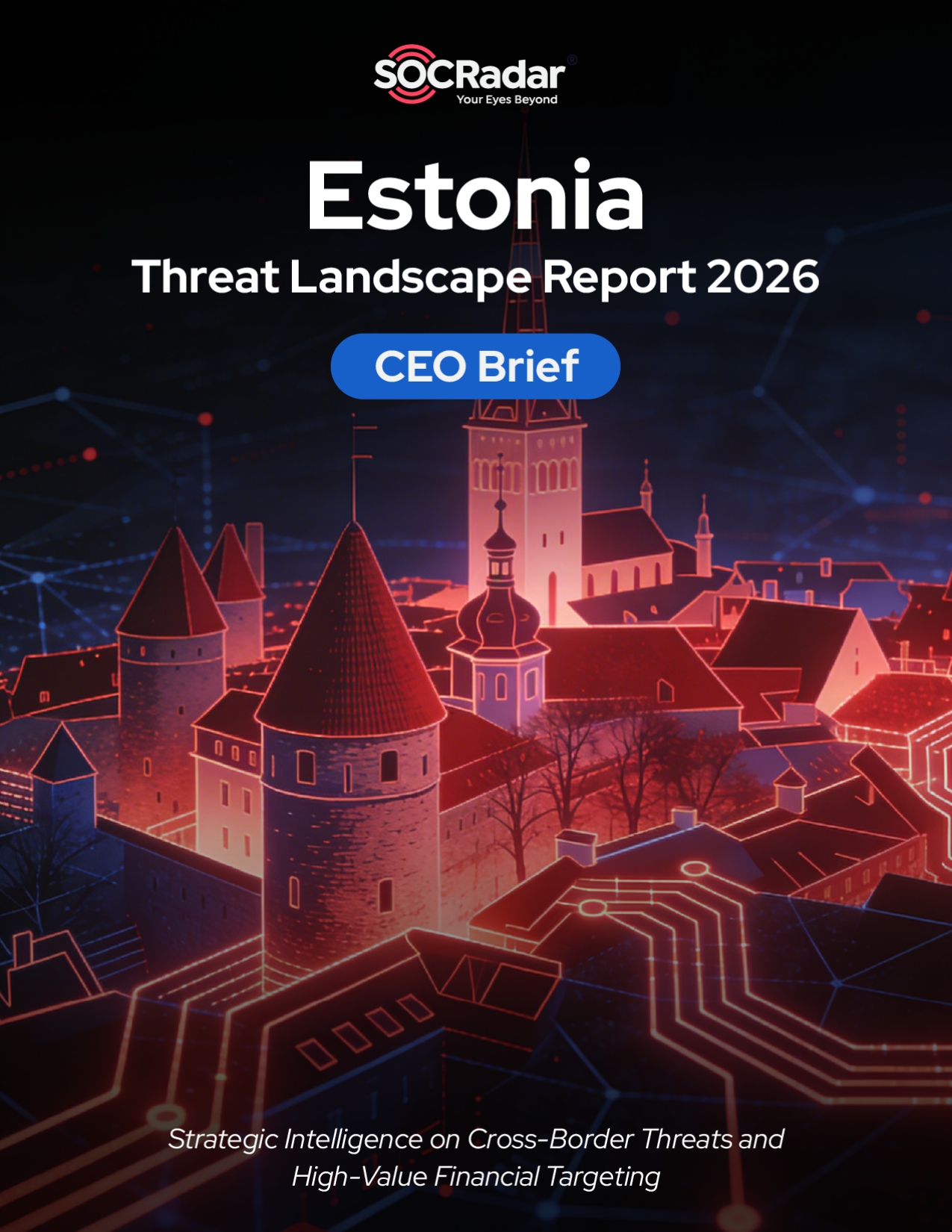
Welcome to SOCRadar’s Estonia Threat Landscape Report’s CEO Brief!
Estonia’s digital landscape reflects a concentrated and financially driven cyber threat environment. Attackers increasingly focus on high-value financial institutions, cryptocurrency platforms, and data-rich organizations. Cross-border dark web activity, evenly distributed ransomware actors, and targeted phishing campaigns highlight a landscape shaped by monetization and operational efficiency. SOCRadar’s Estonia Threat Landscape Report’s CEO Brief provides executives with strategic visibility into the risks impacting Estonia’s economy, enabling informed investment and resilience decisions.
Download the full report today to gain a clear understanding of the cyber risks affecting Estonian organizations.
Key Cybersecurity Insights for Business Leaders
-
Cross-Border Threat Activity Dominates: 61.8% of dark web threats linked to Estonia involve multiple countries, signaling shared infrastructure and international coordination among threat actors.
-
Finance and Crypto Are Primary Targets: Finance and Insurance leads at 23.33%, followed by Cryptocurrency and NFT platforms at 18.33%, reflecting direct monetization focus.
-
Data Exposure Is the Core Risk: Data and database leaks account for 67.5% of dark web activity, reinforcing the value of stolen information in underground markets.
-
Ransomware Activity Is Evenly Distributed: LockBit5, Qilin, and Akira each represent 33.33% of observed activity, indicating no single dominant actor.
-
Phishing Concentrates on Financial Services: 61.36% of phishing attacks target finance, with betting platforms as a notable secondary target.
-
Encrypted Phishing Infrastructure Is the Norm: 75.9% of phishing pages use HTTPS, increasing credibility and reducing simple detection cues.
Why This Report Matters for CEOs
Cyber risk in Estonia increasingly impacts financial stability, regulatory compliance, and public trust. The concentration on financial institutions and digital asset platforms elevates the potential for direct economic disruption. Executives must view cybersecurity not as a technical function, but as a strategic safeguard for revenue, brand integrity, and long-term competitiveness. Proactive intelligence and informed decision-making are critical to maintaining resilience in a cross-border threat environment.