
Identity Threat Landscape Report 2026
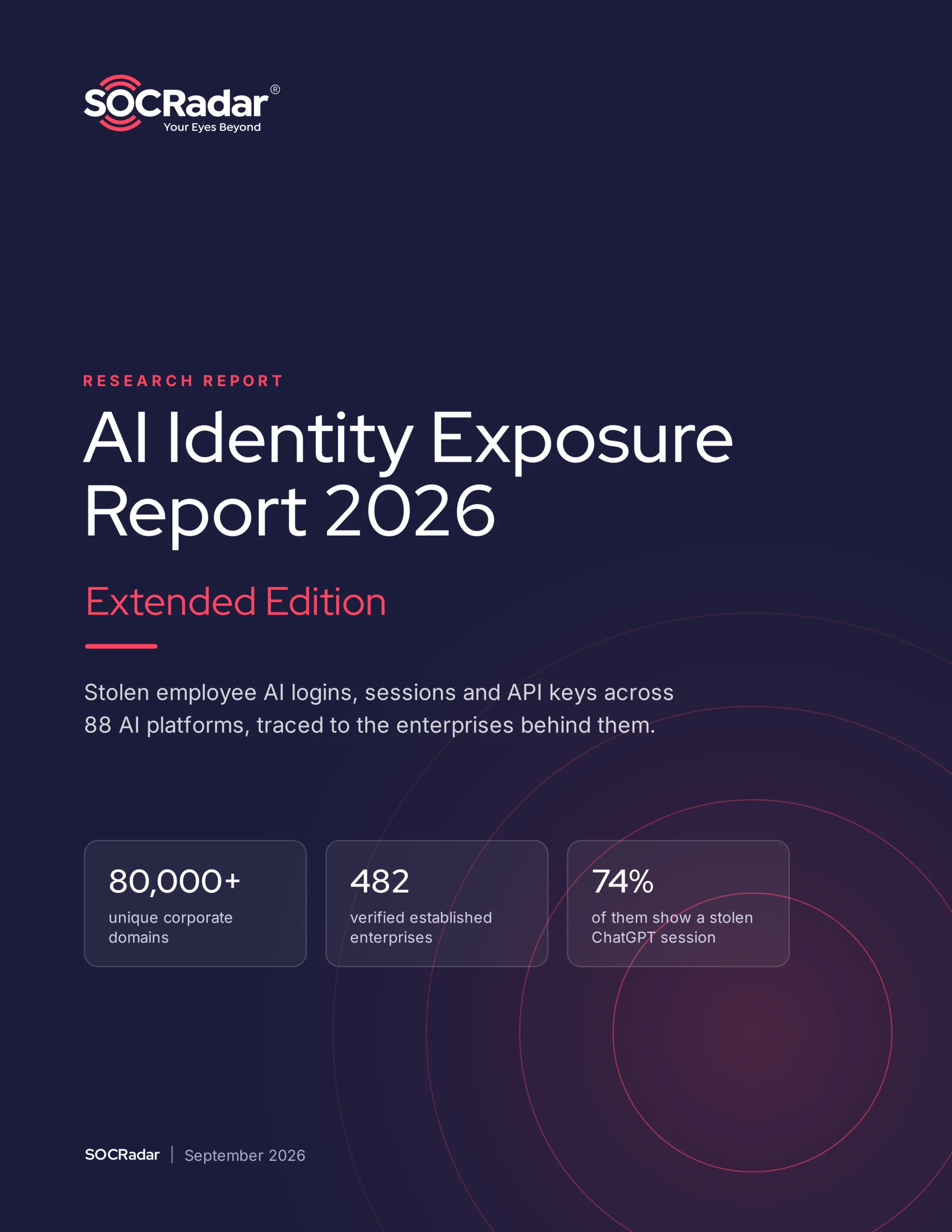
Welcome to SOCRadar’s Identity Threat Landscape Report 2026!
Identity has become the primary gateway to modern enterprise environments. As organizations expand across cloud platforms, SaaS ecosystems, and remote access models, traditional network boundaries have faded. In their place, identity now defines access, exposure, and compromise.
Attackers have adapted accordingly. Instead of exploiting systems, they increasingly rely on valid credentials obtained through infostealer malware, stealer logs, and underground markets. This shift has transformed identity into the most actively exploited attack surface today.
Download the full report today to understand how identity-driven threats are evolving and how organizations can adapt their defenses.
Fill in your details to access the complete intelligence brief.
Thank you. Your download is ready.
Download PDFKey Insights from the Identity Threat Landscape 2026
- Identity Is the New Security Perimeter: Authentication systems are now exposed by design, making identities the primary entry point for attackers.
- Attackers Prefer Logging In Over Breaking In: Stolen credentials allow threat actors to bypass traditional defenses without triggering alerts.
- Infostealer Malware Scales Credential Theft: Malware continuously collects credentials, session cookies, and tokens from infected systems.
- Stealer Logs Power the Underground Economy: Compromised identities are packaged and sold, enabling account takeover and ransomware operations.
- Credential Reuse Creates Permanent Risk: Previously leaked credentials remain exploitable indefinitely.
- SaaS and Cloud Expand Identity Exposure: Each new integration increases identities, permissions, and trust relationships attackers can abuse.
- Non-Human Identities Are Often Overlooked: API keys, service accounts, and tokens introduce hidden risks due to weak governance.
- Access Brokers Accelerate Attacks: Ready-to-use access is widely available, reducing the effort needed to compromise organizations.
- Detection Becomes More Difficult: Malicious activity using valid credentials often appears identical to legitimate user behavior.
Why This Report Matters
Identity-driven attacks redefine how organizations experience cyber risk. When attackers use legitimate credentials, traditional defenses become less effective, and threats such as data exfiltration, privilege escalation, and lateral movement can occur without clear warning signs. Organizations must shift their focus toward identity-centric security to maintain visibility and control.
Take Action Now
- Strengthen Identity Monitoring: Detect suspicious access patterns and credential misuse early
- Reduce Credential Exposure: Enforce MFA and eliminate password reuse
- Track Dark Web Exposure: Monitor leaked credentials and access listings
- Control SaaS Access: Audit integrations and permissions across platforms
- Secure Machine Identities: Manage API keys and service accounts properly
- Focus on Behavioral Detection: Identify anomalies beyond traditional malware signals

Experience the power of comprehensive
cybersecurity firsthand.
See SOCRadar in Action. Join 30,000+ security professionals who trust SOCRadar to protect their organizations.