

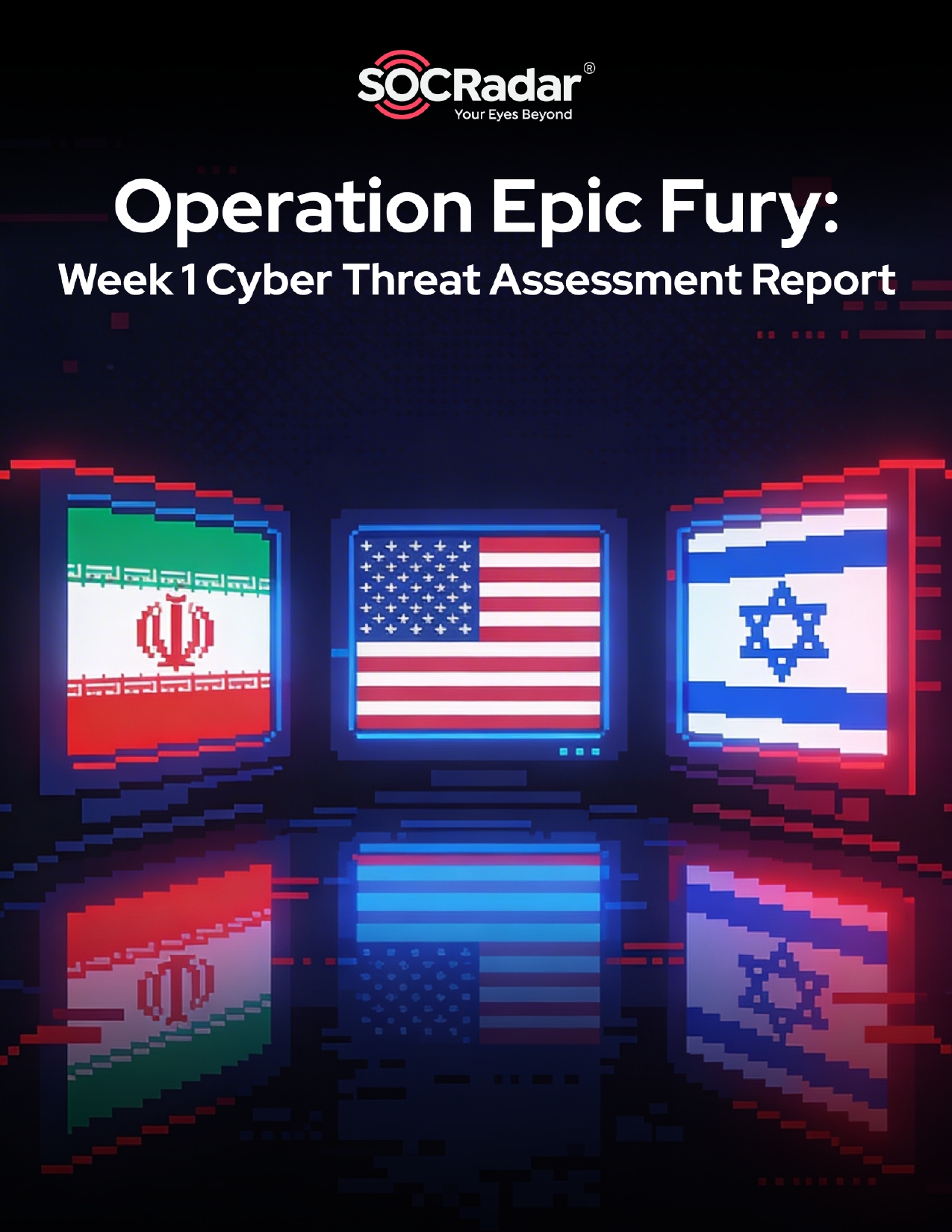
Welcome to SOCRadar’s Operation Epic Fury Week 1 Cyber Threat Assessment Report!
Operation Epic Fury triggered an immediate and wide-reaching cyber escalation that expanded far beyond the initial kinetic strikes. Within hours, coordinated disruption campaigns, hacktivist mobilization, ransomware activity, and OT/ICS intrusion claims began spreading across the Middle East and beyond. SOCRadar’s Operation Epic Fury Week 1 Cyber Threat Assessment Report provides a structured view of this rapidly evolving threat environment, highlighting the actors, methods, sectors, and geographies most exposed during the first week of conflict.
Download the full report today to gain strategic visibility into the cyber risks emerging from Operation Epic Fury and strengthen your organization’s readiness in an active conflict-driven threat environment.
Key Insights from Operation Epic Fury’s Cyber Threat Landscape
-
Cyber Escalation Was Immediate and Large-Scale: 368 verified cyber incidents were recorded across 7 days, spanning 14 countries and 15 sectors.
-
DDoS Was the Dominant Attack Method: DDoS accounted for 74.7% of all incidents, confirming it as the primary tool for rapid disruption and public impact.
-
Israel Was the Main Target: Israel absorbed 184 incidents, representing 50% of all recorded activity during the reporting period.
-
Gulf States Were Pulled Into the Conflict: Kuwait (53), Jordan (41), Bahrain (17), and Qatar (17) were heavily targeted as the cyber perimeter expanded beyond Israel and Iran.
-
Government and Critical Services Faced the Highest Risk: Government (84), Financial Services (31), Defense (20), Aviation & Aerospace (15), and Energy-related sectors were among the most exposed.
-
Hacktivist Activity Was Highly Imbalanced: More than 60 pro-Iran aligned groups were active, compared with only 11 pro-Israel or allied groups.
-
Russian-Linked Actors Entered by Day 3: Russian-affiliated groups formally joined the conflict early, extending the operational coalition beyond the Middle East.
-
OT/ICS Escalation Emerged Early: 13 OT/ICS intrusion claims appeared within the first 96 hours, signaling early interest in water, energy, and industrial control systems.
-
Iranian APTs Were Already Positioned: Groups including MuddyWater had reportedly pre-positioned access inside U.S. and Israeli targets before the first strike.
Why This Report Matters
Operation Epic Fury shows how fast a kinetic conflict can trigger a parallel cyber campaign that spreads across borders, sectors, and actor types. The combination of hacktivist mobilization, APT pre-positioning, DDoS at scale, and early OT/ICS targeting creates a threat environment where disruption, narrative warfare, and infrastructure risk overlap. Organizations in affected or aligned countries should treat this as an active and expanding cyber risk landscape rather than a short-lived surge.
Take Action Now
-
Threat Intelligence Monitoring: Track conflict-linked hacktivist groups, APT activity, and escalation signals in real time.
-
DDoS Preparedness: Strengthen protections for public-facing portals, media sites, and critical services.
-
OT/ICS Risk Visibility: Review exposure across water, energy, logistics, and industrial environments.
-
Incident Readiness: Prepare for phishing, access abuse, disinformation, and infrastructure-targeting activity tied to regional escalation.