

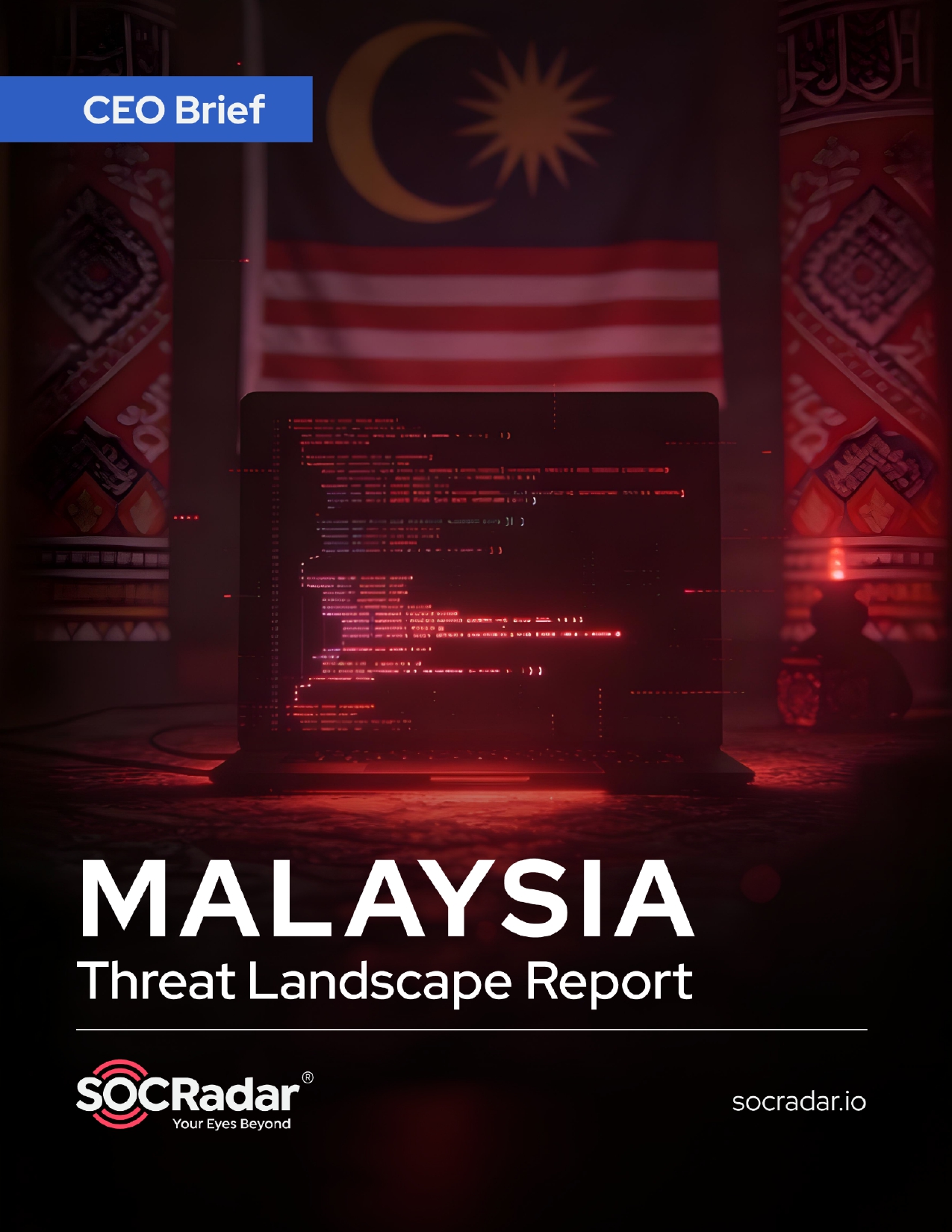
Welcome to SOCRadar’s Malaysia Threat Landscape Report’s CEO Brief!
Malaysia faces an increasingly concentrated cyber threat environment, with attackers focusing on domestic organizations across government, finance, telecommunications, and consumer services. SOCRadar’s Malaysia Threat Landscape Report’s CEO Brief provides high-level visibility into the most impactful cyber risks, helping executives reduce exposure, protect business continuity, and strengthen organizational resilience.
Download the full report today to gain strategic insight into Malaysia’s evolving cyber threat landscape.
Key Cybersecurity Insights for Business Leaders
-
Threat Activity Is Largely Domestic: Nearly 80% of dark web threats and 98% of ransomware incidents target Malaysian organizations exclusively, indicating strong local attacker focus.
-
Public Sector Faces Highest Exposure: Public Administration accounts for over 24% of dark web threats, making government data and systems a primary target.
-
Data Theft Drives Most Attacks: Stolen databases and sensitive records dominate underground activity, fueling fraud, identity abuse, and follow-on intrusions.
-
Ransomware Is Highly Localized: Ransomware actors overwhelmingly target Malaysian entities directly, increasing the risk of operational disruption within national boundaries.
-
Finance Leads Phishing Activity: Financial services account for nearly one-third of phishing attacks, followed by telecommunications and public administration.
-
Brand Impersonation Fuels Phishing: Booking.com alone represents more than 40% of phishing page titles, showing repeated use of trusted consumer brands to drive credential theft.
Why This Report Matters for CEOs
Cyber incidents in Malaysia increasingly threaten operational stability, customer trust, and regulatory compliance. With attackers prioritizing local data, access, and financial systems, cybersecurity must be treated as a strategic business priority rather than a purely technical issue.
Strengthening Cyber Resilience at the Executive Level
-
Dark Web Monitoring: Identify leaked data and unauthorized access before exploitation.
-
Ransomware Intelligence: Track active threat groups and strengthen recovery and continuity planning.
-
Phishing Detection & Response: Reduce fraud risk by monitoring brand impersonation and financial phishing campaigns.