

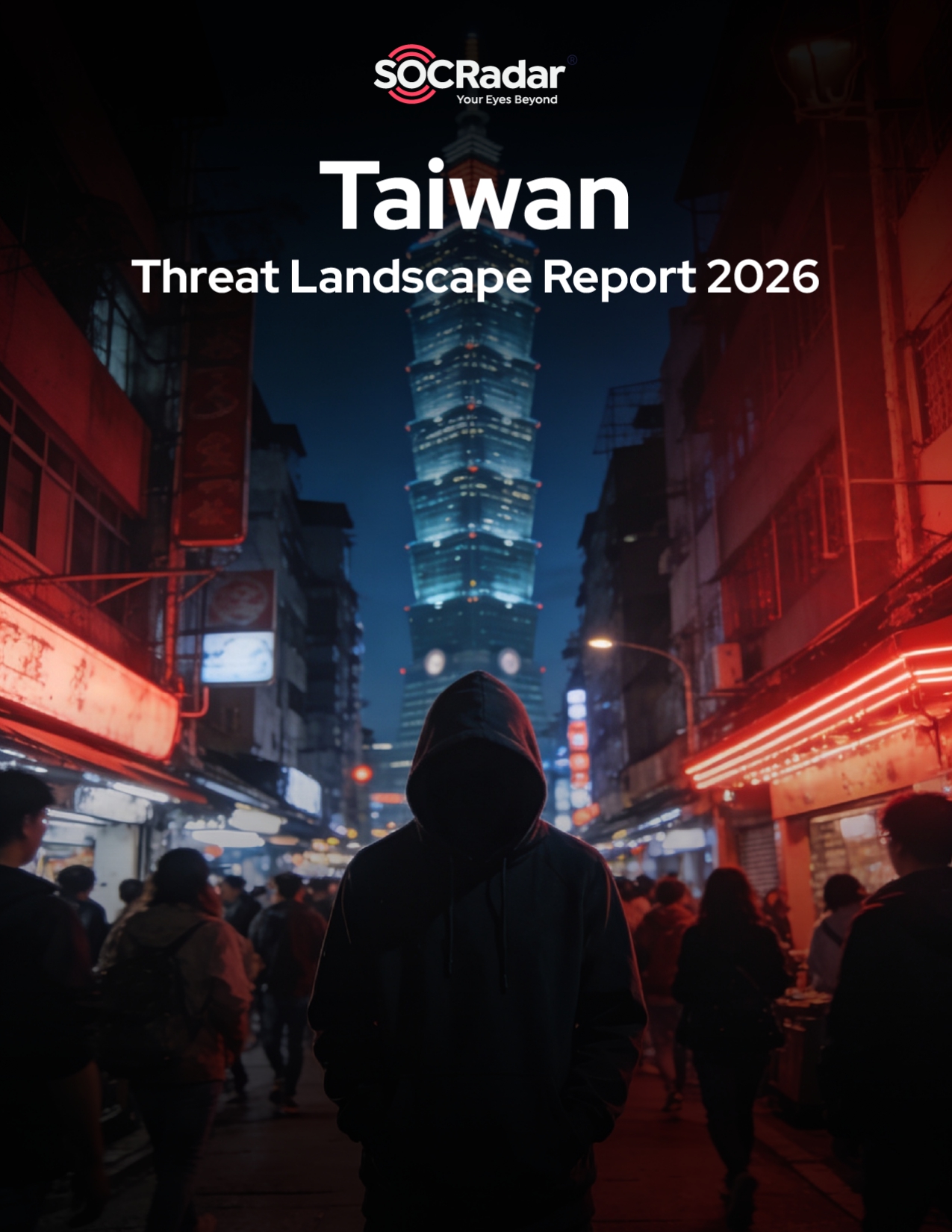
Welcome to SOCRadar’s Taiwan Threat Landscape Report 2026!
Explore the evolving cyber threats targeting Taiwan with SOCRadar’s Taiwan Threat Landscape Report 2026. This report highlights how attackers focus on Taiwan-specific victims across government, manufacturing, finance, and information sectors. From dark web data sales and access listings to ransomware activity and Microsoft-themed phishing campaigns, Taiwan’s threat landscape reflects both financially motivated cybercrime and sustained pressure on state-linked organizations.
Download the full report today to gain strategic visibility into cyber risks affecting Taiwan and strengthen your organization’s defenses.
Key Insights from Taiwan’s Cyber Threat Landscape
- Taiwan Is a Primary Target: 80% of dark web threats and 65.60% of ransomware cases focus on Taiwan alone, showing deliberate targeting rather than collateral exposure.
- Government Sectors Face Heavy Pressure: Public Administration leads dark web exposure at 11.98%, while National Security and International Affairs (29.63%) and Public Administration (22.22%) dominate phishing activity.
- Manufacturing Stands Out as a Strategic Target: Manufacturing accounts for 9.50% of dark web activity, reflecting Taiwan’s role in semiconductor and electronics supply chains.
- Data Is the Main Underground Commodity: Data and database leaks make up 79.19% of observed threats, while selling accounts for 68.57% of dark web activity.
- Access Listings Signal Follow-On Risk: Access-related threats account for 17.45%, including VPN credentials, RDP access, and admin panels that may enable ransomware or espionage.
- Ransomware Activity Is Fragmented: Qilin leads at 18.7%, followed by The Gentlemen (10.7%) and NightSpire (9.3%), while 61.3% of activity comes from smaller groups.
- Microsoft Credentials Are the Main Phishing Target: Microsoft-branded login pages account for nearly 67% of phishing titles, showing a clear focus on enterprise and government email access.
- Local Platforms Are Abused for Trust: yamShare appears in 13.10% of phishing cases, showing how attackers use familiar Taiwanese services to bypass suspicion.
- HTTPS Is Almost Universal in Phishing: 92.10% of phishing pages use HTTPS, making protocol-based trust signals ineffective.
Why This Report Matters
Taiwan’s threat landscape reflects a focused and high-value targeting environment. Government institutions, manufacturing companies, and enterprise email systems remain central targets due to their strategic importance and access to sensitive data. The combination of data monetization, access sales, ransomware fragmentation, and Microsoft-themed phishing requires organizations to move beyond basic defenses and prioritize intelligence-led visibility.
Take Action Now
- Dark Web Monitoring: Detect leaked databases, credentials, and access listings tied to Taiwanese entities
- Ransomware Intelligence: Track active and emerging groups targeting Taiwan’s public and private sectors
- Phishing Detection & Response: Identify Microsoft-themed phishing pages and local platform abuse
- Access Security: Strengthen MFA, monitor admin access, and reduce exposure across remote services