

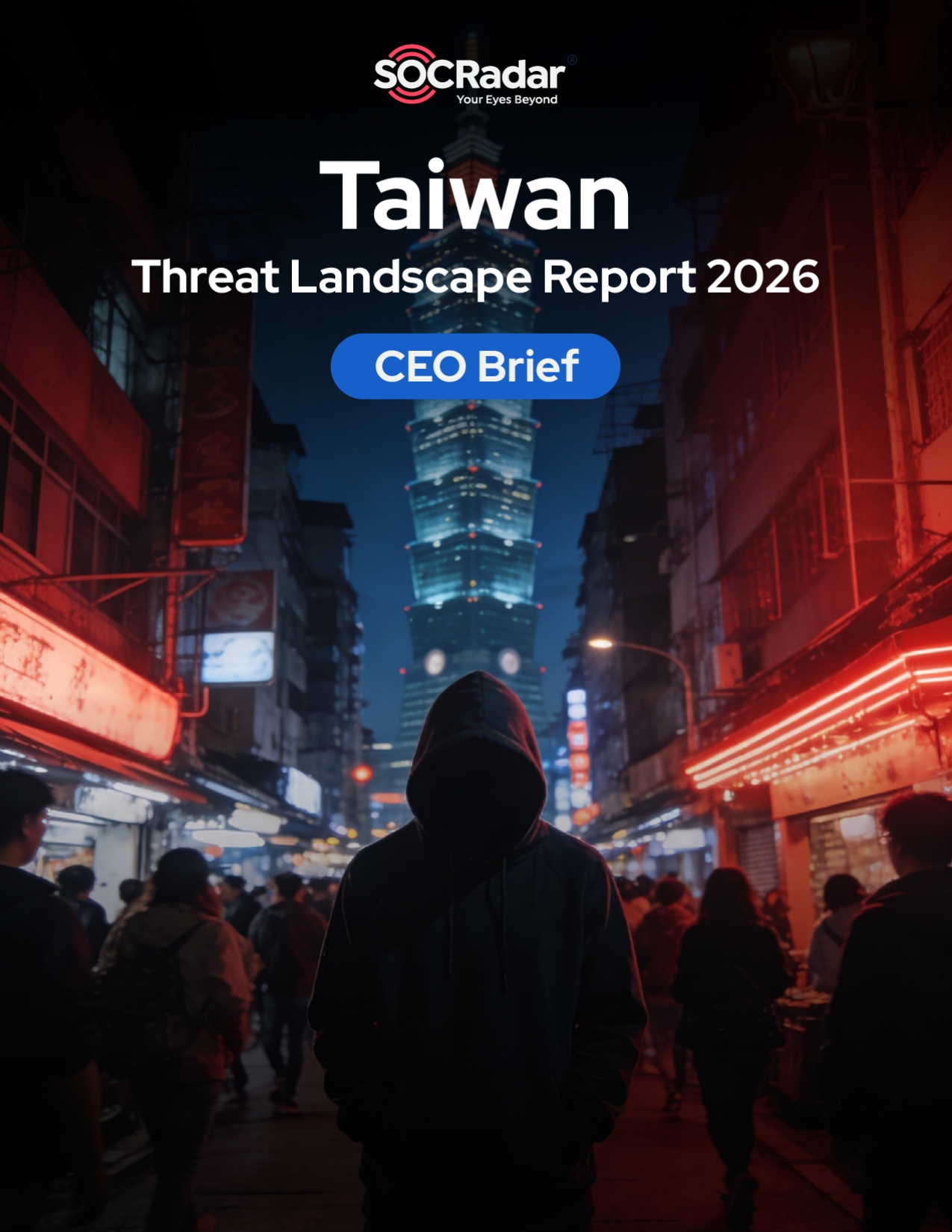
Welcome to SOCRadar’s Taiwan Threat Landscape Report’s CEO Brief!
Taiwan’s position as a global technology and manufacturing hub makes it a highly attractive target for cybercriminals and state-aligned actors. Threat activity in the region is not incidental but deliberate, with campaigns specifically designed to target Taiwanese organizations, data, and infrastructure. From dark web data sales to ransomware activity and targeted phishing campaigns, the threat landscape reflects both financial motivation and strategic intent. SOCRadar’s Taiwan Threat Landscape Report’s CEO Brief provides executives with clear visibility into these risks, helping leaders protect business continuity, intellectual property, and corporate reputation.
Download the full report today to gain a clear understanding of cyber risks impacting organizations across Taiwan.
Key Cybersecurity Insights for Business Leaders
- Taiwan Is a Primary Target: 80% of dark web threats focus solely on Taiwan, showing deliberate and targeted attack campaigns.
- Government and Strategic Industries Are Most Exposed: Public Administration leads at 11.98%, followed by Information (9.92%), Manufacturing (9.50%), and Finance and Insurance (8.68%).
- Manufacturing Is a High-Value Target: Taiwan’s role in global semiconductor and electronics supply chains increases its exposure to espionage and data-driven attacks.
- Ransomware Activity Is Fragmented: Qilin (18.7%), The Gentlemen (10.7%), and NightSpire (9.3%) lead, while 61.3% of attacks come from smaller groups.
- Phishing Campaigns Target Government Functions: National Security and International Affairs (29.63%) and Public Administration (22.22%) dominate phishing activity.
- Logistics-Themed Phishing Exploits Business Operations: Delivery Services account for 14.81% of phishing attacks, using shipping and customs lures.
Why This Report Matters for CEOs
Cyber risk in Taiwan directly affects operational continuity, intellectual property protection, and global supply chain stability. The concentration of attacks on government institutions and manufacturing highlights how cyber threats intersect with both economic and geopolitical factors. For business leaders, this means cybersecurity is not only a technical concern but a strategic priority that impacts long-term growth, resilience, and competitive advantage.