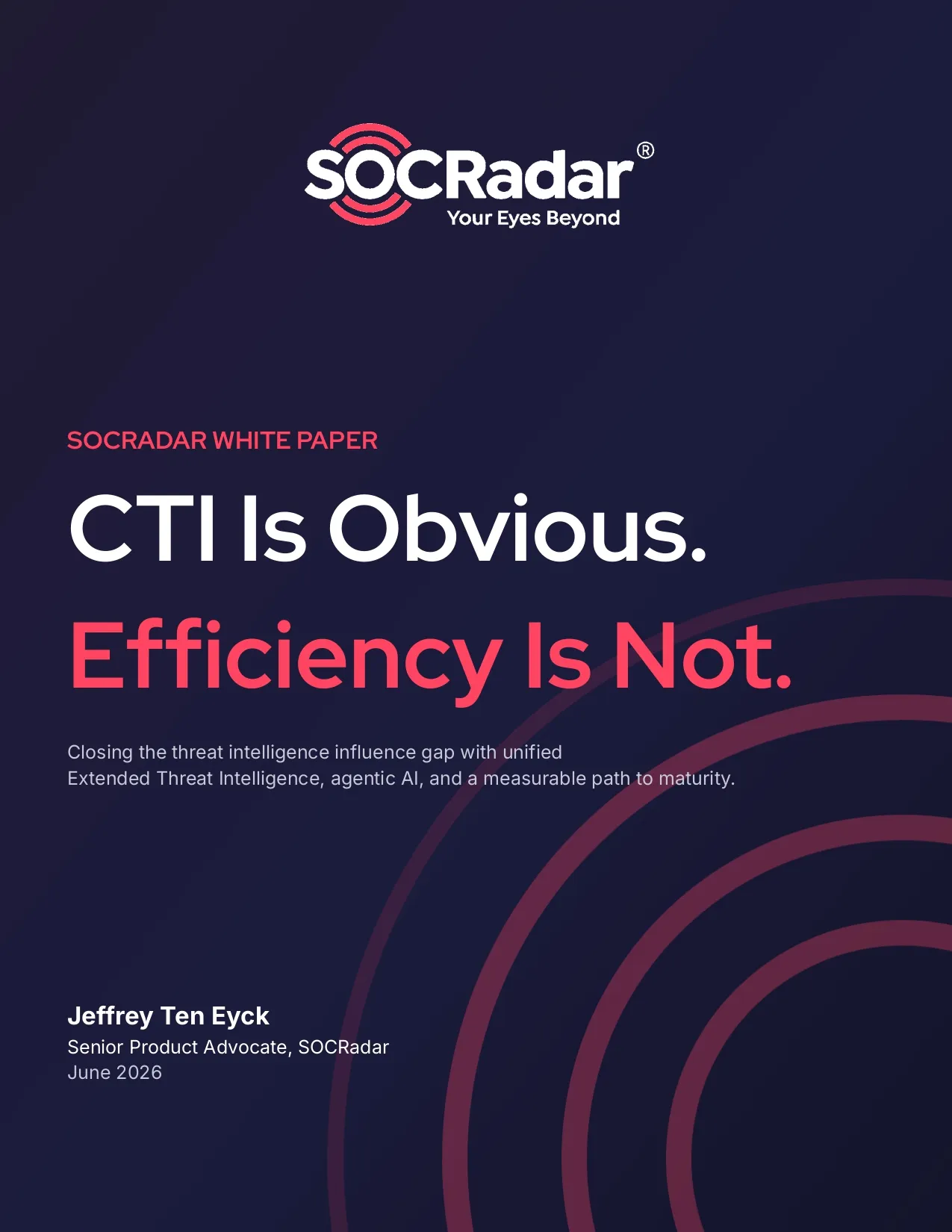
Why Cyber Threat Intelligence Isn’t Driving Better Security Outcomes
Fill in your details to access the complete intelligence brief.
Thank you. Your download is ready.
Download PDFKey Highlights:
- Why many CTI programs struggle to influence security and business decisions
- Research-backed analysis of the industry’s biggest intelligence challenges
- Five structural reasons organizations fail to operationalize CTI effectively
- Practical framework for improving intelligence workflows and reporting
- Strategies to increase efficiency through automation, context, and prioritization
Whether you’re building a new CTI capability or improving an existing program, this whitepaper provides practical guidance for transforming threat intelligence into measurable security outcomes.
➡️ Download the full whitepaper to learn how to close the CTI influence gap and build an intelligence program that drives real business value.

Get started today
Experience the power of comprehensive
Experience the power of comprehensive
cybersecurity firsthand.
See SOCRadar in Action. Join 30,000+ security professionals who trust SOCRadar to protect their organizations.
150+
Countries
316
Partners
86M+
IPs Monitored
50K+
Brands Protected