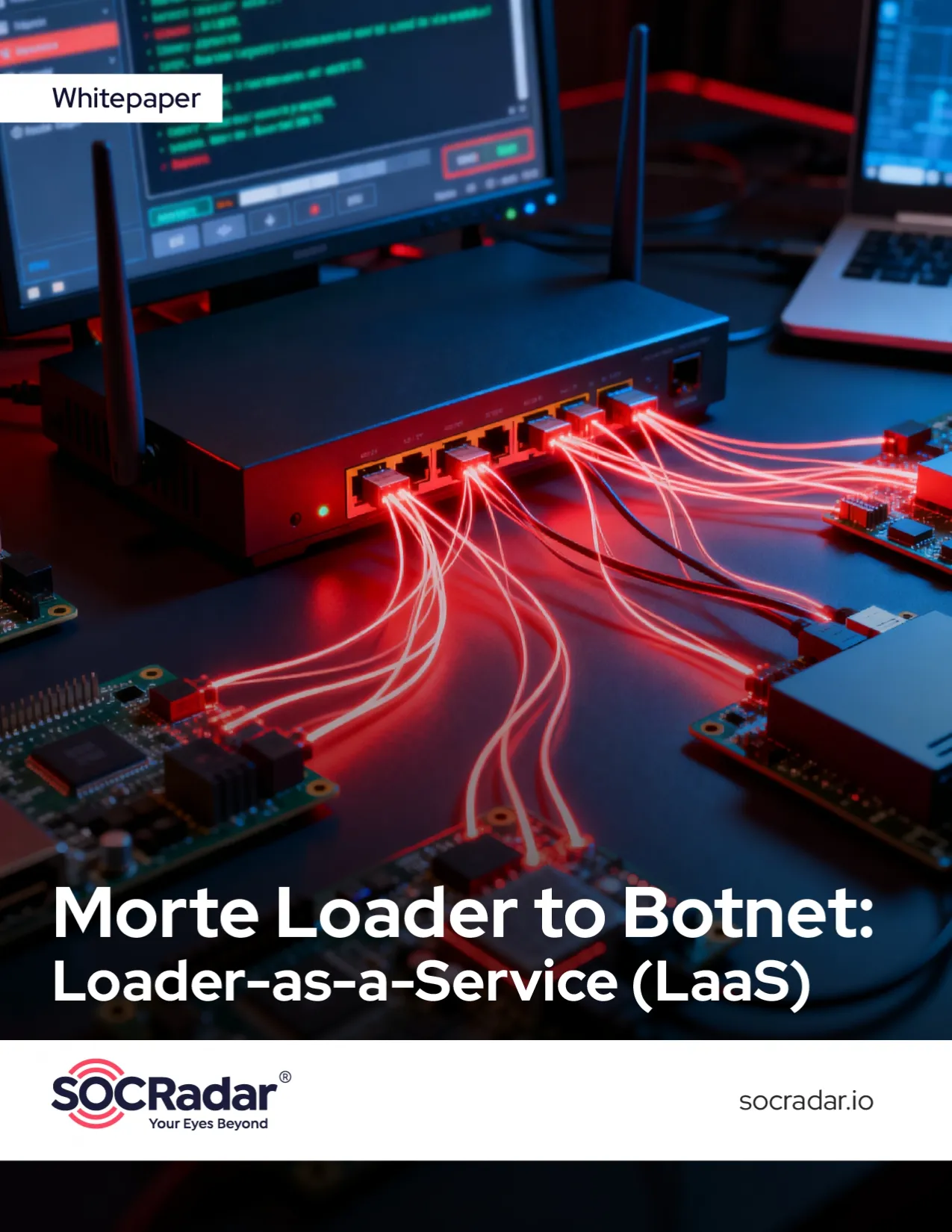
From Morte Loader to Botnet: Unpacking Loader-as-a-Service (LaaS) Operations
Fill in your details to access the complete intelligence brief.
Thank you. Your download is ready.
Download PDFLoaders are no longer just entry tools—they are scalable cybercrime platforms.
This white paper explores the rise of Loader-as-a-Service (LaaS) through the evolution of Morte Loader, a tool that began as a stealthy delivery mechanism and matured into a core enabler of malware distribution at scale.
Initially used to deploy infostealers like RedLine and LummaC2, Morte Loader now acts as a foundational component of criminal operations—supporting payload delivery, maintaining persistent access, and coordinating botnet expansion. Its campaigns involve deceptive installers, cracked software, and SEO-poisoned sites to distribute malware. Robust evasion techniques and infrastructure reuse indicate centralized, organized control. This service-based model transforms loaders from disposable payload droppers into long-term monetization engines for cybercriminals.
Morte Loader also shows ties to clipper malware, crypto-drainers, and proxy services, revealing its place in a broader malware-as-a-service ecosystem. As LaaS grows in popularity, defenders must understand how these loaders operate, propagate, and integrate with other malicious services to proactively identify and disrupt their operations.
Key Takeaways:
- Morte Loader supports payloads for RedLine, Amadey, LummaC2, and others
- Over 9,000 unique IPs tied to active command-and-control infrastructure
- Delivered via fake software bundles and SEO-poisoned download sites
- Infrastructure reuse indicates coordinated loader-botnet partnerships
- Expands into LaaS with modules for persistent infection and resource abuse
This paper is essential reading for SOC teams, malware analysts, and threat hunters tracking access-as-a-service models and evolving loader infrastructure.
Download the full white paper to understand how Loader-as-a-Service is fueling cybercrime scalability in 2025.
Experience the power of comprehensive
cybersecurity firsthand.
See SOCRadar in Action. Join 30,000+ security professionals who trust SOCRadar to protect their organizations.