

Oct 09, 2026
Jan 02, 2026
4 Mins Read

Summarize with:
IBM API Connect Exposed to Critical Auth Bypass (CVE-2025-13915)
A recent security vulnerability, tracked as CVE-2025-13915, affects IBM API Connect, an end-to-end API platform used to create, test, manage, and secure APIs. Identified during internal testing by IBM, the issue allows a remote attacker to bypass authentication controls and potentially gain unauthorized access to the application.
This blog provides a clear, factual overview of the vulnerability, including what was discovered, which systems are affected, how serious the risk is, and what steps organizations should take to reduce exposure.
What Is CVE-2025-13915?
CVE-2025-13915 (CVSS 9.8) is an authentication bypass vulnerability identified in IBM API Connect. An authentication bypass occurs when an application does not properly enforce identity verification, allowing access without valid credentials. If exploited, this flaw could enable a remote attacker to access parts of the API Connect application without authorization.
The issue is categorized under CWE-305: Authentication Bypass by Primary Weakness, highlighting a failure in enforcing identity verification at a critical point in the application.
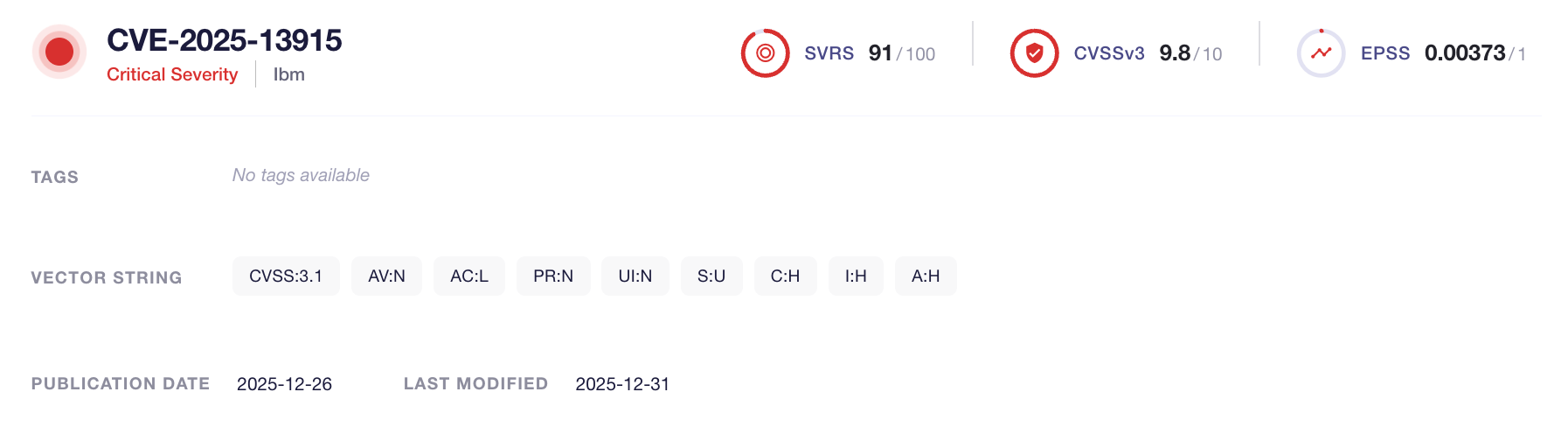
CVE-2025-13915 (SOCRadar Vulnerability Intelligence)
Why Is CVE-2025-13915 Considered Critical?
The vulnerability carries a CVSS base score of 9.8 out of 10, placing it firmly in the critical severity range. The score reflects several risk factors:
- The attack can be executed remotely over a network
- No user interaction is required
- No privileges are needed to attempt exploitation
- Successful exploitation could impact confidentiality, integrity, and availability
Taken together, these factors explain why IBM recommends addressing the issue without delay.
Which Versions of IBM API Connect Are Affected by CVE-2025-13915?
According to IBM’s advisory, the vulnerability impacts the following versions:
- IBM API Connect 10.0.8.0 through 10.0.8.5
- IBM API Connect 10.0.11
Organizations running these versions should assume they are exposed unless remediation steps have already been applied.
Is There Evidence of Active Exploitation?
At the time of disclosure, IBM stated that there is no evidence of exploitation in the wild. However, the public availability of vulnerability details increases the likelihood of future targeting. For widely deployed enterprise platforms, attackers often move quickly once technical information becomes accessible.
What Remediation Steps Does IBM Recommend?
IBM strongly advises customers to apply the appropriate interim fixes (iFixes) for their specific API Connect version. These fixes are available through IBM Fix Central and related support pages.
For organizations unable to deploy the fix immediately, IBM suggests a temporary mitigation: disabling self-service sign-up on the Developer Portal, if that feature is enabled. While this does not fully resolve the issue, it can help reduce exposure until patching is possible.
Full details and official remediation instructions are available in IBM’s security bulletin.
How Can SOCRadar Help Organizations Track and Respond to CVEs?
Managing critical vulnerabilities like CVE-2025-13915 requires more than periodic advisories. Your organization needs continuous visibility into newly disclosed risks, affected assets, and available remediation guidance. This is where SOCRadar XTI supports security teams.
With its Cyber Threat Intelligence module, SOCRadar continuously monitors vendor advisories, CVE disclosures, and threat intelligence sources to provide timely alerts on high-severity vulnerabilities impacting enterprise technologies such as API platforms. Furthermore, through its Attack Surface Management (ASM) module, SOCRadar correlates CVE data with your organization’s external attack surface, helping security teams identify whether exposed or internet-facing assets may be affected.
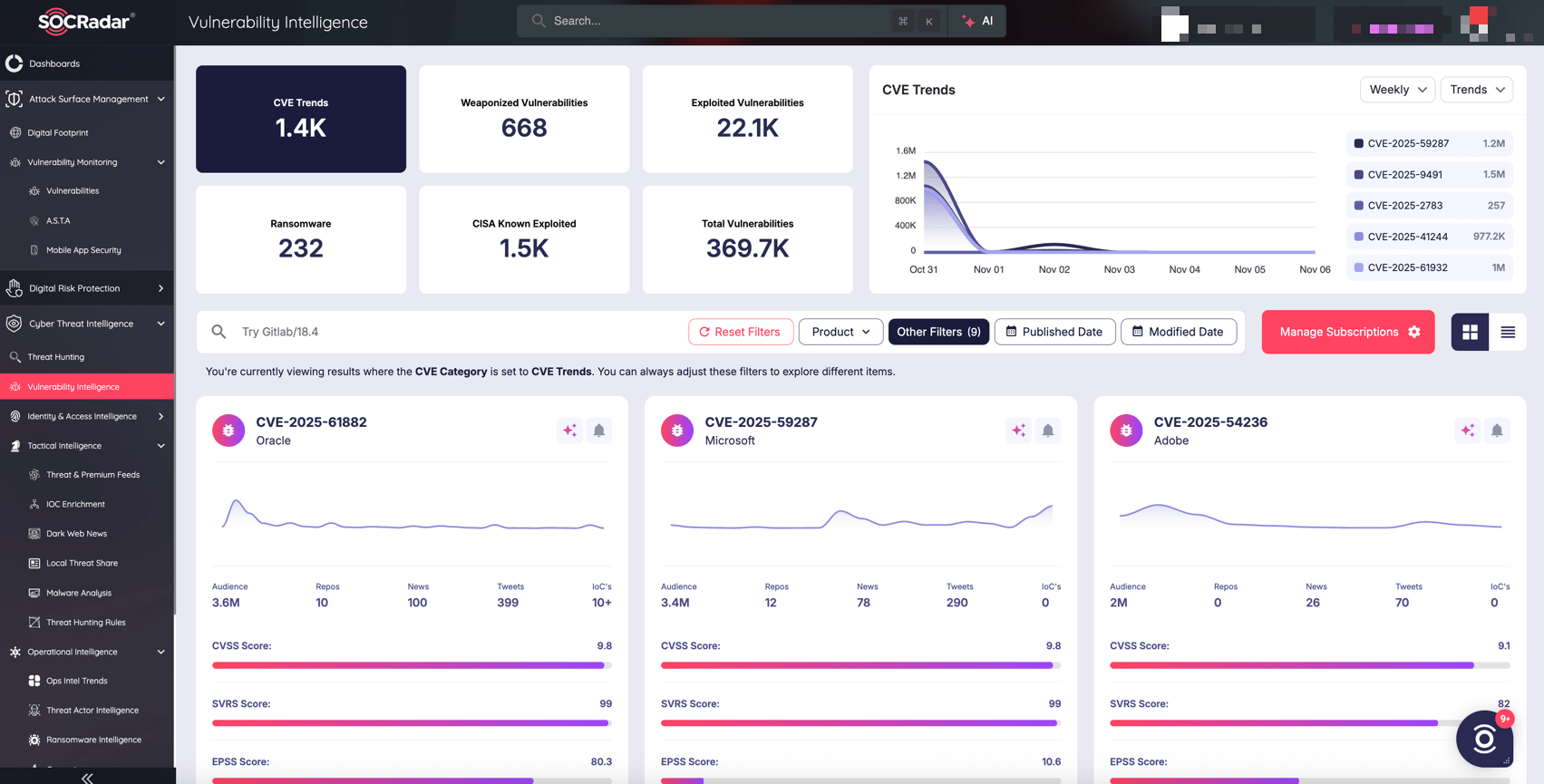
SOCRadar’s Vulnerability Intelligence, Cyber Threat Intelligence module
SOCRadar helps prioritize vulnerabilities based on severity, exploitability signals, and asset criticality, enabling teams to focus remediation efforts where they matter most. This approach supports faster decision-making and reduces the likelihood that critical vulnerabilities remain unaddressed.

Table Of Content
IBM API Connect Exposed to Critical Auth Bypass (CVE-2025-13915)
What Is CVE-2025-13915?
Why Is CVE-2025-13915 Considered Critical?
Which Versions of IBM API Connect Are Affected by CVE-2025-13915?
Is There Evidence of Active Exploitation?
What Remediation Steps Does IBM Recommend?
How Can SOCRadar Help Organizations Track and Respond to CVEs?
Related Articles

Critical Cisco NX-OS Flaws Threaten Nexus Switches

CVE-2026-21589: Critical Atlassian File Access
Oct 07, 2026

CVE-2026-88779: Citrix NetScaler Zero-Day
Oct 06, 2026

CVE-2026-90970: GitLab AI Gateway RCE
Oct 05, 2026

FortiMail Zero-Day Under Active Exploitation
Oct 02, 2026