Dark Web Profile: Orion Ransomware
Orion Ransomware is a newly observed operation identified after the detection of a previously unknown ransomware Data Leak Site (DLS) by SOCRadar. The group emerged publicly by listing 13 alleged victims and presenting itself as an active ransomware actor within underground ecosystems.
Who Is Orion Ransomware?
Orion Ransomware is a newly observed operation identified through the emergence of a previously unknown ransomware DLS. At the time of discovery, the group presented itself as an active ransomware actor by listing 13 alleged victims. However, analysis indicates that Orion currently lacks evidence of original ransomware development or independently verified intrusions. Its public footprint is limited to leak-site activity and promotional messaging rather than demonstrated operational capability.
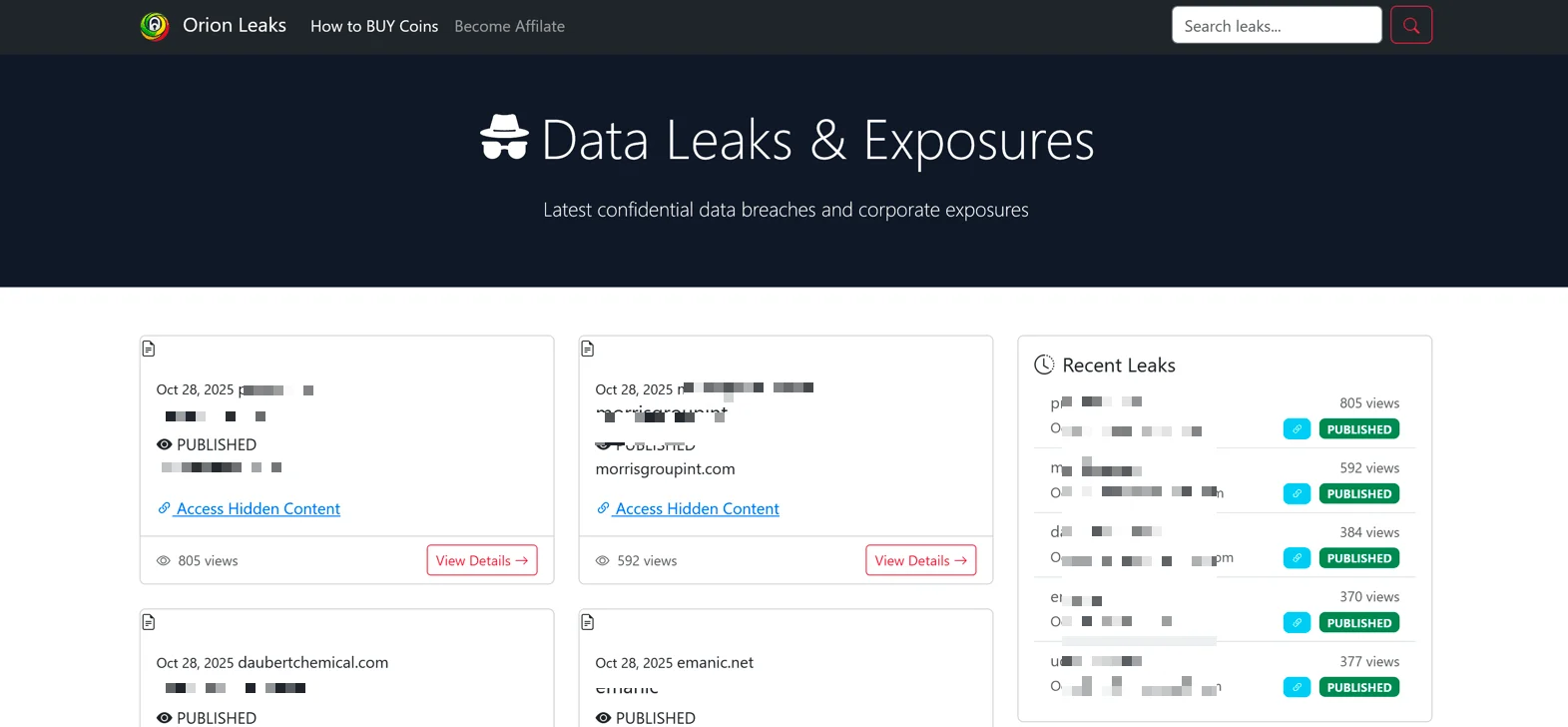
Data Leak Site(DLS) of Orion Leaks/Ransomware
Affiliates and Operating Model
Orion promotes an “exclusive affiliate program” positioned around high-profit potential, anonymity, and fast payouts. The language and structure of this recruitment messaging resemble access brokerage and data extortion schemes more than a mature Ransomware-as-a-Service (RaaS) platform. There is no technical detail about payloads, encryption methods, or panel capabilities, which are typically highlighted by established RaaS operators. This suggests Orion may be attempting to attract affiliates before proving technical legitimacy, relying on branding and incentives rather than tooling.

Previous Dark Web Activity and Reputation Signals
Infrastructure and contact analysis link Orion’s operator to prior underground activity unrelated to a standalone ransomware operation. The TOX address associated with the DLS has historical presence across multiple Dark Web forums and channels known for access sales, ransomware panel promotion, and recycled data leaks. Discussions tied to this identity reference data reselling, leak amplification, and connections to Babuk2-linked activity, an operation widely assessed as reputation-driven and technically weak.
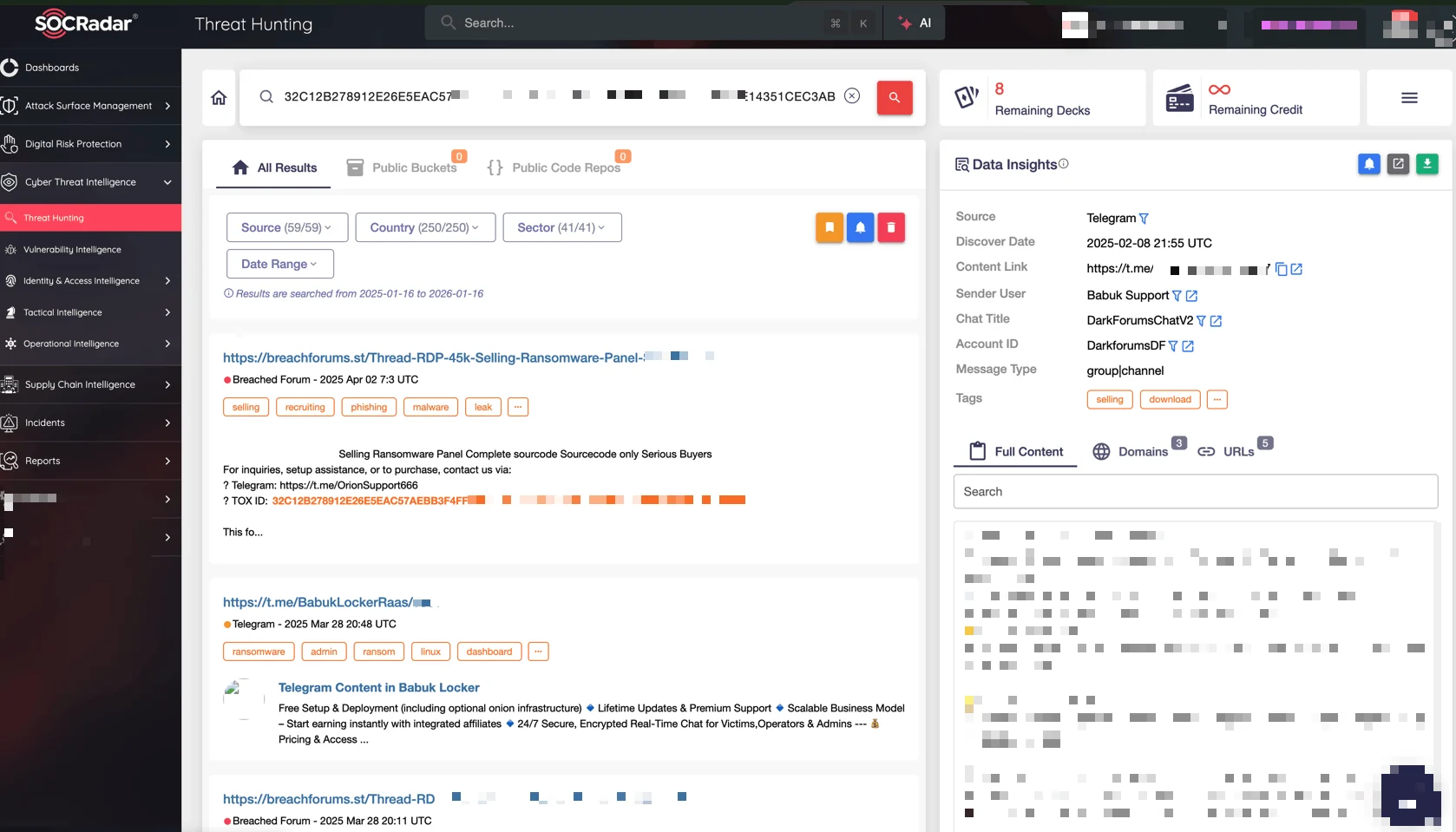
Mentions of Orion in hacker forums and Telegram channels (SOCRadar Threat Hunting)
Taken together, Orion currently appears less like a newly emerged ransomware group and more like a data-focused extortion front attempting to establish credibility within the ransomware ecosystem. Its reliance on recycled exposure, aggressive affiliate marketing, and inherited underground identities places it closer to opportunistic actors than to established ransomware operations.
What are Orion Ransomware’s Targets?
Orion’s Data Leak Site lists 13 alleged victims across multiple countries and sectors. The United States appears most frequently among the claimed victims, followed by a small number of organizations in other regions. This geographic distribution aligns with common ransomware monetization patterns rather than indicating a distinct targeting strategy.
From an industry perspective, the listed organizations fall into financial services, manufacturing, healthcare, and professional services. These sectors are frequently targeted by ransomware groups due to operational criticality and regulatory pressure. However, Orion’s listings do not reveal a focused vertical strategy or coordinated campaign behavior.
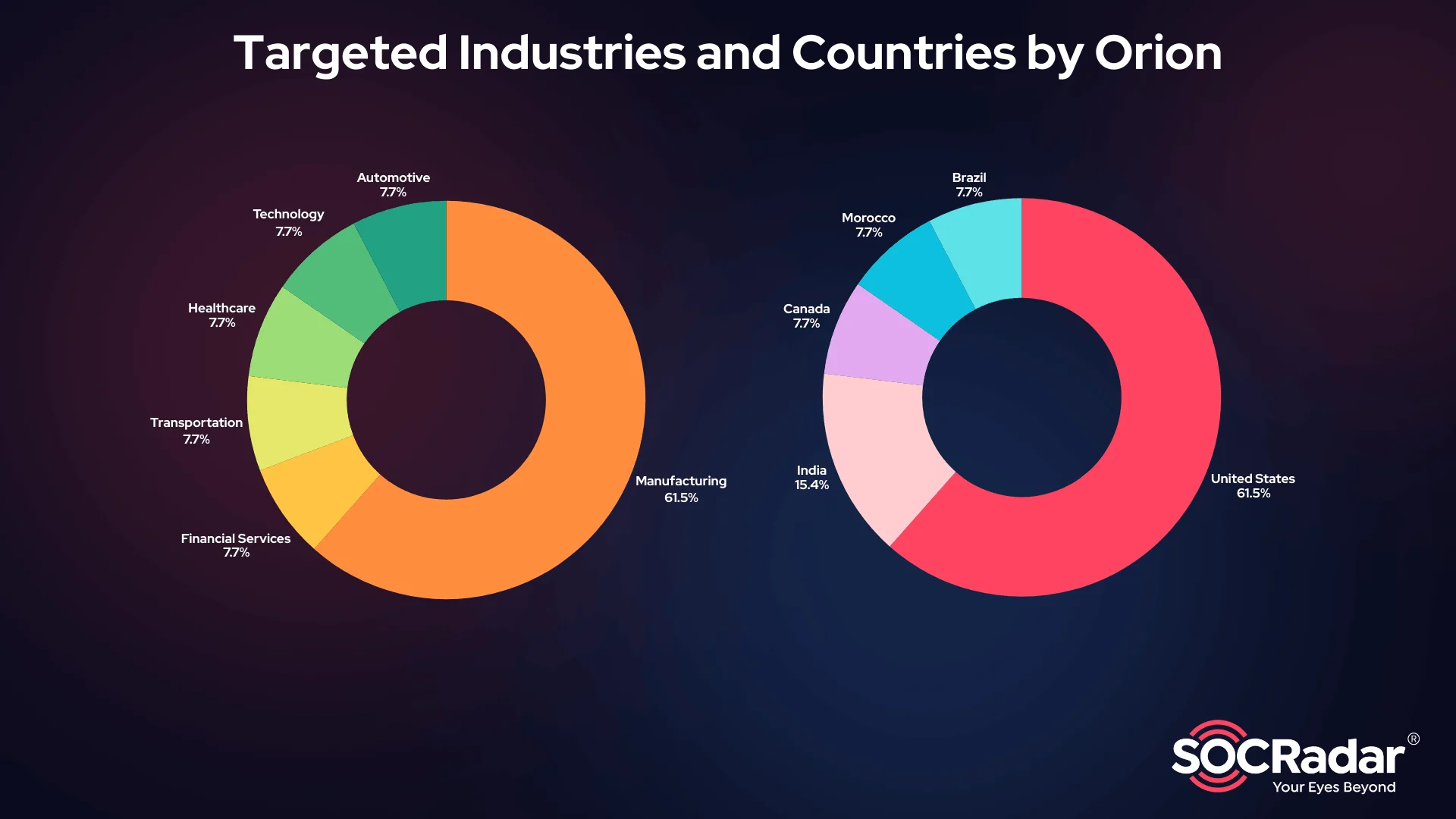
Targeted Industries and Countries by Orion
Crucially, all listed victims were previously published by established ransomware operations in earlier years. Multiple entries directly overlap with LockBit disclosures, and at least one organization was also claimed by BlackCat (ALPHV). This overlap indicates that Orion’s victim list is composed of reused or reshared leak material rather than evidence of fresh compromises.
Overall, Orion’s targeting reflects inherited exposure instead of active victim selection, calling into question the group’s operational maturity and credibility.
Connections to Babuk2
As mentioned above, analysis of Orion’s underground activity reveals overlaps with actors and narratives previously associated with Babuk2, a name that carries significant baggage in the ransomware ecosystem.
Babuk2 emerged as a revival attempt of the original Babuk ransomware brand, but subsequent investigations showed that many of its claims relied on recycled data, misattributed breaches, and rebranded tooling rather than verified new intrusions. Victim listings frequently overlapped with disclosures previously published by established ransomware groups, raising doubts about Babuk2’s technical capability and operational legitimacy.
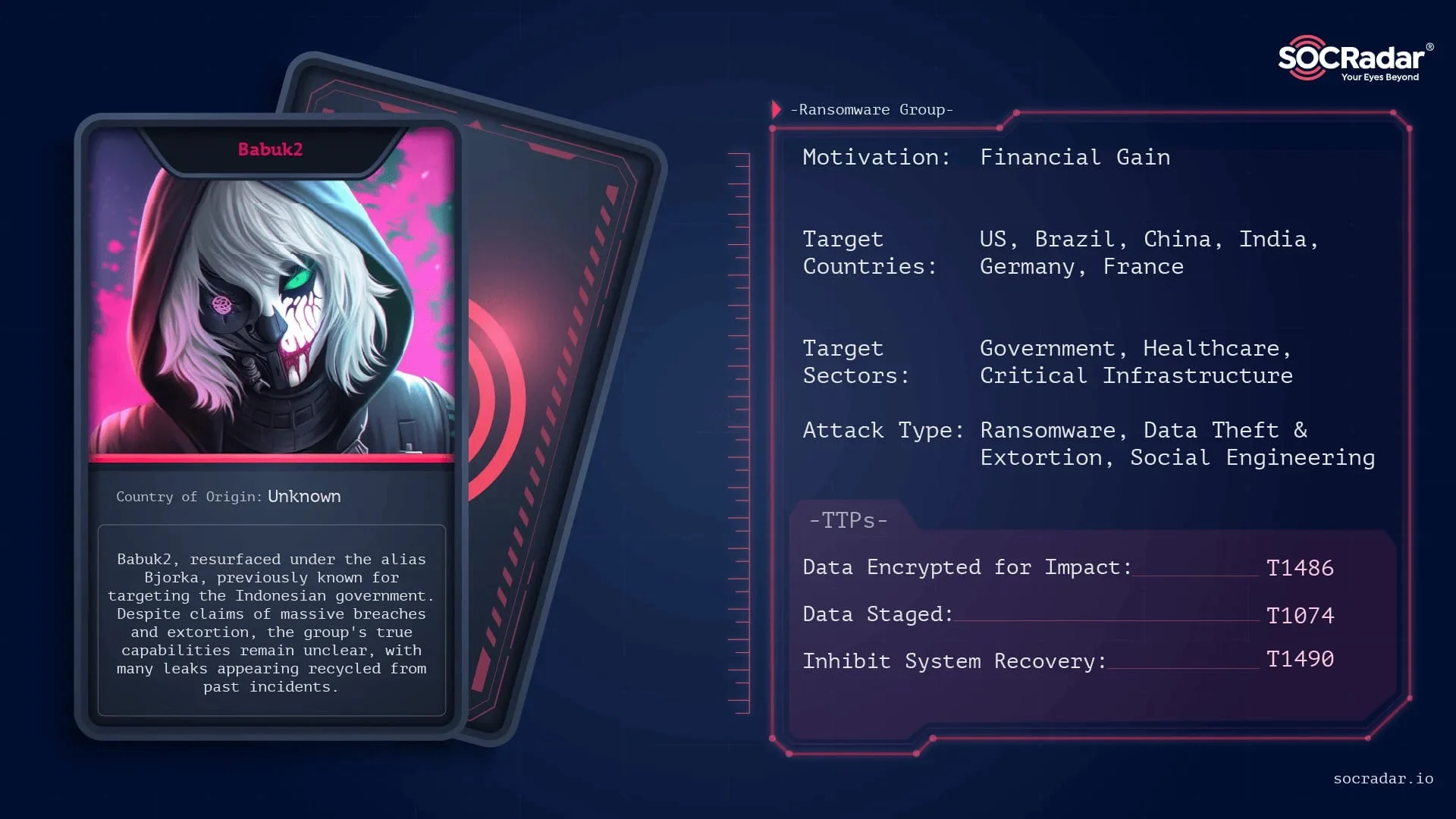
SOCRadar’s earlier Dark Web Profile research on Babuk2 concluded with high confidence that Babuk2 was not a direct continuation of the original Babuk operation. Instead, it functioned as an opportunistic extortion project that capitalized on name recognition, leaked builders, and fear-driven narratives rather than sustained ransomware development.
The Orion operator’s observed links to Babuk2-related channels, access sales discussions, and ransomware panel advertisements follow a similar pattern. Rather than demonstrating novel intrusion activity, Orion appears to inherit elements of Babuk2’s playbook:
- Reliance on reputation rather than verified breaches,
- Reuse of underground identities and infrastructure,
- Emphasis on affiliate recruitment and monetization language over technical proof.
This association has direct implications for Orion’s credibility. Babuk2’s history of exaggerated claims and recycled leaks weakens confidence in Orion’s victim assertions and suggests that Orion may represent a continuation of reputation-based extortion tactics rather than a technically distinct ransomware group.
From a threat intelligence perspective, this does not eliminate risk. Actors tied to Babuk2 have demonstrated a willingness to exploit fear, brand confusion, and affiliate-driven monetization to generate pressure. However, it does suggest that Orion should currently be assessed as a low-confidence ransomware operation with elevated reputational noise, pending evidence of original intrusions, unique tooling, or independently verified victim impact.
Conclusion
Orion Ransomware represents an emerging example of reputation-based extortion rather than a technically mature ransomware operation. Analysis of its victim listings, underground infrastructure, and affiliate recruitment tactics reveals patterns consistent with data recycling and inherited exposure rather than original intrusions. The operational overlaps with Babuk2 further undermine confidence in Orion’s claims of active ransomware capability.
While Orion’s current footprint suggests limited technical legitimacy, the group’s activity still reflects broader trends in the ransomware ecosystem: the commoditization of leaked data, aggressive affiliate marketing, and attempts to exploit brand confusion for extortion leverage. Organizations should remain vigilant, as even opportunistic actors can generate reputational risk and operational disruption through leaked data amplification and pressure tactics.
How Can SOCRadar Help?
SOCRadar’s Extended Threat Intelligence (XTI) platform provides comprehensive coverage of ransomware operations. Through continuous monitoring of Dark Web forums, Data Leak Sites, and underground channels, SOCRadar enables security teams to:
- Track ransomware groups in real-time: Monitor new ransomware operations as they emerge, including victim listings, infrastructure changes, and underground communications.
- Assess organizational exposure: Quickly determine if your organization or partners appear on ransomware leak sites, enabling rapid incident response and breach validation.
- Contextualize threat actor credibility: Access detailed profiles and reputation assessments of ransomware groups to distinguish between mature operations and opportunistic extortion fronts.
- Detect data leaks and stolen credentials: Identify exposed corporate data, employee credentials, and sensitive information circulating on Dark Web marketplaces and forums.
- Monitor affiliate recruitment and TTPs: Gain visibility into ransomware affiliate programs, tooling advertisements, and evolving tactics used by threat actors.
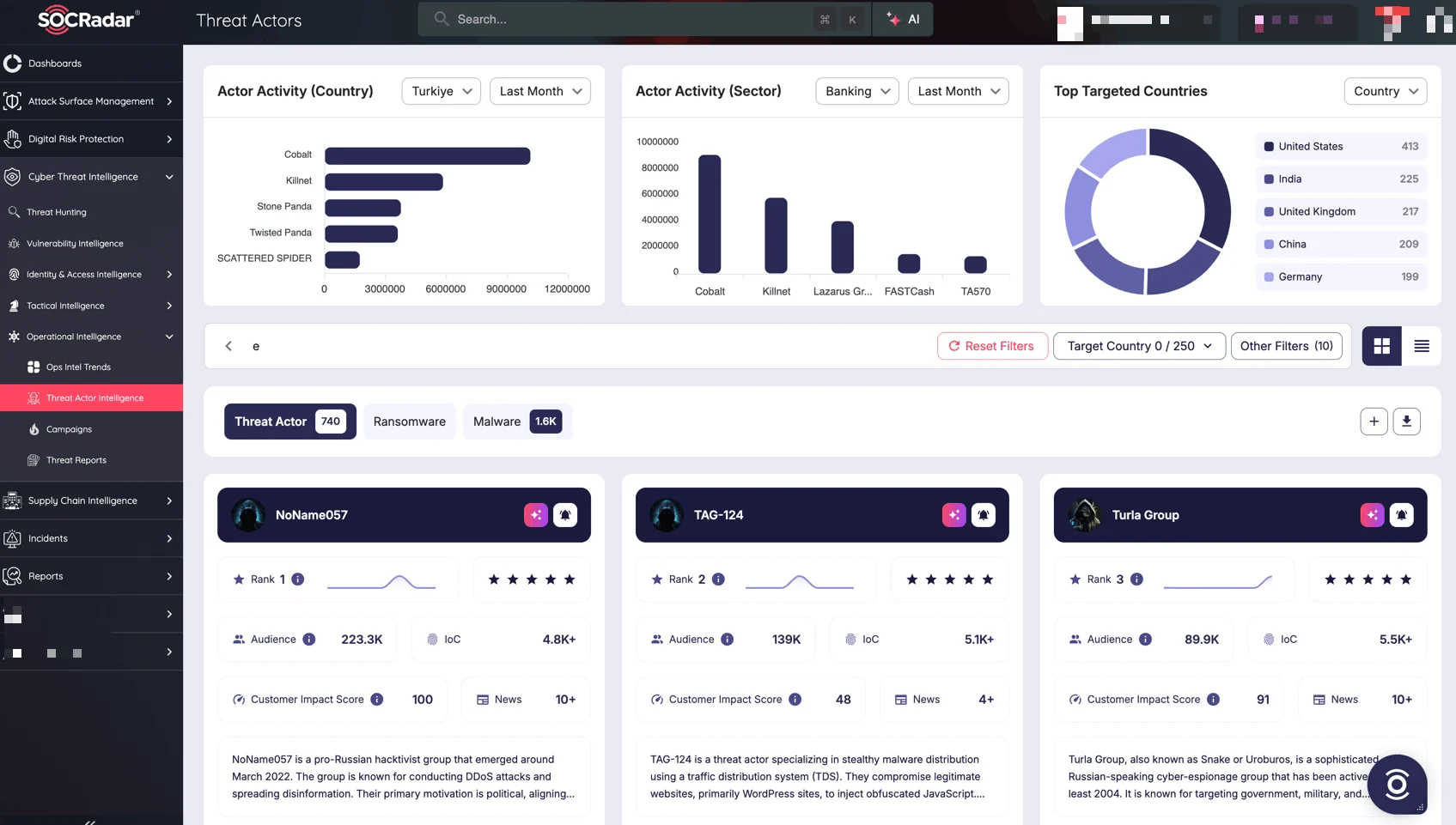
SOCRadar Threat Actor Intelligence
SOCRadar’s threat intelligence analysts continuously investigate ransomware ecosystems, providing actionable insights that help organizations prioritize defenses, validate incidents, and respond effectively to both established and emerging threats. By combining automated detection with expert analysis, SOCRadar empowers security teams to stay ahead of the evolving ransomware landscape.