

Oct 07, 2026
Jan 27, 2026
12 Mins Read

Summarize with:
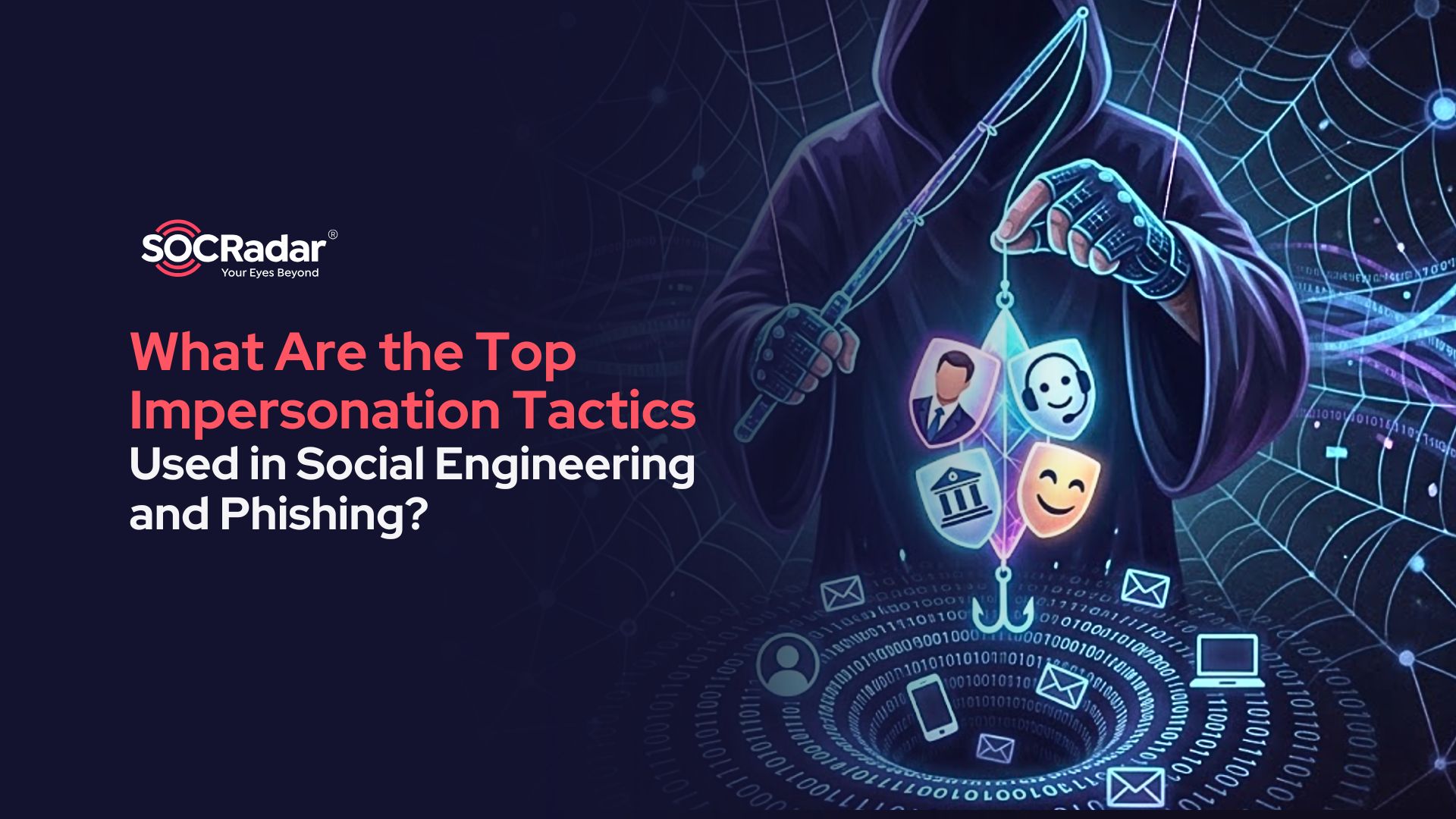
Top Impersonation Tactics Used in Social Engineering and Phishing
Impersonation attacks succeed by borrowing trust. Attackers pretend to be a familiar brand, a trusted vendor, a help desk agent, or an executive whose request feels urgent and non-negotiable. That illusion can push people to click a link, sign in to a fake portal, share a one-time code, or approve a payment change before they slow down to verify the sender.
In practice, these tactics rarely show up as a single email anymore. Campaigns often blend lookalike domains, cloned login pages, SMS follow-ups, and collaboration-app messages to build a believable story and increase conversion rates. Some operations even add voice calls or remote support style interactions to guide targets through MFA steps in real time.
This article breaks down the top impersonation tactics used in social engineering and phishing, explains why attackers rely on them, highlights real-world cases, and outlines practical defenses to protect both employees and brand trust.
What Is an Impersonation Attack & Why Do Attackers Rely on It?
In social engineering and phishing, an impersonation attack occurs when an attacker pretends to be someone the target already trusts, such as a well-known brand, a vendor, an internal IT team, or an executive whose request feels urgent. By borrowing that identity, the attacker pressures the victim into a risky action that benefits the fraud, including signing in to a fake portal, approving a login request, paying an invoice, or sharing sensitive information.
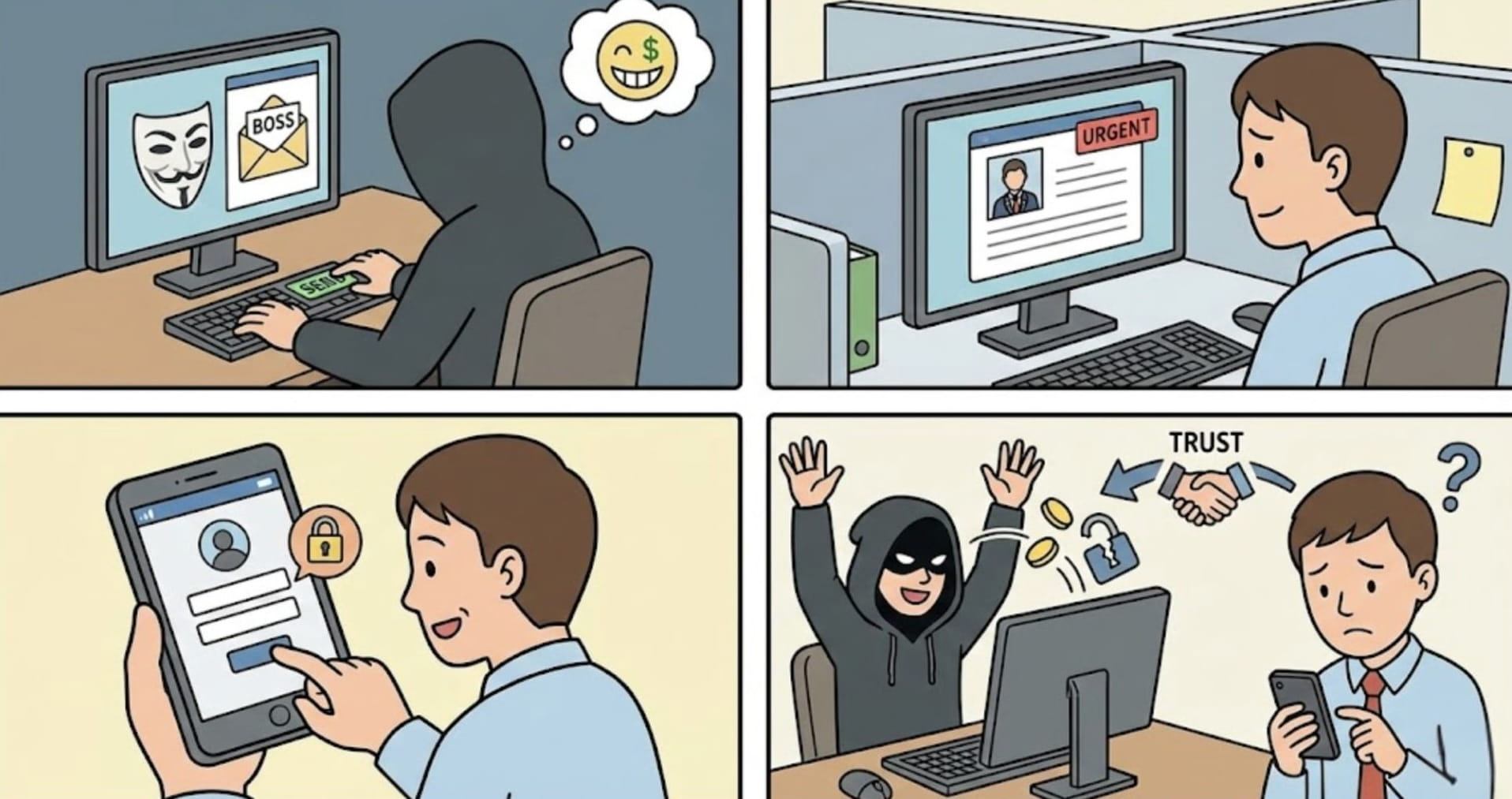
Attackers rely on impersonation because it removes technical barriers. Instead of exploiting software, they exploit trust. This approach also scales easily, which is why impersonation campaigns appear across email, SMS, mobile apps, collaboration tools, and social media. Many operations now combine automation and AI-written lures to increase both volume and credibility while maintaining a consistent pretext across channels.
Attackers impersonate users or brands to achieve a small set of repeatable goals:
- Credential theft and account takeover through fake sign-in pages or SSO prompts
- Payment fraud and Business Email Compromise (BEC) by imitating executives, finance teams, or vendors
- Data collection through HR or support-style “verification” requests
- Brand abuse at scale using cloned logos, messaging, and lookalike domains
Key Statistics to Know in 2025
Understanding how impersonation works is only part of the picture. The following figures show how frequently these tactics appeared in real-world attacks throughout 2025, and how impersonation-based phishing, BEC, and brand abuse continued to affect organizations across industries and regions.
- Phishing stayed at industrial scale in mid-2025. APWG recorded 1,130,393 phishing attacks in Q2 2025, up from 1,003,924 in Q1 2025.
- QR phishing moved from “niche” to volume. In Q2 2025, Mimecast detected 635,672 unique malicious QR codes embedded in email attacks, pointing to phishing, impersonation pages, and other scam sites.
- BEC impersonation kept getting pricier. The average amount requested in wire-transfer BEC attacks during Q2 2025 was $83,099, and APWG reported wire-transfer BEC volume increased 27% compared to Q1 2025.
- Brand impersonation heavily favored “everyday” enterprise identities. In Check Point’s Q3 2025 brand phishing data, the top impersonated brands were Microsoft (40%), Google (9%), and Apple (6%).
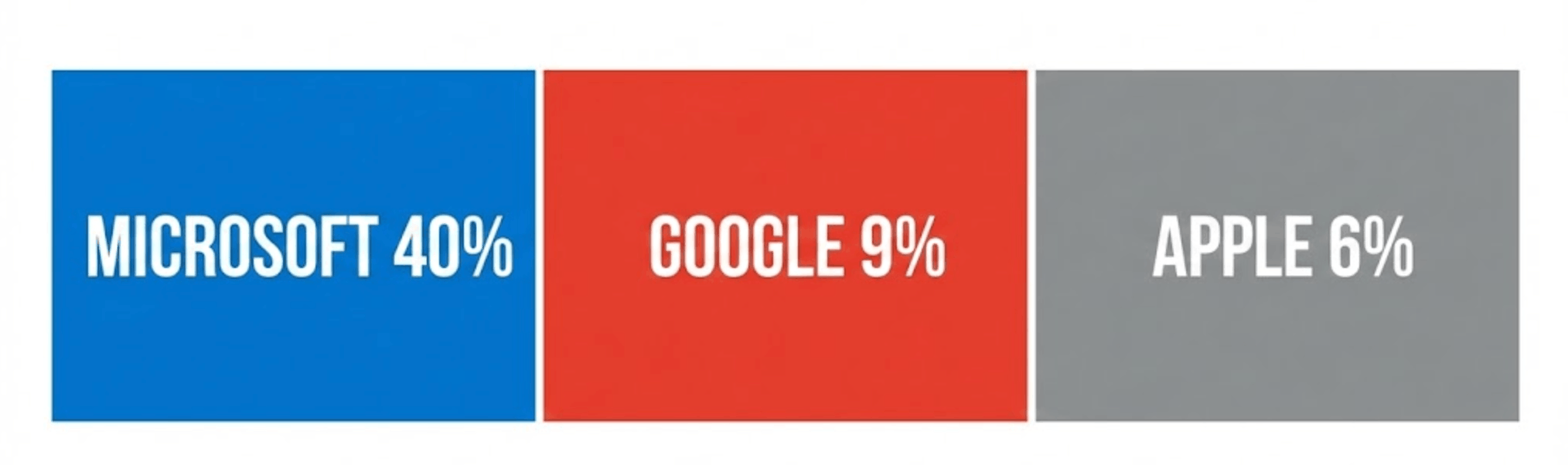
The top impersonated brands in Q3 2025
- Fraud tied to social engineering hit close to home in 2025. WEF reported that 73% of surveyed respondents said they or someone in their network was personally affected by cyber-enabled fraud during 2025.
The numbers make it clear that impersonating in phishing, Business Email Compromise (BEC, and brand abuse remained widespread throughout 2025, affecting organizations across industries and communication channels. The good news is that these campaigns rarely start without leaving traces.
Impersonation operations usually expose themselves early through signals such as newly registered lookalike domains, cloned login pages, fake social media accounts, and phishing kits reused across multiple targets. A complete Brand Protection solution can help teams spot and triage these signals by continuously monitoring brand abuse across domains, social platforms, app stores, and the open and Dark Web, while supporting response workflows such as evidence collection and takedown coordination.

Top 5 Impersonation Types Used in Social Engineering and Phishing
Those early indicators are not random. They map closely to a handful of patterns that attackers reuse across campaigns, often changing only the delivery channel. Below are some of the most common impersonation types driving social engineering and phishing today, with real-world examples showing how each tactic played out in practice.
1. Brand Impersonation Phishing Using Lookalike Domains
This is the classic “fake brand” playbook: attackers register a domain that looks close to a real one, build a cloned login page, and send messages that push users into signing in. The goal is usually credential theft, session hijacking, or payment capture.
Brand impersonation has long been the most common form of phishing, and that position has not changed. What has changed is scale. Throughout 2025, researchers observed attackers increasingly using automation and AI-assisted content to register lookalike domains faster, generate more convincing lures, and reuse phishing infrastructure across email, SMS, and collaboration platforms. As a result, a tactic that was already dominant became easier to deploy at volume, keeping brand impersonation firmly at the top of the list.
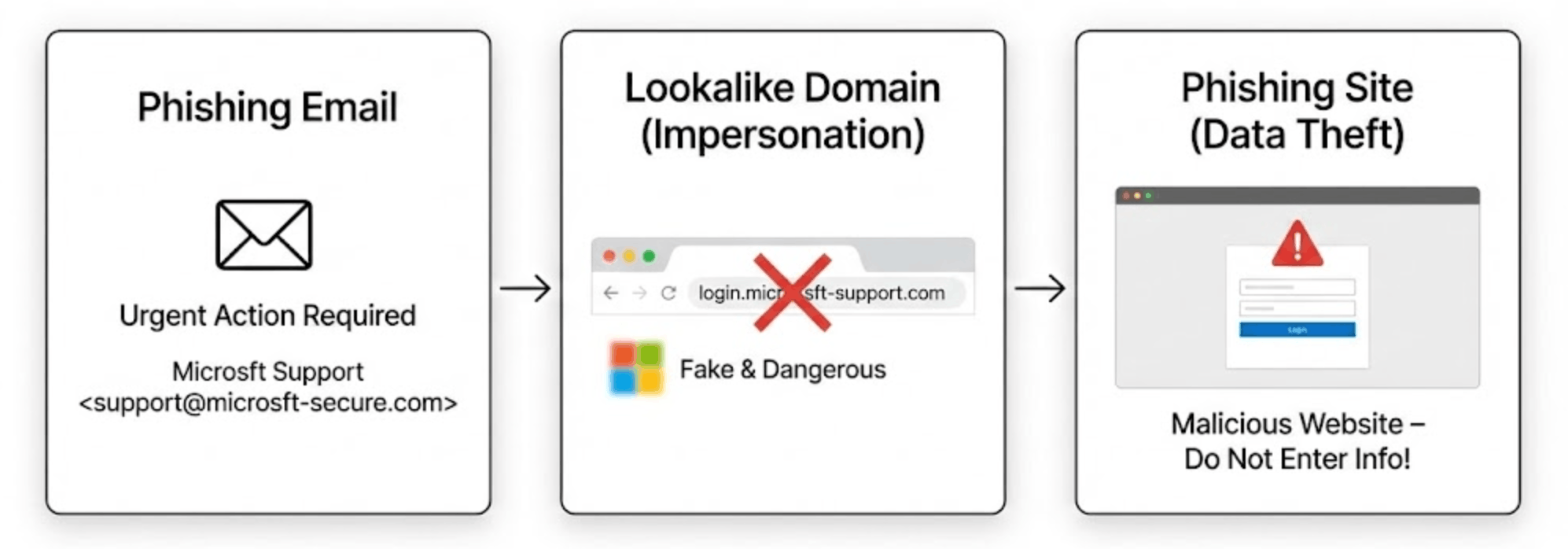
Example use of lookalike/fake domains in brand impersonation
Common tactics that make it convincing:
- Typosquatted domains and subdomains that resemble real portals
- Cloned SSO pages for Microsoft 365, Google Workspace, or popular SaaS tools
- “Account security” or “subscription renewal” themes that push urgency
Fake Fortinet and YouTube Lookalike Sites Pushed Malicious Chrome Extensions
In May 2025, researchers uncovered a Chrome Web Store campaign involving more than 100 malicious browser extensions posing as VPNs, AI tools, and crypto utilities. The operators registered over 100 fake domains, some impersonating Fortinet and YouTube, to promote the extensions as legitimate. Once installed, the extensions enabled cookie theft and remote script execution, allowing attackers to hijack sessions and move toward deeper compromise.
2. Business Email Compromise Using Executive Impersonation & Whaling
Here, the attacker imitates an executive, legal counsel, or a senior stakeholder to force quick action. This often targets finance teams, assistants, HR, and IT administrators because those roles can move money, approve access, or share sensitive documents.
Such emails are often tailored with personal details gathered from public sources and breaches, which increases believability.
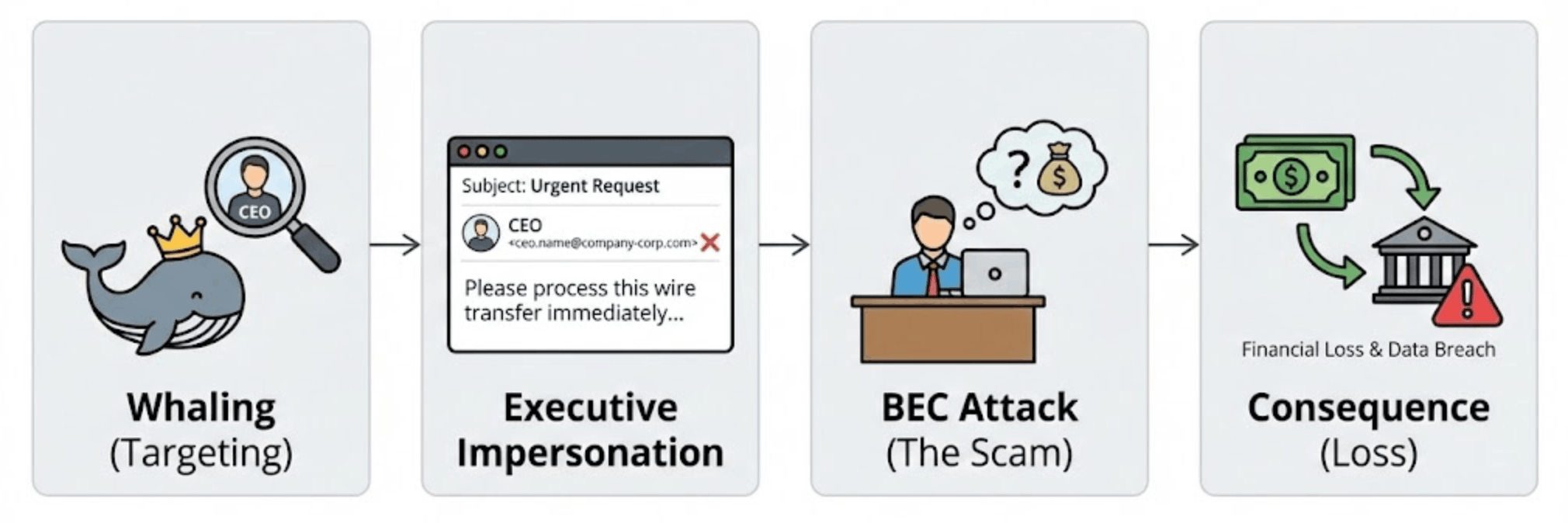
BEC attacks impersonating executives
Common tactics:
- “Urgent” acquisition, legal, or payroll requests
- Requests to bypass process due to confidentiality
- Follow-up nudges to stop the target from verifying
AI Facial Filters Enabled Executive-Style Hiring Fraud in Remote Interviews
In 2025, investigations linked North Korea-associated IT worker activity to remote hiring fraud where attackers used stolen identities and real-time AI facial filters during video interviews. The activity, tied to Famous Chollima, showed how executive-style impersonation can extend into HR and onboarding workflows, potentially leading to payroll fraud or internal access rather than a single phishing click.
3. IT Help Desk Impersonation to Capture MFA Codes & Reset Access
Support desk impersonation aims at account takeover. Attackers pose as IT, HR tech support, or a SaaS support agent and pressure the victim to share a one-time code or approve an MFA prompt. This style also shows up as phone-based vishing or chat-based support scams, which makes it harder for employees to rely on email-only warning signs.
In recent years, ransomware operators increasingly used IT staff impersonation and vishing as an initial access technique. A well-known example is the MGM Resorts breach, where the Scattered Spider group gained access by impersonating internal IT support.
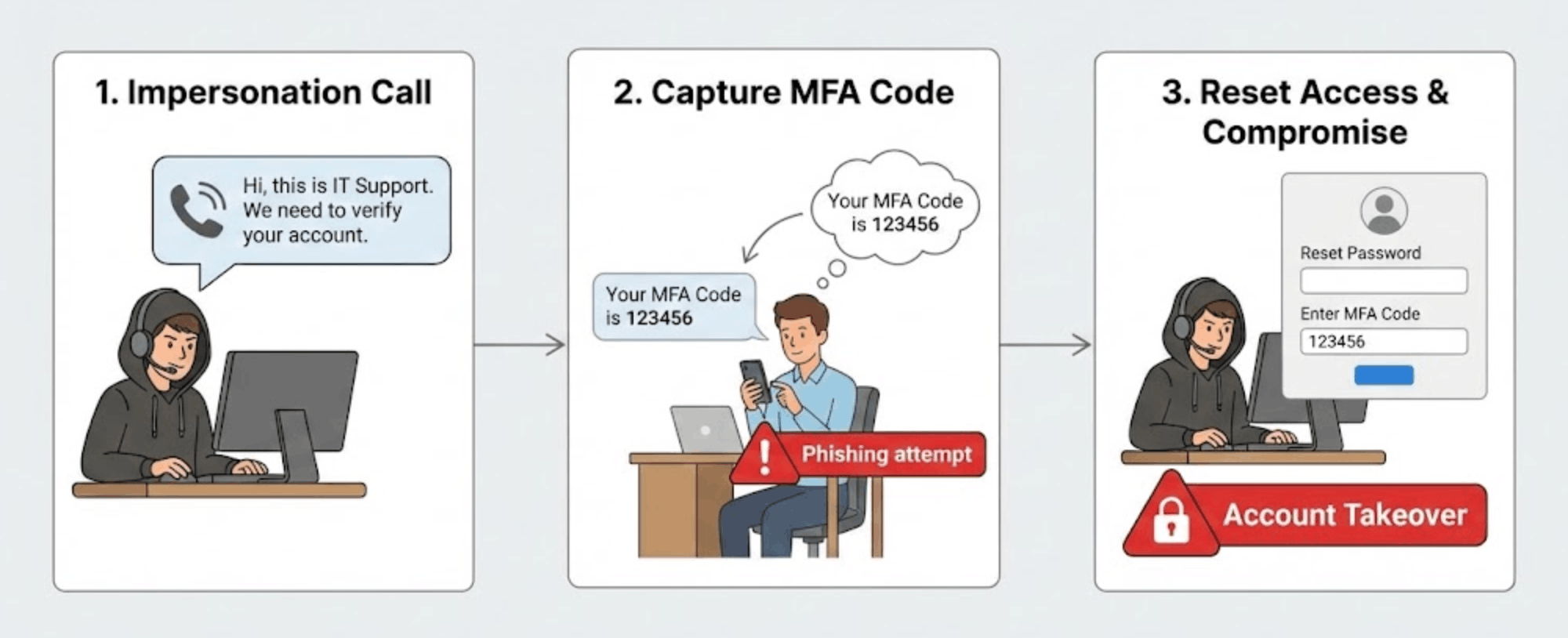
Impersonating IT and help desk has become another common way, especially for ransomware actors
Common tactics:
- “Your account is locked” and “we need to verify your login”
- Requests for MFA codes “to resolve the issue”
- Links to fake “password reset” portals
Okta Vishing Campaign Used IT Support Impersonation to Take Over SSO Accounts
A more recent example is the Okta vishing campaign. In early 2026 reporting, Okta Threat Intelligence explained how attackers posed as internal IT support, contacted employees by phone, and walked them through real-time login and verification steps. During these calls, victims were directed to fake SSO login pages designed to capture credentials and influence MFA prompts.
4. Vendor Impersonation & Invoice Fraud
Vendor impersonation does not always look like a random phishing email. Attackers often mimic a real supplier, payment processor, or logistics partner and try to change bank details or redirect invoices. Many BEC playbooks start with domain impersonation or compromised mailboxes, then attackers inject themselves into real billing threads once they understand the workflow.
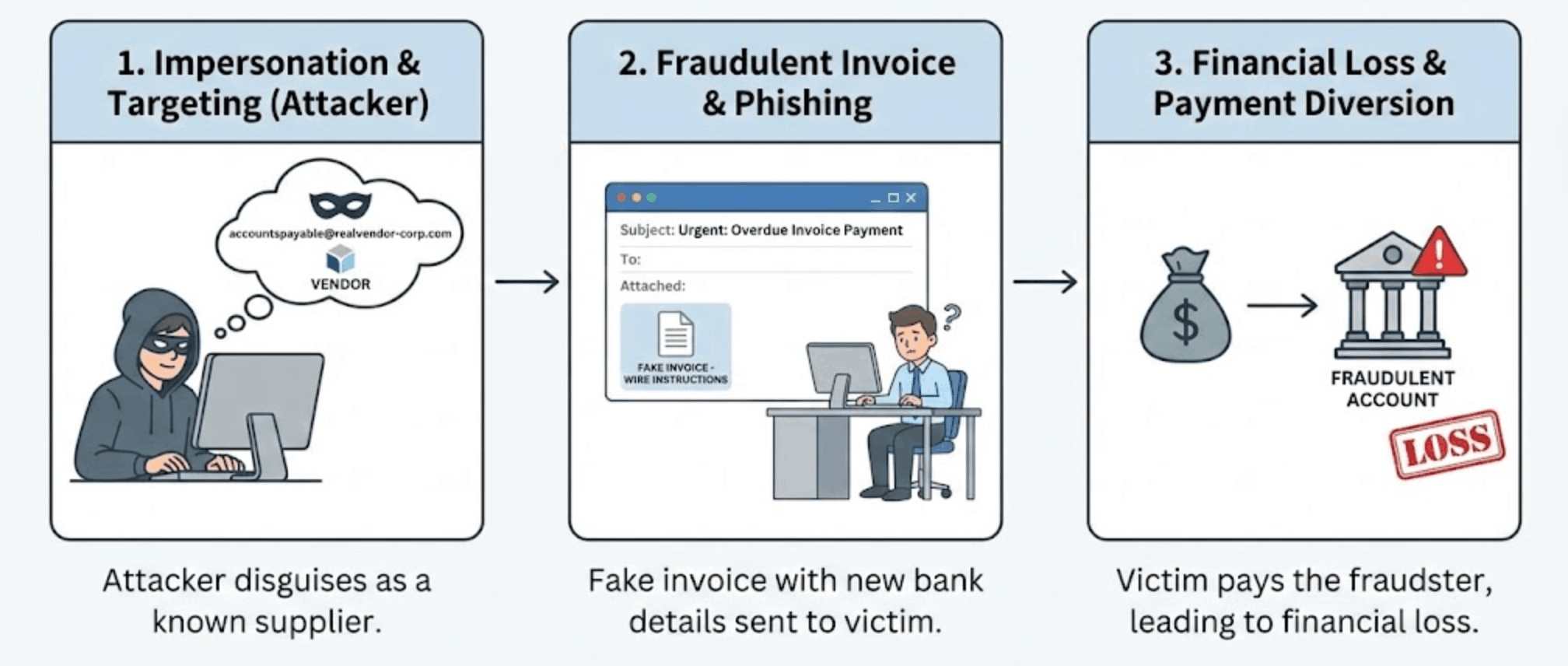
How a common invoice fraud scheme works
Common tactics:
- Fake “updated bank account” notifications
- Invoice attachment swaps or “resend the latest invoice” requests
- Slightly altered sender domains that slip past quick reviews
Lookalike Vendor Email Redirected a Payment
In February 2025, the Connecticut Port Authority received an invoice for recruitment services from a legitimate vendor contact, then got a follow-up email from a lookalike domain that differed by only a couple of letters. The spoofed sender claimed the vendor was updating payment information, and the agency processed a $16,666 payment based on that message. The fraud was discovered on April 11, 2025, when the real vendor asked about the missing payment and staff noticed the domain mismatch.
5. Collaboration Tool Impersonation in Microsoft Teams & Business Messaging
Attackers increasingly abuse trusted workplace tools, where messages, updates, and downloads often feel safe by default. By blending into routine workflows, impersonation attempts can bypass the skepticism users apply to email.
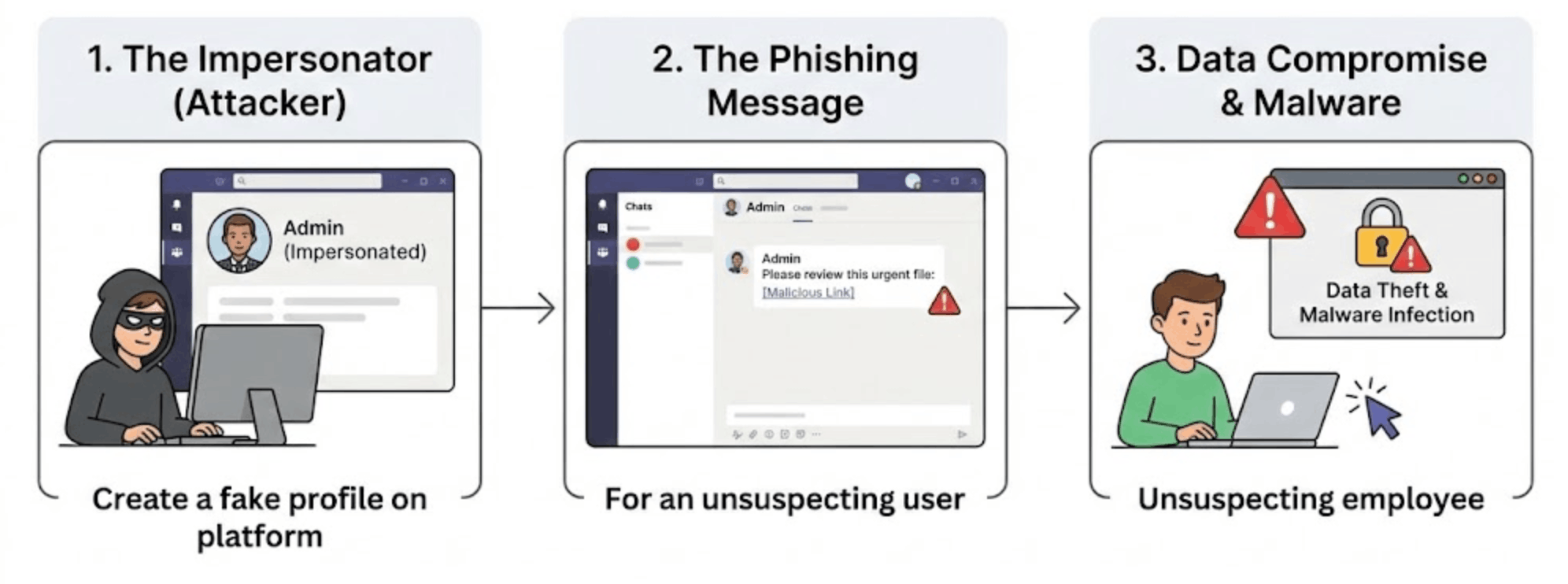
Attackers may impersonate through popular collaboration tools
Common tactics:
- Fake internal notifications and urgent chat requests
- Executive impersonation in chats to push payments or credential checks
- Social engineering that moves from email to Teams to close the scam
Microsoft Teams Impersonation Risks in Enterprise Chat
Check Point reported in 2025 that certain Microsoft Teams behaviors could be abused to create impersonation-like scenarios, where attackers manipulated sender display names and notifications to make messages appear to come from executives or finance staff. The finding also highlights how collaboration platforms have become a high-trust phishing surface.
How to Protect Your Brand and Employees Against Impersonation Tactics?
Impersonation defenses work best when you combine identity controls with brand abuse visibility. The steps below focus on preventing account takeover and BEC losses while also reducing how long lookalike domains and cloned pages can stay online.
- Use phishing-resistant MFA for high-value access: Enforce FIDO2/WebAuthn for SSO, email, VPN, and admin accounts, tighten controls around MFA resets and new device enrollment, and disable legacy password-only fallbacks since CISA has highlighted FIDO2/WebAuthn as phishing resistant compared to many common alternatives.
- Block BEC payouts with verification rules: Treat any “urgent executive” or “vendor banking update” request as high risk, require an out-of-band verified callback for bank-detail changes, apply dual approval for new payees and high-value transfers, and flag first-time payment requests for manual review.
- Treat mobile, QR, and chat prompts as first-class risk: Train staff to validate QR destinations and SMS links before signing in, restrict risky enrollments and MFA resets from unmanaged devices, and enforce conditional access based on device health and sign-in risk to limit mobile-first impersonation paths.
- Detect lookalike domains and cloned pages early with Brand Protection: Monitor new domain registrations that resemble your brand, product names, and executive identities, then validate risk signals like active DNS and mail records (MX), hosted login clones, and copied branding. SOCRadar Brand Protection helps surface and triage these impersonation indicators across domains, social channels, and broader online exposure.
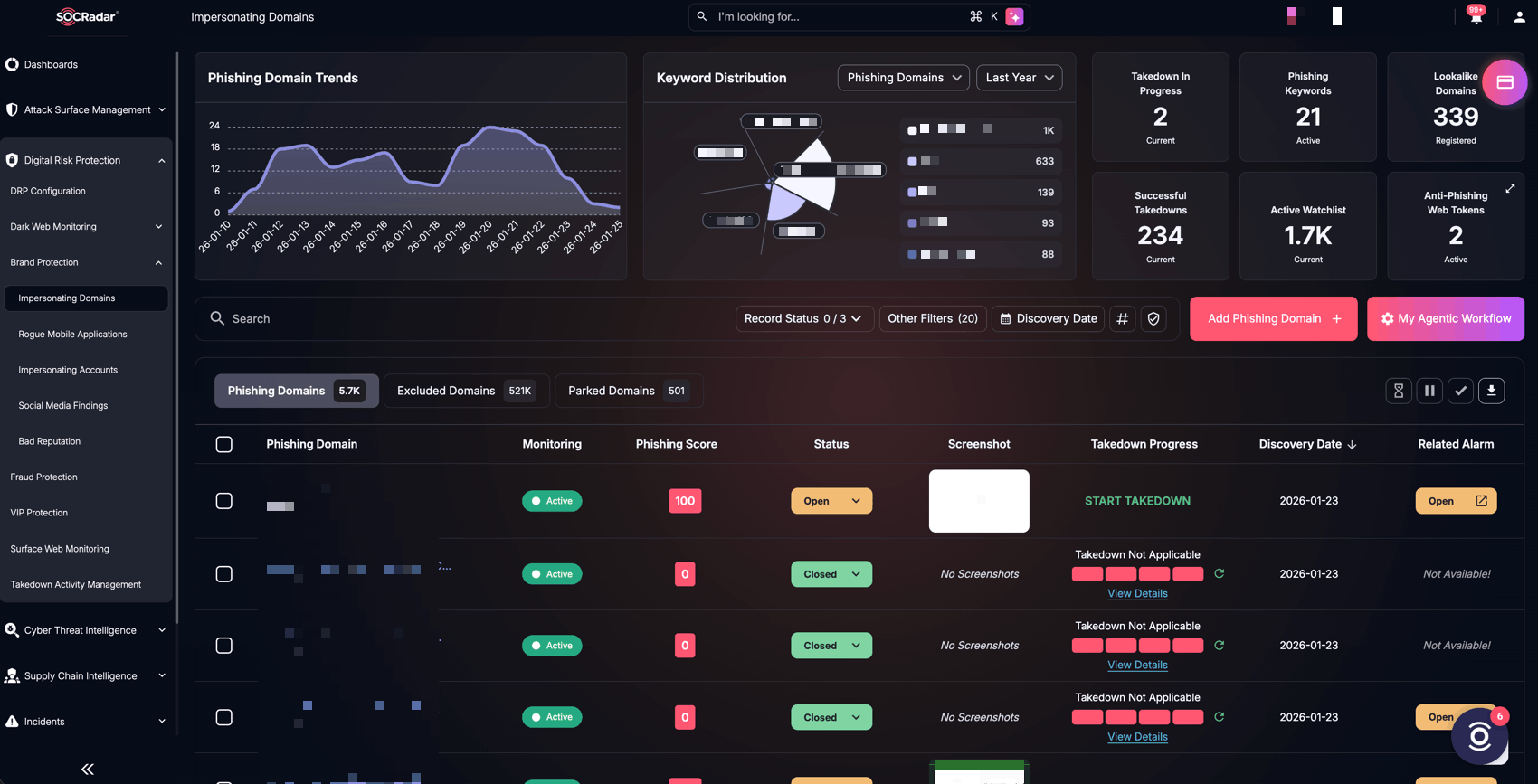
SOCRadar’s Brand Protection, Impersonating Domains
- Furthermore, SOCRadar’s Integrated Takedown Management capability supports faster action by centralizing evidence capture and coordinating takedown workflows to reduce how long malicious pages stay live.
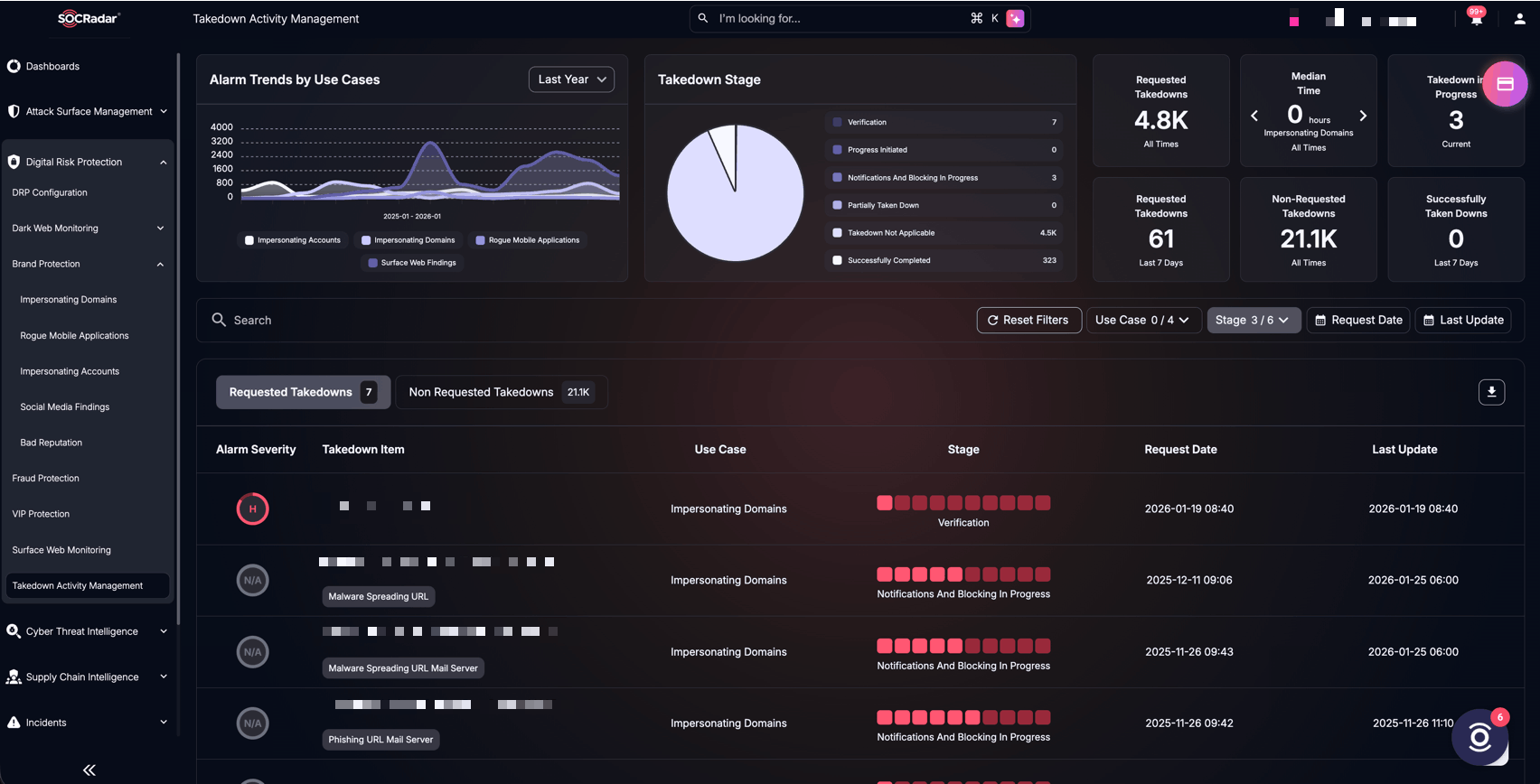
SOCRadar’s Takedown Activity Management page
Conclusion
Through 2025, impersonation remained one of the most effective social engineering tactics because it exploited trust faster than most security controls could react. Whether the attacker posed as an executive, a vendor, a help desk agent, or a familiar platform, the goal stayed the same: create a believable context, add urgency, and push the target into a risky action such as signing in, approving access, or changing payment details. The real-world cases in this article showed how quickly these campaigns moved across channels, from lookalike domains and fake software pages to collaboration apps and live vishing calls.
To reduce the impact, organizations need layered defenses that match how impersonation works in practice. Phishing-resistant authentication and tighter enrollment and reset policies help protect identities. Clear payment verification rules stop many BEC attempts even when the email looks legitimate. Continuous monitoring for domain and brand abuse helps teams find impersonation infrastructure early, before it scales.
To close the loop, combine monitoring with fast removal. SOCRadar Brand Protection supports that approach by helping teams identify lookalike domains and cloned pages and by using Takedown Management to streamline evidence collection and takedown coordination, reducing the window attackers have to exploit your brand and your users.

Table Of Content
Top Impersonation Tactics Used in Social Engineering and Phishing
What Is an Impersonation Attack & Why Do Attackers Rely on It?
Key Statistics to Know in 2025
Top 5 Impersonation Types Used in Social Engineering and Phishing
How to Protect Your Brand and Employees Against Impersonation Tactics?
Conclusion
Related Articles