Surface Web Vs Deep Web Vs Dark Web
Most internet users only see a small part of the web. The pages you find through Google or Bing are just the beginning. Behind the scenes, there are deeper layers of the internet that serve different purposes. These layers are called the Surface Web, the Deep Web, and the Dark Web.
Each layer has its own level of visibility, access rules, and risks. Understanding the difference between surface, deep, and dark web helps you browse more safely and smartly. In this article, we explain what each layer is, how it works, and why it matters to you.
Understanding the Three Layers of the Internet
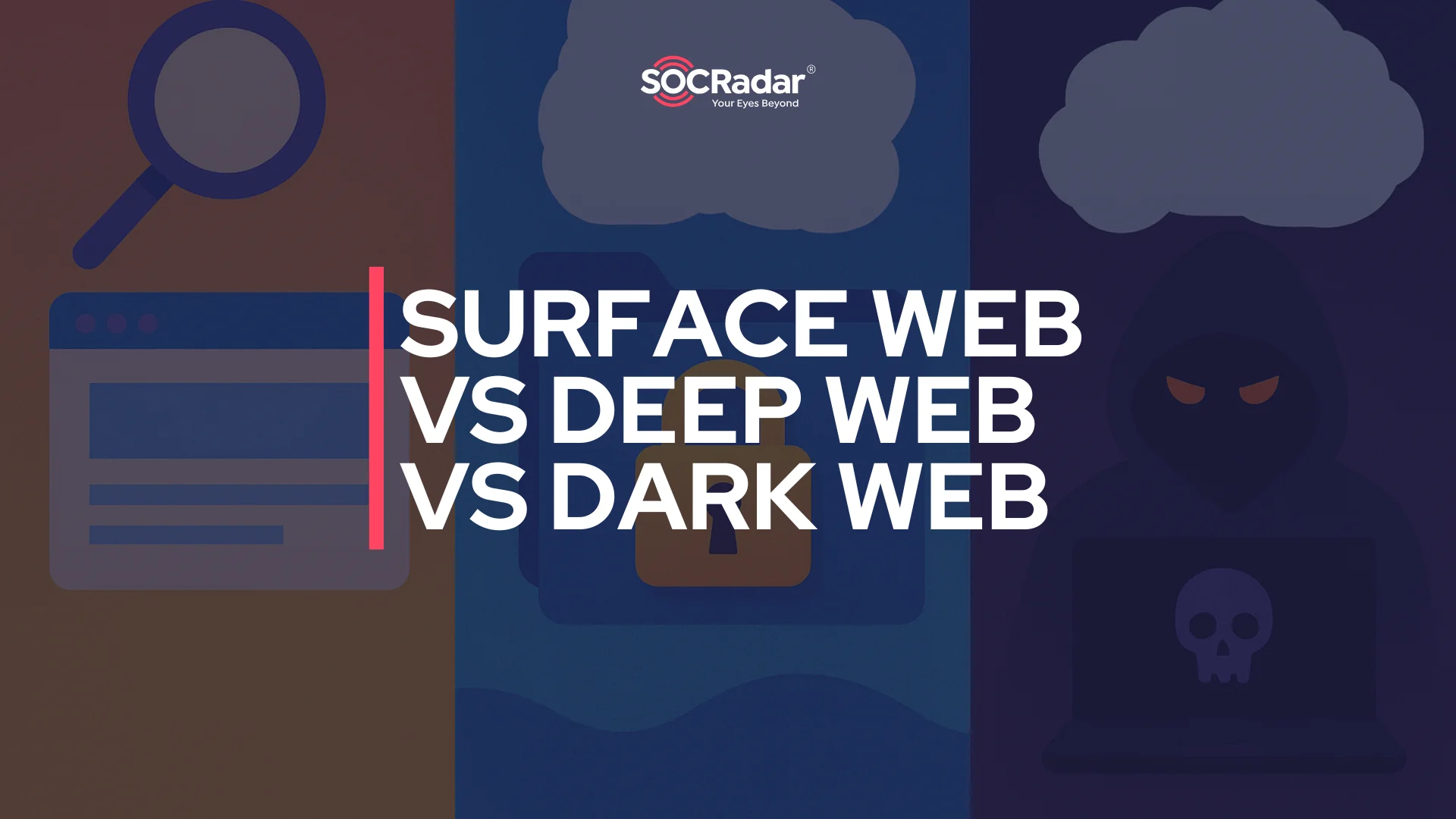
The internet has more layers than most people realize. While many only know the websites found through search engines, there’s much more below the surface. We can break it into three parts: the Surface Web, the Deep Web, and the Dark Web. Each has different access levels, content types, and risks.
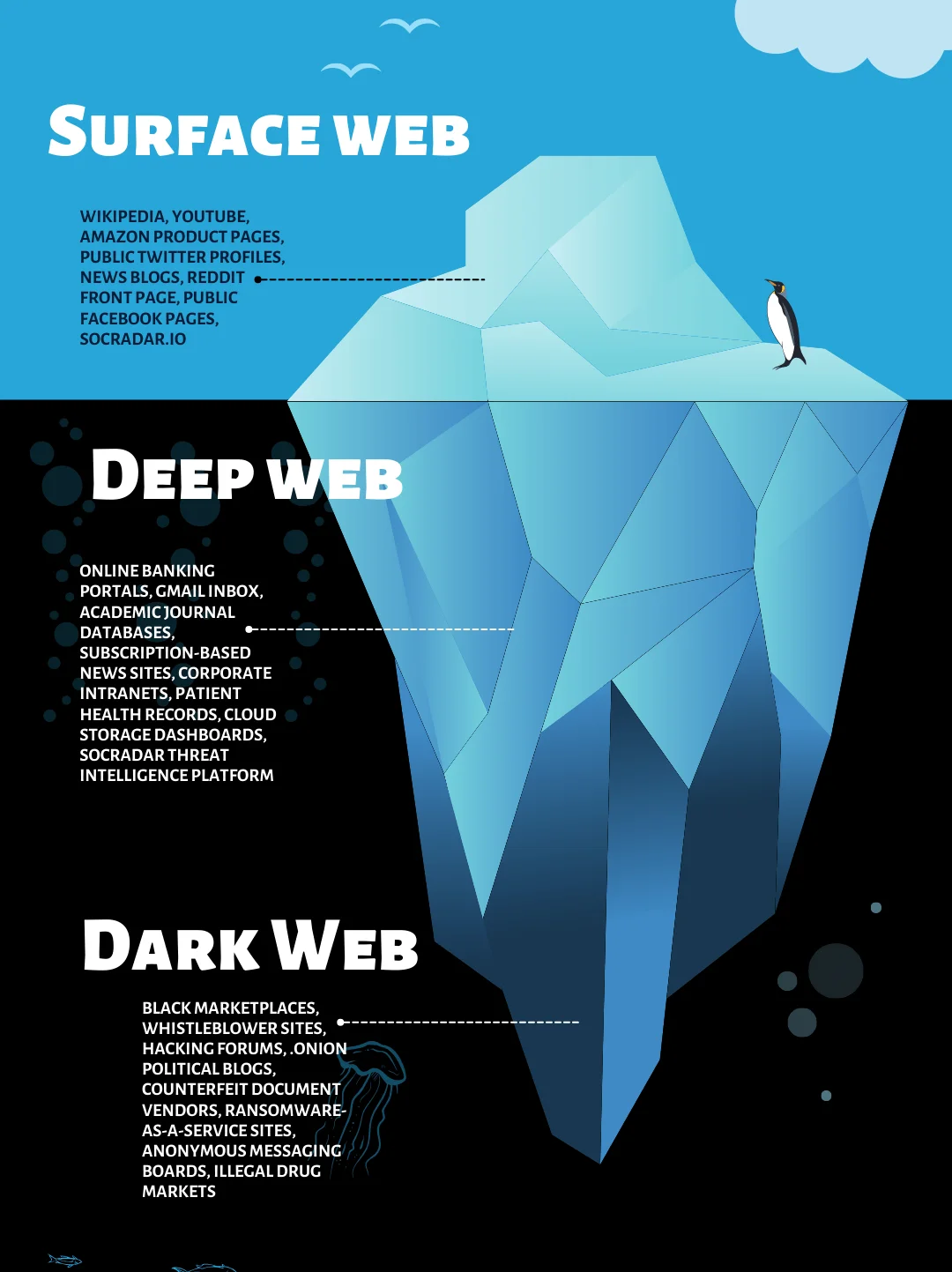
The famous iceberg of the web, showcasing the 3 layers
Surface Web: The Visible Face of the Internet
The Surface Web includes all the websites you can find through search engines like Google or Bing. These pages are indexed and available to the public. Examples include:
- News sites
- Blogs
- Online stores
- Social media platforms
Is Google part of the surface web? Yes, both Google and the websites it shows in search results are on the Surface Web.
Deep Web: Content Hidden from Search Engines
The Deep Web contains content not indexed by search engines. You need direct links, credentials, or permissions to access this content. It is legal and often safe. Examples include:
- Online banking pages
- Private company databases
- Subscription services
- Government and academic portals
How the deep web differs from the surface web: Search engines cannot access deep web content. You need a login or direct access.
Dark Web: Anonymity, Secrecy, and Cybercrime
The Dark Web is a small part of the Deep Web. It requires special tools like the TOR browser to access. It allows anonymous browsing and hosts hidden services.
While not everything on the Dark Web is illegal, it often includes:
- Illicit marketplaces
- Forums for cybercrime
- Hacked data sales
Do I need the TOR browser to access the dark web? Yes. Standard browsers cannot reach dark web content.
Indexing and Accessibility: What Separates the Layers
| Layer | Indexed by Search Engines | Requires Login | Needs Special Tools |
| Surface Web | Yes | Sometimes | No |
| Deep Web | No | Yes | No |
| Dark Web | No | Sometimes | Yes (e.g., TOR) |
Search engine indexing plays a key role in separating the layers. Non-indexed pages are either private (deep) or hidden and anonymous (dark).
Legality and Risk Levels Across Web Segments
- Surface Web: Legal and mostly safe
- Deep Web: Legal but may include sensitive data
- Dark Web: High risk, often used for illegal activities
Which layer poses the highest cybersecurity risks? The Dark Web has the most threats due to its use for cybercrime.
Who Uses Each Layer and Why
- Surface Web: General users for daily browsing
- Deep Web: Businesses, students, professionals accessing secure data
- Dark Web: Journalists, whistleblowers, cybercriminals
Real-World Examples from Surface, Deep, and Dark Web
- Surface: Wikipedia, Amazon, Twitter
- Deep: Paywalled research papers, medical records, internal CRM tools
- Dark: Hidden forums, darknet markets, whistleblower platforms
Examples of content in each web layer help users understand visibility and purpose.
How Threat Intelligence Varies Across Web Layers
Cybersecurity experts monitor all layers. The Dark Web often contains leaked credentials or threats. Threat intelligence teams use tools to gather insights from hidden services.
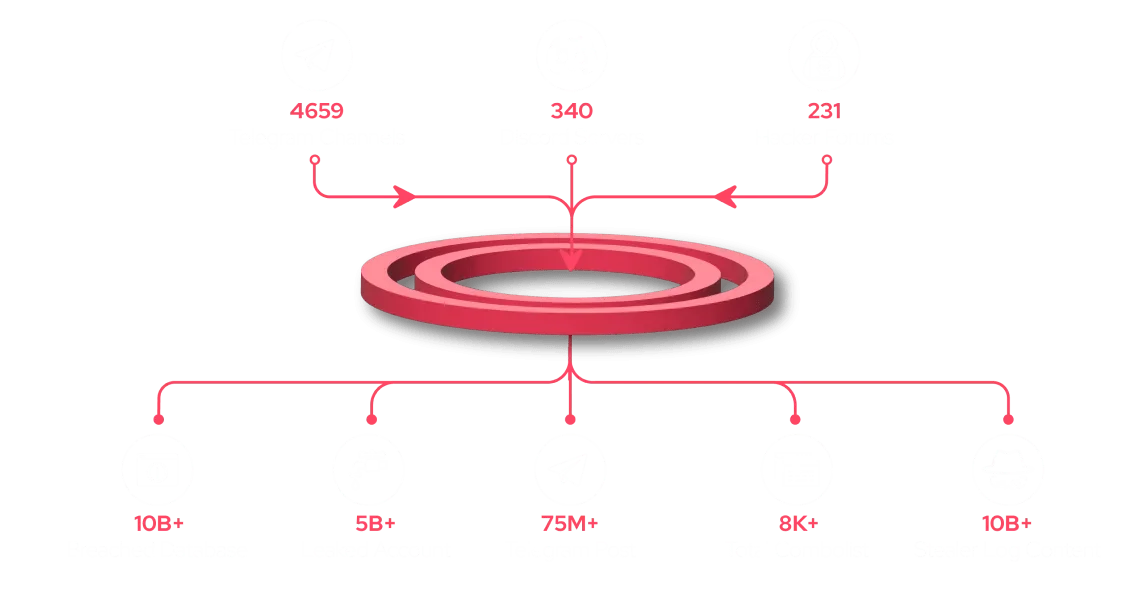
Wherever threat actors are, so are we
Navigating the Internet Safely: What You Need to Know
- Use strong passwords for deep web logins
- Never access the dark web without proper security tools
- Use VPNs for added privacy
- Keep software updated
- Avoid clicking unknown links
FAQ
What is the surface web, and how is it different from the deep web?
The surface web is public and searchable. The deep web requires login or direct links and stays hidden from search engines.
Is the deep web illegal like the dark web?
No. The deep web is legal. It includes safe sites like email inboxes and online banking.
Can I access all three layers of the web with a regular browser?
You can access the surface and most of the deep web with a normal browser. You need TOR for the dark web.
What type of content is available on each web layer?
Surface: public pages. Deep: private portals. Dark: anonymous, often illegal content.
Why is the deep web larger than the surface and dark web combined?
It holds private data from banks, universities, and businesses. This makes it massive in size.
Is it safe to browse the deep web?
Yes, if you stick to trusted sites like banks or schools.
Do I need the TOR browser to access the dark web only?
Yes. Dark web sites use special domains that only TOR can open.
How do search engines interact with each layer of the web?
They index surface web content. They cannot access deep or dark web content.
Which layer poses the highest cybersecurity risks?
The dark web, due to its link to cybercrime.
Are government or academic portals part of the deep web or surface web?
They are part of the deep web because they often need logins or have restricted access.