


Mar 10, 2026

Feb 19, 2026
5 Mins Read
Sep 13, 2026
Table Of Content
Related Articles

SMS Bombing

Threat Actors
Jan 08, 2026

Dark Web Monitoring
Feb 19, 2026

Ransomware
Jan 31, 2026

OSINT Framework
Apr 17, 2026

What Is the Surface Web?
The surface web is the publicly accessible and indexable portion of the internet.
It includes public sites, social profiles, news, documentation, repositories, and other content reachable without special software or authentication. It is commonly used as a synonym for the clear web.
Key Takeaways
- Public websites and documents is a central category or capability.
- Reliable assessment requires identity, timing, source, and operational context.
- Detection should correlate external, identity, device, network, and cloud evidence.
- Response should preserve evidence and remove every reusable access path.
How the Surface Web Works
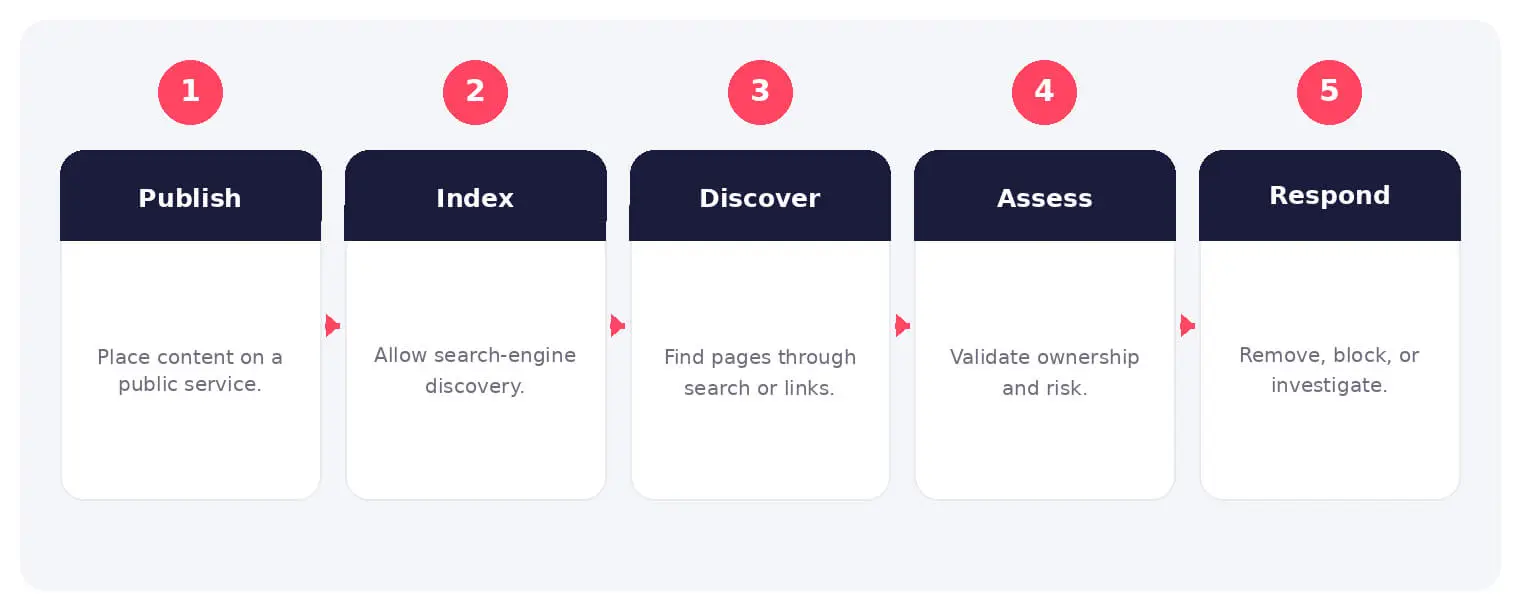
The sequence above provides a practical operating model. Individual stages may overlap, repeat, or involve different people and services, so analysts should validate each step against the available evidence.
It includes public sites, social profiles, news, documentation, repositories, and other content reachable without special software or authentication. It is commonly used as a synonym for the clear web.
Common Types and Techniques
- Public websites and documents
- Social media and communities
- Code repositories and paste pages
- Advertising and marketplace content
Security and Business Risks
- Brand impersonation and phishing
- Exposure of secrets and internal data
- Reconnaissance against people and assets
- Malware distribution and fraud
Warning Signs and Detection
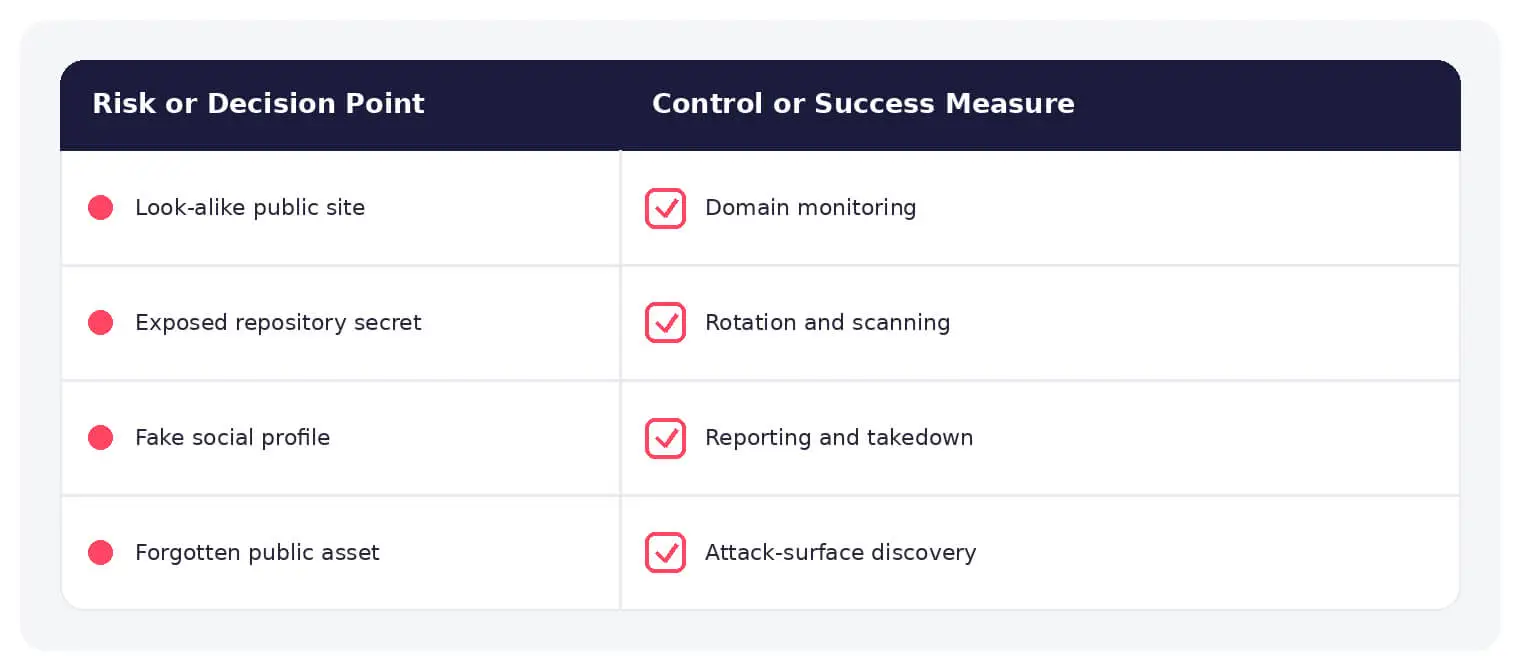
Monitor domains, certificates, public profiles, repositories, exposed credentials, cloned pages, advertisements, and newly indexed assets.
Prevention and Response
Minimize public data, protect official identities, scan repositories, monitor look-alikes, remove stale assets, and maintain takedown and incident-response workflows.
How SOCRadar Can Help
SOCRadar combines external visibility, threat intelligence, Dark Web monitoring, brand protection, vulnerability context, and indicator enrichment to help teams investigate exposure connected to surface web.
Explore SOCRadar Attack Surface Management or request a demo to strengthen threat-informed prevention and response.
Frequently Asked Questions
What Is the Surface Web?
The surface web is the publicly accessible and indexable portion of the internet, including public sites, social profiles, news, documentation, and repositories. It requires no special software or authentication to reach and is often used as a synonym for the clear web. It contrasts with the deep web, which sits behind logins, and the dark web, which requires specialized tools to access.
Why Is the Surface Web a Security Risk for Organizations?
Attackers use open sources to gather intelligence before attacking, so anything exposed publicly becomes reconnaissance material. Common risks include brand impersonation, phishing campaigns, leaked credentials or API keys, and malware distributed through seemingly legitimate files. Because the content is public, many teams underestimate how much of it can be weaponized against them.
What Types of Sensitive Data Commonly End Up on the Surface Web?
Frequently exposed items include internal documents, credentials pasted into public repositories, employee details on social media, and stale domains or subdomains that attackers can hijack. Job postings, technical documentation, and marketing assets can also reveal infrastructure details. Each of these gives adversaries useful context for phishing, social engineering, or direct intrusion attempts.
How Do Attackers Use the Surface Web for Reconnaissance?
Adversaries map employee names and roles from professional networks, harvest email formats, identify technology stacks from job ads and repositories, and search for exposed secrets in code. They also register look-alike domains and clone login pages for phishing. This open-source groundwork makes later attacks more convincing and harder to detect.
What Warning Signs Indicate Surface Web Exposure?
Red flags include newly registered domains that mimic your brand, cloned login or support pages, your organization’s credentials or source code appearing in public repositories, and unfamiliar certificates tied to look-alike domains. Sudden spikes in phishing reports or employee-targeted emails also suggest public data is being abused. Monitoring newly indexed assets helps catch these signals early.
How Can Teams Detect Brand Impersonation on the Surface Web?
Continuous monitoring of domain registrations, certificate transparency logs, social media profiles, app stores, and search results can surface impostors quickly. Automated look-alike detection should be paired with manual validation of identity, timing, and source to confirm intent. The sooner a fake domain or profile is found, the cheaper it is to take down before customers are harmed.
What Preventive Controls Reduce Surface Web Risks?
Minimize publicly available data by reviewing what your organization publishes, locking down repositories, and removing stale domains, subdomains, and accounts. Protect official identities with domain monitoring and clear phishing-reporting channels for employees and customers. Regularly scan your own code and public assets for secrets before adversaries find them.
How Should Organizations Respond to Malicious Surface Web Content?
Preserve evidence such as screenshots, WHOIS records, and certificate details, then initiate takedown requests with registrars, hosts, and platforms. Reset any credentials that were exposed and notify affected customers or partners if a phishing page impersonated your brand. Close the root cause afterward, whether that was a leaked secret, a stale asset, or a monitoring gap.
What Is the Business Impact of Unmanaged Surface Web Exposure?
Consequences range from credential compromise and data breaches to lost revenue from phishing scams that abuse your brand. Customer trust erodes when attackers convincingly impersonate your organization, and regulatory exposure follows if leaked data involves personal information. Remediation, legal action, and reputational repair are far more expensive than proactive monitoring.