
Mar 10, 2026
Jan 31, 2026
6 Mins Read
Sep 13, 2026
Table Of Content
Related Articles
SMS Bombing
Threat Actors
Jan 08, 2026
Dark Web Monitoring
Feb 19, 2026
Ransomware
Jan 31, 2026
OSINT Framework
Apr 17, 2026
What Is the Dark Web?
The dark web is a portion of the internet hosted on overlay networks that require specialized software or configuration, such as Tor, to access. Services may conceal server locations and user identities, providing privacy and resistance to censorship.
The dark web supports legitimate journalism, whistleblowing, and private communication, but also hosts criminal markets, leak sites, fraud services, stolen credentials, malware sales, and access brokers. The technology itself is not inherently illegal; activity and jurisdiction determine legality.
Key Takeaways
- Hidden forums and marketplaces is a central category or use case.
- Reliable assessment depends on source, timing, ownership, and operational context.
- Detection should connect external findings with identity, device, network, and business signals.
- Response should protect affected people and remove every reusable access path.
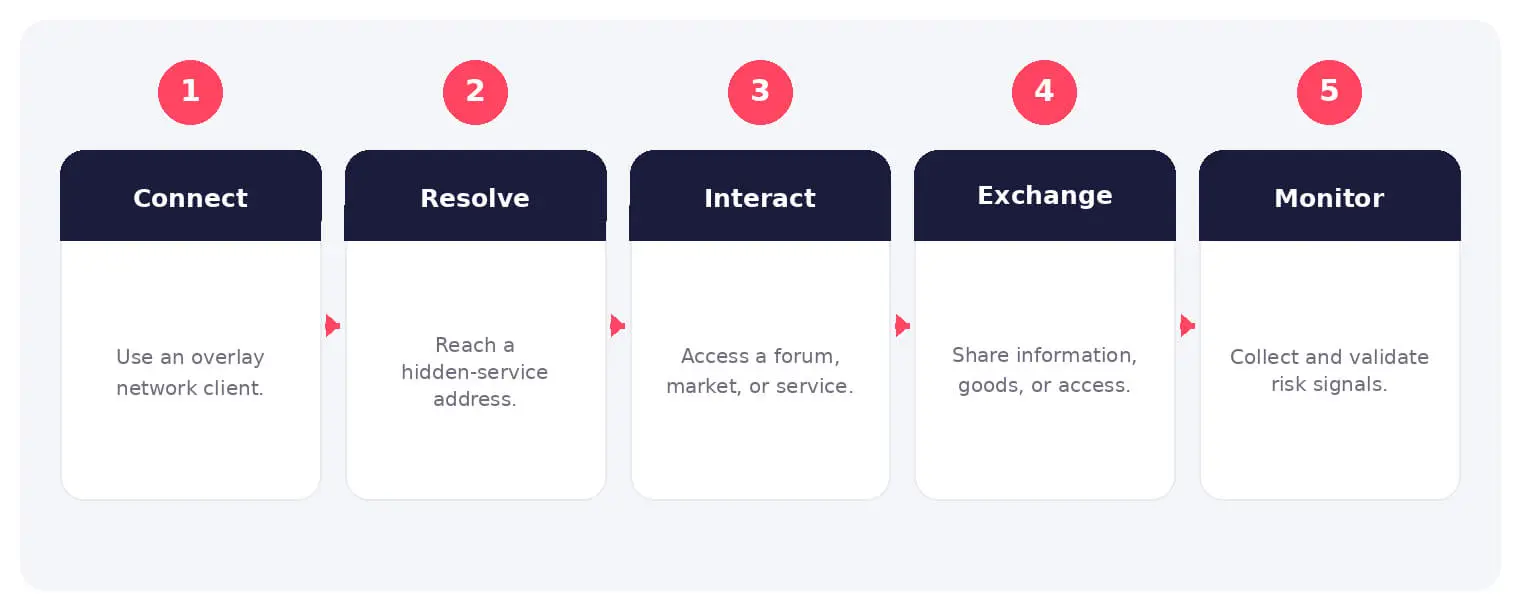
How the Dark Web Works
The sequence shown above provides a practical operating model. Individual steps may overlap, repeat, or involve different services and participants, so analysts should validate each stage against available evidence.
The dark web supports legitimate journalism, whistleblowing, and private communication, but also hosts criminal markets, leak sites, fraud services, stolen credentials, malware sales, and access brokers. The technology itself is not inherently illegal; activity and jurisdiction determine legality.
Common Types and Use Cases
- Hidden forums and marketplaces
- Ransomware leak and extortion sites
- Anonymous publishing and communication
- Credential, malware, fraud, and access services
Security, Privacy, and Business Risks
- Sale of stolen data and credentials
- Attack planning and initial-access trading
- Brand abuse, fraud, and executive targeting
- Exposure to scams, malware, and illegal content
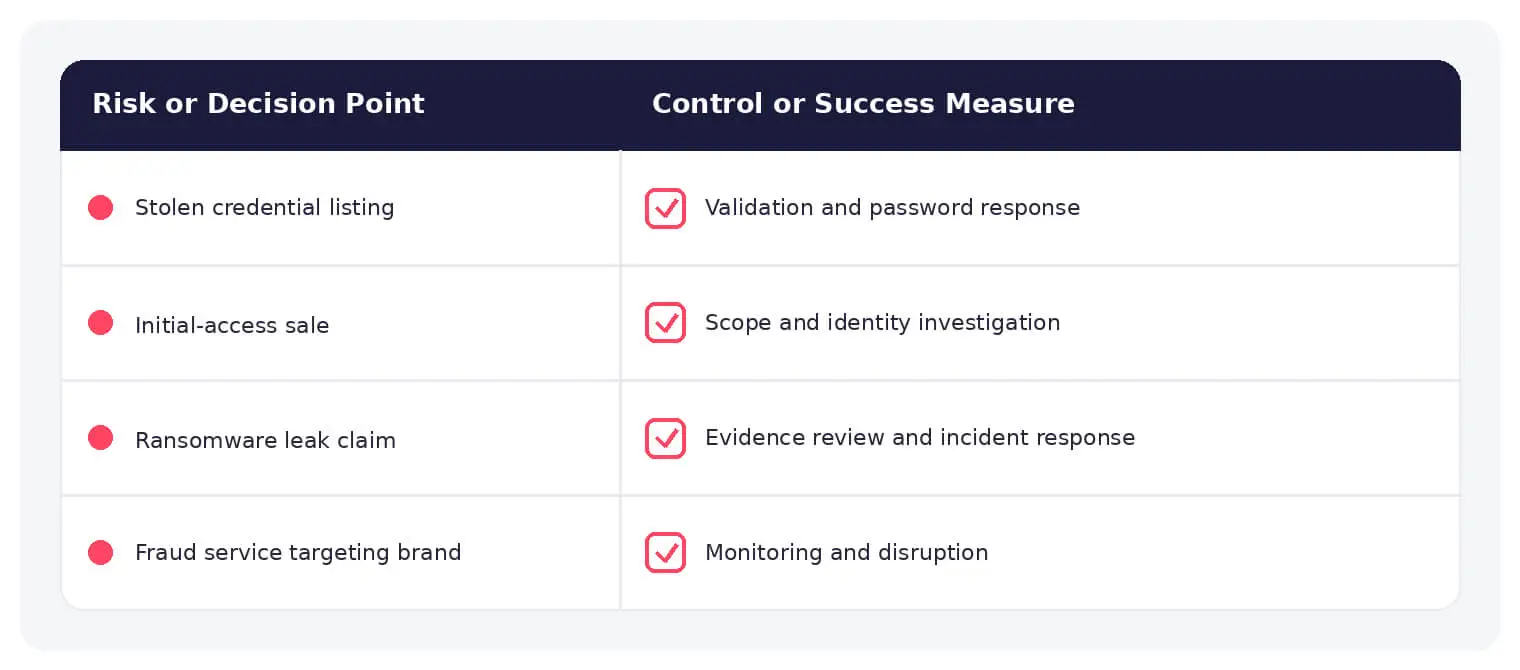
Warning Signs and Validation
Monitor mentions of organizational assets, credentials, access sales, leak samples, executive data, and actor discussions. Findings require source context, timestamping, validation, and correlation with internal telemetry.
Prevention and Response
Use ethical intelligence collection, protect analyst environments, minimize handling of sensitive data, validate claims, monitor continuously, and connect confirmed findings to credential resets, incident response, and takedown actions.
How SOCRadar Can Help
SOCRadar combines external intelligence, Dark Web visibility, brand monitoring, attack-surface discovery, and contextual enrichment to help teams identify exposure and investigate activity connected to dark web.
Explore SOCRadar Dark Web Monitoring or request a demo to strengthen external threat detection and response.
Frequently Asked Questions
What Is the Difference Between the Dark Web and the Deep Web?
The deep web covers all content that standard search engines do not index, including paywalled articles, medical records, and ordinary business applications behind logins. The dark web is a much smaller portion of it, hosted on overlay networks such as Tor that require special software to reach and deliberately conceal server locations.
Is It Illegal to Access the Dark Web?
No. The overlay networks and privacy tools behind the dark web have lawful uses, including anonymous journalism, whistleblowing, and censorship-resistant communication. Legality depends on the specific activity, content, and jurisdiction: browsing hidden services is not a crime in itself, while buying stolen data or malware clearly is.
How Do Hidden Services Stay Anonymous on the Dark Web?
Most dark web services run on networks such as Tor, which route traffic through multiple relays and encrypt each hop before a connection reaches its destination. Sites use .onion addresses that resolve only inside the overlay network, so under normal conditions a server’s physical location and a visitor’s IP address stay hidden from each other.
What Types of Criminal Activity Operate on the Dark Web?
Recurring categories on hidden services include:
- Markets selling stolen data, credentials, and malware
- Fraud, cash-out, and money-laundering services
- Ransomware leak and extortion sites
- Forums where initial access brokers sell corporate footholds
The same platforms can also host legitimate activity, which is why context matters when assessing any finding.
How Do Stolen Credentials End Up on Dark Web Marketplaces?
Credentials usually originate from data breaches, phishing, and infostealer malware that harvests saved logins, cookies, and session tokens from infected devices. Criminals package this material as stealer logs or combo lists and sell it underground, where buyers test the entries against email, VPN, and cloud services to find accounts without multi-factor authentication.
What Are Ransomware Leak Sites?
Ransomware groups run dedicated .onion sites where they publish stolen files, victim names, and countdown timers to pressure targets into paying. These sites serve as both an extortion lever and a public record of claims, which makes them a useful early signal that a named organization may have been compromised.
What Are Initial Access Brokers?
Initial access brokers gain entry to corporate networks through stolen remote-access credentials, exposed services, or phishing, then sell that foothold to ransomware operators and other buyers. As a result, an organization’s intrusion may be advertised and sold weeks before any visible attack begins.
Do Standard Search Engines Reach Dark Web Sites?
No. Conventional crawlers do not traverse overlay networks, so .onion pages do not appear in normal search results. Specialized directories and search services exist, but their coverage is incomplete and unstable, so absence from search results proves nothing about exposure.
Can Visiting Dark Web Sites Put Your Device at Risk?
Yes. Hidden services can host scams, malicious downloads, and browser exploits just like the clear web, and analysts typically use isolated research environments rather than daily-use machines. Visitors should avoid downloading files, reusing personal credentials, or logging into identifiable accounts.
What Warning Signs Suggest an Organization’s Data Is on the Dark Web?
Indicators include employee credentials appearing in stealer logs, the company’s name on a ransomware leak site, forum posts discussing internal systems, executive personal data circulating in fraud channels, and stolen file samples offered for sale. Each finding should be checked for source, timestamp, and ownership before it is treated as confirmed.
What Should an Organization Do After Finding Its Data on the Dark Web?
First confirm the data is genuine and current, since underground claims are often stale, repackaged, or fabricated. Then assess the affected scope, reset exposed passwords and revoke active sessions and tokens where the platform supports it, protect affected individuals, preserve evidence for investigation, and meet any regulatory or contractual notification duties.
How Can Organizations Reduce Their Exposure to Dark Web Threats?
Practical measures include enforcing phishing-resistant multi-factor authentication, patching internet-facing services, monitoring for leaked credentials tied to corporate domains, and continuously reviewing exposed assets. These steps do not remove risk altogether, but they shrink the volume of data and access that criminals can harvest and resell.