

| Category | What It Includes | Why It Matters |
| Stolen Credentials | Usernames, passwords, session cookies, email accounts, corporate logins | Enables account takeover and unauthorized access |
| Stealer Logs | Browser data, saved passwords, cookies, crypto wallets, device fingerprints | Helps attackers commit fraud and bypass login protections |
| Payment Card Data | CVVs, dumps, fullz, bank logins, payment details | Supports carding and financial fraud |
| Initial Access | RDP, VPN, SSH, cPanel, cloud accounts, corporate access | Can be used by ransomware affiliates and intrusion actors |
| Malware and Hacking Tools | RATs, keyloggers, phishing kits, loaders, exploit tools | Lowers the barrier for cyberattacks |
| Counterfeit Documents | Fake IDs, passports, driver’s licenses, KYC bypass material | Supports identity fraud and money laundering |
| Digital Goods | Cracked software, premium accounts, scam pages, templates | Used in fraud, resale, and social engineering |
| Drugs and Chemicals | Narcotics, synthetic drugs, prescription drugs | Remains a major category across traditional darknet markets |
| Guides and Tutorials | Carding guides, phishing playbooks, OPSEC material | Helps less experienced actors learn fraud methods |
| Cash-out Services | Crypto exchange accounts, mixers, mule services | Helps convert stolen funds into usable money |
Jun 22, 2026
24 Mins Read
Aug 04, 2026

Summarize with:
Top Dark Web Marketplaces in 2026
Dark Web marketplaces in 2026 are underground platforms where cybercriminals buy and sell stolen data, credentials, stealer logs, payment card records, malware, fraud services, counterfeit documents, drugs, and access to compromised systems. Also known as Dark Web markets or darknet markets, these platforms are increasingly specialized, with some operating as broad marketplaces and others focusing on cybercrime categories such as carding, infostealer logs, and initial access.
The top Dark Web marketplaces in 2026 include Russian Market, Torzon Market, Black Ops Market, STYX Market, Exodus Marketplace, BriansClub, WeTheNorth Market, Vortex Marketplace, Anubis Market, and FreshTools. These marketplaces were selected based on their cybercrime relevance, marketplace activity, visible category structure, listing estimates where available, and importance for threat intelligence monitoring.
Several major shifts define the Dark Web marketplace ecosystem in 2026. Infostealer logs, stolen credentials, payment card data, and corporate access listings remain high-risk categories for enterprises, while law enforcement takedowns, exit scams, DDoS attacks, phishing mirrors, and vendor migration continue to reshape which platforms remain active or trusted by underground users.
What Are Dark Web Marketplaces?
Dark Web marketplaces are hidden online markets where users trade illegal or high-risk goods and services with a degree of anonymity. Most operate through Tor hidden services and use cryptocurrency payments, escrow systems, vendor profiles, and reputation scores to create trust between anonymous buyers and sellers.
Unlike ordinary e-commerce platforms, darknet marketplaces are designed to reduce traceability. Buyers may use privacy-focused tools, vendors often require PGP-encrypted communication, and marketplaces may rotate mirrors to avoid downtime, phishing, or law enforcement disruption.
However, not every underground platform works the same way. Some Dark Web marketplaces act like broad criminal bazaars, listing drugs, counterfeit documents, malware, and stolen accounts in one place. Others function more like specialized data stores, focusing only on stolen payment cards, stealer logs, credentials, RDP access, or compromised corporate accounts.
What Do Dark Web Marketplaces Sell?
Dark Web marketplaces sell illegal products, stolen data, and cybercrime services. While each market has its own focus, most Dark Web markets include one or more of these categories:
Prices vary widely depending on the freshness, validity, access level, account balance, and type of data being sold. The Dark Web Price Index 2026 provides a closer look at how stolen credentials, payment data, compromised accounts, initial access, and other illicit products are priced across underground markets.
For security teams, the highest-risk listings are usually digital assets: leaked credentials, session cookies, corporate VPN access, exposed databases, source code, and ransomware-related posts.
How Dark Web Marketplaces Work
Dark Web marketplaces operate like underground e-commerce platforms, but with anonymity and trust mechanisms built into the transaction process. Vendors list products or services, buyers pay with cryptocurrency, and the marketplace may hold funds in escrow until the order is completed.
Escrow Systems
Many darknet markets use escrow to reduce fraud between anonymous buyers and sellers. The marketplace holds the buyer’s payment until the transaction is finalized. However, escrow does not remove risk completely, since markets can still face exit scams, fake vendors, or internal fraud.
Cryptocurrency Payments
Cryptocurrency is central to most Dark Web marketplaces. Bitcoin is still widely used, while Monero is common on privacy-focused marketplaces. Some markets also support other coins or internal wallet systems to make payments easier for users.
Vendor Verification and Reputation
Darknet marketplaces often use vendor profiles, buyer reviews, reputation scores, vendor bonds, and dispute systems to build trust. These features help users decide which sellers appear more reliable, but they can also be manipulated.
PGP Encryption and OPSEC
Many marketplaces encourage or require PGP encryption for vendor communication and account protection. Markets may also use two-factor authentication, anti-phishing checks, mirror verification, and private mirrors to reduce account theft and phishing risks.
Types of Dark Web Marketplaces
Dark Web marketplaces can be grouped by what they sell and which criminal communities they serve.
Carding Markets
Carding markets focus on stolen payment card data, CVVs, dumps, fullz, and bank-related information.
Stealer-Log Markets
Stealer-log markets sell data collected from malware-infected devices, including passwords, cookies, session tokens, crypto wallet data, and browser fingerprints.
Initial Access Marketplaces
Initial access marketplaces offer access to compromised systems, such as VPN accounts, RDP servers, SSH credentials, cloud accounts, and admin panels.
Malware and Ransomware Ecosystems
Some Dark Web marketplaces and forums support malware sales, phishing kits, loaders, botnet access, exploit tools, and ransomware-related services.
General-Purpose Darknet Markets
General-purpose darknet markets list broader categories such as drugs, counterfeit documents, fraud tools, digital goods, guides, and hacking-related products.
1. Russian Market
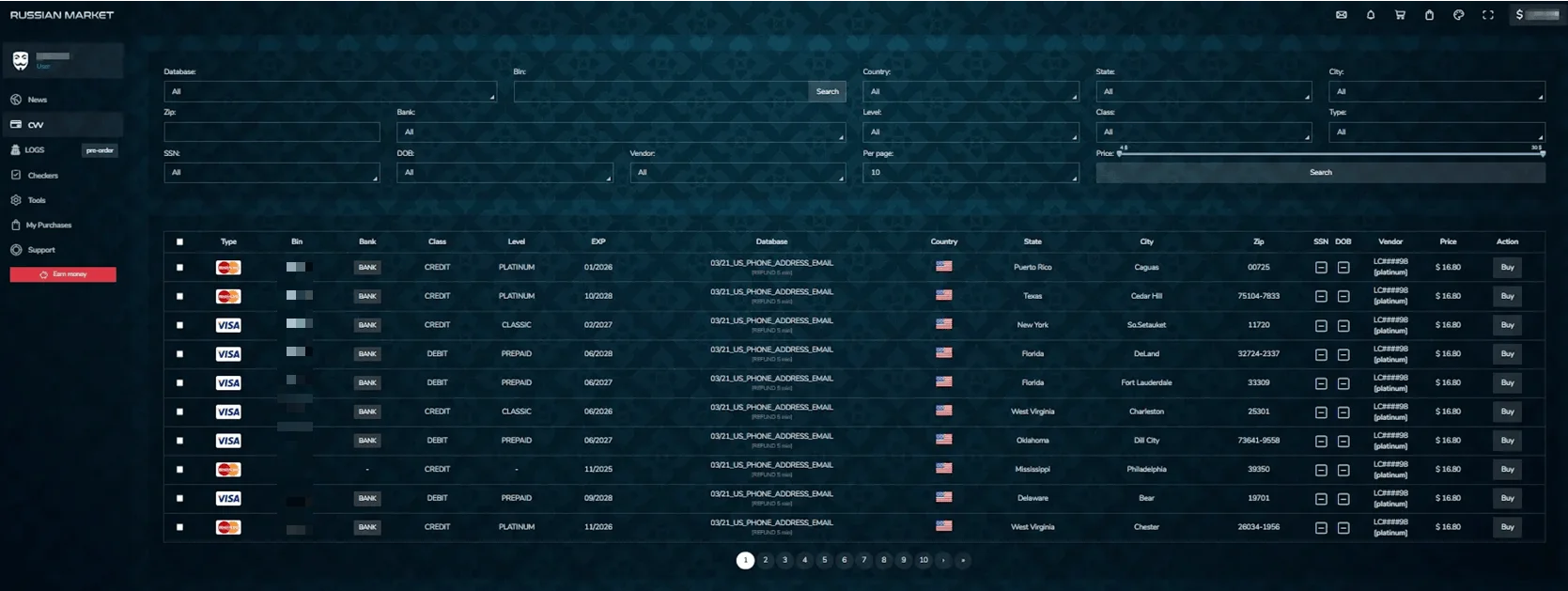
Type: Data-focused marketplace | Main Focus: Stealer logs, credentials, cookies, payment data | Access Model: Underground marketplace | Listing Note: No verified current count | Monitoring Value: Infostealer and credential exposure
Russian Market
Russian Market is one of the most important Dark Web marketplaces to track in 2026 for stolen credentials, stealer logs, cookies, payment card data, and corporate access. Unlike general-purpose darknet markets, it is mainly a data-focused marketplace where threat actors buy information taken from compromised devices.
The market has evolved from RDP access and compromised credential sales into a major hub for infostealer malware logs. For enterprises, this creates risk around account takeover, business email compromise, identity theft, financial fraud, and initial access.
Common data sold on Russian Market includes:
- Infostealer logs
- Corporate and personal credentials
- Browser cookies and session data
- Payment card data and CVVs
- RDP and remote access credentials
- Device fingerprints and autofill data
- Credentials linked to email, cloud, VPN, and SaaS platforms
Russian Market’s relevance is tied to the wider infostealer economy. Malware families such as Lumma, RedLine, Vidar, Raccoon, Stealc, Rhadamanthys, and Acreed have fed underground markets with stolen logs and credentials.
In May 2025, Microsoft and international partners disrupted Lumma Stealer, taking action against about 2,300 malicious domains and reporting more than 394,000 infected Windows computers between March 16 and May 16, 2025. This was not a Russian Market takedown, but it shows how infostealer malware supplies marketplaces trading in logs, credentials, cookies, and session data.
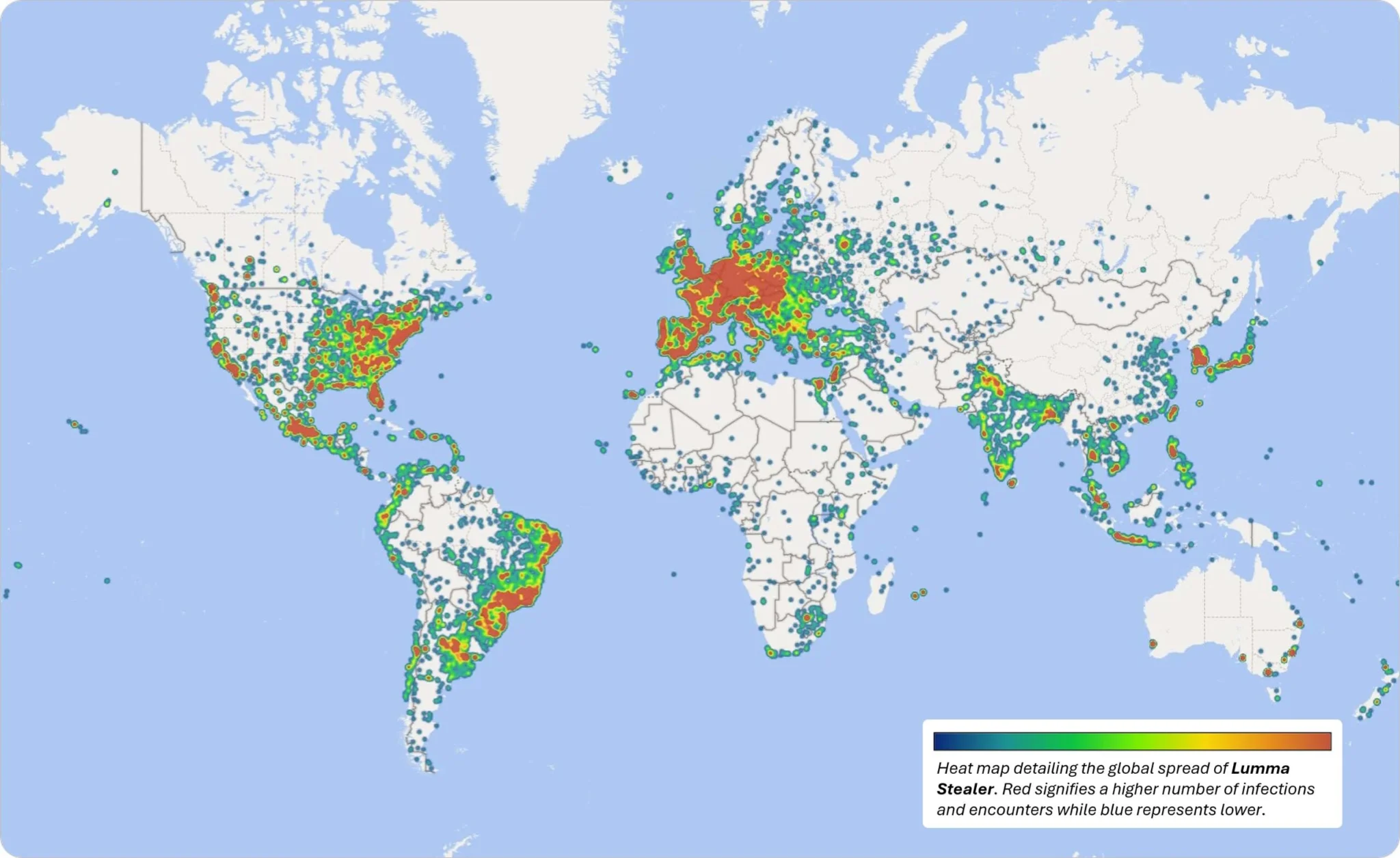
Lumma Stealer malware spread map according to Microsoft
2. Torzon Market
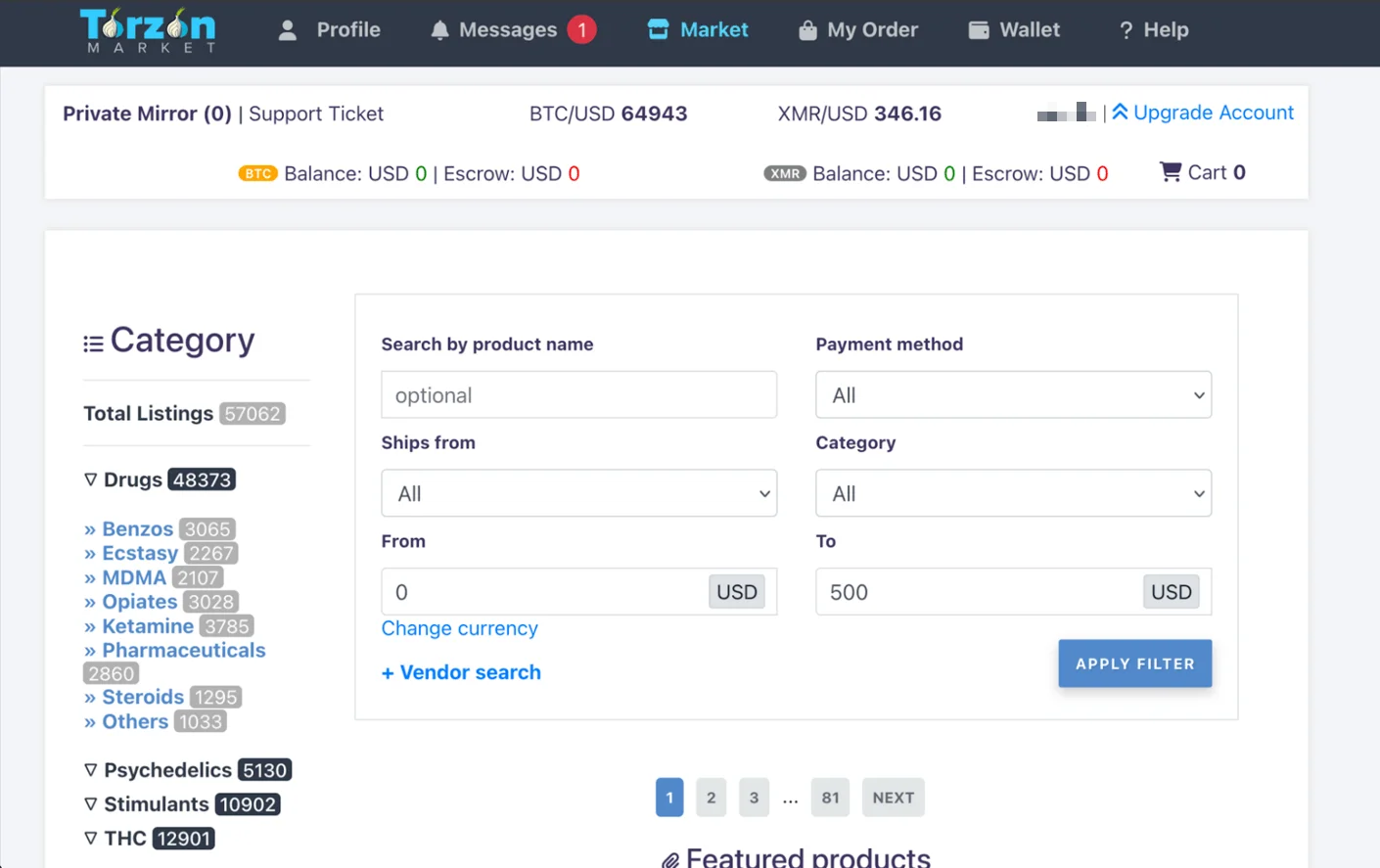
Type: Multi-purpose darknet marketplace | Main Focus: Drugs, fraud, hacking, digital goods | Access Model: Tor/onion mirrors | Listing Note: 57,000+ marketplace-displayed listings | Monitoring Value: Vendor migration and post-Abacus market activity
Torzon Market
Torzon Market is a strong candidate for the traditional Dark Web marketplace category in 2026. It fits the broader darknet market model, where multiple illicit categories are listed under one platform rather than focusing only on credentials, carding, or stealer logs.
Its relevance increased after instability hit several Western-facing darknet markets. One key example was Abacus Market, which went offline in July 2025 after withdrawal issues and exit-scam concerns. When a large marketplace disappears, vendors and buyers often move to platforms with similar features, and Torzon appears to have benefited from this wider migration pattern.
Recent marketplace pages show Torzon presenting a large multi-category structure. Its interface shows more than 57,000 total listings, though this should be treated as a marketplace-displayed claim, not an independently verified figure.
Common categories listed on Torzon Market include:
- Drugs
- Fraud
- Hacking
- Digital goods
- Counterfeits
- Carding ware
- Services
- Guides and tutorials
- Security and hosting
- Software and malware
3. Black Ops Market
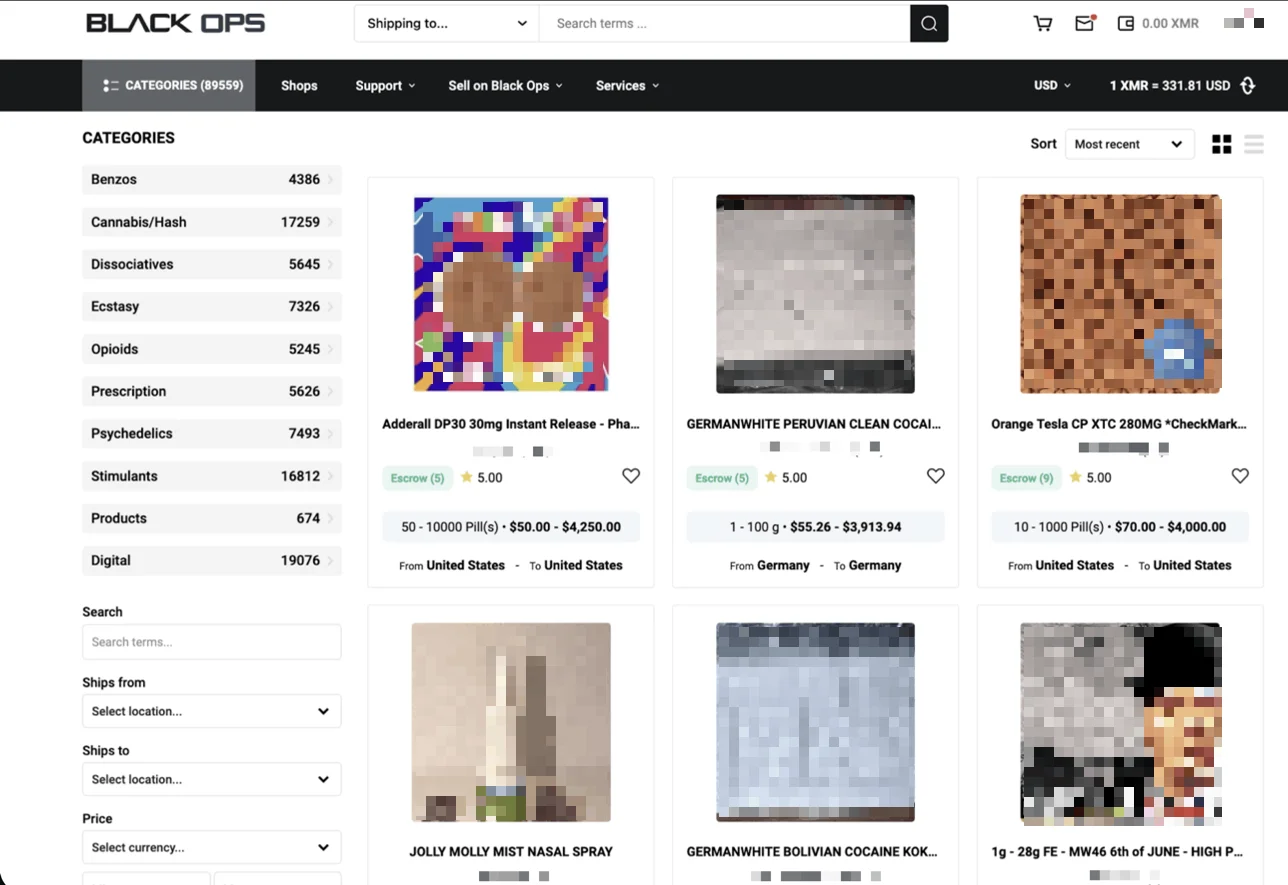
Type: Large multi-category darknet marketplace | Main Focus: Digital products, drugs, prescriptions, general products | Access Model: Tor/onion marketplace | Listing Note: 89,000+ marketplace-displayed listings | Monitoring Value: Digital-goods and broad marketplace activity
Black Ops Market
Black Ops Market is a large multi-category Dark Web marketplace that appears to combine traditional darknet market activity with a more polished interface, vendor features, and cryptocurrency support.
Based on the marketplace, Black Ops displays roughly 89,000+ marketplace-displayed listings. These figures should be treated as marketplace-displayed estimates, not independently verified listing counts. The market appears especially notable for its digital products category, which is shown with more than 19,000 listings in the observed interface.
Common categories listed on Black Ops Market include:
- Digital products
- Cannabis
- Drugs and related products
- General products
While many visible listings are drug-related, the large digital products category makes Black Ops relevant for cybercrime monitoring. Digital sections on darknet markets may include fraud material, account access, guides, software, templates, or other illicit digital goods.
4. STYX Market
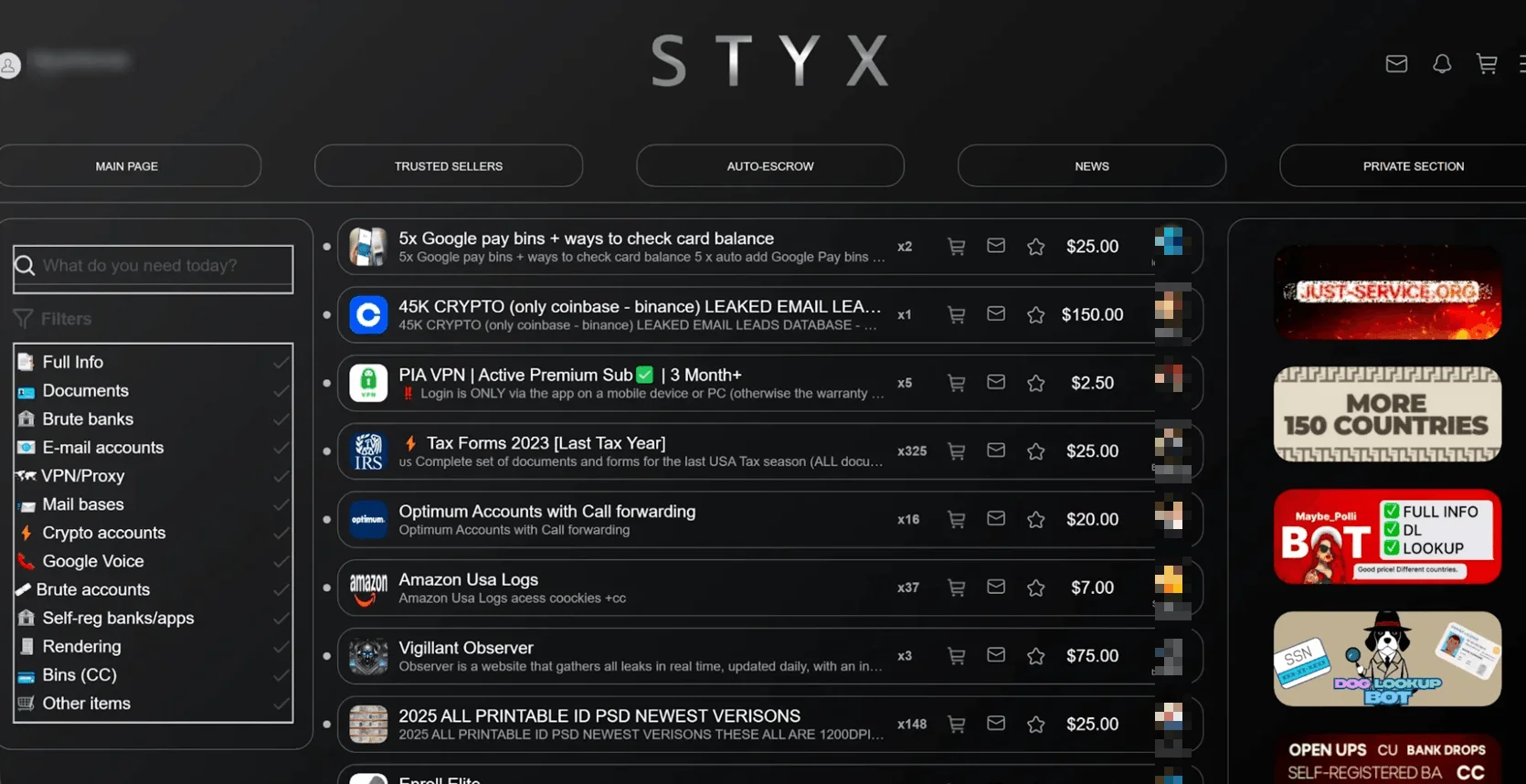
Type: Fraud-focused marketplace | Main Focus: Financial fraud, identity abuse, access trading | Access Model: Underground marketplace | Listing Note: No verified current count | Monitoring Value: Fraud, access, and cash-out activity
STYX Market
STYX Market is a financial fraud-focused Dark Web marketplace, making it especially relevant for teams tracking account takeover, identity abuse, access trading, and cash-out activity. Unlike broad darknet markets that mix drugs, counterfeit goods, and digital products, STYX is more closely tied to fraud services and cybercrime monetization.
The marketplace gained attention for offering resources connected to financial crime, stolen identities, banking malware, SIM-related services, 2FA/SMS bypass, and laundering support. It also overlaps with the wider infostealer and access economy, where stealer logs, bot data, remote access credentials, and compromised accounts can be used for fraud or unauthorized access.
Common categories listed on STYX Market include:
- Financial fraud services
- Stolen identity data and documents
- Stealer logs and bot data
- Remote access credentials
- Banking malware and fraud tools
- 2FA/SMS bypass services
- Cash-out and laundering support
- Fraud tutorials and operational guides
5. Exodus Marketplace
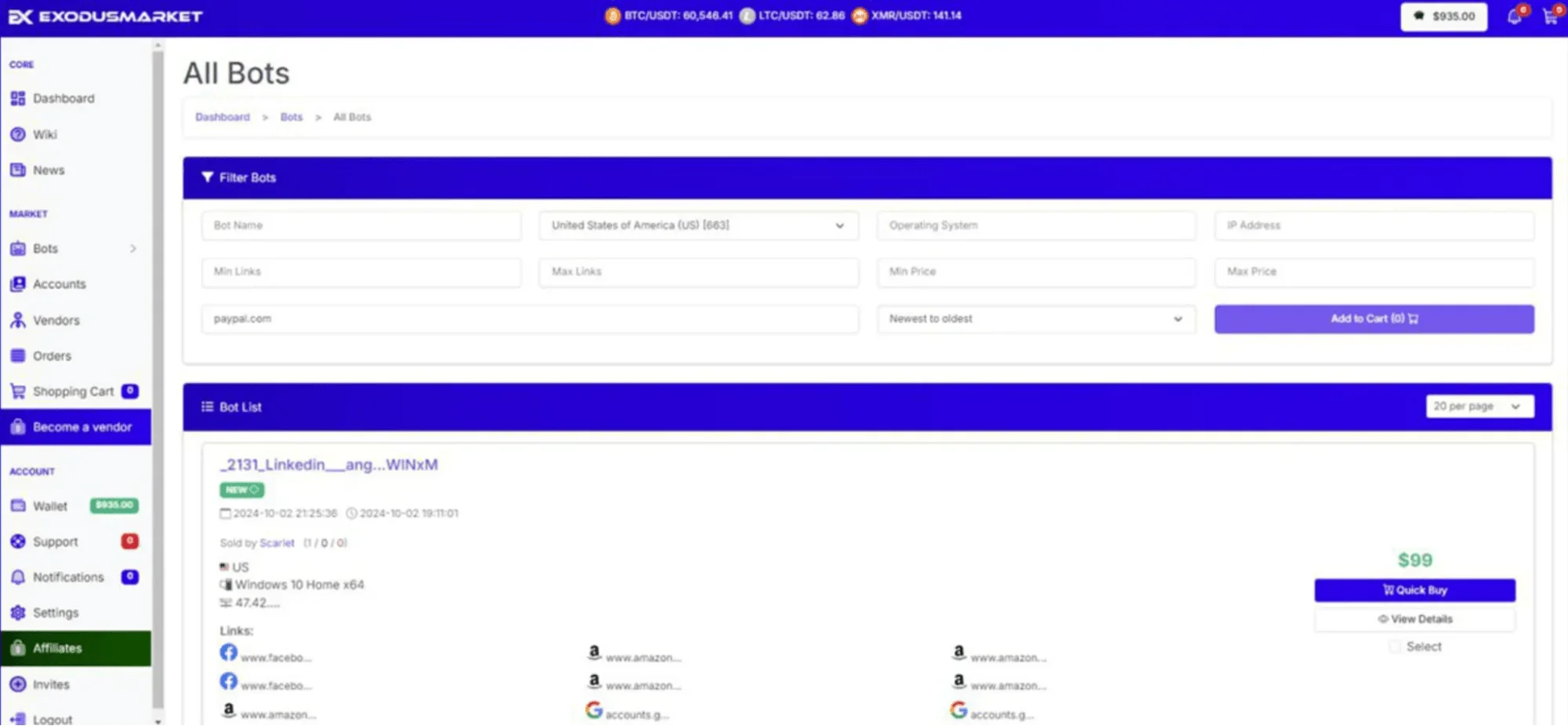
Type: Stealer-log marketplace | Main Focus: Browser profiles, cookies, device-linked logs | Access Model: Underground marketplace | Listing Note: Use cautious status wording | Monitoring Value: Genesis-style infostealer-log activity
Exodus Marketplace
Exodus Marketplace is best positioned as a stealer-log marketplace rather than a traditional all-purpose darknet market. It became relevant after the disruption of Genesis Market, which had been one of the most recognizable platforms for bot-based stolen data before law enforcement action reshaped that part of the ecosystem.
Exodus focuses on data collected from malware-infected devices. This makes it part of the broader Genesis-style economy, where attackers buy compromised browser profiles and device-linked data instead of only static username-password pairs. For cybercriminals, this type of access can support account takeover, fraud, identity theft, and attempts to bypass login protections.
Common categories listed on Exodus Marketplace include:
- Infostealer logs
- Browser cookies and session tokens
- Saved credentials
- Autofill and payment data
- Device fingerprints
- Crypto wallet information
- Personal and corporate account data
Because underground market availability can change quickly, Exodus should be described with cautious wording such as “reported,” “referenced in 2026 marketplace roundups,” or “relevant to stealer-log monitoring” unless current access and activity are confirmed through direct threat intelligence.
6. BriansClub
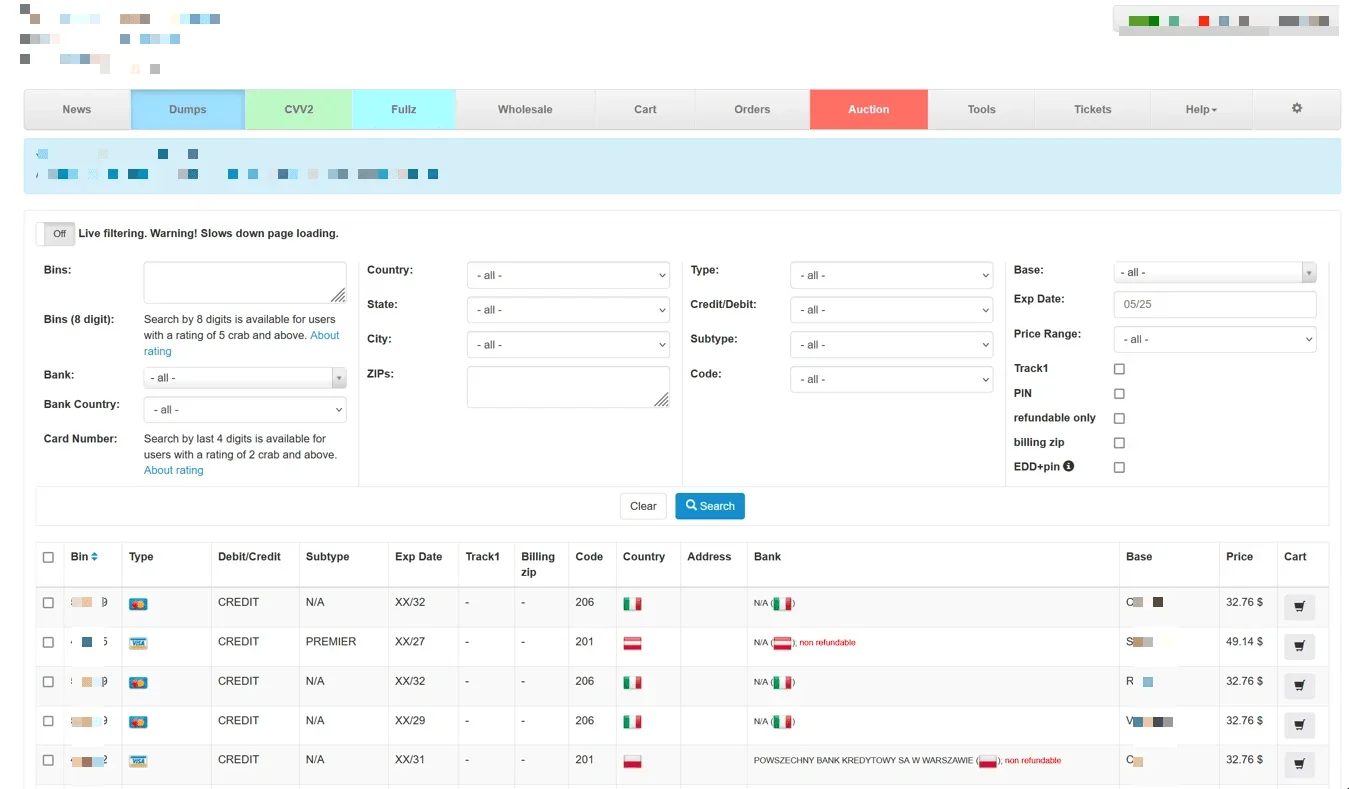
Type: Carding marketplace | Main Focus: CVVs, dumps, fullz, payment card data | Access Model: Underground carding ecosystem | Listing Note: 26M+ records exposed in 2019 breach | Monitoring Value: Payment-card fraud and financial abuse
BriansClub Market
BriansClub is one of the most recognizable underground markets for stolen payment card data. Unlike general-purpose Dark Web marketplaces that list many product types, BriansClub is best understood as a specialized carding market built around credit card fraud.
The marketplace has been active for years and is widely associated with the sale of CVVs, dumps, fullz, and payment card records. These datasets are commonly used in carding, identity theft, fraudulent purchases, account creation abuse, and other financial crime workflows.
BriansClub’s reputation was shaped partly by a major incident in 2019, when the marketplace itself was reportedly breached. KrebsOnSecurity reported that more than 26 million credit and debit card records were taken from BriansClub and shared with financial institutions, exposing the scale of its inventory and the role of large carding markets in the underground economy.
Common categories listed on BriansClub include:
- CVVs and payment card records
- Card dumps
- Fullz and identity-linked card data
- Bank and issuer information
- Region-specific card datasets
- Bulk card listings
- Freshness or validity indicators
7. WeTheNorth Market
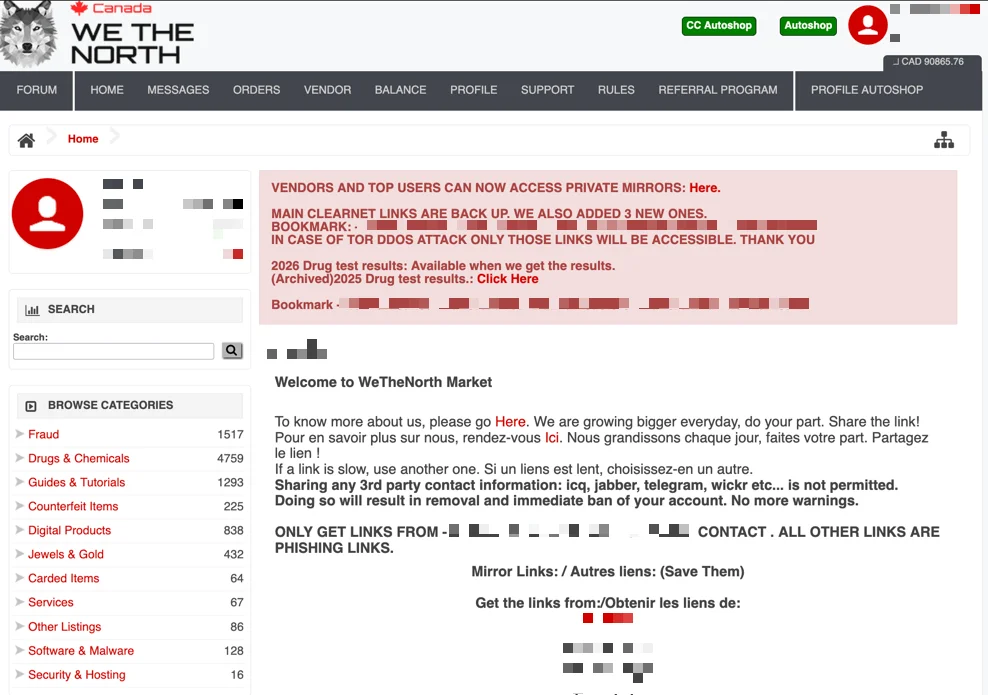
Type: Regional darknet marketplace | Main Focus: Canada-focused drugs, fraud, digital products | Access Model: Tor/onion and market mirrors | Listing Note: 8,000–9,000+ marketplace-displayed listings | Monitoring Value: Canada-focused fraud and marketplace activity
WeTheNorth Market
WeTheNorth Market, also known as WTN, is a Canada-focused Dark Web marketplace that stands out because of its regional positioning. Launched in 2021, the marketplace appears to target Canadian buyers, vendors, and illicit supply chains more directly than larger global darknet markets.
Unlike broad multi-region platforms, WeTheNorth is best understood as a localized darknet market. Its Canadian focus can reduce friction for users around domestic shipping, CAD pricing, language, local fraud patterns, and counterfeit document formats. This makes it relevant not only for narcotics-related monitoring, but also for visibility into fraud, identity abuse, malware access, and Canadian underground market activity.
Based on the marketplace, WeTheNorth displays roughly 8,000 to 9,000+ visible listings across its categories, with the largest share appearing under Drugs & Chemicals. These figures should be treated as marketplace-displayed estimates, not independently verified listing counts.
Common categories listed on WeTheNorth Market include:
- Drugs and chemicals
- Fraud
- Guides and tutorials
- Counterfeit items
- Digital products
- Carded items
- Services
- Software and malware
- Security and hosting
8. Vortex Marketplace
Type: General-purpose darknet marketplace | Main Focus: Recreational drugs, digital goods, escrow-based trade | Access Model: Tor/onion marketplace | Listing Note: 4,800–6,300 visible product results | Monitoring Value: Vendor trust, escrow, and payment behavior
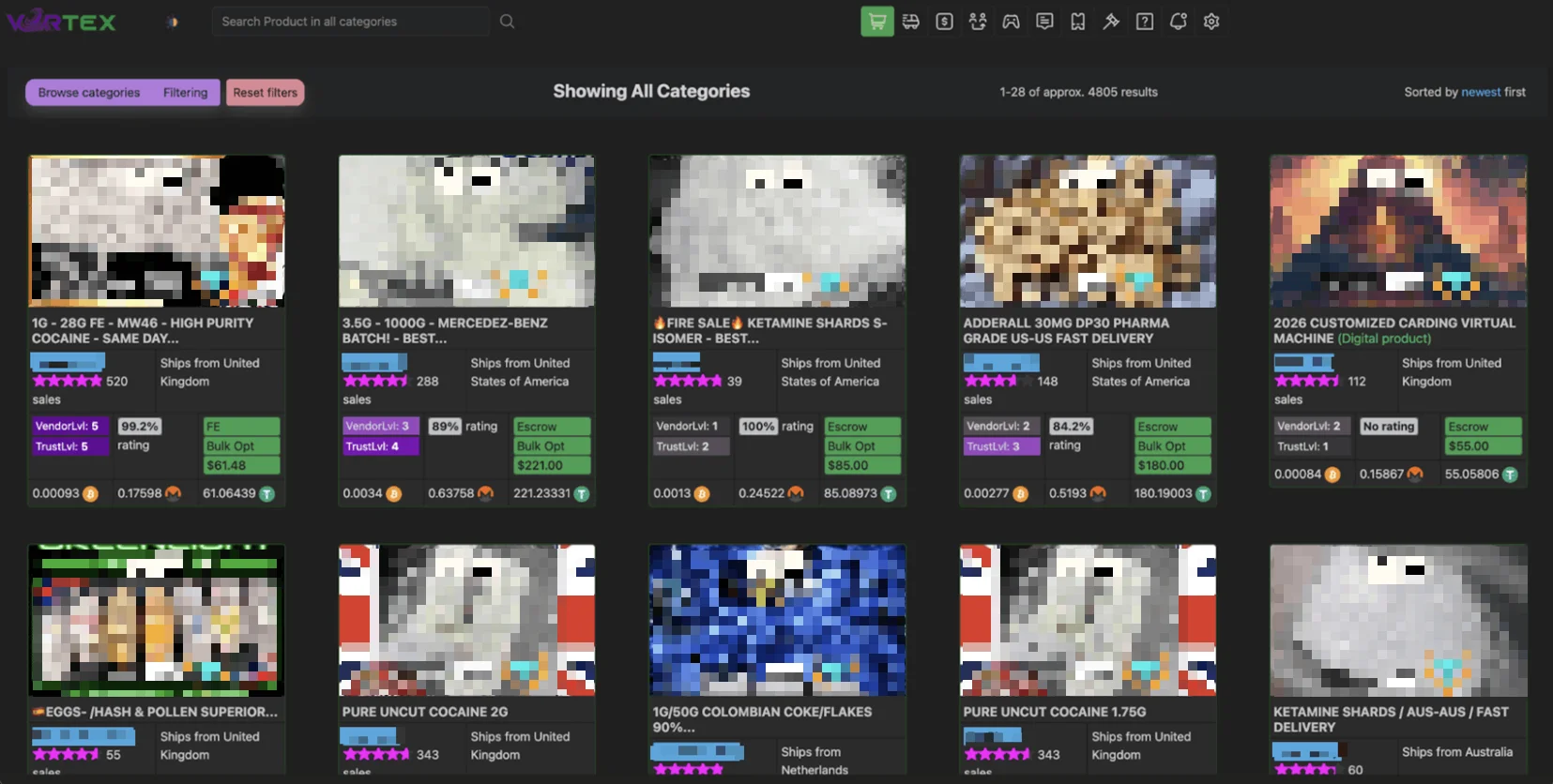
Vortex Marketplace
Vortex Marketplace is a traditional Dark Web marketplace that represents the broader, general-purpose side of the darknet economy. Unlike Russian Market, STYX, or Exodus, which are more closely tied to credentials, fraud, and stealer logs, Vortex is better understood as a marketplace built around anonymous trade, escrow, vendor trust, and cryptocurrency payments.
The market describes itself as a “classic wallet escrow market,” which fits its positioning as a conventional darknet marketplace rather than a specialized cybercrime data store. Its relevance in 2026 comes from the continued demand for multi-category darknet markets after repeated shutdowns, exit scams, and vendor migration across the underground economy.
Based on the marketplace, Vortex appears to be drug-heavy, but not limited to narcotics alone. It displays roughly 4,800 to 6,300 visible product results across observed marketplace views. These figures should be treated as marketplace-displayed estimates, not independently verified listing counts.
Common categories listed on Vortex Marketplace include:
- Recreational drugs
- Digital products
- General marketplace goods
- Fraud-related listings
- Counterfeit or identity-related material
- Escrow-based vendor listings
- FE listings
Vortex appears to support BTC, XMR, and USDT, and the interface also shows a built-in coin swap function with a stated 4% conversion fee. This suggests a marketplace model built to keep transactions inside its own wallet and payment flow, while still exposing users to risks such as scams, fake mirrors, account theft, exit scams, and law enforcement monitoring.
9. Anubis Market
Type: Multi-category darknet marketplace | Main Focus: Drugs, digital goods, counterfeits | Access Model: Tor/onion marketplace | Listing Note: 8,000–9,000+ marketplace-displayed listings | Monitoring Value: General darknet market and digital-goods activity
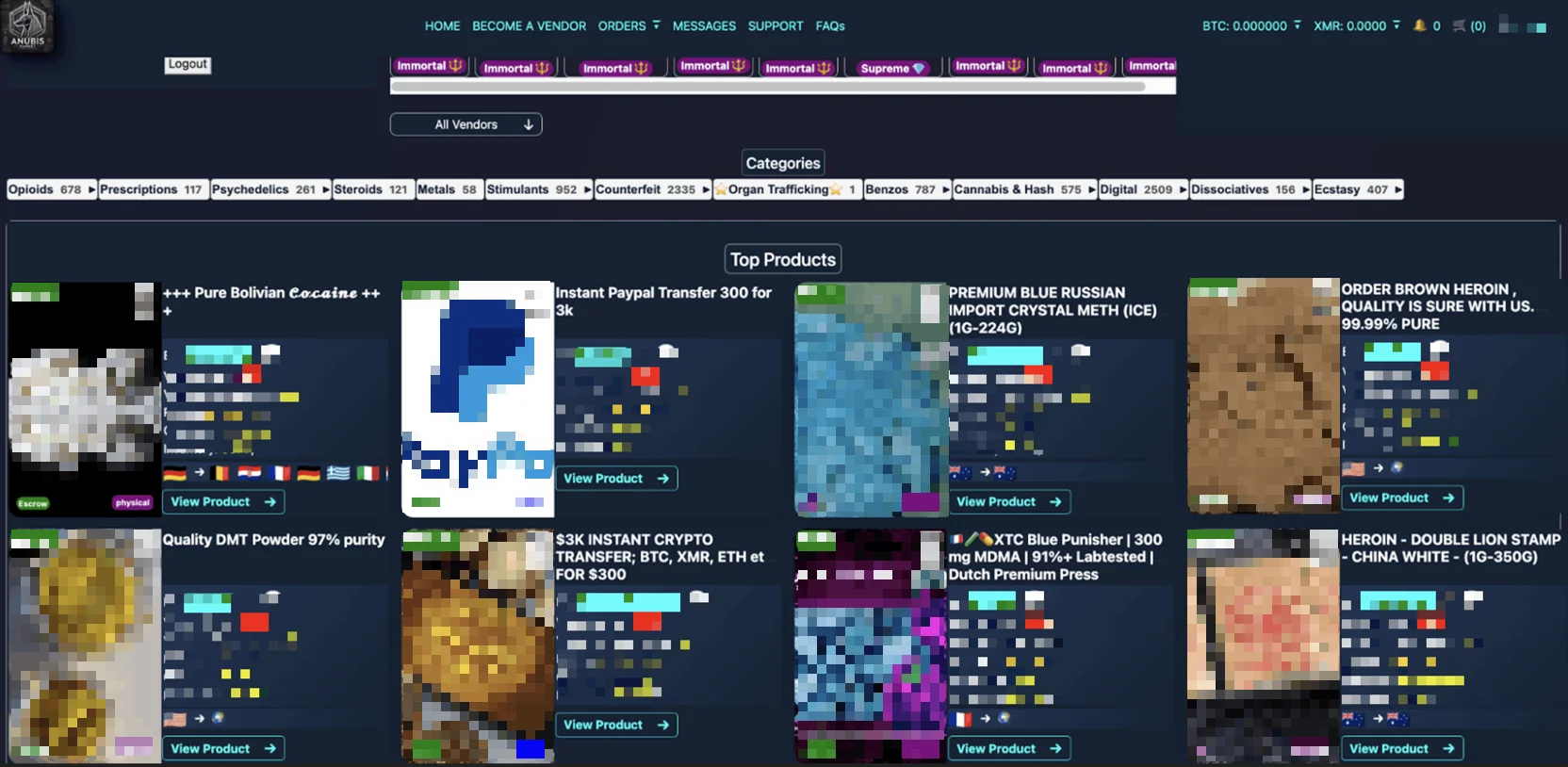
Anubis Market
Anubis Market is a multi-category Dark Web marketplace that fits the traditional darknet market model, with a mix of physical goods, digital products, vendor accounts, escrow-based trading, and cryptocurrency payments. Unlike Russian Market or Exodus, which are more closely tied to stolen credentials and stealer logs, Anubis appears to operate as a broader marketplace where illicit products and services are grouped across several categories.
Based on the marketplace, Anubis displays roughly 8,000 to 9,000+ marketplace-displayed listings. The largest visible categories appear to include digital goods, counterfeit items, drugs and related products and cannabis and hash. These figures should be treated as marketplace-displayed estimates, not independently verified listing counts.
Common categories listed on Anubis Market include:
- Steroids
- Drugs and related products
- Counterfeit items
- Cannabis
- Digital goods
Anubis also appears to support Bitcoin and Monero, and its pages reference an Ethereum swap feature that allows ETH to be converted into BTC or XMR for purchases. This suggests a flexible payment model while still relying on major underground transaction currencies.
10. FreshTools
Type: Clearnet access shop | Main Focus: RDP, cPanel, webmail, SSH, compromised accounts | Access Model: Clearnet underground marketplace | Listing Note: Historical large-inventory claims | Monitoring Value: Credential abuse and direct access trading
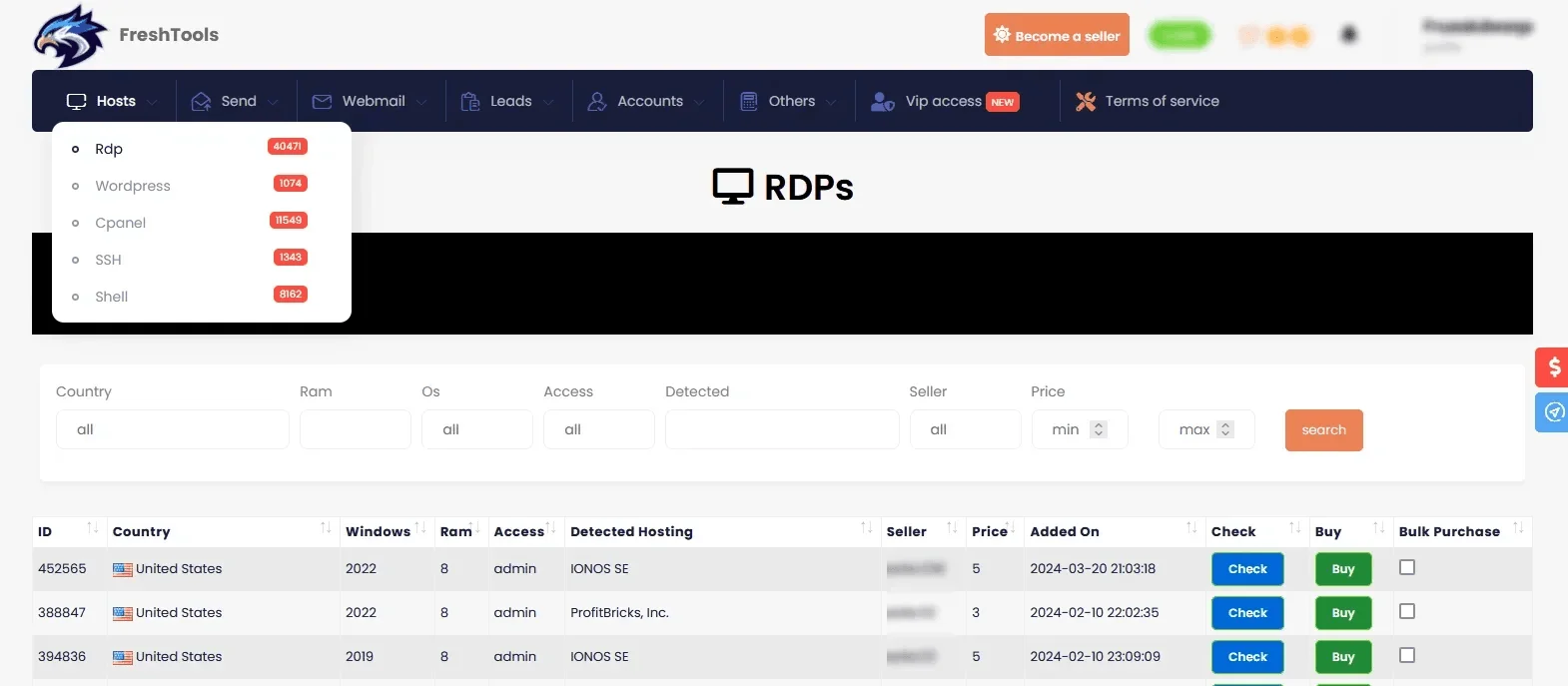
FreshTools Market
FreshTools is best positioned as a clearnet underground marketplace focused on stolen access, compromised accounts, and fraud-related tools. Unlike traditional Dark Web marketplaces that operate mainly through Tor, FreshTools is more closely tied to credential-based cybercrime and direct access to compromised systems.
The platform has been referenced as active since around 2019 and is commonly described as a marketplace for ready-to-use access, including RDP accounts, cPanels, webmail accounts, SMTP servers, WordPress logins, root SSH credentials, scam pages, and fraud tutorials. This makes it relevant for threat actors looking for quick access to infrastructure rather than broad darknet market browsing.
Older reporting and marketplace descriptions have associated FreshTools with a very large inventory, sometimes claiming hundreds of thousands of illegal products. These figures should be treated as marketplace-reported or historically reported estimates, not independently verified current totals.
Common categories listed on FreshTools include:
- RDP access
- cPanel and hosting credentials
- Webmail and SMTP access
- WordPress logins
- Root SSH credentials
- Scam pages and phishing material
- Fraud tutorials
- Compromised digital accounts
Bonus: Dread Forum
Type: Marketplace-adjacent forum | Main Focus: Market reputation, scam reports, vendor migration | Access Model: Onion forum | Listing Note: Not a marketplace | Monitoring Value: Marketplace trust and disruption signals.
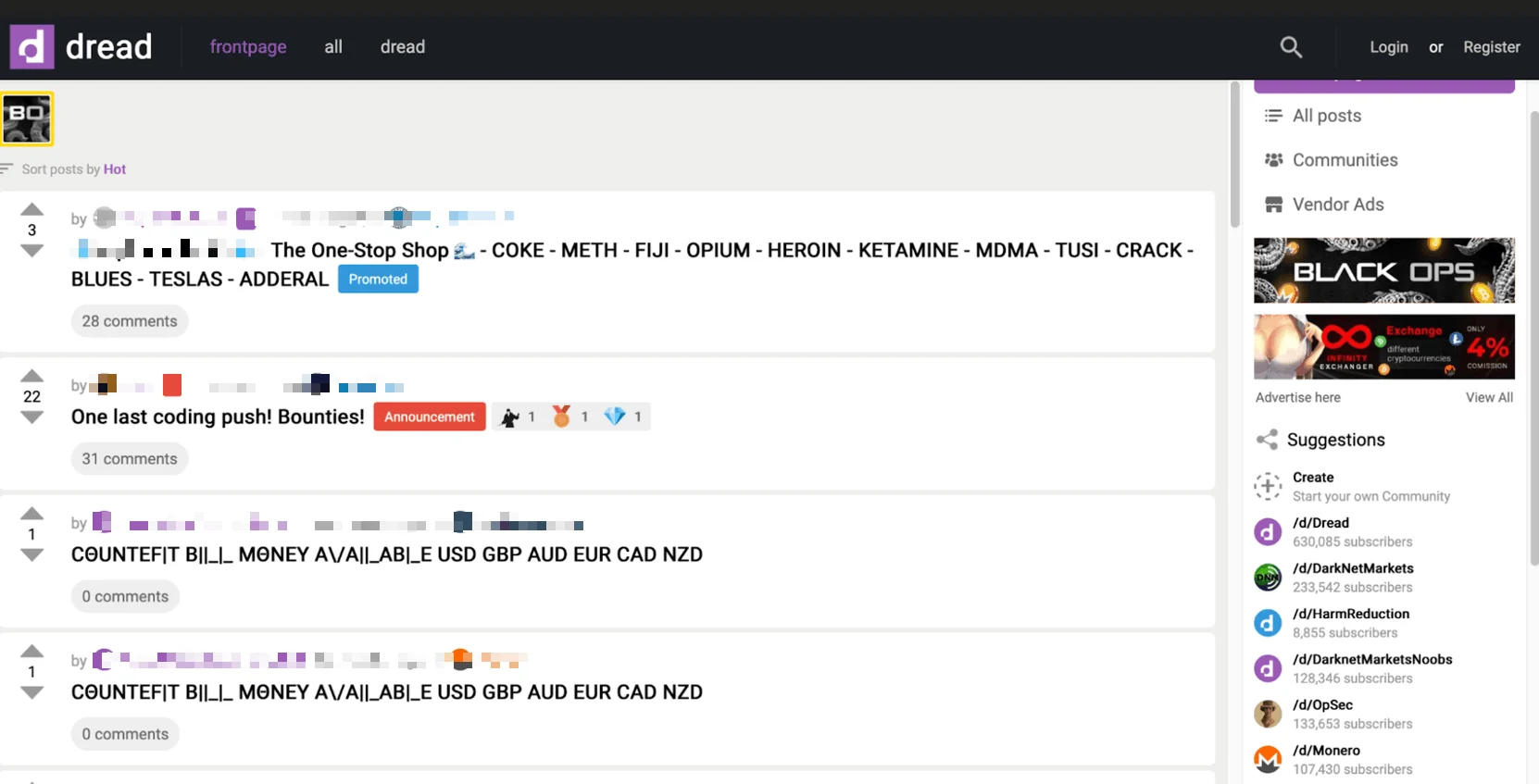
Dread Forum
Dread is not a Dark Web marketplace in the traditional sense, but it remains one of the most important marketplace-adjacent forums in the Dark Web ecosystem. Launched in 2018, Dread describes itself as an onion-based free speech forum where users can post, comment, and join communities, with a Reddit-like interface designed for privacy and usability.
Dread plays a major role in the underground economy because it acts as a discussion hub for darknet markets, vendor reputation, scam reports, market disputes, harm reduction, and cybercrime-related communities. While the platform says it does not allow on-site trades or direct transactions, marketplace vendors and communities can still use it for visibility, user support, announcements, and reputation building.
Dread’s own site-wide rules prohibit categories such as terrorism, child sexual abuse material, weapons, poisons, doxing, spam, impersonation, vote manipulation, and on-site trades or transactions. Its market standards also describe expectations for marketplace communities, including support for Monero, vendor PGP verification, anti-DDoS protections, market growth, known vendors, and original marketplace features. These rules suggest that Dread tries to reduce platform-level risk while still allowing discussion around darknet markets.
For threat intelligence teams, Dread is useful because it can provide early signals about the health and reputation of Dark Web marketplaces. Discussions may reveal exit scam concerns, phishing mirrors, vendor migration, law enforcement rumors, market downtime, new market launches, and user complaints before they appear in formal reporting.
Dread is best positioned as a Dark Web forum that supports marketplace intelligence, not as one of the top Dark Web marketplaces itself. It should be included as a bonus or separate entry because it helps explain how darknet market communities communicate, advertise, review vendors, and respond to disruption.
Common intelligence signals from Dread include:
- Market outage reports
- Exit scam allegations
- Vendor reputation discussions
- Phishing mirror warnings
- Market launch announcements
- Law enforcement and seizure rumors
- OPSEC discussions
- Monero and payment-related discussions
- Darknet market community updates
How Law Enforcement Disrupts Darknet Markets
Law enforcement agencies disrupt darknet markets through a mix of technical investigations, financial tracing, undercover operations, and international cooperation. These actions can target the marketplace itself, its administrators, major vendors, payment flows, or the infrastructure used to keep the market online.
Common disruption methods include:
- Seizing marketplace servers, domains, or onion infrastructure
- Tracking cryptocurrency transactions and cash-out points
- Running undercover investigations against vendors or administrators
- Arresting market operators, moderators, or high-volume sellers
- Taking over marketplace accounts or services to collect evidence
- Disrupting malware, botnets, or infostealer infrastructure that supplies stolen data
- Sharing seized data with victims, banks, service providers, or private-sector partners
These actions can remove major marketplaces from the ecosystem, but they rarely eliminate demand. When one Dark Web marketplace shuts down, vendors and buyers often migrate to other platforms, forums, encrypted channels, or regional markets. This is why marketplace disruption is usually followed by vendor movement, phishing mirror campaigns, scam warnings, and new market launches.
For threat intelligence teams, law enforcement activity is an important signal. A takedown, seizure banner, arrest, or suspected exit scam can quickly change where stolen credentials, stealer logs, payment card data, malware, and corporate access listings appear next.
What Security Teams Should Monitor on Dark Web Marketplaces
Dark Web marketplaces can expose early signs of compromise before an organization sees direct impact. For security teams, the most important signals are usually not general marketplace activity, but listings that mention the organization, its employees, customers, domains, infrastructure, or third-party vendors.
Key indicators to monitor include:
- Leaked employee credentials
- Session cookies and stealer logs
- Corporate VPN, RDP, SSH, or cloud access
- Mentions of company domains, brands, or executives
- Customer databases or internal files offered for sale
- Payment card data linked to the organization
- Phishing kits abusing company branding
- Ransomware group activity and victim listings
- Vendor or supplier exposure
- Marketplace posts referencing access to corporate systems
Early detection helps security teams reset exposed credentials, revoke sessions, investigate infected endpoints, protect customers, and reduce the chance of account takeover, fraud, or follow-on intrusion.
How SOCRadar Helps Monitor Dark Web Threats
Monitoring Dark Web markets manually is risky, incomplete, and difficult to scale. Marketplaces change mirrors, restrict access, rotate infrastructure, and often operate alongside forums, Telegram channels, paste sites, and ransomware leak pages. This makes structured monitoring essential for organizations that need visibility without direct interaction with threat actors.
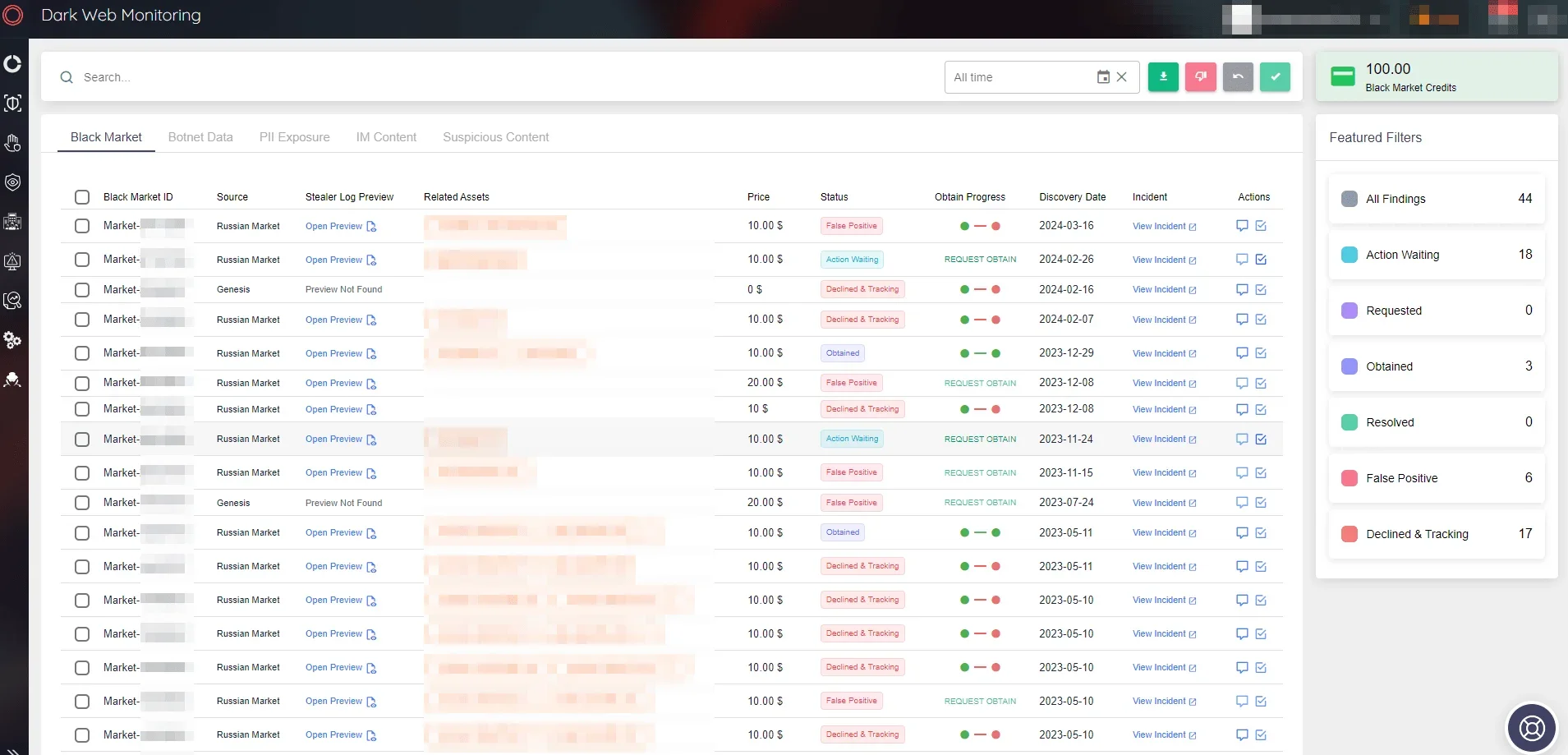
SOCRadar Digital Risk Protection Module, Dark Web Monitoring
SOCRadar Dark Web Monitoring helps security teams detect exposed assets across underground sources, including Dark Web marketplaces, hacker forums, leak sites, credential dumps, Telegram channels, and ransomware platforms. It can surface mentions of company domains, employee emails, leaked credentials, stolen databases, exposed access, and brand abuse.
With SOCRadar, organizations can:
- Monitor Dark Web marketplaces and forums continuously
- Detect leaked credentials and stealer-log exposure
- Identify mentions of brands, domains, executives, and suppliers
- Track ransomware and data leak activity
- Prioritize alerts based on business risk
- Integrate findings into SOC, SIEM, and incident response workflows
This turns Dark Web visibility into actionable intelligence. Instead of reacting after a breach becomes public, security teams can detect external exposure earlier and respond before attackers expand their access.
Frequently Asked Questions
Is Accessing the Dark Web Illegal?
Accessing the Dark Web is not illegal in many countries. Tools such as the Tor browser are also used for privacy, journalism, research, and censorship resistance.
However, buying stolen data, malware, illicit goods, or unauthorized access is illegal. Laws vary by jurisdiction, so organizations should follow internal legal, compliance, and security policies when conducting Dark Web research.
Are Dark Web Marketplaces Illegal?
Most Dark Web marketplaces are associated with illegal trade, including stolen credentials, payment card data, malware, drugs, counterfeit documents, and unauthorized access. While the technology used to access the Dark Web may be legal, participating in illegal marketplace activity is a criminal offense.
What Are Dark Web Marketplaces?
Dark Web marketplaces are hidden online markets where users buy and sell illicit goods, stolen data, fraud services, malware, counterfeit documents, and access to compromised systems. Many operate through Tor and use cryptocurrency, escrow, vendor ratings, and encrypted messaging.
What Is the Difference Between Dark Web Markets and Darknet Markets?
The terms Dark Web markets, Dark Web marketplaces, and darknet markets are often used interchangeably. In general, they refer to hidden online markets that operate on anonymized networks such as Tor. Some are broad marketplaces, while others specialize in carding, stealer logs, fraud, or initial access.
How Do Dark Web Marketplaces Work?
Most Dark Web marketplaces follow a marketplace-style model. A vendor lists a product or service, a buyer pays with cryptocurrency, and the platform may hold the funds in escrow until the transaction is completed. Reputation systems, vendor reviews, dispute handling, and PGP encryption are often used to build trust between anonymous users.
What Is Escrow on a Dark Web Marketplace?
Escrow is a payment-holding system used by many darknet markets. The buyer sends payment to the marketplace, and the funds are released to the vendor after the transaction is completed. Escrow is meant to reduce fraud between anonymous users, but it does not remove risks such as exit scams, fake vendors, or marketplace theft.
How Do Dark Web Marketplaces Verify Vendors?
Dark Web marketplaces may use vendor bonds, manual approval, PGP verification, reputation scores, buyer reviews, and transaction history to evaluate sellers. These systems help build trust, but they can still be manipulated through fake reviews, compromised accounts, or vendor migration from other markets.
What Is Sold on Dark Web Marketplaces?
Common listings include stolen credentials, stealer logs, payment card data, corporate access, malware, phishing kits, counterfeit documents, drugs, guides, and cash-out services. For businesses, the most important risks usually involve leaked credentials, exposed access, customer data, and brand abuse.
What Are Stealer Logs?
Stealer logs are data packages collected from malware-infected devices. They may include saved passwords, browser cookies, session tokens, autofill data, crypto wallet information, and device fingerprints. These logs can help attackers access accounts, bypass login protections, or target corporate systems.
What Are Initial Access Brokers?
Initial access brokers are threat actors who sell access to compromised networks or accounts. This can include VPN credentials, RDP access, cloud accounts, email panels, or administrator portals. Ransomware affiliates and intrusion actors may use this access as an entry point into a target environment.
Why Do Dark Web Markets Shut Down?
Dark Web markets shut down for several reasons, including law enforcement takedowns, exit scams, DDoS attacks, infrastructure seizures, internal disputes, phishing pressure, and loss of user trust. When one market disappears, vendors and buyers often migrate to other platforms.
Are Dark Web Marketplaces Safe?
No. Dark Web marketplaces are high-risk environments. Users may face scams, phishing mirrors, malware, fake vendors, stolen funds, account theft, law enforcement monitoring, and sudden market shutdowns. For organizations, direct browsing can also create legal, operational, and security risks.
How Can Organizations Monitor the Dark Web Safely?
Organizations should avoid direct browsing or interaction with marketplace participants. Safer methods include using professional Dark Web monitoring platforms, automated alerts, credential leak monitoring, and structured threat intelligence workflows.
Best practices include:
- Use trusted Dark Web monitoring tools
- Monitor domains, brands, executives, and employee emails
- Track credential leaks and stealer-log exposure
- Integrate alerts into SOC and incident response processes
- Avoid direct engagement with threat actors
Why Is Dark Web Monitoring Important for Businesses?
Dark Web monitoring gives organizations visibility into external exposure before it escalates. It can help detect leaked credentials, stolen data, exposed access, phishing campaigns, ransomware mentions, and supplier-related risks.
Key benefits include:
- Earlier breach detection
- Faster incident response
- Reduced fraud and account takeover risk
- Better visibility into attacker behavior
- Stronger digital risk protection

Table Of Content
Top Dark Web Marketplaces in 2026
What Are Dark Web Marketplaces?
What Do Dark Web Marketplaces Sell?
How Dark Web Marketplaces Work
Types of Dark Web Marketplaces
1. Russian Market
2. Torzon Market
3. Black Ops Market
4. STYX Market
5. Exodus Marketplace
6. BriansClub
7. WeTheNorth Market
8. Vortex Marketplace
9. Anubis Market
10. FreshTools
Bonus: Dread Forum
How Law Enforcement Disrupts Darknet Markets
What Security Teams Should Monitor on Dark Web Marketplaces
How SOCRadar Helps Monitor Dark Web Threats
Frequently Asked Questions
Related Articles
Dark Web Profile: Blue Locker Ransomware
Sep 25, 2026
ShinyHunters Claims Access to FBI Systems
Sep 24, 2026
Clop Hack: ShinyHunters Hijacks Data Leak Site
Sep 21, 2026