

Mar 10, 2026
May 07, 2026
5 Mins Read
Sep 13, 2026
Table Of Content
Related Articles
SMS Bombing
Threat Actors
Jan 08, 2026
Dark Web Monitoring
Feb 19, 2026
Ransomware
Jan 31, 2026
OSINT Framework
Apr 17, 2026
What Is a Darknet?
A darknet is an overlay network or intentionally restricted network that is not directly accessible through ordinary internet browsing. Participants use special software, credentials, or configurations to connect, and designs may emphasize anonymity, privacy, trusted membership, or hidden service locations.
Darknet is sometimes used interchangeably with dark web, but the terms differ. A darknet is the underlying network or environment, while the dark web refers to sites and services hosted on such networks. Tor, I2P, and private friend-to-friend networks are examples of darknet models.
Key Takeaways
- Anonymity networks such as Tor is a central category or use case.
- Reliable assessment depends on source, timing, ownership, and operational context.
- Detection should connect external findings with identity, device, network, and business signals.
- Response should protect affected people and remove every reusable access path.
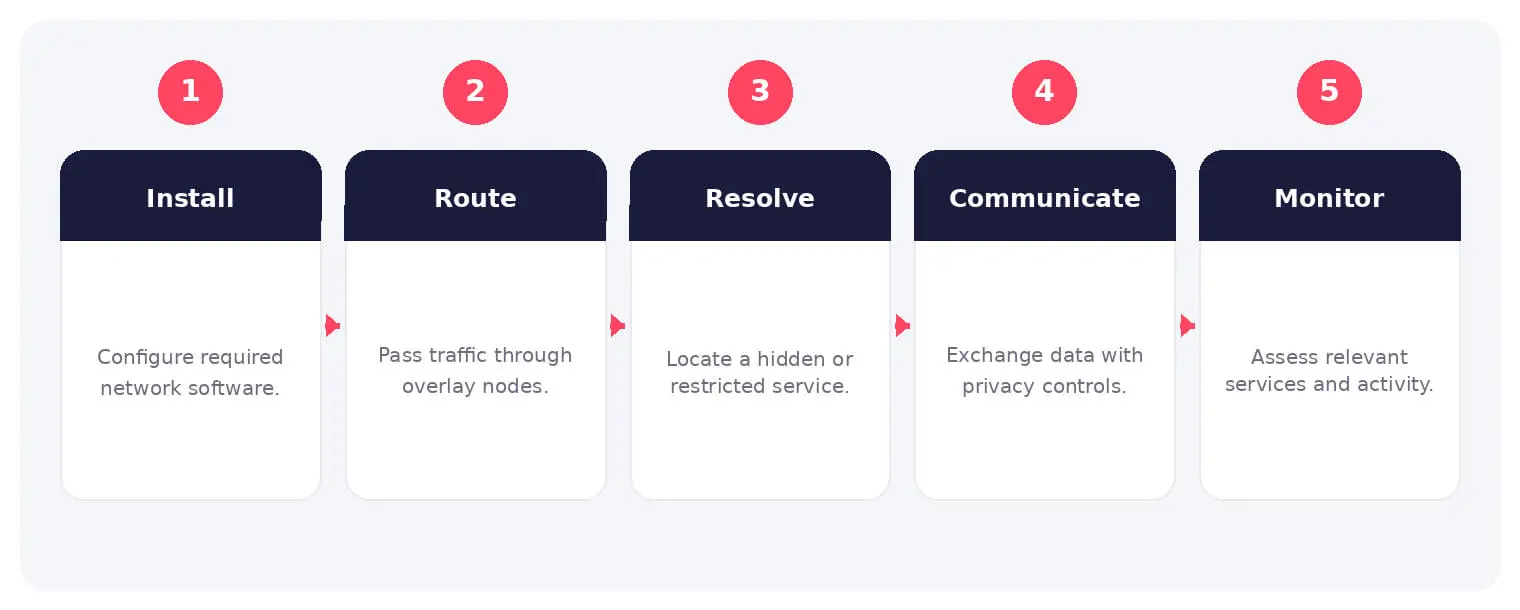
How a Darknet Works
The sequence shown above provides a practical operating model. Individual steps may overlap, repeat, or involve different services and participants, so analysts should validate each stage against available evidence.
Darknet is sometimes used interchangeably with dark web, but the terms differ. A darknet is the underlying network or environment, while the dark web refers to sites and services hosted on such networks. Tor, I2P, and private friend-to-friend networks are examples of darknet models.
Common Types and Use Cases
- Anonymity networks such as Tor
- Peer-to-peer privacy networks such as I2P
- Friend-to-friend and private overlay networks
- Restricted research or organizational darknets
Security, Privacy, and Business Risks
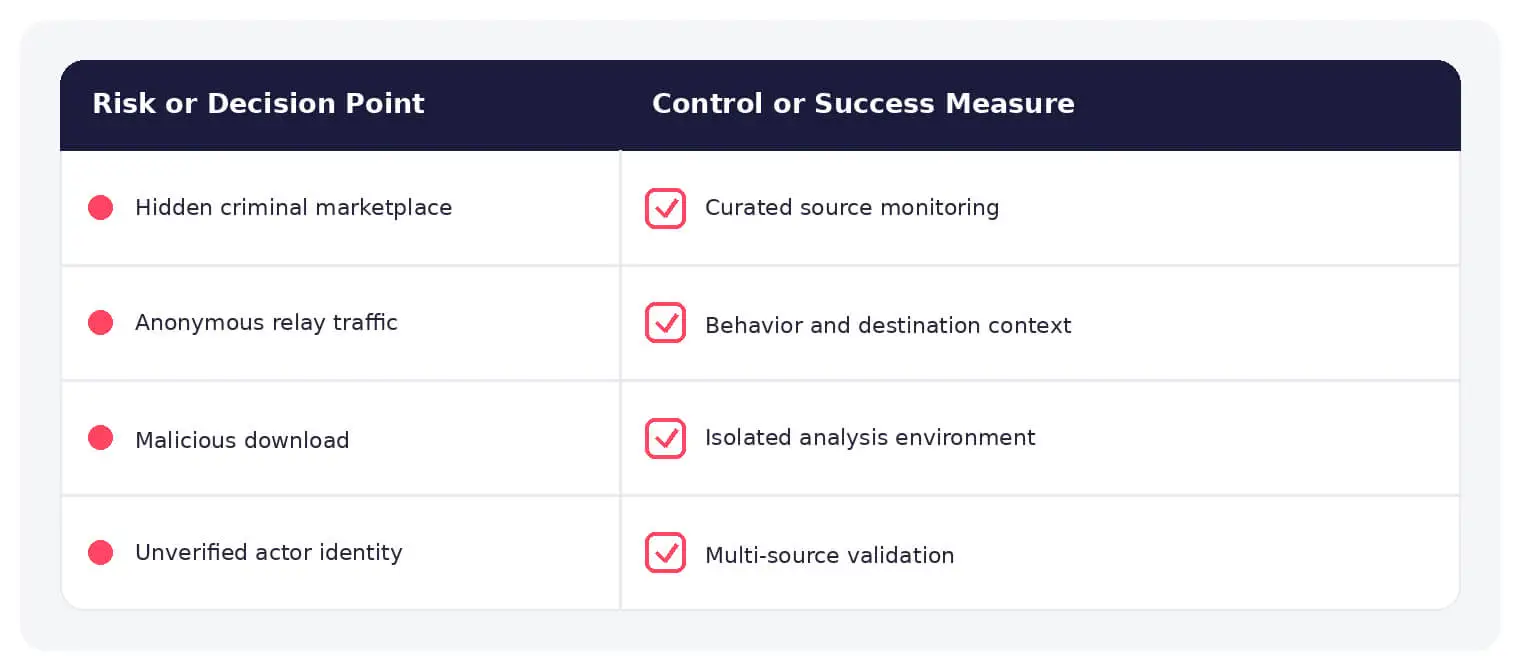
- Criminal services hidden from ordinary discovery
- Malware, scams, and hostile downloads
- Misattribution caused by anonymity and relays
- Legal and operational risk during collection
Warning Signs and Validation
Monitor through approved research environments, curated sources, service addresses, actor infrastructure, and content collection. Exit-node IP addresses alone do not identify the originator of activity.
Prevention and Response
Define lawful collection boundaries, isolate analyst systems, avoid unnecessary interaction, protect captured data, validate identities and claims, and integrate relevant findings with broader threat intelligence.
How SOCRadar Can Help
SOCRadar combines external intelligence, Dark Web visibility, brand monitoring, attack-surface discovery, and contextual enrichment to help teams identify exposure and investigate activity connected to darknet.
Explore SOCRadar Cyber Threat Intelligence or request a demo to strengthen external threat detection and response.
Frequently Asked Questions
How Is a Darknet Different From the Dark Web and the Deep Web?
A darknet is the underlying network, such as Tor or I2P, that requires special software, credentials, or configuration to reach. The dark web refers to the sites and services hosted on those networks. The deep web is broader: it covers any content not indexed by standard search engines, including ordinary databases, intranets, and pages behind logins, not just hidden services.
Is Accessing a Darknet Illegal?
No. Running Tor relays, browsing hidden services, and using anonymity tools are lawful in most countries, and journalists, researchers, and users behind censorship rely on them. What matters is conduct: buying stolen data, selling malware, or distributing illicit content is illegal, and specific laws differ by jurisdiction.
What Threat Activity Is Commonly Bought and Sold on Darknets?
Darknet marketplaces and forums commonly host:
- Stolen credentials and stealer logs, often filtered by corporate domain.
- Initial access listings, where brokers sell footholds into company networks.
- Ransomware leak sites and extortion claims used to pressure victims.
- Malware, phishing kits, and fraud services offered as ready-made tooling.
Much of this material is staged for resale, so a single mention of your organization can indicate an intrusion that is already underway.
How Does Tor Onion Routing Hide User Traffic?
Tor encrypts traffic in layers and routes it through a circuit of volunteer relays, so each relay sees only the neighboring hops and no single relay knows both the sender and the destination. Hidden services add rendezvous points so neither party learns the other’s IP address. Traffic is decrypted at the exit node, so unencrypted requests are visible at that point.
What Darknet Networks Exist Besides Tor?
I2P routes traffic through unidirectional tunnels and hosts its own internal sites. Friend-to-friend networks such as Hyphanet (formerly Freenet) connect only to peers a user explicitly trusts. Private research and organizational overlays exist as well, so monitoring that covers only Tor misses part of the picture.
Can Darknet Activity Be Traced Back to a User?
Not from routing data alone. Anonymity typically fails through operational mistakes, compromised endpoints, reused usernames, payment trails, or traffic-correlation attacks rather than the network design itself. Exit-node IP addresses alone do not identify the originator of activity, since traffic from many users passes through the same relays.
What Warning Signs Indicate Company Data Has Surfaced on a Darknet?
Common indicators include stealer logs containing corporate email addresses, credentials for your domains offered on marketplaces, threat actors discussing your brand or executives, and listings on ransomware leak sites. Failed logins, password-spray waves, or unfamiliar sessions shortly after a leak can confirm the data is actively being used.
How Should Analysts Investigate Darknet Sources Safely?
Work from isolated research systems outside production networks, define lawful collection boundaries in advance, and avoid interacting with sellers or listings. Treat captured content as sensitive evidence, treat actor claims as unverified until corroborated, and connect findings to your own identity, endpoint, and network data.
What Should an Organization Do After Finding Its Credentials on a Darknet?
First confirm the record’s source and freshness, then reset the exposed credentials and revoke active sessions, because a password reset alone may not terminate sessions already in progress on every platform. Deploy phishing-resistant MFA where the platform supports it, review sign-in logs for activity that predates the reset, and determine whether the original infostealer infection or phishing event is still active.
How Can Organizations Reduce the Chance of Their Data Reaching Darknets?
Most darknet data originates from infostealer infections, phishing, and exposed systems, so endpoint detection, phishing-resistant MFA, timely patching, and shrinking the internet-facing footprint reduce the supply at its source. Vendor and supply-chain controls matter as well, because third-party breaches expose your data just as directly as your own incidents.