

Oct 07, 2026
Table Of Content
Top 10 MCP Server Attacks & Mitigations
1. Tool Poisoning
2. Prompt Injection
3. Tool Shadowing and Spoofing
4. Data Exfiltration via Tools
5. Unauthorized Invocation
6. Single Point of Privilege Exploitation
7. Credential Leakage
8. Command Injection in Tool Parameters
9. Overprivileged External API Access
10. Tool Chain Exploitation
Key Takeaways
Related Articles

NetScaler C2: CVE-2026-88771 Exploitation Operation





Oct 01, 2025
11 Mins Read

Summarize with:
Top 10 MCP Server Attacks & Mitigations
As AI systems become more powerful and integrated into business workflows, securing the tools they use has become critical. AI agents can interact with databases, APIs, and external systems, creating new attack surfaces that traditional security measures don’t cover.
Here are the top 10 security threats facing MCP Server’s AI tool implementations and practical steps to defend against them.

1. Tool Poisoning

What it is: Attackers modify the code inside AI tools to steal data or make them behave differently when deployed.
Tool poisoning is one of the most dangerous threats because it compromises the foundation of your AI system. When attackers successfully modify a tool’s internal logic, they can make it appear to function normally while secretly exfiltrating sensitive data or producing incorrect results.
The attack typically happens during the development phase when tools are being built or updated, or through supply chain compromises where malicious code gets injected into third-party tools. Once a poisoned tool is deployed, it can access all the data and systems that the legitimate tool was authorized to use.
How to prevent it:
- Verify tool integrity before deployment
- Run regular code audits on all tools, especially after updates
- Test tools in isolated sandbox environments that mirror production
- Set up deterministic testing to catch unexpected behavior patterns
- Implement version control with approval workflows for tool changes
- Monitor tool behavior in production for deviations from expected patterns
2. Prompt Injection

What it is: Malicious inputs that trick the AI into ignoring its instructions. Attackers embed commands in text, URLs, or other content the AI processes.
Prompt injection attacks exploit how AI models process and prioritize instructions. Attackers craft inputs that appear legitimate but contain hidden commands designed to override the AI’s original instructions. These attacks can be embedded anywhere the AI processes text – in uploaded documents, website content, email messages, or even image captions.
The danger lies in how AI models treat all text input as potentially containing instructions. A well-crafted injection can make the AI ignore security policies, reveal system information, or perform unauthorized actions. These attacks are especially problematic because they can be chained together, with one injection setting up conditions for follow-up attacks.
How to prevent it:
- Clean and validate all user inputs before processing them through the AI
- Separate user data from system prompts
- Deploy AI guardrails and content filters that scan for malicious patterns
- Never trust external content without thorough validation
- Use prompt templates that clearly distinguish between instructions and data
- Implement input length limits and character restrictions where appropriate
3. Tool Shadowing and Spoofing

What it is: Fake tools that copy the names and interfaces of legitimate ones to intercept data or return false information.
Tool shadowing attacks work by creating malicious tools that masquerade as trusted ones. Attackers register tools with names similar to legitimate ones or exploit weaknesses in tool registration systems to overwrite existing tools.
These attacks are particularly dangerous in environments where multiple developers contribute tools or where tools are sourced from external repositories. The fake tool can collect all the data that would normally go to the legitimate tool, modify responses to cause downstream problems, or simply fail to perform critical functions while appearing to work correctly.
How to prevent it:
- Enforce unique naming for all registered tools with strict validation
- Show verified tool information to users before execution
- Maintain approved tool lists with regular reviews
- Require formal approval and security review before adding new tools
- Implement tool versioning with integrity checks
- Verify tool authenticity
4. Data Exfiltration via Tools

What it is: Tools secretly copying sensitive data from AI conversations or uploaded files during normal operations.
Data exfiltration through tools represents a serious breach of trust and privacy. Malicious tools can access the full context of AI conversations, including sensitive business information, personal data, or confidential documents that users share. The tool appears to function normally while secretly copying data to external locations.
This attack is particularly dangerous because users often share sensitive information with AI systems, trusting that it will be processed securely. Tools with broad access permissions can gather data across multiple conversations and users, building comprehensive profiles or stealing valuable intellectual property over time.
How to prevent it:
- Monitor tool outputs for unusual data patterns or unexpected information
- Set limits on how much data tools can return in a single operation
- Scan outputs for sensitive information before release to users
- Log all data access for security review and audit trails
- Implement tools to detect sensitive data movement
- Use network monitoring to detect unusual outbound traffic from tools
5. Unauthorized Invocation

What it is: Attackers triggering internal tools they shouldn’t have access to by manipulating prompts or API calls.
Unauthorized invocation attacks occur when attackers find ways to trigger tools they don’t have permission to use. This often happens through prompt manipulation where attackers craft inputs that cause the AI to call restricted tools on their behalf. It can also occur through API exploitation where attackers find ways to directly invoke tools by bypassing normal access controls.
The risk increases in systems where tools have broad capabilities or where the AI has access to administrative functions. Attackers might chain together multiple unauthorized tool calls to escalate their privileges or access sensitive systems they couldn’t reach directly.
How to prevent it:
- Control tool access based on user roles and permissions with strict enforcement
- Set usage limits and detect unusual patterns in tool invocation
- Give tools only the minimum permissions they need to function
- Track who uses which tools and when with detailed audit logs
- Implement request validation to ensure tool calls come from authorized sources
- Use anomaly detection to flag unusual tool usage patterns
6. Single Point of Privilege Exploitation

What it is: Abuse of high-privilege tools that can perform wide-reaching actions like accessing all user data or system settings.
Single point of privilege exploitation targets the most powerful tools in your AI system. These tools often exist for administrative purposes or to provide broad functionality, but they create significant risk if compromised. A single exploited high-privilege tool can give attackers access to entire databases, all user conversations, or critical system configurations.
The problem is amplified when these powerful tools lack proper access controls or logging. Attackers who gain access can perform massive data breaches, modify system behavior, or create backdoors for future access. The impact can be organization-wide and difficult to detect until significant damage is done.
How to prevent it:
- Give tools the least privilege necessary to function effectively
- Break powerful capabilities into smaller, limited tools with specific purposes
- Log and alert on all privileged operations
- Require additional approval or multi-factor authentication for sensitive actions
- Regularly review and audit high-privilege tool usage
- Implement time-limited access for administrative tools
7. Credential Leakage

What it is: API keys, passwords, or other credentials accidentally getting stored in AI conversation history where tools can access them.
Credential leakage happens when sensitive authentication information ends up in places where it shouldn’t be. AI systems often maintain conversation context across multiple interactions, and this context can inadvertently capture credentials that users mention or that tools expose in their outputs. Once credentials are in the context, any tool with access to that context can potentially extract and misuse them.
This problem is particularly acute in debugging scenarios where developers might paste error messages containing credentials, or when tools return verbose output that includes authentication tokens. The leaked credentials can then be used to access external systems, escalate privileges, or perform unauthorized actions long after the original conversation ended.
How to prevent it:
- Train users to avoid sharing credentials in AI conversations
- Automatically remove sensitive data from conversation logs using pattern matching
- Use dynamic credentials that expire quickly and rotate frequently
- Store secrets in secure vaults, not in plain text within the system
- Regularly audit conversation histories for exposed credentials
8. Command Injection in Tool Parameters
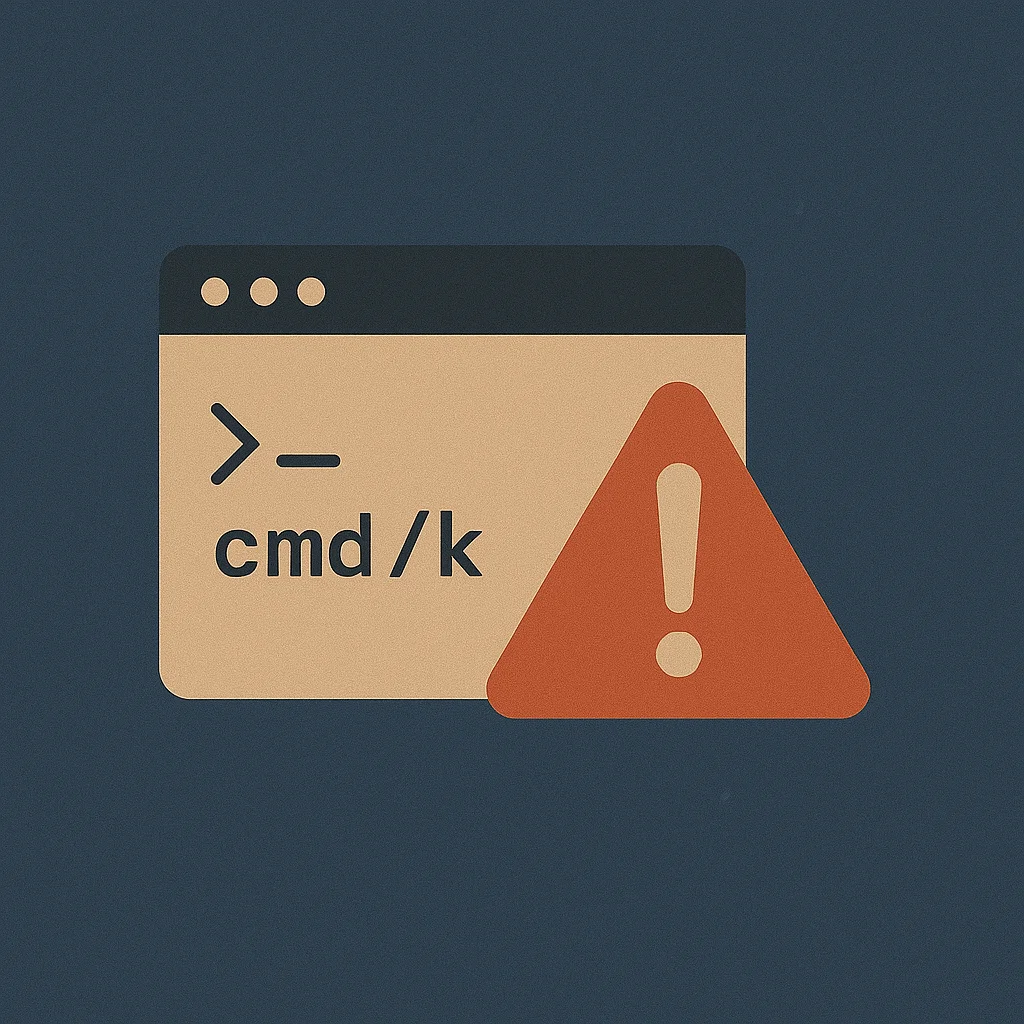
What it is: When tools execute system commands, attackers can inject malicious code through tool parameters.
Command injection attacks target tools that interact with the operating system or execute shell commands. Attackers craft malicious input that gets incorporated into system commands, allowing them to execute arbitrary code on the host system. This can lead to complete system compromise, data theft, or the installation of persistent backdoors.
The vulnerability typically arises when tools build command strings by concatenating user input without proper sanitization. Even tools that seem safe can be vulnerable if they pass parameters to system utilities, scripts, or other programs that interpret special characters as command separators or operators.
How to prevent it:
- Implement strict input validation
- Escape special characters in parameters
- Use containerization to isolate tools from the host system with minimal privileges
- Monitor system calls and process execution for anomalous behavior
- Apply principle of least privilege at the OS level for tool execution accounts
9. Overprivileged External API Access

What it is: Tools connected to external services with more permissions than needed, allowing attackers to abuse those connections.
Overprivileged API access creates significant risk when tools have broader permissions than necessary to perform their intended functions. Many organizations grant tools administrative or “power user” access to external systems for convenience, but this creates opportunities for attackers to abuse those elevated privileges if they compromise the tool.
The problem is compounded by the fact that API keys and tokens often have long lifespans and broad scopes. A single compromised tool with overprivileged access can potentially read sensitive data from cloud storage, modify critical configurations, or perform actions that affect entire user bases across external systems.
How to prevent it:
- Use specific API permissions instead of broad administrative access
- Rotate API keys regularly and use short-lived tokens when possible
- Monitor API usage for suspicious patterns or unusual activity
- Implement API rate limiting to prevent abuse
- Use separate API keys for different tools rather than sharing credentials
10. Tool Chain Exploitation

What it is: Attackers manipulate the sequence of tool calls to achieve unauthorized outcomes by chaining legitimate tools together in malicious ways.
Tool chain exploitation occurs when attackers discover ways to combine legitimate tools in sequences that weren’t intended by the system designers. Each individual tool call might be perfectly legitimate and within the attacker’s permissions, but the combination creates a pathway to unauthorized access or actions. This is similar to privilege escalation attacks but specifically targets the logical flow between tools.
The attack works by identifying tools that can pass data or state to each other, then crafting a sequence of calls that bypasses security controls. For example, an attacker might use a file reading tool to access a configuration file, then use that information with a different tool to gain elevated access, and finally use an administrative tool to modify system settings. Each step appears normal in isolation, but together they achieve something the attacker shouldn’t be able to do.
How to prevent it:
- Implement workflow validation that checks entire tool call sequences for suspicious patterns
- Set limits on tool chaining depth to prevent complex multi-step attacks
- Monitor for unusual combinations of tools being used together
- Use context isolation between tool calls to prevent information leakage
- Require explicit approval for tool combinations that could be high-risk
- Log complete tool call chains with their data flows for security analysis
- Implement circuit breakers that halt execution when suspicious patterns are detected
Key Takeaways
AI tool security requires a layered approach. No single measure will protect against all threats. Focus on these core principles:
- Least privilege: Give tools only the access they need
- Input validation: Never trust external data without checking it
- Monitoring: Track tool usage and outputs for anomalies
- Regular audits: Review tools, permissions, and logs frequently
- Defense in depth: Use multiple security measures together
As AI systems become more capable, the stakes for getting security right only increase. Start implementing these protections now, before attackers find your vulnerabilities first.