

Oct 09, 2026

Apr 07, 2026
6 Mins Read

Summarize with:
BlueHammer Windows Zero-Day: Privilege Escalation Risk
A newly exposed Windows zero-day known as BlueHammer has become a serious concern because it can let an attacker move from a limited user account to SYSTEM-level control on a device. On its own, that may sound like a technical detail, but in practice, it means a threat actor who already has some form of access can use the flaw to take over the machine much more completely. The risk grew further after exploit code was released publicly before any official fix was available.
What Is BlueHammer?
BlueHammer is a Windows local privilege escalation vulnerability, meaning it does not give attackers initial remote access on its own but can help them gain much higher privileges after they already have a foothold on a system. The issue drew broader attention after BleepingComputer reported that publicly released exploit code could elevate a low-privileged user to NT AUTHORITYSYSTEM, the built-in Windows account with extensive control over the machine. At the time, no official patch had been made available, which is why the flaw was treated as a zero-day.
That distinction matters. Remote code execution flaws can let attackers run code on a target system, often without prior access. Privilege escalation flaws, by contrast, help attackers who are already on the machine gain higher control. In real attacks, that jump to SYSTEM-level access can make persistence, credential theft, defense evasion, and deeper compromise much easier.
Why Did the Public Exploit Release Change the Risk?
A vulnerability does not become equally dangerous the moment it is discovered. Risk often changes when technical details become easier for others to use. In this case, exploit code was posted publicly, which means other researchers, criminals, and opportunistic attackers no longer need to start from scratch. Even if the code is imperfect, a public proof of concept can shorten the time between disclosure and abuse.
That public release matters even more when there is no patch yet. Defenders cannot simply deploy a fix and move on. Instead, they are left relying on monitoring, endpoint controls, privilege restrictions, and fast detection. That is why an unpatched local privilege escalation flaw with public exploit code deserves attention, even if it is not the initial access vector.
How Does BlueHammer Work at a High Level?
At a broad level, BlueHammer appears to abuse a mismatch between what Windows verifies first and what it later processes during a privileged action. The flaw is described as involving time-of-check to time-of-use behavior along with path confusion, meaning the system’s original validation can be bypassed when conditions change at the right moment. In practice, that kind of inconsistency can give an attacker room to interfere with a process that should have remained protected.
The practical result is more important than the code path details. According to public reporting, successful exploitation can give access to the Security Account Manager (SAM) database, which stores password hashes for local accounts, and can then be used to reach SYSTEM-level execution. Once an attacker reaches that level, the device should be treated as fully compromised.
What Could an Attacker Do After Reaching SYSTEM?
SYSTEM privileges can open the door to actions that are far more damaging than ordinary user-level compromise. An attacker with that level of access may be able to spawn privileged shells, interfere with security tools, access protected files, dump credentials, and establish persistence that is harder to remove. BleepingComputer also notes that the exploit can provide elevated administrator access on some systems, with broader SYSTEM-level compromise possible in successful cases.
This is why local privilege escalation bugs remain useful in real intrusions. They help bridge the gap between a weak foothold and meaningful control. A phishing email or malware dropper may only get code running as a user. A flaw like BlueHammer can help turn that smaller compromise into something much more serious. This is an inference based on the reported exploit outcome.
Is the Exploit Reliable Everywhere?
Not entirely. Public testing indicates the exploit may not work consistently across all Windows environments. Reporting says the released code contains bugs and that some researchers did not see it succeed on Windows Server in the same way it did elsewhere. Even so, analysts also confirmed that the core issue is real and exploitable, which is enough to keep it on defenders’ radar.
Security researcher Will Dormann also shared testing related to BlueHammer, showing a Windows command prompt running as nt authoritysystem, which helps illustrate the end result of successful privilege escalation.
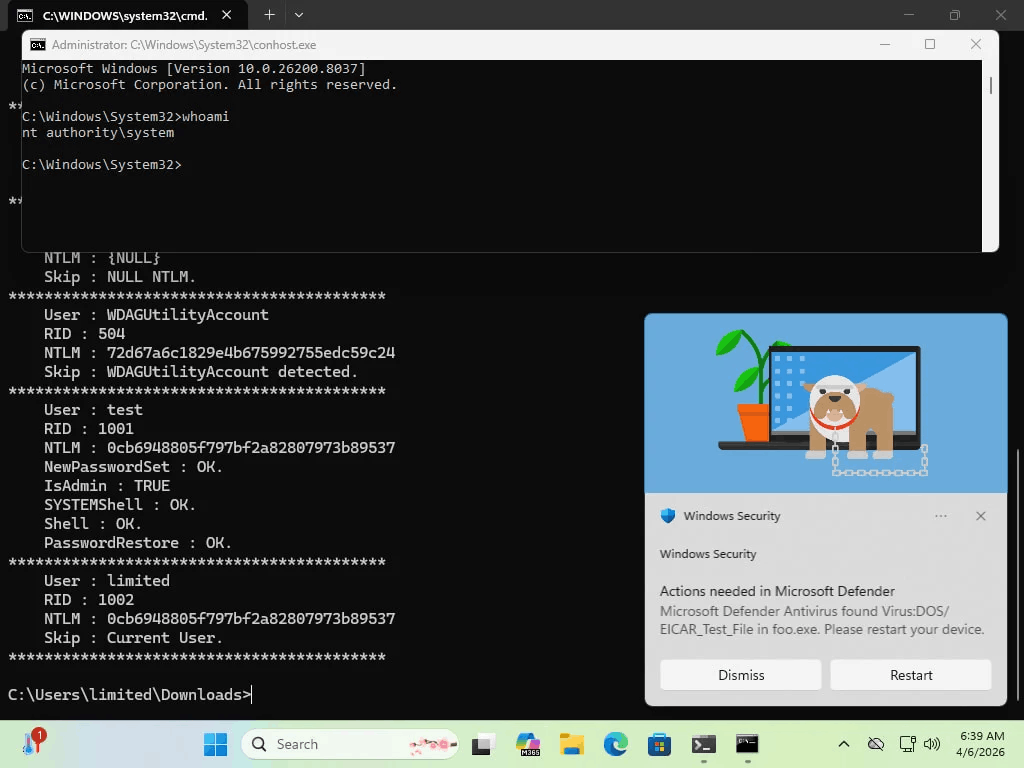
Will Dormann’s shared BlueHammer test image showing successful escalation to NT AUTHORITYSYSTEM
That mixed reliability should not be mistaken for safety. Attackers do not need an exploit to work on every system to find it useful. They only need it to work often enough on the right targets. In practice, imperfect public exploit code often improves over time once more people begin testing it.
What Should Organizations Do While Waiting for a Fix?
For now, the most practical response is to focus on containment and exposure reduction. Security teams should pay extra attention to systems where untrusted code could already be running, because this is the kind of bug that becomes most useful after an attacker has gained some local foothold. Tightening least privilege, reducing unnecessary local admin rights, and investigating suspicious privilege escalation behavior are all sensible short-term steps.
Teams should also make sure endpoint monitoring can spot abnormal privilege changes, suspicious access to sensitive account data, and unusual process behavior that could signal post-compromise activity.
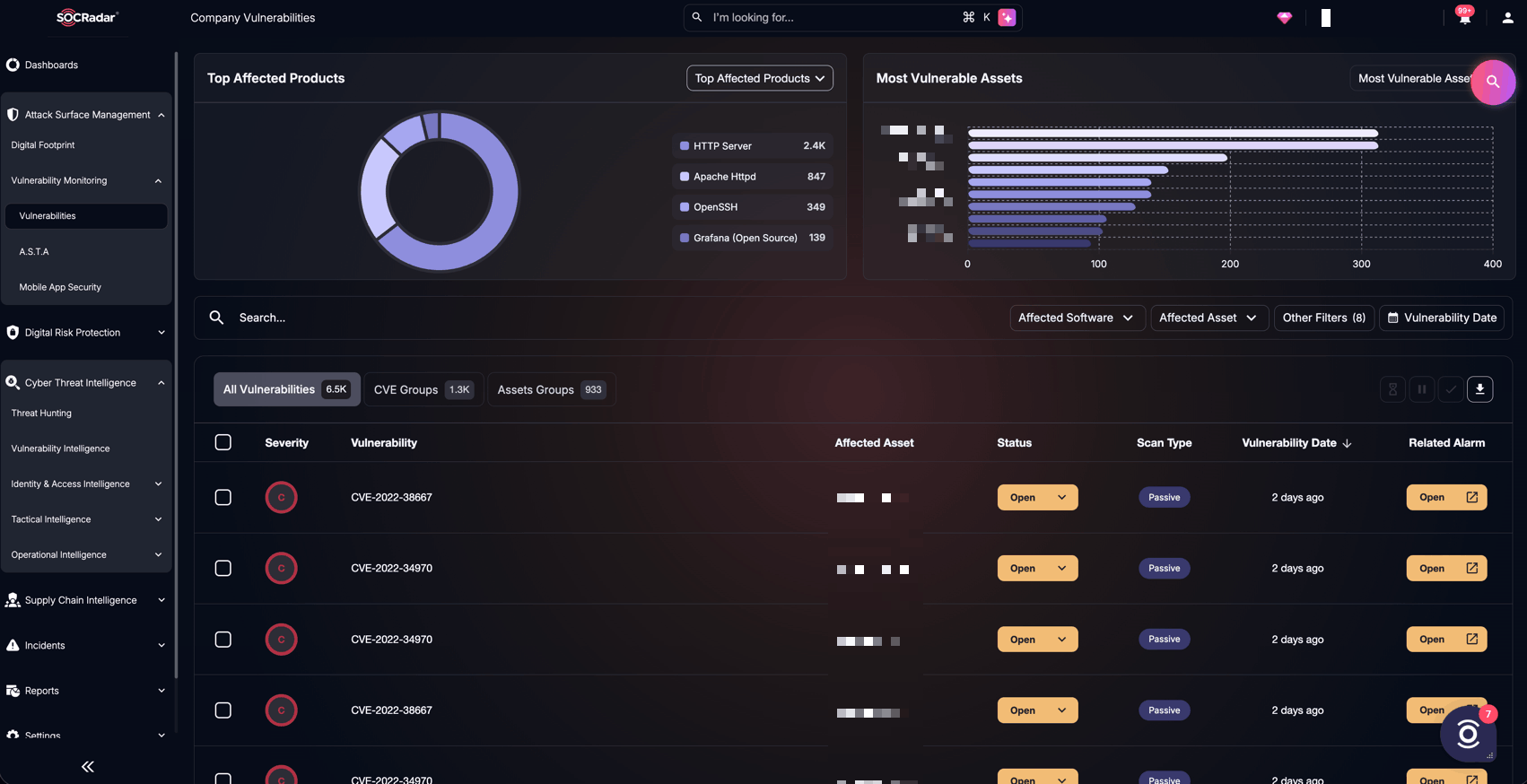
SOCRadar’s Attack Surface Management, Company Vulnerabilities
For organizations that want broader context around emerging flaws, SOCRadar Vulnerability Intelligence and Attack Surface Management can help connect newly disclosed risks to exposed assets and remediation priorities, making it easier to focus first on the systems that matter most.
Conclusion
BlueHammer is also a reminder that security risk is shaped by more than technical severity alone. A flaw can move from a private research issue to an operational problem very quickly when disclosure breaks down and exploit code is released before a patch is ready. That changes the defender’s job immediately, even before there is evidence of broad exploitation.
It also reinforces a basic point about Windows security: attackers do not always need a dramatic remote exploit to cause damage. Sometimes they just need a modest foothold and a reliable way to climb higher. When that second piece becomes public before a fix exists, the issue deserves close attention.

Table Of Content
BlueHammer Windows Zero-Day: Privilege Escalation Risk
What Is BlueHammer?
Why Did the Public Exploit Release Change the Risk?
How Does BlueHammer Work at a High Level?
What Could an Attacker Do After Reaching SYSTEM?
Is the Exploit Reliable Everywhere?
What Should Organizations Do While Waiting for a Fix?
Conclusion
Related Articles

Critical Cisco NX-OS Flaws Threaten Nexus Switches

CVE-2026-21589: Critical Atlassian File Access
Oct 07, 2026

CVE-2026-88779: Citrix NetScaler Zero-Day
Oct 06, 2026

CVE-2026-90970: GitLab AI Gateway RCE
Oct 05, 2026

FortiMail Zero-Day Under Active Exploitation
Oct 02, 2026