



Oct 07, 2026
Table Of Content
CISA Budget Cuts and the U.S. Cyber Defense Gap in 2026
Key Takeaways from CISA Budget Cuts 2026
How Much Is CISA’s Budget Being Cut in 2026?
Why Do CISA Workforce Cuts Matter for U.S. Cyber Defense?
How Federal Cyber Cuts Could Increase Risk Across the U.S.
How Does the U.S.-Israel-Iran War Affect the Cyber Threat Landscape?
What Do CISA Budget Cuts Mean for Critical Infrastructure and Public-Sector Defense?
What Should Security Teams Do as CISA Budget Cuts Take Effect in 2026?
Related Articles

NetScaler C2: CVE-2026-88771 Exploitation Operation





Mar 31, 2026
9 Mins Read

Summarize with:
CISA Budget Cuts and the U.S. Cyber Defense Gap in 2026
CISA entered 2026 under pressure. The agency responsible for helping defend U.S. civilian networks, critical infrastructure, and public-sector organizations is facing a smaller budget, fewer staff, and a more demanding threat environment. That alone would be enough to raise concern.
The timing makes it more serious. As Iran-linked cyber activity continues to draw attention during the wider U.S.-Israel-Iran conflict, questions about American cyber readiness are no longer limited to Washington budget debates. They now affect defenders who may have to respond with less federal support, less coordination, and less room for error.
This article examines what the CISA budget cuts mean for U.S. cyber defense in 2026, why defenders should pay attention, and how the issue fits into the broader cyber dimension of the U.S.-Israel-Iran war.
Key Takeaways from CISA Budget Cuts 2026
- CISA’s 2026 budget request sharply reduced funding and staffing compared with the 2025 request, creating immediate concerns about federal cyber capacity.
- The proposed cuts hit partnership-heavy functions, including election security, cyber training, and risk-management work that supports state, local, and critical infrastructure defenders.
- Lawmakers spent early 2026 pressing CISA over steep workforce losses, with reporting pointing to roughly 1,000 departures.
- Iran-linked cyber operations have intensified during the conflict, including reported targeting of U.S. figures, financial-sector concerns, and high-volume attacks tied to the broader conflict.
- For defenders, the real problem is not one budget line. It is the widening gap between a growing threat environment and a thinner civilian cyber backstop.
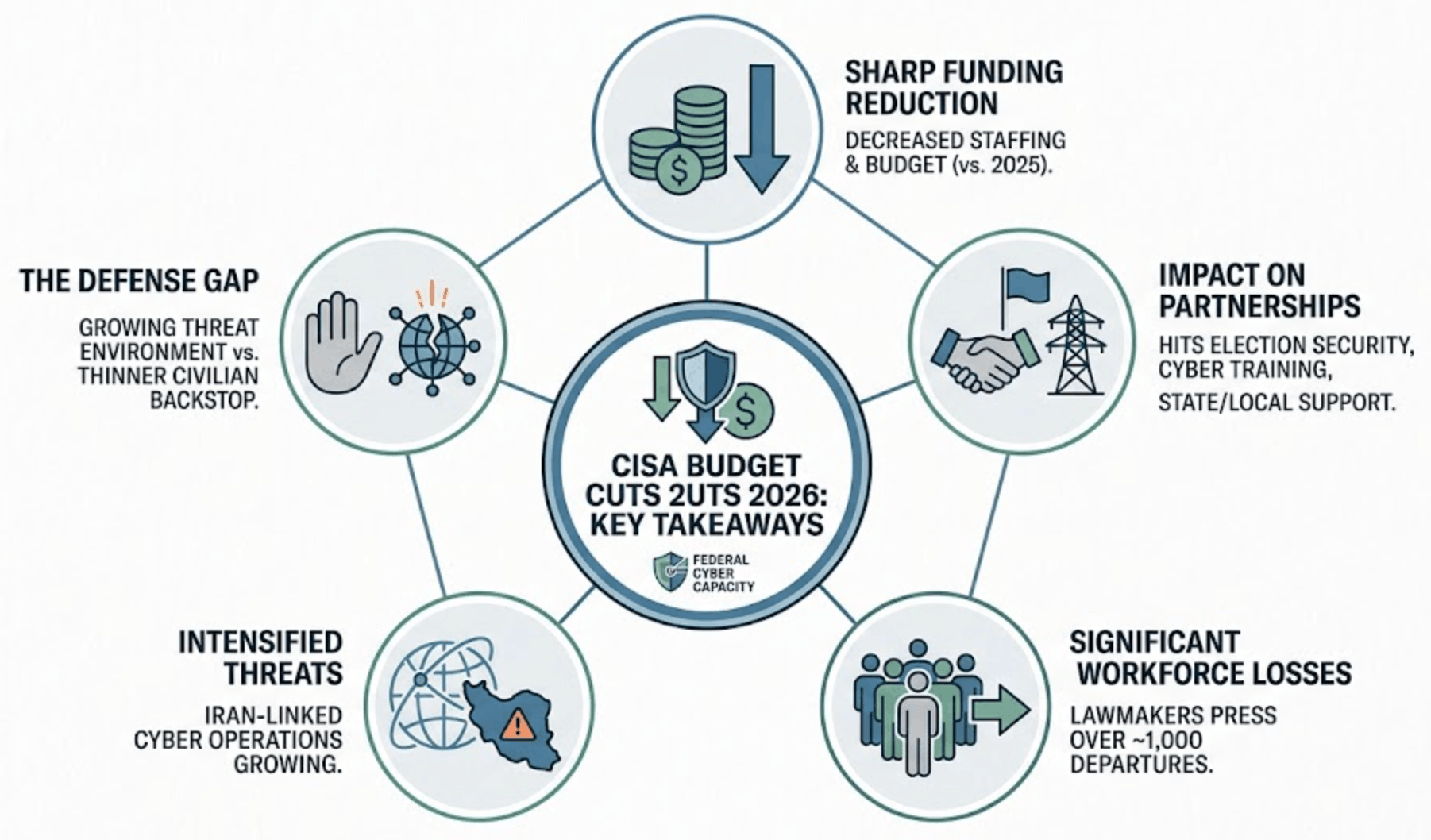
What do you need to know about CISA budget cuts in 2026 and its effects on U.S. defense?
How Much Is CISA’s Budget Being Cut in 2026?
DHS’s budget justification for fiscal year 2026 lists $2.4 billion, 2,649 positions, and 2,324 full-time staff roles for CISA. The fiscal year 2025 budget justification listed $3.0 billion, 4,021 positions, and 3,641 full-time staff roles. Read side by side, those documents show a federal cyber agency being asked to do more with materially less.
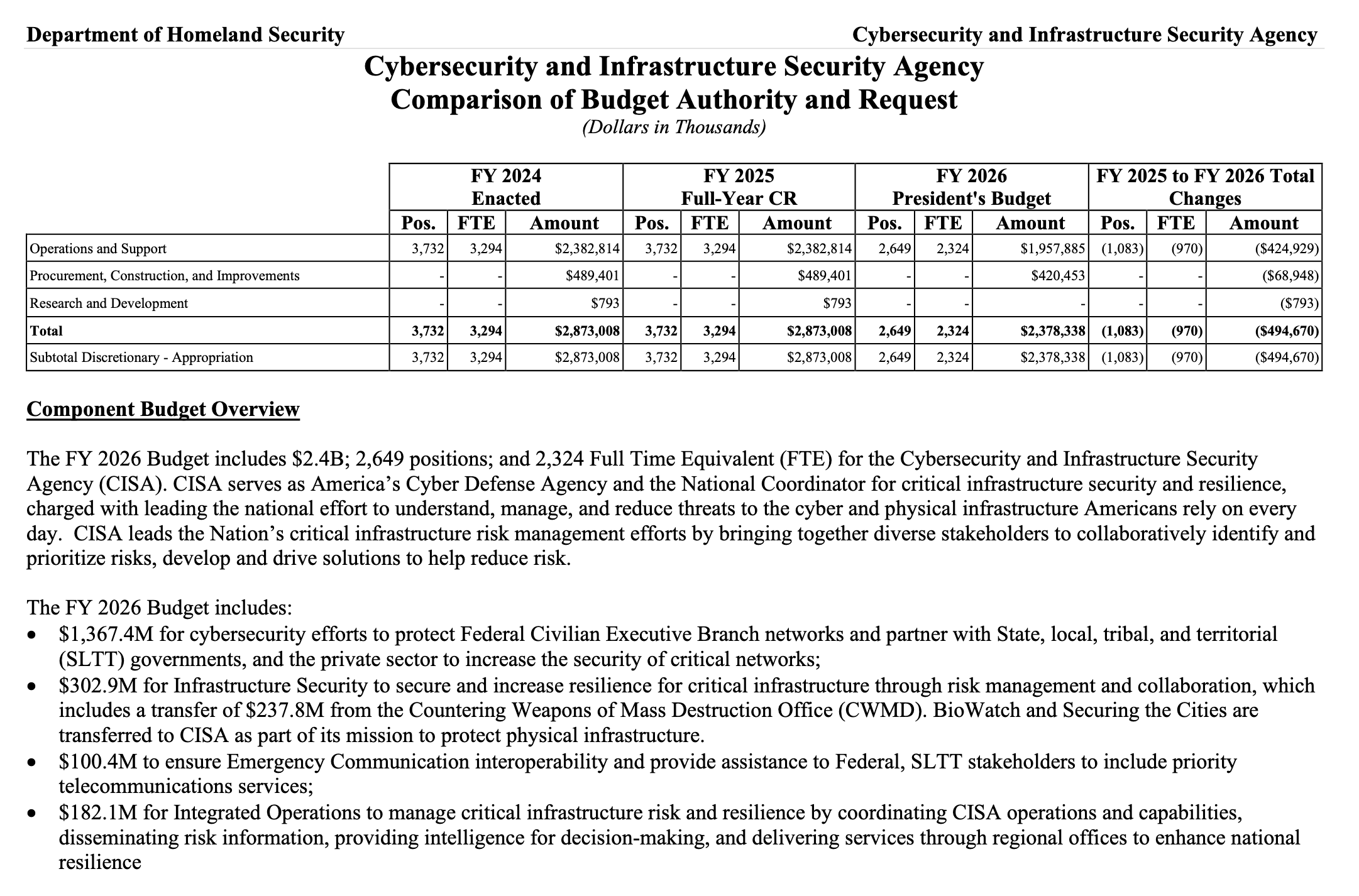
2026 budget overview from DHS’s FY2026 budget document
The impact becomes clearer when looking at what was targeted. Under the 2026 proposal, CISA’s election-security mission would lose 14 positions and roughly $40 million. It would also cut about $45 million from Cyber Defense Education and Training and 35 positions plus $70 million from the National Risk Management Center. In practice, that means less support for election officials, under-resourced defenders, and critical infrastructure risk coordination.
Much of CISA’s value comes from coordination and reach. It helps local governments, sector partners, and infrastructure operators prepare for and respond to cyber threats. Cuts to those functions can leave the United States with solid plans on paper, but less practical support where it is needed most.
Why Do CISA Workforce Cuts Matter for U.S. Cyber Defense?
Budget reductions alone do not tell the full story. To understand the impact, it helps to look at how large the staffing losses at CISA have become.
By January 2026, CISA was reported to have seen at least 998 departures, layoffs, or transfers since the administration took office. Lawmakers pressed acting leadership over those reductions during a January 21, 2026 House hearing.
That concern had been building for months. By June 2025, about 1,000 personnel were reported to have left the agency, and CISA was also described as having lost nearly one-third of its workforce by that stage. The precise counts vary by timing and source, but they point in the same direction: a substantial drawdown before the 2026 debate had even settled.
The policy contradiction becomes harder to miss here. In March 2025, it was reported that the White House had told agencies to avoid firing cybersecurity staff because cyber work is tied to national security. Weeks later, it was also reported that support for the MITRE CVE program was close to expiring before officials extended it at the last minute. That sequence is telling. Washington clearly understands that cyber capacity is strategic, yet key parts of the ecosystem still faced turbulence.
How Federal Cyber Cuts Could Increase Risk Across the U.S.
A smaller CISA means less surge support, fewer embedded relationships, and less room for preventive work across the wide range of American organizations that are neither federal agencies nor Fortune 100 security leaders. That includes local government, education, regional healthcare, water utilities, and many operators in critical infrastructure supply chains.
That middle layer deserves close attention. Large enterprises can often buy intelligence, outsource coverage, or lean on mature internal teams. Smaller and mid-sized organizations depend more heavily on public guidance, federal warnings, and sector-wide coordination. When the federal civilian cyber agency narrows its footprint, these organizations do not suddenly become less exposed. They simply carry more of the burden themselves.
That does not mean CISA has stopped operating. In February 2026, the agency still issued a directive ordering federal agencies to strengthen edge device security amid rising threats. CISA is still expected to perform mission-critical work, but the budget and staffing trend suggest it may be doing so with less depth, less margin, and less ability to absorb simultaneous crises.
How Does the U.S.-Israel-Iran War Affect the Cyber Threat Landscape?
The timing matters because this debate is unfolding during an active regional conflict.
This budget story would be serious under normal conditions. It becomes more consequential during a war, when cyber operations are used to harass, distract, intimidate, and sometimes disrupt. In March 2026, analysis from CSIS argued that cyber operations are likely to shape the U.S.-Israel conflict with Iran because Tehran has long relied on cyber activity and proxy-style operations as asymmetric tools. CSIS also noted a sharp rise in attacks tied to earlier phases of the conflict and warned that resilience matters immediately, not only after a headline-grabbing incident.
Recent developments support that assessment. On March 3, 2026, U.S. banks were reported to be on high alert for possible Iran-linked cyberattacks as the war escalated, with concerns centered on DDoS and other disruptive activity. Later that month, the Iran-linked Handala Hack Team claimed to have breached FBI Director Kash Patel’s personal email and published photos and documents, in what experts described as part of a broader Iranian effort to embarrass and unsettle U.S. officials.
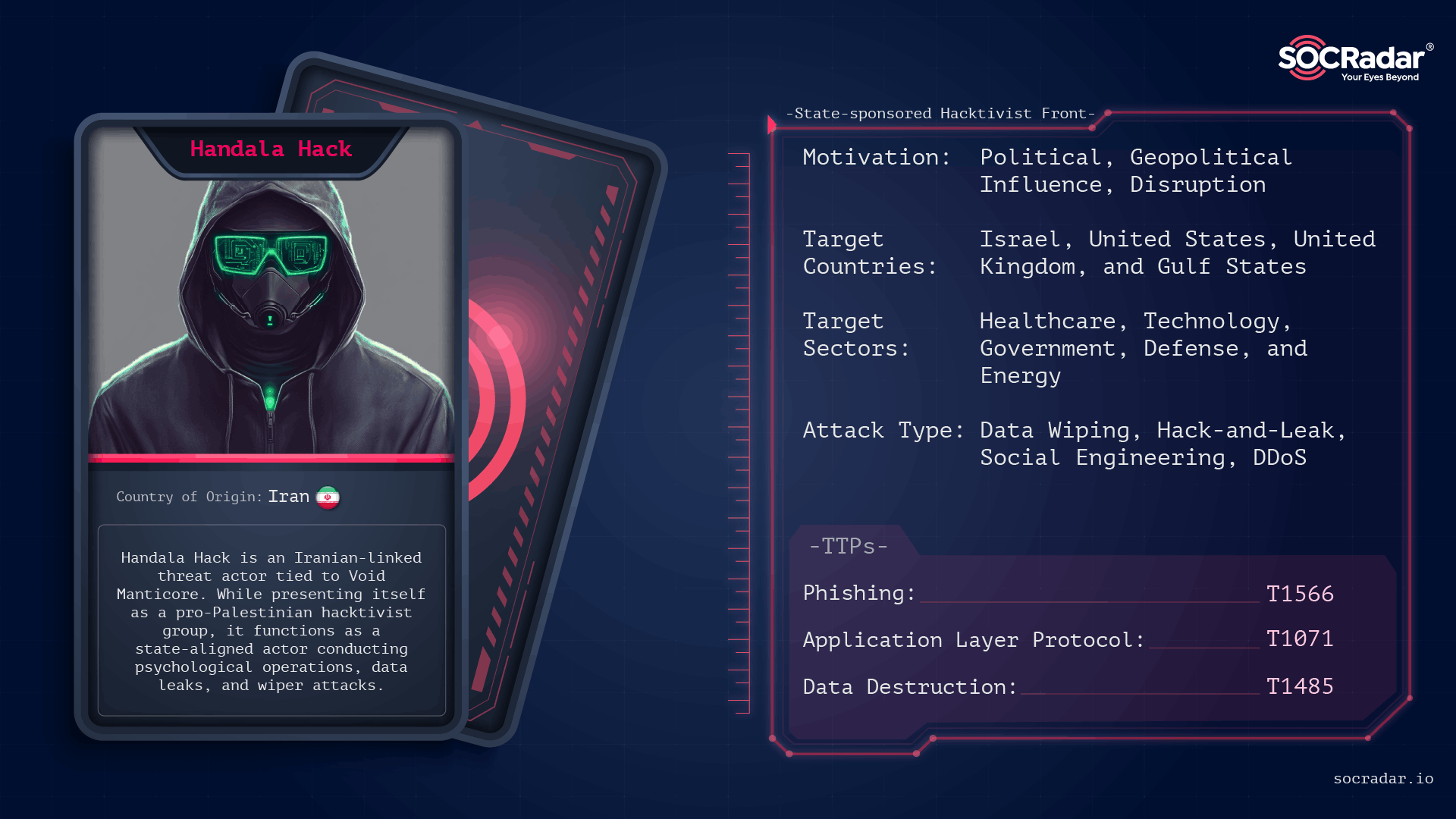
Threat actor card of Handala Hack
The wider pattern matters even more than any single incident. By March 29, 2026, researchers had tracked nearly 5,800 cyberattacks from almost 50 groups tied to Iran, many aimed at U.S. or Israeli targets. Many of these operations were low-impact but high-volume, often forcing organizations to spend time and money on triage, containment, and cleanup. That kind of activity fits the exact scenario in which a thinner national coordination layer hurts the most: not because every incident becomes catastrophic, but because many smaller incidents become harder to manage at scale.
For broader context, SOCRadar’s Iran–Israel/U.S. War 2026 dashboard helps track conflict-linked activity, actor claims, and targeting patterns as the situation evolves.
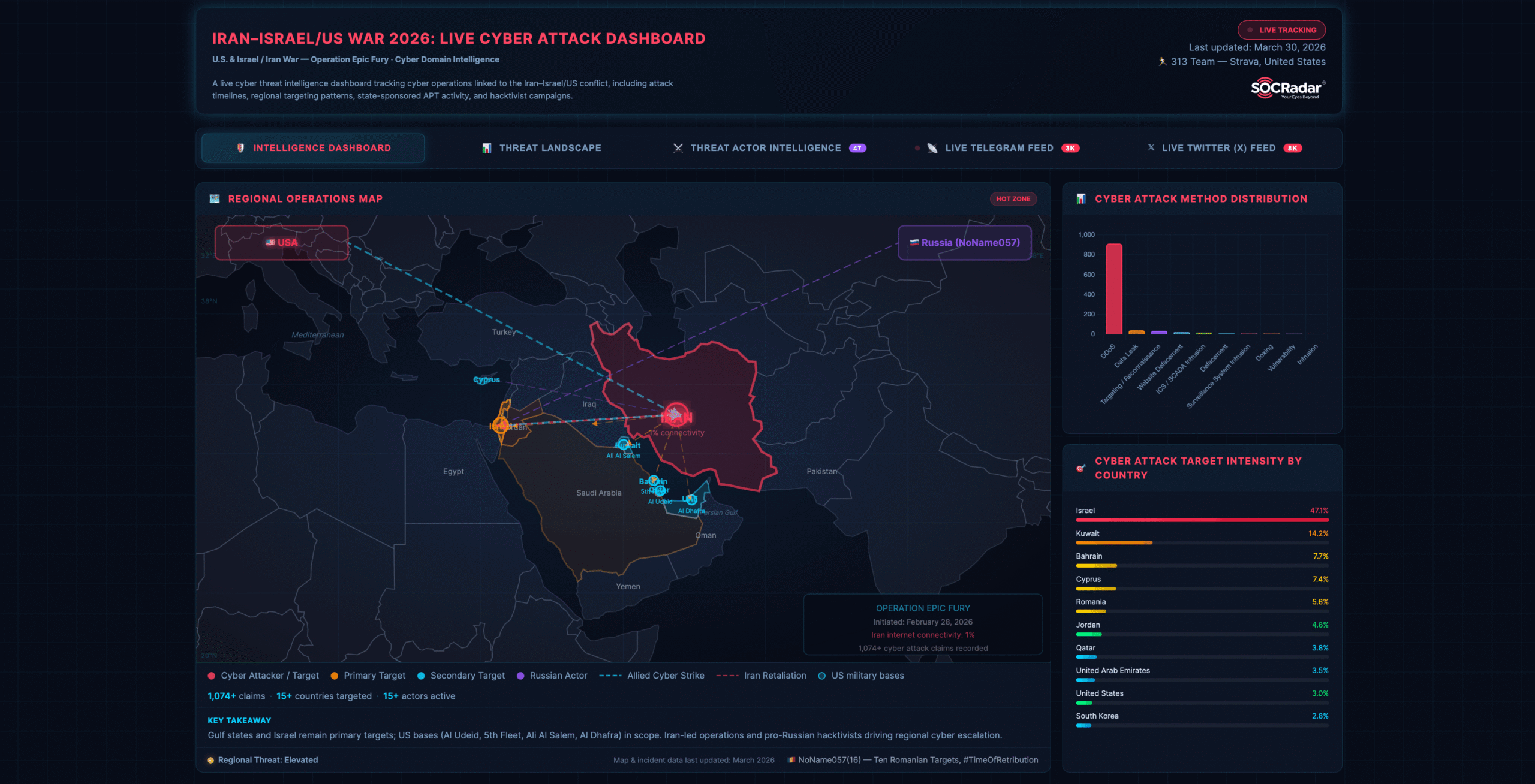
Live SOCRadar dashboard following activity surrounding Operation Epic Fury
What Do CISA Budget Cuts Mean for Critical Infrastructure and Public-Sector Defense?
Budget cuts do not automatically mean the United States loses all defensive capability, and Iran-linked activity does not mean every organization is facing an imminent, destructive breach. But taken together, the evidence points to a more fragile operating environment: less federal cyber capacity, fewer experienced personnel, and a wartime threat landscape that rewards speed, coordination, and resilience.
That is why the CISA story matters beyond Washington budget politics. The agency sits in the space between national intelligence and local reality. When that layer thins out, private-sector teams, sector ISACs, MSSPs, and internal SOCs have to compensate. Some can. Many cannot. The result is not a clean break in U.S. cyber defense. It is a gradual widening of uneven protection across the country.
How Officials Justify the CISA Budget Cuts
Supporters of the cuts say the goal is not to weaken CISA, but to return it to its core mission. In this view, the agency should focus more tightly on protecting federal civilian networks and critical infrastructure, while stepping back from some broader stakeholder-facing functions.
That is the main case for the cuts: a smaller agency with a narrower scope. It is a clear argument on paper. The challenge is that cyber defense does not depend only on frontline missions. It also depends on the support functions, shared resources, and coordination layers that help the wider ecosystem work.
The MITRE CVE funding scare in April 2025 is a good example. MITRE warned that the contract supporting the CVE program was about to expire, raising fears that a vulnerability-tracking system widely used by defenders might not continue. CISA extended the contract at the last minute and said there would be no lapse in critical CVE services. Even so, the episode showed how quickly concern can spread when the continuity of a shared cyber resource comes into question.
What Should Security Teams Do as CISA Budget Cuts Take Effect in 2026?
CISA’s budget cuts and workforce losses add pressure at a difficult moment for U.S. defenders. They hit while Iran-linked cyber activity is active, while the U.S.-Israel-Iran war is expanding the range of possible retaliatory operations, and while the organizations most likely to struggle are the ones that rely most on public guidance and shared warning.
For security leaders, that means planning for a world where federal help still matters, but may arrive with less bandwidth than before. Teams should strengthen external intelligence coverage, validate incident response paths, harden internet-facing assets, review OT exposure, and track conflict-linked threat actors more closely than usual. In that environment, platforms such as SOCRadar can help fill visibility gaps with Cyber Threat Intelligence, Dark Web Monitoring, and broader tracking of conflict-linked activity.