MDASH and AI Reshape Windows Patching
Microsoft is planning to bring AI deeper into Windows vulnerability management through tools such as MDASH, an internal system designed to identify and validate software flaws at scale. In its July 9 Windows blog post, Microsoft said this approach helps Windows find issues earlier, speed up engineering fixes, strengthen validation, and deliver security updates more quickly.
Faster discovery can send more vulnerabilities into Microsoft’s update pipeline, which means the workload around Patch Tuesday grows. The vendor has also said customers should expect larger releases for some time as discovery, reporting, and automation continue to scale.
What Is Microsoft’s MDASH?
MDASH is Microsoft Security’s multi-model agentic scanning harness. It is described as a system that coordinates more than 100 specialized AI agents across multiple models to discover, validate, and prove exploitability across codebases.
In the May 2026 Patch Tuesday release, MDASH helped researchers identify 16 vulnerabilities across the Windows networking and authentication stack, including four critical remote code execution flaws in components such as the Windows TCP/IP stack and the IKEv2 service.
The broader shift is operational: Microsoft is trying to make AI-assisted discovery repeatable, validated, and easier to route into remediation.
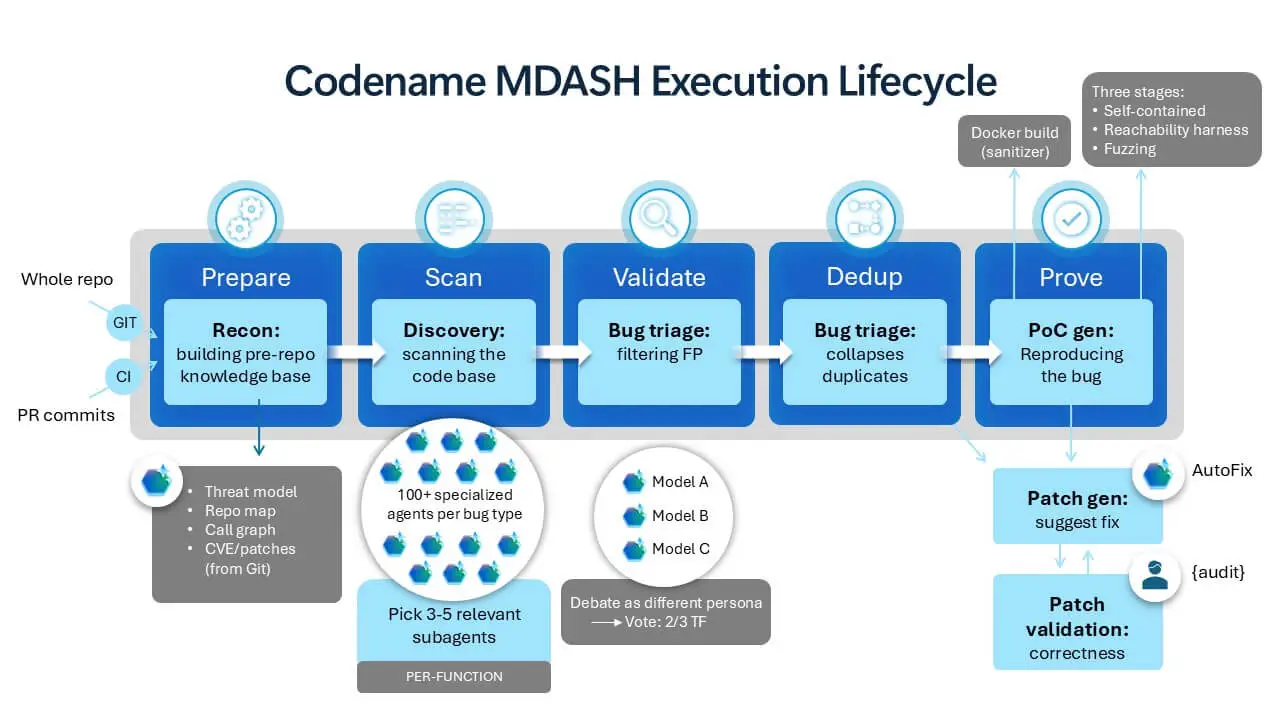
MDASH workflow for AI-assisted vulnerability discovery, validation, and remediation (Microsoft)
MDASH has already moved into active use across Windows, Azure, and identity systems, with findings feeding into Defender, GitHub, and Azure DevOps workflows for prioritization, validation, and remediation.
Why Does Microsoft’s AI Vulnerability Discovery Matter?
Microsoft says vulnerability reporting volume has increased for several years, driven by broader researcher participation, mature automation tooling, and wider AI use across Microsoft engineers and the security community.
For defenders, that means vulnerability discovery may translate into larger update groups, broader test scope, and tighter prioritization decisions. More findings can help vendors fix issues earlier, but security teams still need the capacity to validate, deploy, and track updates across complex environments.
| Change | What it means for defenders |
|---|---|
| More AI-assisted discovery | Larger vulnerability groups may become routine |
| Faster validation | Fixes may move into update pipelines more efficiently |
| Broader component coverage | Patch cycles may touch identity, networking, kernel, and cloud-adjacent components together |
| Faster patch analysis | Attackers may analyze released fixes more quickly |
| More prioritization pressure | Teams need exposure-aware patching instead of severity-only patching |
What Does This Mean for Patch Tuesday?
Patch Tuesday remains the main update path for Microsoft’s on-premises products, while cloud-connected services follow separate update schedules. The vendor also expects Patch Tuesday releases to keep trending larger and advises customers to prepare for urgent out-of-band cases when risk requires faster action.
This makes Patch Tuesday a capacity and prioritization challenge. Larger releases require more testing, more exception handling, and clearer rules for which systems move first.
| Patch Tuesday area | What changes | What defenders should do |
|---|---|---|
| Monthly update volume | Larger releases may become more common as discovery scales | Plan capacity for bigger test and deployment cycles |
| Patch prioritization | CVE counts become less useful on their own | Prioritize by exploitability, asset exposure, and business impact |
| Testing scope | More components may be patched in the same release | Expand test rings for identity, networking, kernel, and virtualization changes |
| Out-of-band updates | Urgent fixes may require action outside the normal monthly cycle | Keep an emergency patch lane ready and pre-approved |
| Post-release risk window | Attackers can analyze patches faster | Patch internet-facing and identity-adjacent systems earlier |
| Fleet visibility | Larger releases expose inventory and update blind spots | Track patch status by asset tier, ownership, and risk level |
Patch Tuesday planning should include defined rollout rings, baseline tests, progress tracking, and an emergency update path.
How Should Teams Prioritize Patch Tuesday Risk?
As update volume grows, CVSS alone gives teams an incomplete view of urgency. Microsoft points customers to Security Update Guide signals such as exploitability, public exploit code status, and observed exploitation when deciding which updates need faster action.
Security teams should also factor in asset exposure and business impact. Internet-facing systems, identity infrastructure, remote access services, and broadly reachable servers should move earlier in the patch cycle than lower-risk endpoints.
Microsoft also notes that patches can now be studied and reasoned about faster. That makes release day the start of an exposure countdown for critical assets, especially when attackers can analyze fixes quickly and look for vulnerable systems that remain unpatched.
How Is Microsoft Supporting Remediation and Visibility?
Microsoft is also applying AI to customer-side remediation. The Vulnerability Remediation Agent for Security Copilot in Microsoft Intune uses Microsoft Defender Vulnerability Management data to identify CVEs on managed devices, prioritize remediation guidance, and track progress in the Intune admin center.
Fleet visibility also becomes more important as update cycles grow. Microsoft’s Intune Security update status dashboard gives administrators a fleet-wide view of update currency across Windows client devices, Windows Server devices, and Microsoft 365 Apps.
For security teams, these tools can reduce manual triage and expose patching blind spots, such as unmanaged devices, stale inventory, delayed update rings, unsupported builds, and high-risk assets without clear ownership.
How Can Security Teams Prepare?
Security teams should adapt patch operations for higher volume, faster analysis, and more frequent prioritization decisions.
| Priority | Action |
|---|---|
| Build capacity | Standardize rollout rings, automate core testing, and prepare for larger monthly update groups |
| Improve prioritization | Use exploitability, exposure, asset criticality, and observed exploitation signals |
| Prepare emergency patching | Define approval paths, minimum testing, communications, and rollback criteria |
| Close visibility gaps | Audit unmanaged devices, stale inventory, unsupported builds, and policy exceptions |
| Measure performance | Track deployment progress, time-to-remediate by risk tier, and exception aging |
These steps make it easier to manage high-volume patch cycles without turning Patch Tuesday into a last-minute scramble.
How Can SOCRadar Support Vulnerability Prioritization?
As Microsoft scales AI-driven vulnerability discovery, security teams need to connect CVE context with real-world exposure. Patch Tuesday is one part of that workflow, but the same challenge applies to:
- Out-of-band security updates
- Actively exploited vulnerabilities
- Third-party software risks
- Internet-facing assets and services
SOCRadar’s Cyber Threat Intelligence module helps teams track critical CVEs, exploit alerts, affected technologies, and threat activity around newly disclosed or actively discussed vulnerabilities. Furthermore, the Attack Surface Management (ASM) module provides critical visibility by enabling teams to discover and rank the risk levels of their external digital footprint, including:
- Cloud infrastructure
- Software-as-a-Service (SaaS) applications
- Internet-facing systems
- Identities
- Third-party integrations
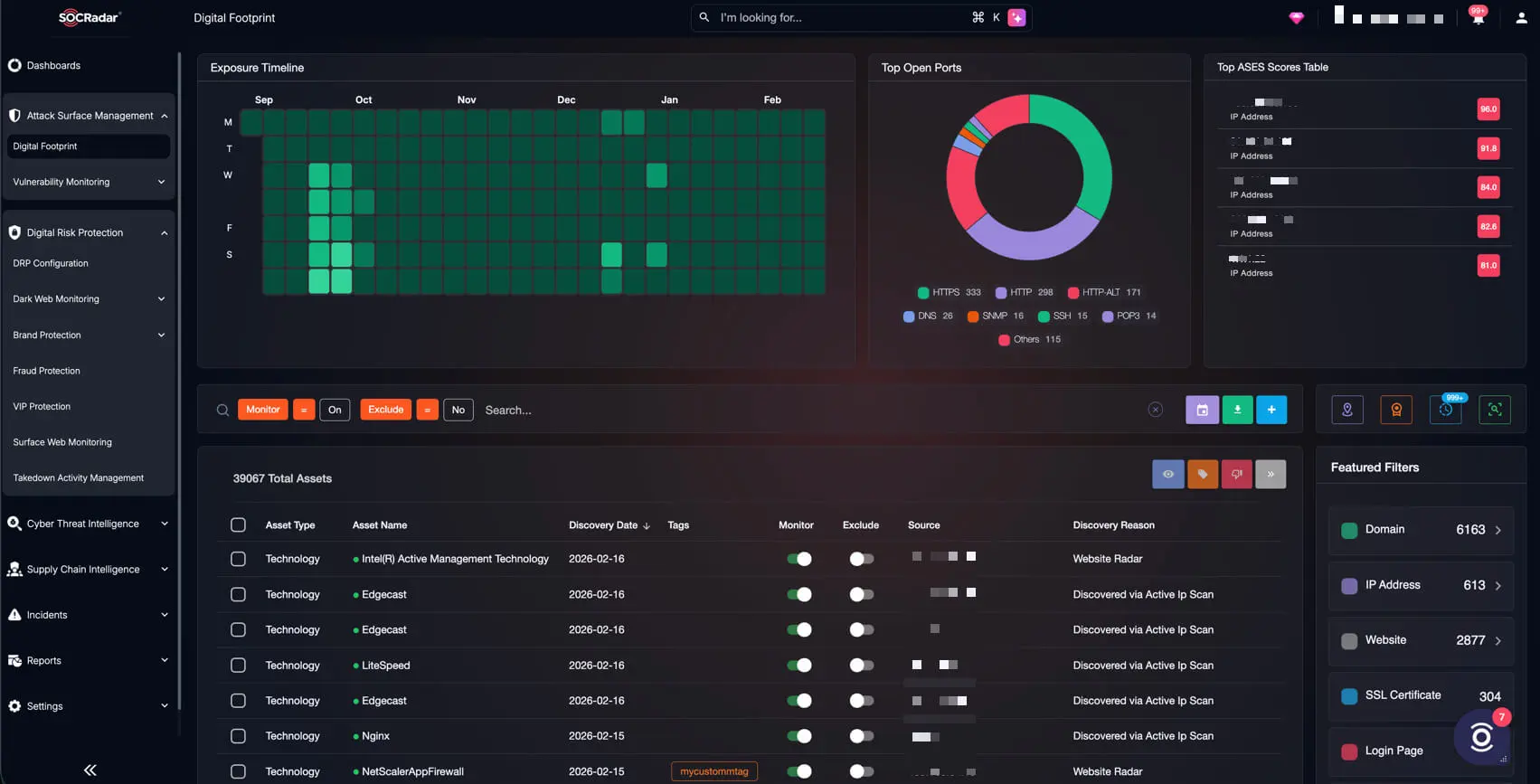
SOCRadar’s ASM module, Digital Footprint
Together, CTI and ASM help teams prioritize remediation based on exploitability, threat activity, exposure, and business impact.
Conclusion
MDASH signals a shift in how Microsoft discovers, validates, and routes vulnerabilities toward remediation. AI-assisted discovery can increase the volume of findings, broaden the components included in monthly updates, and shorten the time teams have before attackers analyze released fixes.
Security teams should respond with disciplined, exposure-aware patch management. They should prepare for larger update cycles, prioritize with exploitability and asset context, maintain an emergency patch lane, and improve fleet visibility before patch volume becomes harder to manage.
Patch Tuesday remains predictable; the vulnerability discovery process around it is becoming faster, broader, and more operationally demanding.