Patch management is the controlled process of identifying, evaluating, testing, deploying, verifying, and documenting software and firmware updates.
A mature program prioritizes by more than severity. It considers known exploitation, exploit availability, internet exposure, asset criticality, compensating controls, operational dependencies, and the consequences of delayed or failed deployment.
Key Takeaways
Patch management is the controlled process of identifying, evaluating, testing, deploying, verifying, and documenting software and firmware updates.
A mature program prioritizes by more than severity. It considers known exploitation, exploit availability, internet exposure, asset criticality, compensating controls, operational dependencies, and the consequences of delayed or failed deployment.
Active exploitation of unpatched systems is a primary concern.
Effective security combines prevention, continuous visibility, ownership, and tested response.
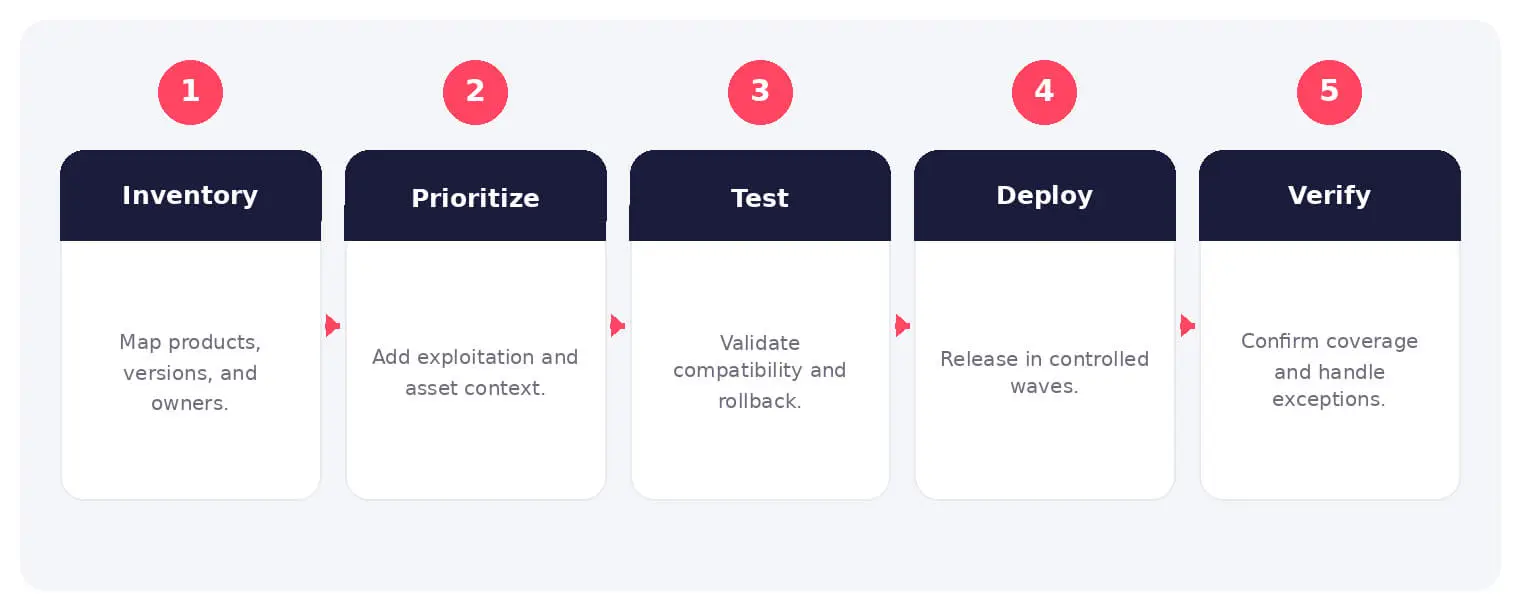
The main stages and decision points associated with patch management.
How It Works
The operating flow above turns the concept into observable steps. Exact implementations vary, but each stage needs accountable ownership, trusted inputs, documented policy, and evidence that analysts can use during investigation and review.
A mature program prioritizes by more than severity. It considers known exploitation, exploit availability, internet exposure, asset criticality, compensating controls, operational dependencies, and the consequences of delayed or failed deployment.
Common Types and Capabilities
Operating-system and application patches
Firmware and network-device updates
Cloud, container, and dependency updates
Emergency and routine patch cycles
Security and Business Risks
Active exploitation of unpatched systems
Incomplete inventory and false compliance
Service disruption from failed updates
Unsupported software and permanent exposure
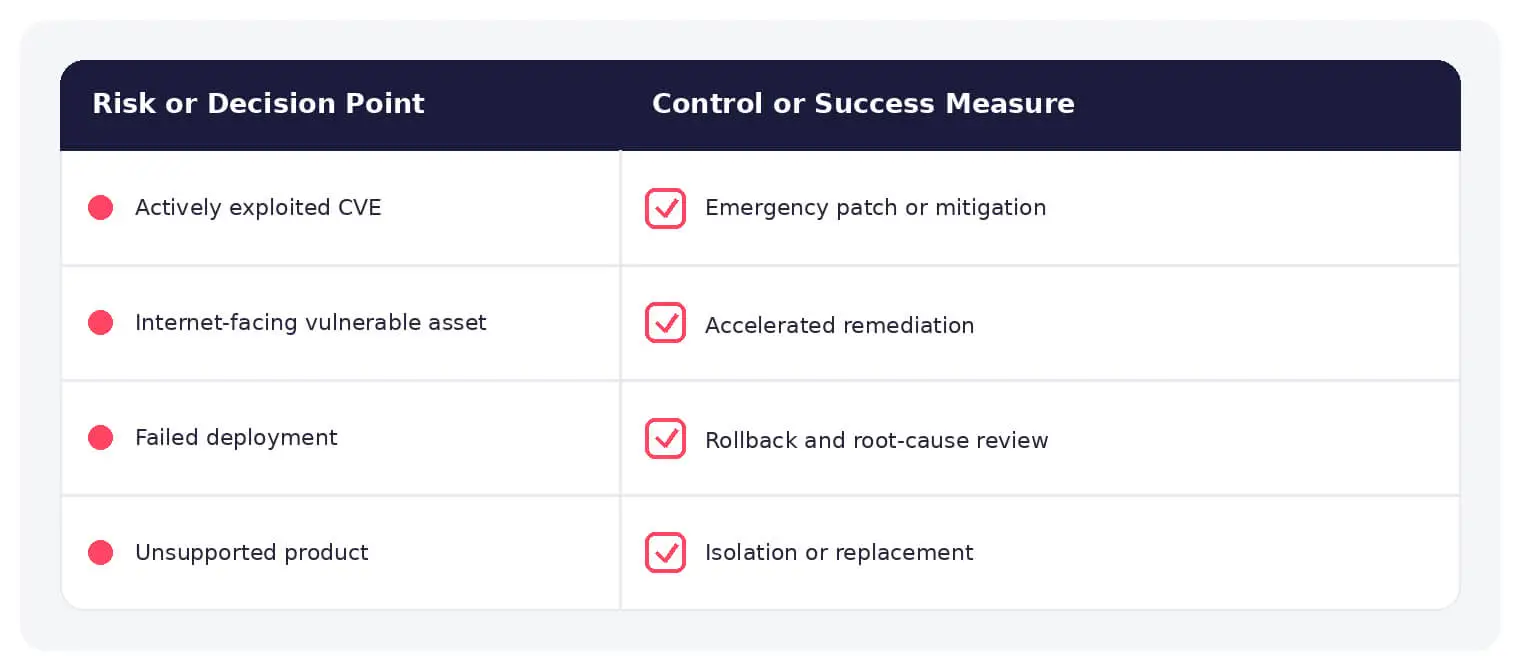
Common patch management risks paired with practical defensive controls.
Warning Signs and Detection
Monitor vendor advisories, CISA KEV additions, exploit intelligence, exposed vulnerable services, failed deployments, devices missing check-ins, version drift, reboot requirements, rollback events, and exceptions past their expiry.
Best Practices
Maintain authoritative inventory, define risk-based service levels, prioritize exploited and exposed flaws, test representative systems, deploy in waves, back up critical assets, verify versions, document exceptions, and remove unsupported products.
How SOCRadar Can Help
SOCRadar adds external visibility, threat intelligence, exposure context, and continuous monitoring to help teams validate and prioritize risks related to patch management. This context complements internal network, endpoint, identity, and vulnerability controls.
Explore SOCRadar Vulnerability Intelligence or request a demo to strengthen threat-informed prevention and response.
Frequently Asked Questions
What Does Patch Management Include Besides Operating System Updates?
A complete program covers application updates, firmware and network-device releases, cloud platform components, container images, and third-party or open-source dependencies. Firmware and dependency updates are frequently overlooked even though they carry the same risk as an unpatched server.
Why Does Active Exploitation Matter More Than Severity Scores Alone?
A high CVSS score with no public exploit can be a lower operational concern than a moderate flaw that attackers are actively exploiting on internet-facing systems. Mature programs weigh known exploitation, exploit availability, exposure, asset criticality, and operational dependencies alongside severity when setting order and deadlines.
What Are the Main Stages of the Patch Management Process?
The core cycle is identifying available updates, evaluating their relevance and risk, testing them, deploying them in controlled waves, verifying the resulting versions, and documenting what changed. Each stage needs a named owner, trusted input sources, and evidence that supports later audits and investigations.
How Should Patching Deadlines Be Set for Different Vulnerabilities?
Risk-based service levels work better than one universal deadline for every update. Exploited flaws on exposed, critical assets typically warrant emergency or same-day handling, while low-risk updates on internal systems can follow routine monthly or quarterly cycles with documented exceptions.
Why Should Patches Be Tested Before Full Deployment?
Testing on systems that represent the production environment catches compatibility problems, failed installations, and service disruptions before they affect users. Combined with backups and a phased rollout, it gives teams a chance to pause or roll back instead of repairing a broken service under pressure.
Which Warning Signs Suggest a Patch Program Is Falling Behind?
Useful signals to monitor include:
CISA KEV additions covering software in your inventory
Failed deployments and rollback events
Devices that stop checking in for updates
Version drift between systems that should match
Reboots or service restarts that were postponed
Exceptions that remain open past their expiry date
What Should Teams Do During an Emergency Patch Situation?
Move the affected update into an emergency cycle: confirm exposure and exploit status, apply compensating controls such as segmentation or temporary blocking rules where an immediate fix is not possible, deploy in prioritized waves, and verify versions afterward. Coordinate with system owners in advance because emergency changes can affect availability.
How Should Systems That Cannot Be Patched Be Handled?
Legacy applications and unsupported hardware need compensating controls such as network isolation, restricted access, enhanced monitoring, and a documented migration or retirement plan. Leaving them connected without these measures turns a known gap into permanent exposure.
Does Installing a Patch Guarantee the Vulnerability Is Closed?
No. Deployments can fail silently, some fixes require reboots or restarts that get postponed, and container images or cloned machines can revert to older versions. Post-deployment version checks and periodic drift detection are what confirm the fix actually landed.
How Is Patch Management Different From Vulnerability Management?
Vulnerability management covers discovering, assessing, and ranking weaknesses across the environment, while patch management is one of the remediation paths that closes them. Vulnerability data tells patch teams what to fix first, and patch records feed back into risk reporting and compliance evidence.