

Mar 10, 2026

May 21, 2026
5 Mins Read
Sep 13, 2026
Table Of Content
Related Articles

SMS Bombing

Threat Actors
Jan 08, 2026
Dark Web Monitoring
Feb 19, 2026

Ransomware
Jan 31, 2026
OSINT Framework
Apr 17, 2026

What Is an Exploit Kit?
An exploit kit is a packaged framework that identifies vulnerabilities in a visiting device or application and attempts to exploit a suitable weakness, often to deliver malware. Operators can rent or deploy kits without developing every exploit, redirect, landing page, and payload mechanism themselves.
Classic browser exploit kits declined as browsers adopted stronger sandboxing, automatic updates, and plugin removal. The operating model remains relevant: attackers still combine traffic distribution, fingerprinting, vulnerability matching, exploit delivery, and payload installation across web and exposed-service campaigns.
Key Takeaways
- Exploit kits automate the path from redirected traffic to vulnerability selection and payload delivery.
- Malvertising, compromised websites, phishing, and traffic distribution systems can feed victims to a kit.
- Patching and browser hardening reduce exploitability, while network and endpoint telemetry expose the chain.
- A blocked payload does not prove the original redirect or vulnerable component has been remediated.
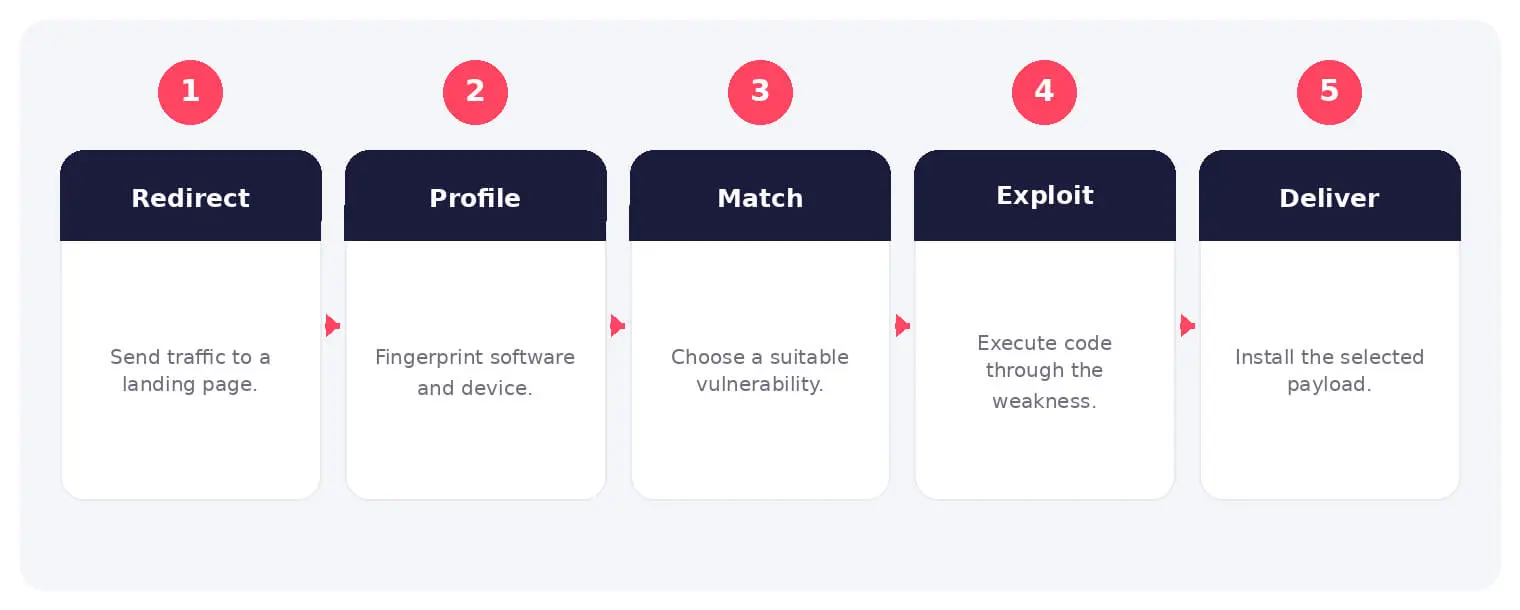
How an Exploit Kit Works
Victims reach a landing page through a malicious advertisement, compromised site, injected link, or redirect chain. The kit fingerprints the browser, operating system, plugins, language, and other characteristics, then selects an exploit that appears likely to succeed.
Successful exploitation runs code and retrieves a payload such as ransomware, an infostealer, a remote access tool, or a downloader. Operators rotate domains, obfuscation, and exploits to avoid reputation controls and signatures.
Common Types and Techniques
- Browser and legacy plugin exploit kits
- Malvertising and compromised-site delivery chains
- Server-side and exposed-service exploitation frameworks
- Crimeware services that bundle exploits and payloads
Security and Business Risks
- Silent malware installation without a visible download
- Ransomware, credential theft, remote access, and fraud
- Compromise of users browsing legitimate but altered sites
- Rapid exploitation of unpatched or unsupported software
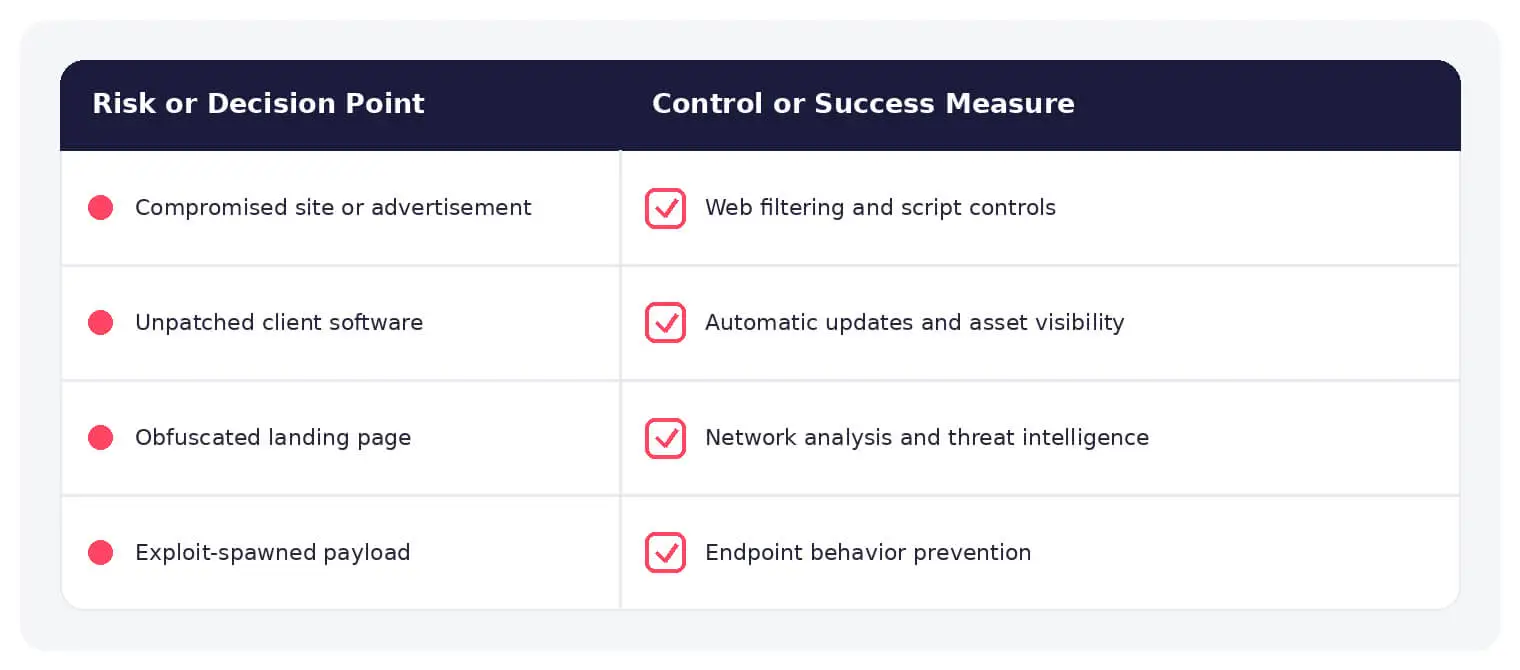
Warning Signs and Detection
Look for redirect chains, short-lived domains, obfuscated scripts, unusual browser child processes, exploit-like crashes, memory-protection alerts, and immediate payload downloads. Correlate web gateway, DNS, endpoint, and threat-intelligence data.
Prevention and Response
Patch browsers, operating systems, and exposed applications promptly; remove unsupported plugins and software; restrict scripting where practical; use browser isolation for high-risk activity; filter malicious domains; and detect exploit behavior at the endpoint.
How SOCRadar Can Help
SOCRadar combines external asset visibility, threat intelligence, Dark Web monitoring, vulnerability context, and indicator enrichment to help teams identify exposure and investigate activity connected to exploit kit.
Explore SOCRadar Cyber Threat Intelligence or request a demo to strengthen threat-informed prevention and investigation.
Frequently Asked Questions
What Is an Exploit Kit?
An exploit kit is a packaged framework that fingerprints a visitor’s device, matches it against known vulnerabilities, and attempts the exploit most likely to succeed, usually to install malware. Operators can rent or deploy a kit instead of building the redirects, landing pages, exploits, and payload delivery themselves.
How Does an Exploit Kit Differ From Malware?
The kit is the delivery and exploitation infrastructure; malware is the payload it installs. The same kit can serve ransomware, an infostealer, a remote access tool, or a downloader depending on the campaign, which is why blocking one payload does not dismantle the delivery chain behind it.
How Does an Exploit Kit Attack Chain Work?
A victim reaches the kit’s landing page through malvertising, a compromised website, an injected link, or a redirect chain, often managed by a traffic distribution system. The kit fingerprints the browser, operating system, plugins, and language settings, selects a matching exploit, and, if exploitation succeeds, downloads and executes a payload.
Do Exploit Kits Require the User to Click or Download Anything?
Not always. A drive-by exploit can execute code from simply loading a redirected or compromised page, with no visible download prompt. Other campaigns still depend on interaction, such as a deceptive update dialog or a manually opened file.
Are Exploit Kits Still Relevant After Modern Browser Hardening?
Classic browser kits declined as sandboxing, automatic updates, and plugin removal reduced what they could exploit, but the operating model persists. Similar workflows appear in malvertising chains, exploitation-as-a-service offerings, and automated attacks on unpatched internet-facing systems.
Can Exploit Kits Target Servers Instead of Browsers?
Yes. The same packaged approach of scanning, fingerprinting, and automated vulnerability matching is used against exposed services such as VPN appliances, edge devices, and web applications. In those cases the target is the internet-facing system rather than a browsing user, so server-side patching matters as much as browser hygiene.
What Warning Signs Indicate an Exploit Kit Encounter?
Look for unexpected redirect chains, connections to short-lived or freshly registered domains, heavily obfuscated scripts, a browser spawning unusual child processes such as command interpreters, exploit-like application crashes, and immediate payload downloads after a page load. Correlating web gateway, DNS, and endpoint telemetry helps reconstruct the full chain.
What Should You Do After Blocking an Exploit Kit Payload?
A blocked payload stops only the final stage, so trace how traffic reached the kit and which component was vulnerable. Identify the affected users and applications, patch or remove the exploited software, and review endpoint data to confirm nothing executed before the block occurred.
How Can Organizations Reduce Exploit Kit Risk?
Patch browsers, operating systems, and exposed applications promptly, and retire unsupported plugins and software that kits commonly target. Layer additional controls where exploitation risk remains: restrict unnecessary scripting, filter malicious domains, use browser isolation for high-risk browsing, and detect exploit behavior at the endpoint.
How Does Threat Intelligence Help Against Exploit Kits?
Intelligence on active campaigns, rotating infrastructure, and exploit activity for specific CVEs helps teams anticipate which weaknesses kits are likely to target. SOCRadar’s Vulnerability Intelligence adds exploitability and KEV context so patching can concentrate on the components attackers are actively exploiting in the wild.