



Mar 10, 2026

Feb 19, 2026
5 Mins Read
Sep 13, 2026
Table Of Content
Related Articles

SMS Bombing

Threat Actors
Jan 08, 2026

Dark Web Monitoring
Feb 19, 2026

Ransomware
Jan 31, 2026

OSINT Framework
Apr 17, 2026

What Is a Digital Footprint?
A digital footprint is the collection of information, accounts, content, identifiers, infrastructure, and behavioral traces connected to a person or organization through digital activity. It includes information published intentionally and data generated, inferred, copied, or exposed by other systems.
For an organization, the footprint extends beyond websites and social profiles to domains, cloud services, applications, certificates, code repositories, suppliers, employee accounts, mobile apps, leaked data, and forgotten infrastructure. Not every visible item is controlled by the organization.
Key Takeaways
- Active footprints from intentional publishing is a central category or technique.
- Reliable assessment requires source, ownership, timing, and operational context.
- Detection should connect external evidence with identity, device, network, and business signals.
- Response should protect affected people and remove reusable access paths.
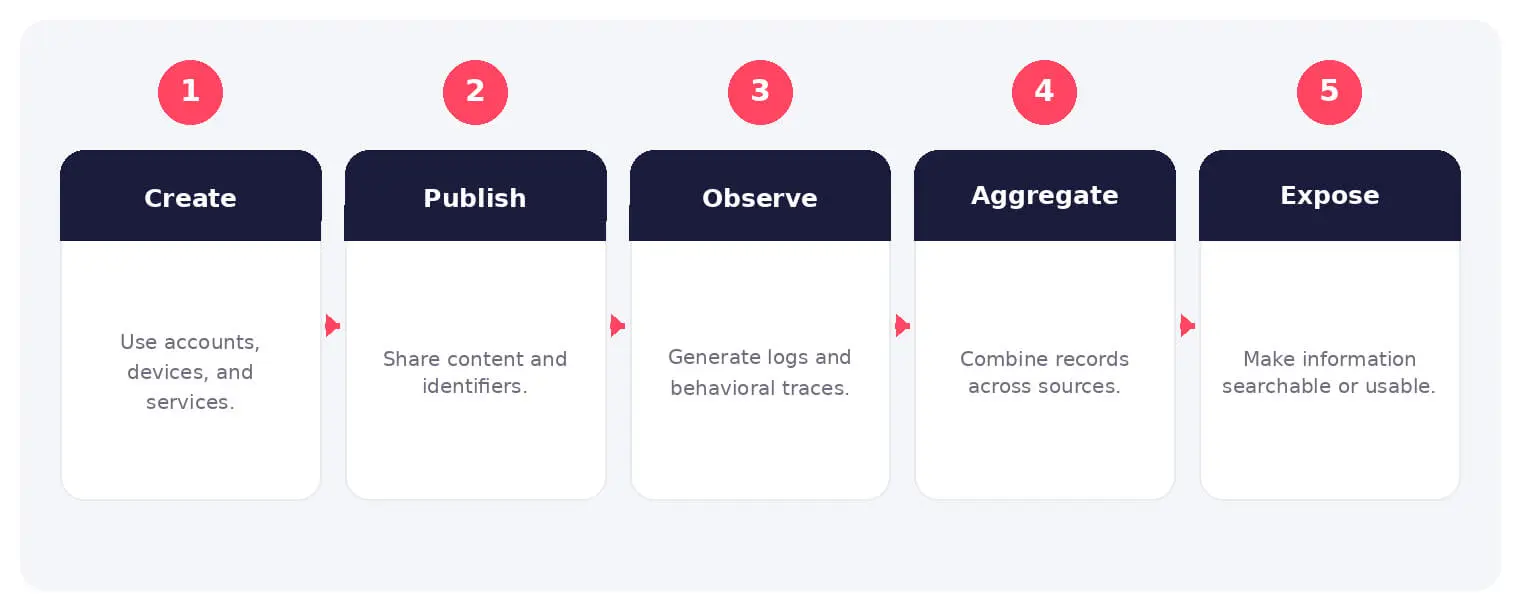
How a Digital Footprint Works
The sequence above provides a practical operating model. Individual steps can overlap, repeat, or involve different people and services, so each stage should be validated against available evidence.
For an organization, the footprint extends beyond websites and social profiles to domains, cloud services, applications, certificates, code repositories, suppliers, employee accounts, mobile apps, leaked data, and forgotten infrastructure. Not every visible item is controlled by the organization.
Common Types and Techniques
- Active footprints from intentional publishing
- Passive footprints from tracking and telemetry
- Organizational attack-surface footprints
- Third-party, employee, and leaked-data footprints
Security, Privacy, and Business Risks
- Phishing, impersonation, and social engineering
- Discovery of exposed systems and forgotten assets
- Privacy loss, stalking, and executive targeting
- Credential abuse and reputational damage
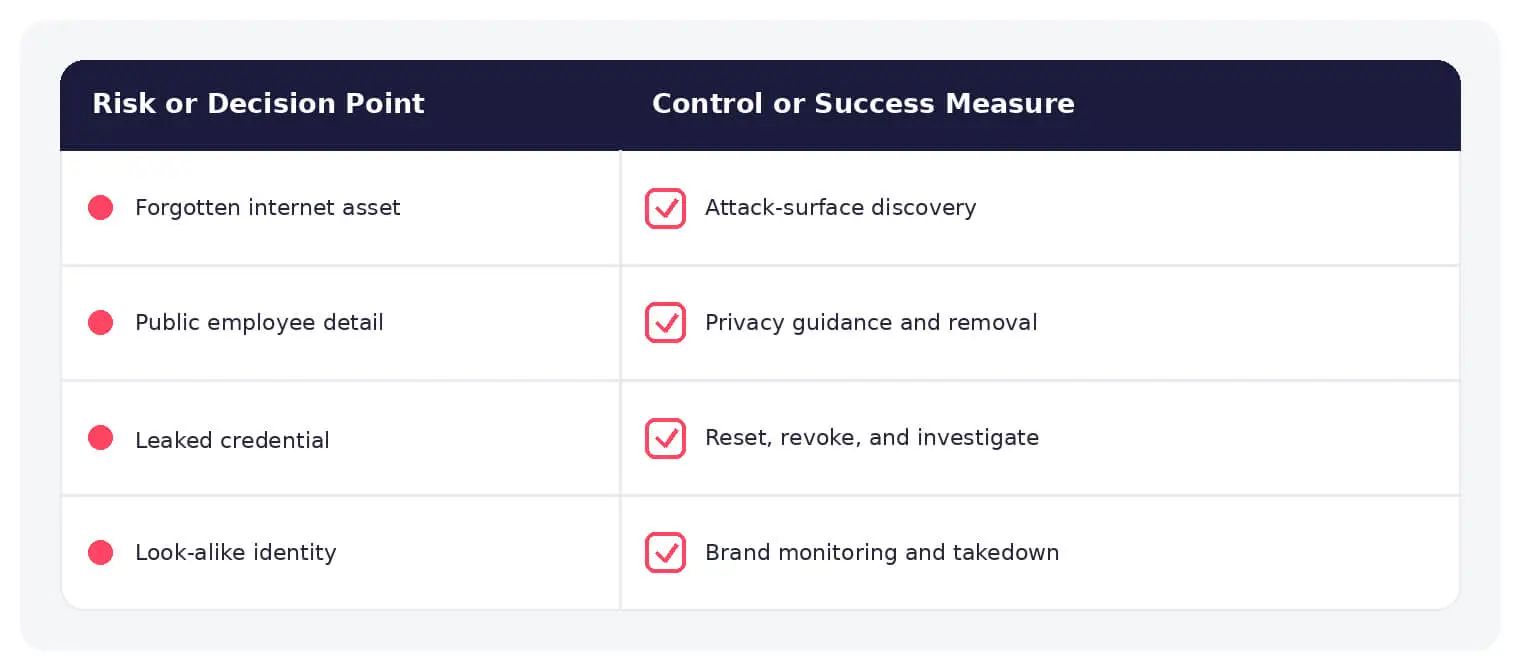
Warning Signs and Validation
Search domains, certificates, public profiles, repositories, cloud assets, mobile apps, leaked credentials, data brokers, and supplier exposure. Validate ownership before remediation.
Prevention and Response
Minimize unnecessary disclosure, remove stale accounts and assets, protect official identities, manage privacy settings, rotate exposed secrets, monitor continuously, and train employees on oversharing.
How SOCRadar Can Help
SOCRadar combines external intelligence, Dark Web visibility, brand monitoring, attack-surface discovery, and contextual enrichment to help teams identify exposure and investigate activity connected to digital footprint.
Explore SOCRadar Attack Surface Management or request a demo to strengthen external threat detection and response.
Frequently Asked Questions
What Does a Digital Footprint Include for an Organization?
Beyond websites and social profiles, an organizational footprint can cover:
- Registered domains, subdomains, and DNS records
- Cloud services, storage buckets, and TLS certificates
- Code repositories and mobile apps
- Employee accounts and supplier relationships
- Leaked credentials and data broker listings
Forgotten infrastructure, such as stale DNS records or decommissioned servers that still resolve, belongs here as well. Not every item is under the organization’s direct control, which is why ownership should be confirmed before any remediation.
What Is the Difference Between an Active and a Passive Digital Footprint?
An active footprint is created deliberately through posts, profiles, registrations, published content, and official announcements. A passive footprint accumulates without direct action, through tracking, telemetry, metadata, location data, and copies or inferences made by third-party systems. Both contribute to the picture that attackers, data brokers, and observers can assemble.
How Do Attackers Use a Company’s Digital Footprint?
Footprint data feeds reconnaissance. Attackers map technologies, employee names and roles, supplier relationships, and exposed services to build convincing phishing pretexts, find vulnerable assets, and guess or reuse credentials. Leaked email addresses and stealer logs frequently provide the first working foothold.
How Can an Organization Discover Its Digital Footprint?
Combine internal asset inventories with outside-in research across search engines, certificate transparency logs, DNS records, code repositories, app stores, cloud storage listings, data broker sites, and breach or paste dumps. Each finding should be checked for source, ownership, and whether it is still live, since stale results can send remediation in the wrong direction.
What Are Warning Signs That Footprint Exposure Is Being Exploited?
Frequent signals include newly registered lookalike domains, credential dumps containing corporate addresses, exposed admin panels or APIs, impersonation of executive or brand accounts, and targeted phishing that references accurate internal details. Employee profiles revealing project names or infrastructure specifics can also indicate oversharing that attackers can act on.
How Should a Company Respond to Exposed Credentials Found in Its Footprint?
Rotate the exposed secrets and any credentials reused elsewhere, verify whether MFA protected the affected accounts, and review session activity, because a password change alone may not terminate an already stolen session. Check for related leaked data, notify affected employees, and monitor for further dumps referencing your domain.
What Controls Help Reduce a Company’s Digital Footprint Over Time?
Publish only what serves a business purpose, retire stale accounts, domains, and cloud assets, lock down privacy settings on official profiles, and set clear limits on what employees share publicly. Footprints regrow as new services, applications, and staff appear, so periodic re-discovery and pruning should be part of routine operations.
Why Are Executives a High-Risk Part of the Footprint?
Executive personal data, including addresses, family details, travel patterns, and personal accounts, gives attackers credible material for spear phishing, stalking, and impersonation. Because a leader’s public presence bridges personal and corporate contexts, a personal leak can quickly become a corporate pretext.
Why Is a Digital Footprint Hard to Erase Completely?
Rarely can every trace be removed. Archives, caches, screenshots, legal records, data broker copies, and third-party datasets usually persist after the original source is gone. The realistic goal is to reduce and correct exposure by removing what you control, requesting takedowns where possible, and watching for resurfaced data.
How Is a Digital Footprint Different From an Attack Surface?
The attack surface is essentially the exploitable portion of the footprint: internet-facing assets, services, and identities an attacker could target or abuse. The footprint is broader, covering personal, behavioral, and third-party traces that may never be directly exploitable but still shape reconnaissance and social engineering.