What Is the Deep Web?
The deep web refers to parts of the internet that search engines can’t index. It includes private databases, login-protected pages, and subscription-only content. While often misunderstood, the deep web is legal, widely used, and essential to daily online activity.
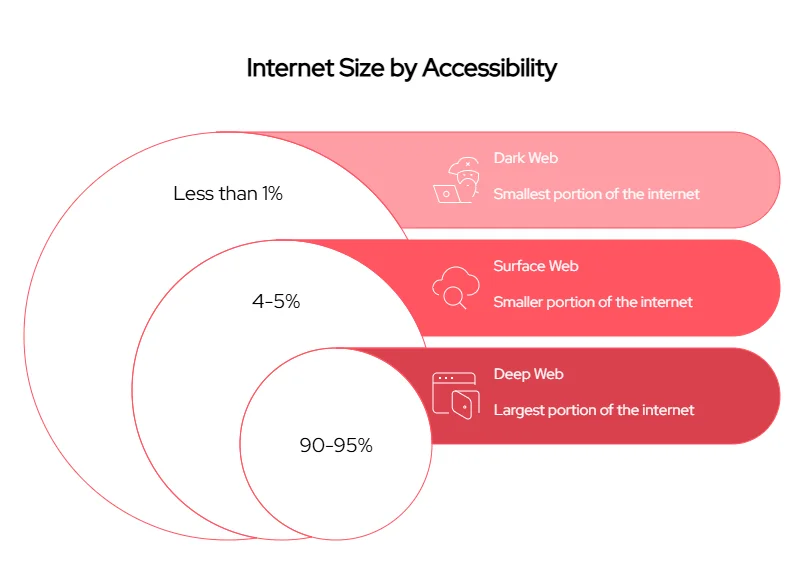
Portions of the web
What Is the Deep Web and Why Does It Matter?
The deep web refers to parts of the internet that are not indexed by traditional search engines like Google or Bing. This includes private databases, login-restricted content, and subscription-based pages.
While it is often misunderstood, the deep web plays an essential role in protecting data privacy, supporting research, and powering secure access to sensitive systems.
How the Deep Web Differs from the Surface and Dark Web
The surface web includes everything publicly accessible through search engines. The dark web, on the other hand, is a small, intentionally hidden part of the internet that requires special software to access and is often used for anonymous communication.
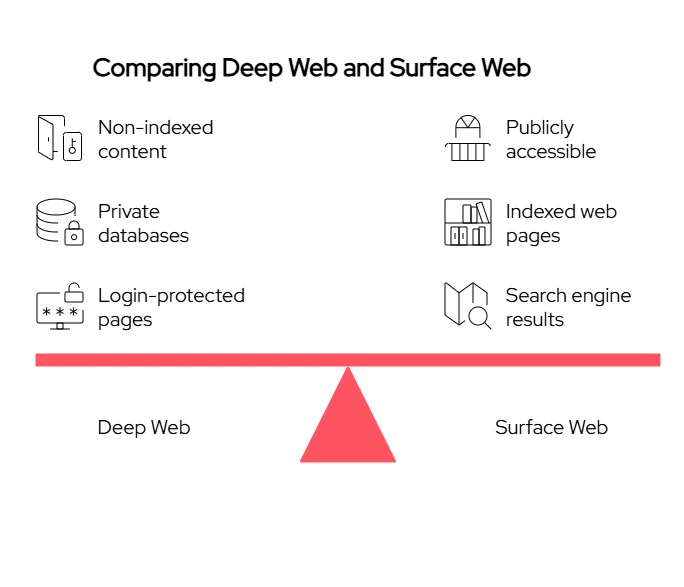
Deep Web vs Surface Web
The deep web sits in between. It includes:
- Banking portals
- Academic journals
- Healthcare systems
- Government databases
- Cloud-based business apps
These resources are legal, secure, and part of our daily internet use.
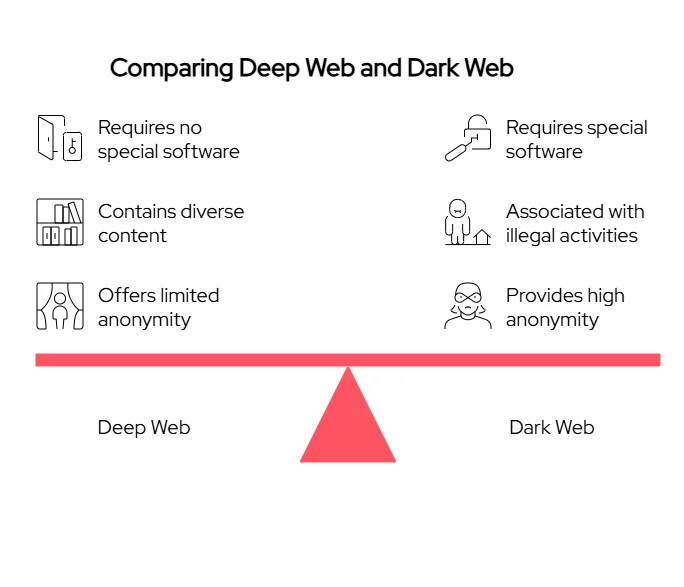
Deep Web vs Dark Web
A Simple Explanation of How the Deep Web Works
Web pages in the deep web are not indexed by search engines. This is often due to:
- Login requirements
- Database queries
- Paywalls or subscriptions
- File sharing systems not exposed to crawlers
These mechanisms protect sensitive data and ensure only authorized users access the content.
Common Examples of Deep Web Content You Use Every Day
Here are everyday tools and systems that exist within the deep web:
- Webmail services (e.g., Gmail, Outlook)
- Online banking platforms
- Corporate intranets
- University library databases
- Health records and hospital systems
- SaaS dashboards (CRM, HR, Analytics)
Most internet users access the deep web regularly—often without realizing it.
Why Search Engines Can’t Access the Deep Web
Search engines cannot index the deep web due to technical and access restrictions:
- Content hidden behind login forms
- Dynamic pages generated by user queries
- Password-protected portals
- Firewall restrictions
- Non-linkable or temporary URLs
This keeps sensitive data secure and minimizes risk from automated crawlers.
Is the Deep Web Safe to Use? Separating Facts from Fear
Yes, the deep web is safe and legal to use. It is where:
- Medical professionals access patient data
- Researchers explore academic databases
- Customers log in to secure banking portals
The confusion often comes from mixing up the deep web with the dark web. They are not the same.
The Role of the Deep Web in Data Privacy and Security
The deep web protects private data by restricting public access. It supports:
- Encrypted sessions
- Role-based access control
- Compliance with privacy laws (like GDPR, HIPAA)
This structure helps organizations manage sensitive content without exposing it to search engines or threat actors.
How the Deep Web Supports Academia, Finance, and Healthcare
In many industries, deep web systems are essential:
- Academia: Access to subscription-only research papers
- Finance: Secure banking, stock trading, internal audits
- Healthcare: Electronic health records, diagnostics platforms
- Government: Citizen services portals and legal databases
These tools enable secure digital operations without exposing data to the open web.
Debunking Myths: What the Deep Web Is Not
The deep web is not illegal, not encrypted by default, and not dangerous for users.
Common myths:
- Myth: The deep web is full of illegal activity
Fact: That refers to the dark web, not the deep web - Myth: You need Tor or special software
Fact: Most deep web content uses standard browsers and logins
Can You Access the Deep Web Without Breaking the Law?
Yes, accessing the deep web is legal and routine. Using your email, logging into a portal, or accessing your bank account online all involve deep web interaction.
What matters is how you use it. As long as you are accessing legitimate services with proper authorization, it is completely legal.
FAQ: Deep Web Explained
What exactly is the deep web?
The deep web includes all internet content not indexed by search engines. This includes email, online banking, and internal business platforms.
Is the deep web the same as the dark web?
No. The deep web is legal and used daily. The dark web requires special access and hosts anonymous or hidden services.
Can I accidentally access the deep web while browsing?
Yes, and it’s normal. Logging into an account or using a private platform accesses deep web content.
Is it illegal to visit websites on the deep web?
No. Accessing deep web content is legal when done with proper credentials.
Why doesn’t Google show deep web content in search results?
Because deep web pages are hidden behind logins or technical barriers that prevent search engine indexing.
What are some everyday examples of deep web content?
Email accounts, online banking, business portals, academic journals, and health records.
Do I need special software to access the deep web?
No. Most deep web content is accessed through regular browsers with credentials.
How is the deep web useful for research or education?
It hosts exclusive databases, journals, and course materials behind login or subscription systems.
How much of the internet is considered part of the deep web?
Estimates suggest over 90% of online content resides in the deep web.
Does the deep web pose any privacy or security risks?
Only if systems are misconfigured or compromised. Properly secured, the deep web enhances privacy.
Conclusion
Understanding the deep web helps separate fact from fiction. It is not a hidden corner of illegal activity. Instead, it powers the modern digital world—quietly and securely.
To learn more about protecting your digital footprint across both the deep and dark web, explore SOCRadar’s Advanced Dark Web Monitoring.

Wherever threat actors are, so are we