

Oct 05, 2026
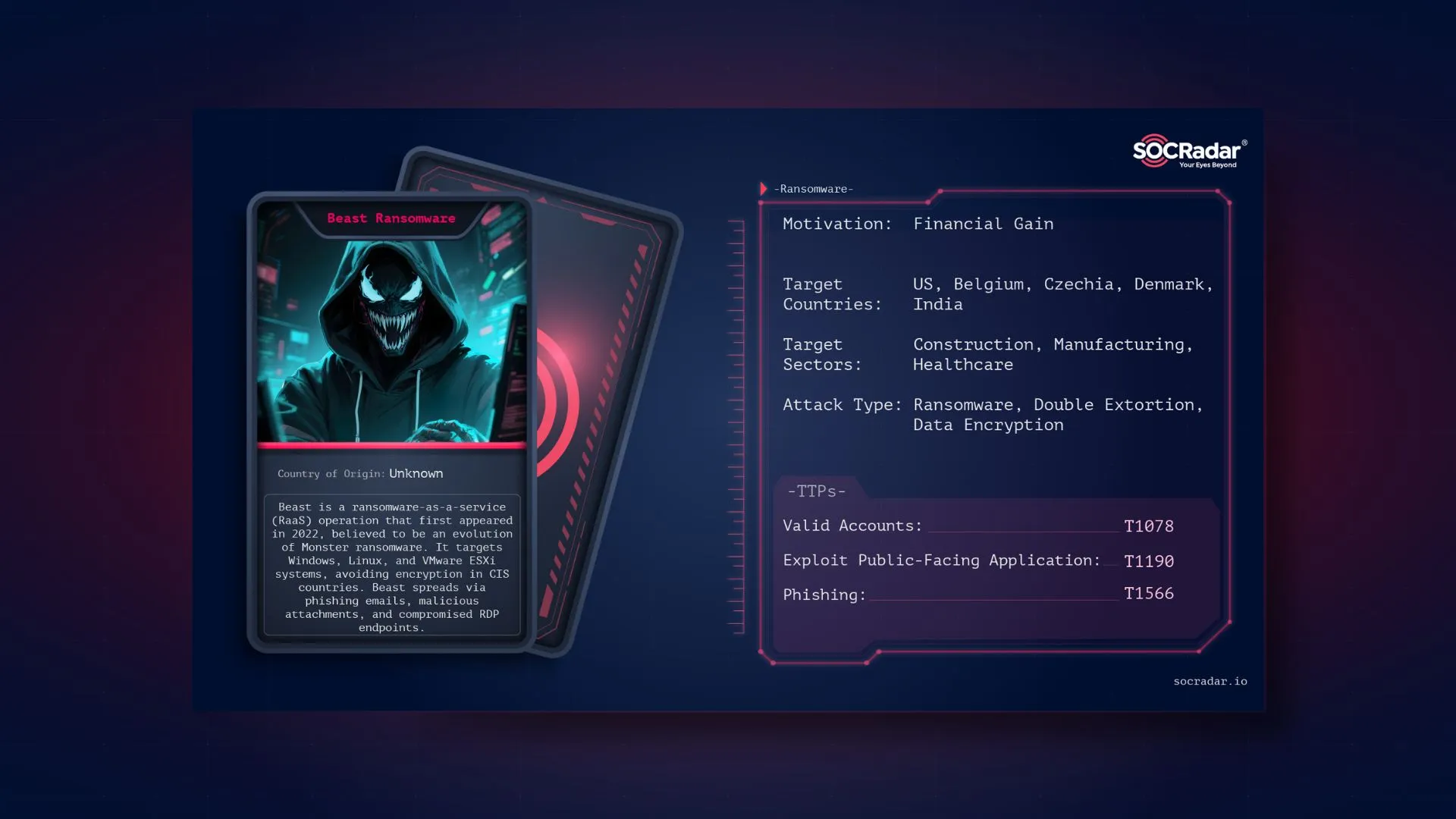
Table Of Content
Related Articles

Dark Web Profile: Blue Locker Ransomware
Sep 25, 2026

ShinyHunters Claims Access to FBI Systems
Sep 24, 2026

Clop Hack: ShinyHunters Hijacks Data Leak Site
Sep 21, 2026

Aug 19, 2025
12 Mins Read
Jun 03, 2026

Summarize with:
Dark Web Profile: Beast Ransomware
Beast Ransomware is the evolved form of an earlier strain known as Monster, first detected in March 2022 during an investigation by the BlackBerry Incident Response team. Initially developed in Delphi, Monster was promoted a few months later on the Russian Anonymous Marketplace (RAMP) alongside a partnership program for affiliates.
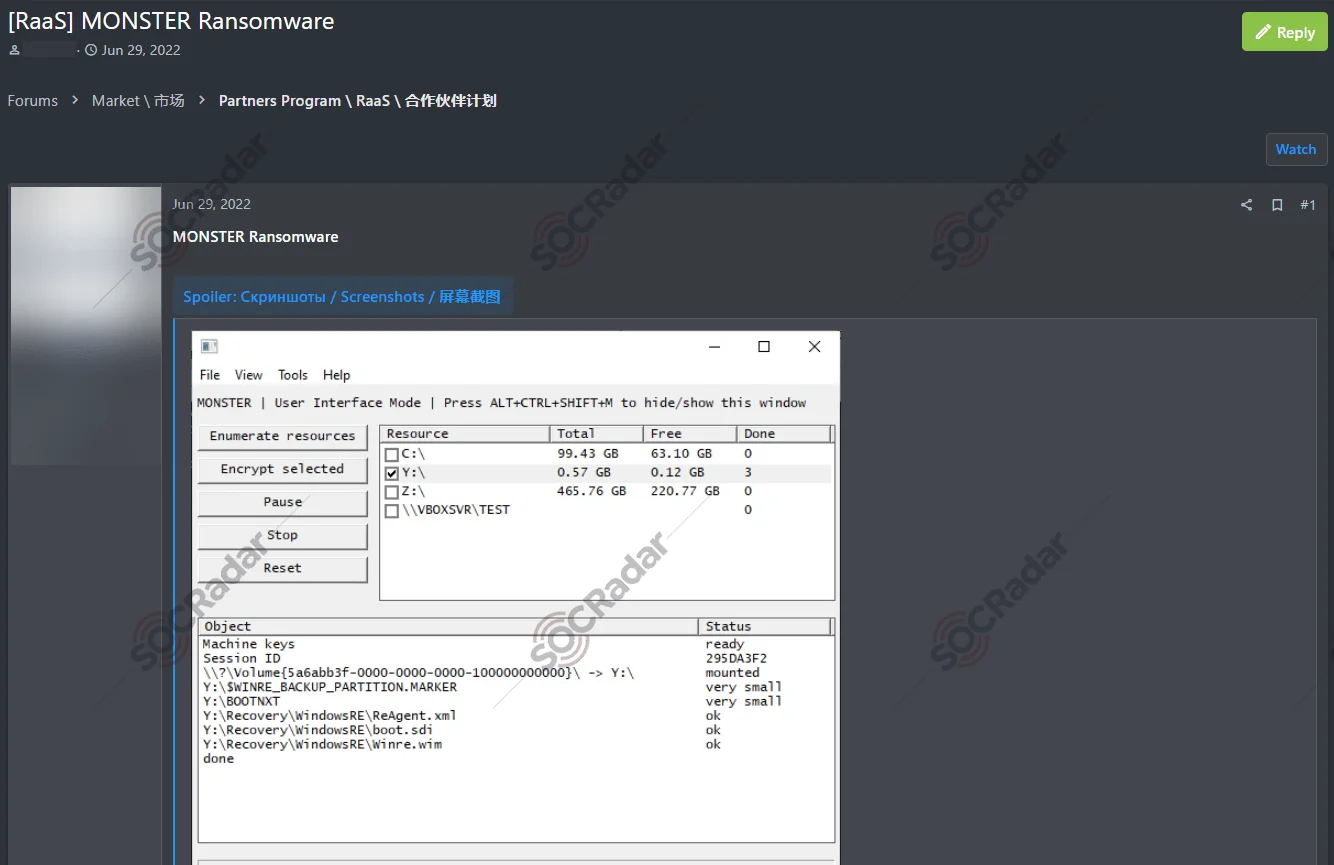
Monster Ransomware’s post in 2022
The developer later unveiled Beast as an upgraded version, equipped with more sophisticated capabilities and expanded platform support. Unlike Monster, which focused on Windows, Beast can also compromise Linux environments and VMware ESXi servers, making it a more versatile and dangerous Ransomware-as-a-Service threat.
Who Is Beast Ransomware?
Beast Ransomware traces its roots to an earlier strain known as Monster, first identified in March 2022 and promoted a few months later on Russian-speaking underground forums alongside an affiliate program. Security researchers believe the operators are likely based in Eastern Europe or Russia.
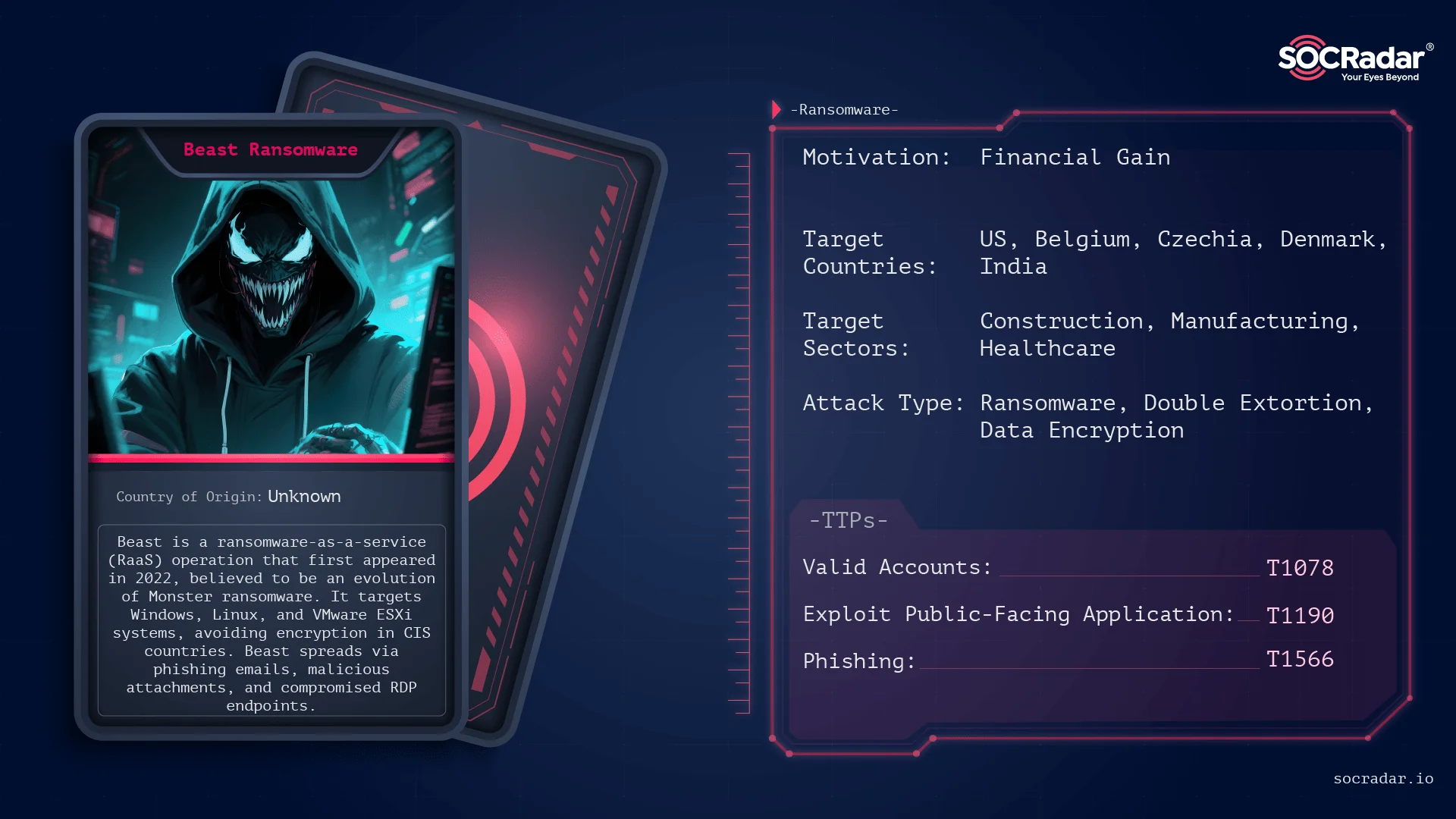
Threat actor card for Beast Ransomware
In 2024, researchers observed the group actively marketing Beast’s partnership program and new capabilities in Russian, English, and Chinese, offering affiliates a customizable Ransomware-as-a-Service platform that could target Windows, Linux, and VMware ESXi systems.
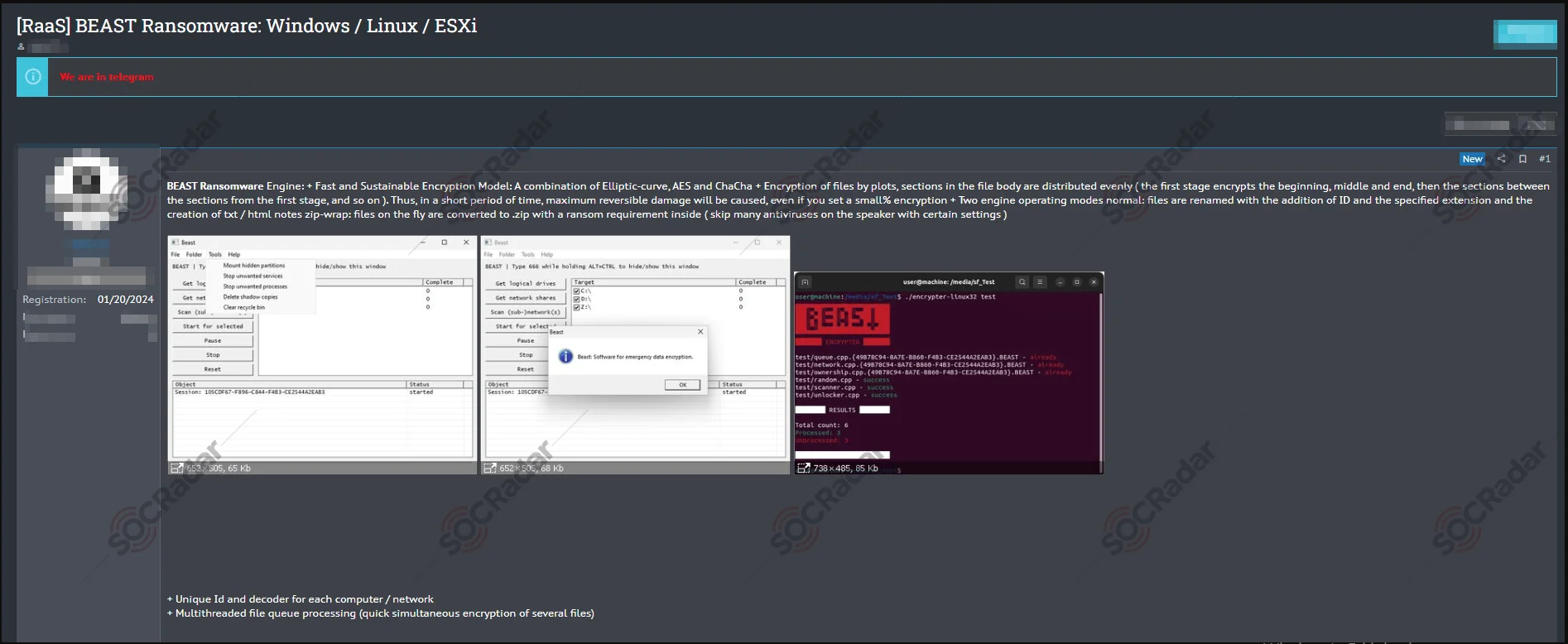
Beast Ransomware’s hacker forum post, looking for RaaS affiliates
While Beast inherited much of Monster’s code, it introduced stronger encryption, multi-threaded processing, service termination, shadow-copy deletion, and other features designed to improve efficiency and reach. Analysts note that despite its technical sophistication, Beast has not yet achieved the widespread impact of leading ransomware families.
In March 2025, discovery of Boramae reported, a variant sharing almost identical code with Beast but expanded in size through static linking with OpenSSL 1.1.0, growing from roughly 150 to over 2,500 functions. This variant also featured more advanced string obfuscation, including incremental XOR key changes for each character. Before the shared similarity discovery, Boramae profiled as a Windows-focused ransomware that appends a “.boramae” extension to encrypted files, changes desktop wallpapers, and delivers ransom notes urging quick payment under threat of data leaks, suggesting the Beast operation continues to evolve through more complex and specialized variants.

What Are Beast Ransomware’s Targets?
Current listings on Beast Ransomware’s Data Leak Site (DLS) point to a total of 18 known victims. The United States dominates the list with ten confirmed cases, making it the clear primary focus of the group’s operations. The remaining incidents are spread evenly across Czechia, Belgium, Denmark, India, and Guatemala, with each country appearing once. This shows that while Beast operates internationally, its activity is concentrated in the U.S. market.
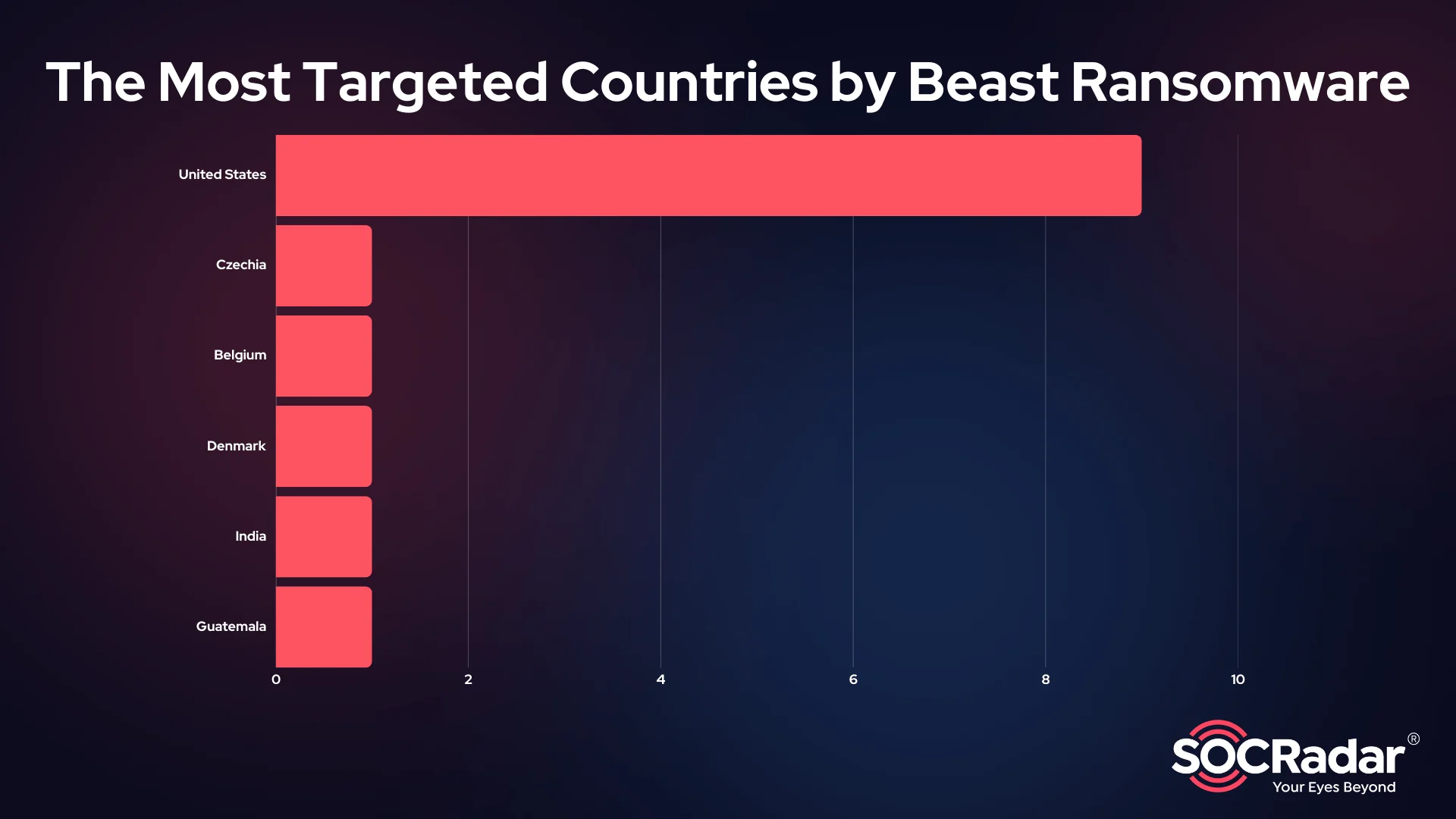
The most targeted countries by Beast Ransomware
Industry data tells a similar story of selective but high-impact targeting. Manufacturing and Construction lead the chart, each with four confirmed victims. Healthcare and Business Services follow, with two victims each, while Financial Services and Education appear once apiece. These industries share two strategic qualities that make them attractive ransomware targets: they are critical to day-to-day operations in their respective regions, and disruption in these sectors can create immediate operational and financial pressure.
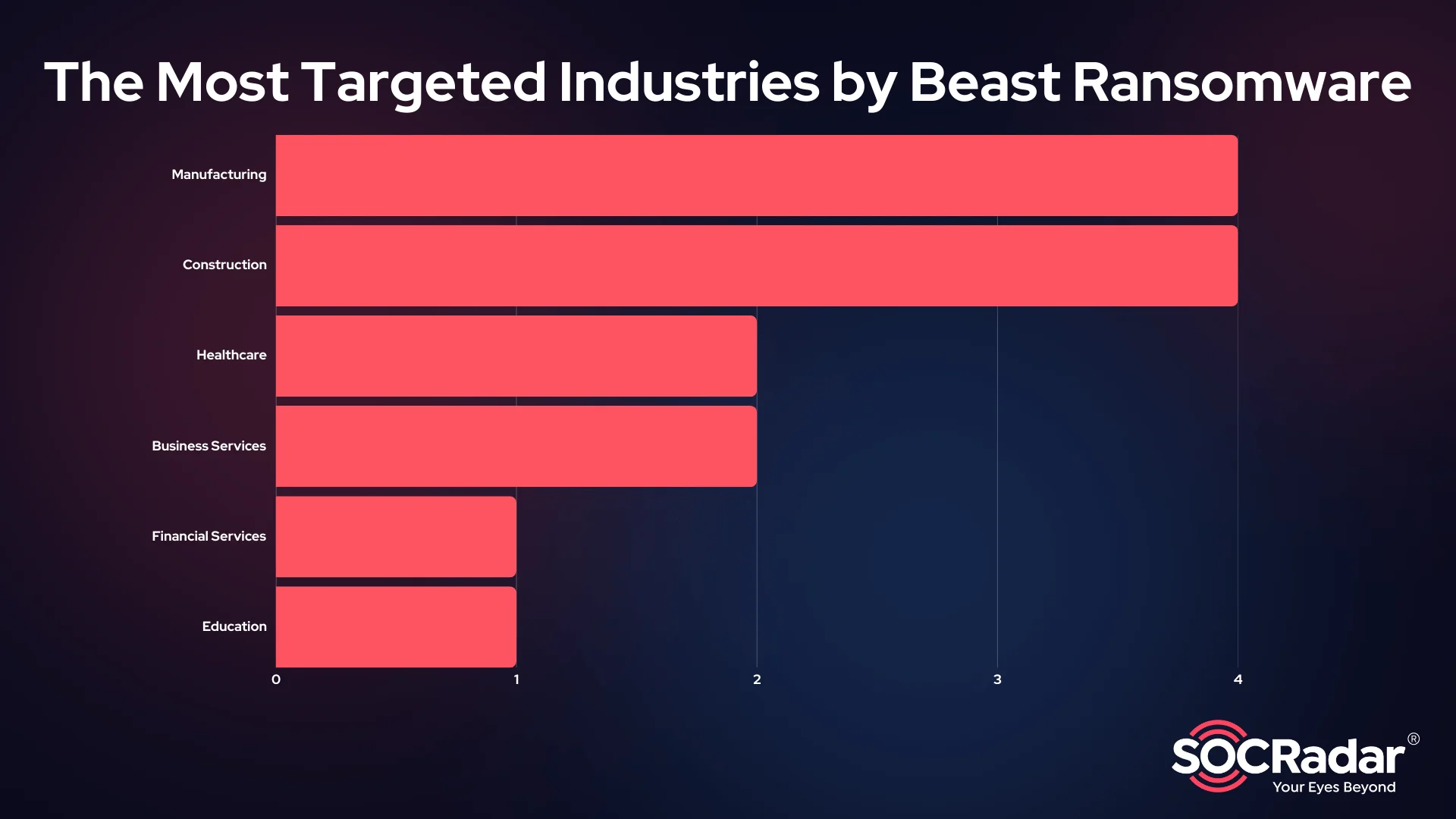
The most targeted industries by Beast Ransomware
By hitting essential industries and showing a strong preference for U.S. organizations while still affecting victims in other countries, Beast’s activity appears driven mainly by financial gain. The pattern suggests opportunism rather than a refined strategic focus. They go where the chance of profit is highest, hitting targets that are more likely to pay quickly to restore operations and protect their data.
What Are Beast Ransomware’s Techniques?
Initial Access
Beast affiliates use several entry points to deploy the ransomware. Researchers notes common intrusion vectors include phishing emails and compromised RDP endpoints, sometimes combined with stolen credentials purchased on underground forums like many other ransomware operators. AhnLab ASEC adds that in 2024, Beast was seen in phishing campaigns disguised as copyright violation warnings or fake resumes, delivered alongside the Vidar infostealer. These emails linked to external download pages hosting compressed archives, often nested within another archive to bypass detection. The final stage contained Beast executables disguised with HWP or Excel icons.
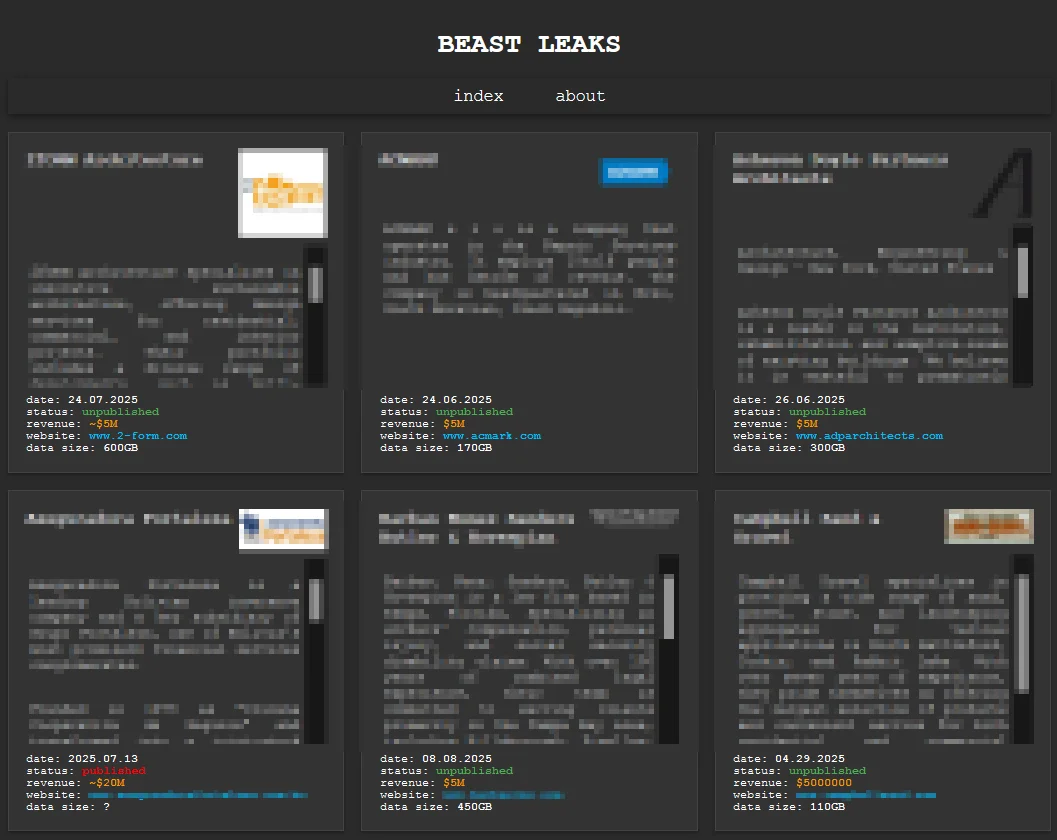
Beast Ransomware’s DLS: Beast Leaks
Execution
Once delivered, Beast runs immediately. Affiliates can build ransomware for Windows, Linux, or VMware ESXi using the group’s offline builder, introduced in August 2024. This allows operations to proceed without live C2 connections. The Linux version supports daemon mode and configurable encryption paths, while the ESXi variant can shut down virtual machines before encryption. Its observed that Windows builds also included two behavioral modes, one encrypting files and compressing them into [ID].BEAST.zip with an embedded ransom note, and another appending [ID].BEAST without compression, likely due to a build error.
Persistence and Control
Beast creates a mutex to prevent multiple instances from running simultaneously, using the string “BEAST HERE?” in earlier builds. In Boramae, the mutex function remains but the exact string is removed, making detection harder.
Evasion and Disruption
Before encryption, Beast terminates numerous processes and services tied to backups, databases, and security products, including Veeam, MSSQL, QuickBooks, and Symantec tools. It deletes shadow copies via WMI queries to block recovery attempts. The ransomware avoids encrypting devices in CIS countries by checking system language, country code, and IP via iplogger.co.
Boramae incorporates static linking with OpenSSL 1.1.0 and complex obfuscation techniques such as stacked strings, incremental XOR decryption, and subtraction-based decoding.
Discovery and Lateral Movement
Beast actively scans SMB ports and subnets to identify accessible shared folders for propagation. This enables the ransomware to spread laterally to other systems without manual intervention.
Impact
Beast uses Elliptic-curve and ChaCha20 encryption to lock files on local and network drives. Its multithreaded design speeds up encryption by processing multiple files in parallel. An optional ZIP-wrapper mode converts files into password-protected archives containing the ransom note The ransom note, “README.txt,” is dropped into each affected directory, and both Beast and Boramae contain a hidden GUI accessible via CTRL+ALT+666 during encryption. Boramae changes the encrypted file extension to .boramae and alters ransom note text.
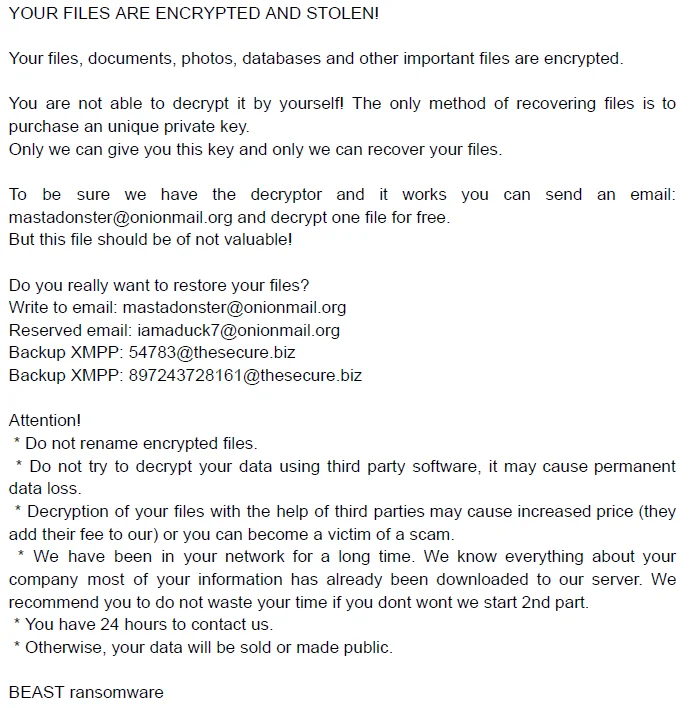
Beast Ransomware’s ransom note (ransomware.live)
In addition to encrypting data, Beast operators maintain a TOR-based DLS to pressure victims into paying. Unlike some ransomware groups that upload stolen data to file-sharing platforms like MEGA, Beast appears to host all leaked data directly on its own onion service, indicating a self-hosted infrastructure.
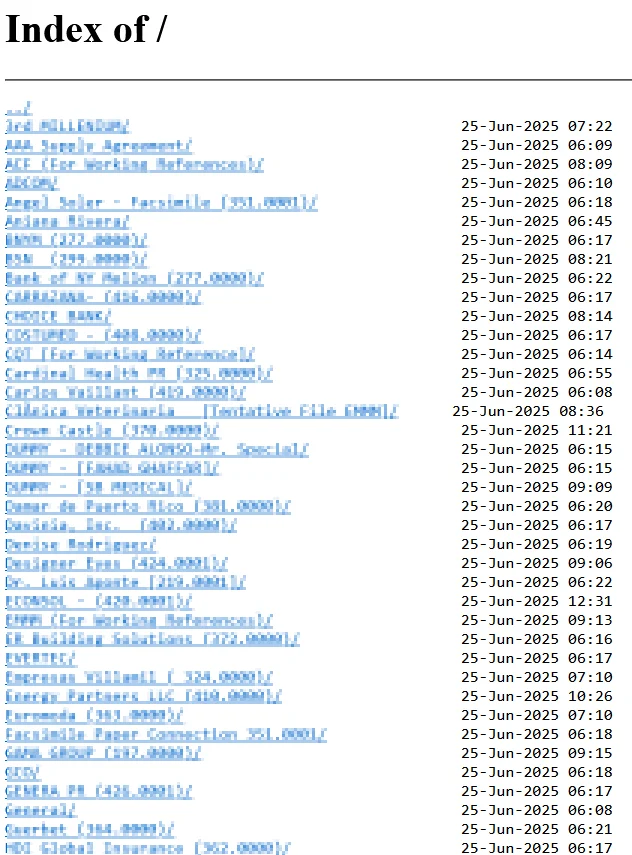
Stolen data is hosted on their Index page
This aligns with a traditional double-extortion model: encrypting the victim’s files while threatening to publish stolen information unless the ransom is paid.
What Are the Mitigation Tactics Against Beast Ransomware?
Because Beast Ransomware is operated as a Ransomware-as-a-Service with multiple affiliates, its intrusion methods can vary from case to case. While some campaigns rely on phishing and malicious document lures, others exploit exposed services or weak credentials. This makes a holistic, layered defense strategy essential—one that combines prevention, detection, and recovery with strong Cyber Threat Intelligence (CTI) coverage.

Block Initial Access
Filter email attachments and block suspicious links with a secure email gateway. Use DNS filtering and web application firewalls to stop access to malicious download sites. Train employees to recognize phishing attempts, including copyright violations and resume-themed lures like those seen in recent Beast campaigns. Disable automatic hyperlink clicking in email clients and apply warning banners to messages from external senders.
Secure Accounts and Authentication
Enforce strong, unique passwords and enable Multi-Factor Authentication (MFA) for all remote and privileged accounts. Restrict the use of administrative accounts and apply the principle of least privilege. Use time-bound or just-in-time access for accounts with elevated permissions.
Keep Systems Updated
Apply security patches to operating systems, applications, and firmware as soon as they are released, prioritizing internet-facing assets. Monitor vulnerability advisories and remediate known exploited vulnerabilities quickly.
Improve Detection and Response
Deploy Endpoint Detection and Response (EDR) tools with behavioral analytics capable of spotting ransomware activity such as shadow copy deletion, mass file modification, and unusual process/service termination. Establish 24/7 monitoring for signs of lateral movement, including SMB scanning. Regularly review new account creations and privilege escalations.
Network Segmentation and Traffic Control
Segment networks by function to contain ransomware spread. Restrict or disable unused services and ports, especially RDP, SMB, and other remote administration tools. Limit inbound connections to trusted IP ranges.
Limit Script and Command-Line Abuse
Disable or restrict the use of command-line tools (PowerShell, WMIC) where possible to hinder ransomware execution and spread. Implement application allowlisting to block unauthorized binaries.
Backup and Recovery
Maintain offline, immutable backups of all critical data. Store backups in a location not accessible from the main network. Regularly test restoration procedures to ensure backups can be relied on in an emergency.
Use Cyber Threat Intelligence (CTI)
Monitor Dark Web sources, including Beast’s own Tor-based data leak site, for early signs of targeting or exposure. Because Beast self-hosts stolen data rather than using public file-sharing services, CTI can help detect leaked files before they are widely distributed. Track Beast’s evolving variants, such as Boramae, and incorporate new indicators into security tools.
Test and Adapt
Regularly test your defenses against known ransomware techniques and refine controls based on the results. Conduct tabletop exercises simulating both encryption and data extortion scenarios to prepare for the full impact of a Beast attack.
How Can SOCRadar Help?
Beast Ransomware has evolved from its origins as Monster into a multi-platform Ransomware-as-a-Service operated by affiliates. Its attack methods vary—from phishing campaigns disguised as copyright violations or resumes, to exploitation of exposed RDP and network services—making it an unpredictable and adaptable threat. With double extortion, a self-hosted TOR-based leak site, and variants like Boramae, Beast continues to refine its capabilities and broaden its victim profile.
To counter this, organizations need strong visibility into emerging threats, early detection of targeted activity, and rapid response capabilities.
Start with a free Dark Web Report in SOCRadar Labs to see your domain’s exposure.
Track leaks of credentials, sensitive files, and personal data across dark web forums, ransomware blogs, and Beast’s own data leak site. Detect if stolen files are posted on Beast’s self-hosted infrastructure before they spread further.
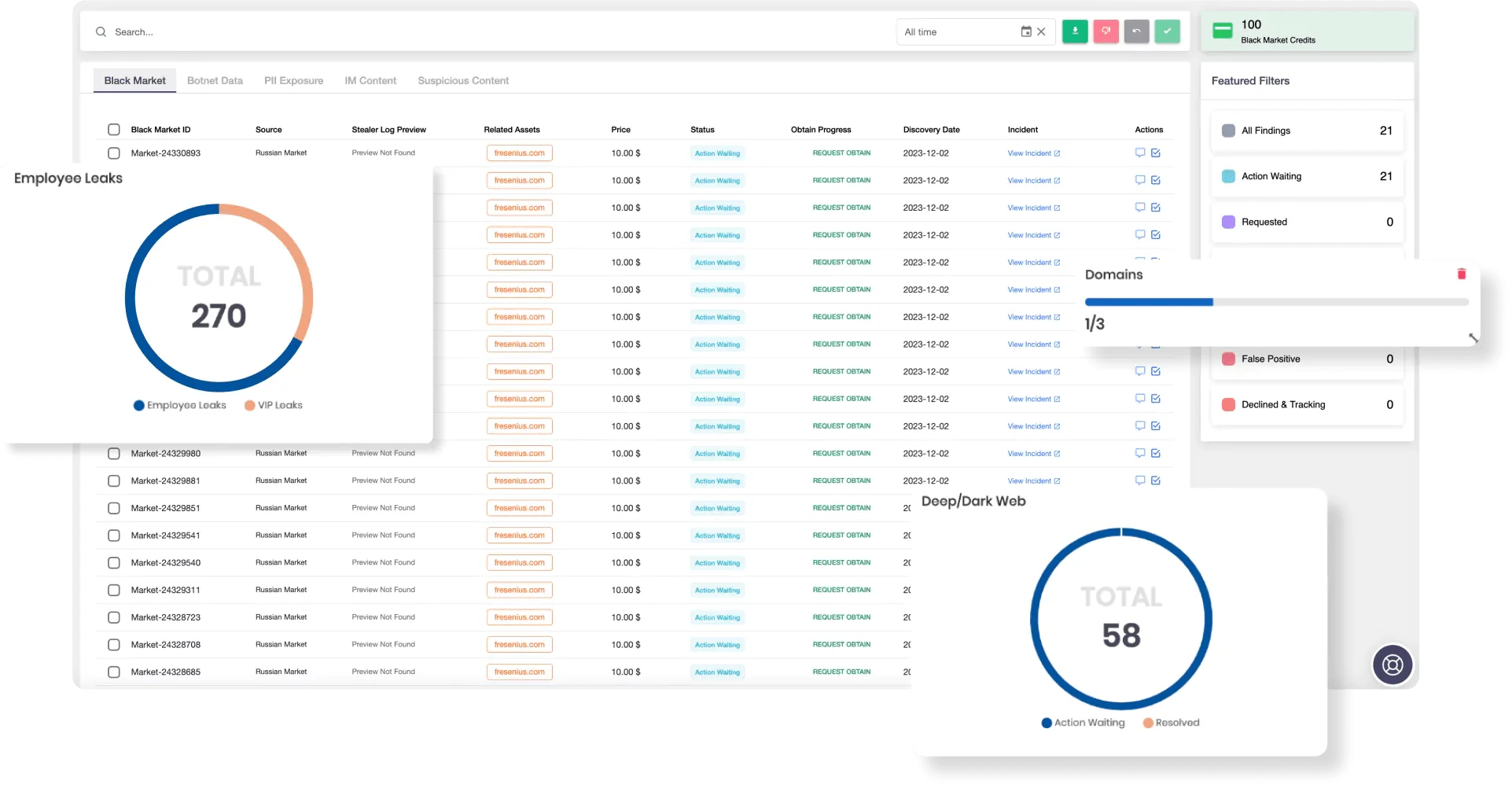
SOCRadar’s Advanced Dark Web Monitoring
Threat Intelligence Feeds
Get live updates on Beast’s TTPs, file hashes, infrastructure, and malware variants—including Boramae—so security teams can update defenses quickly.
Identify exposed services, outdated systems, and misconfigured assets before Beast affiliates can exploit them for initial access.
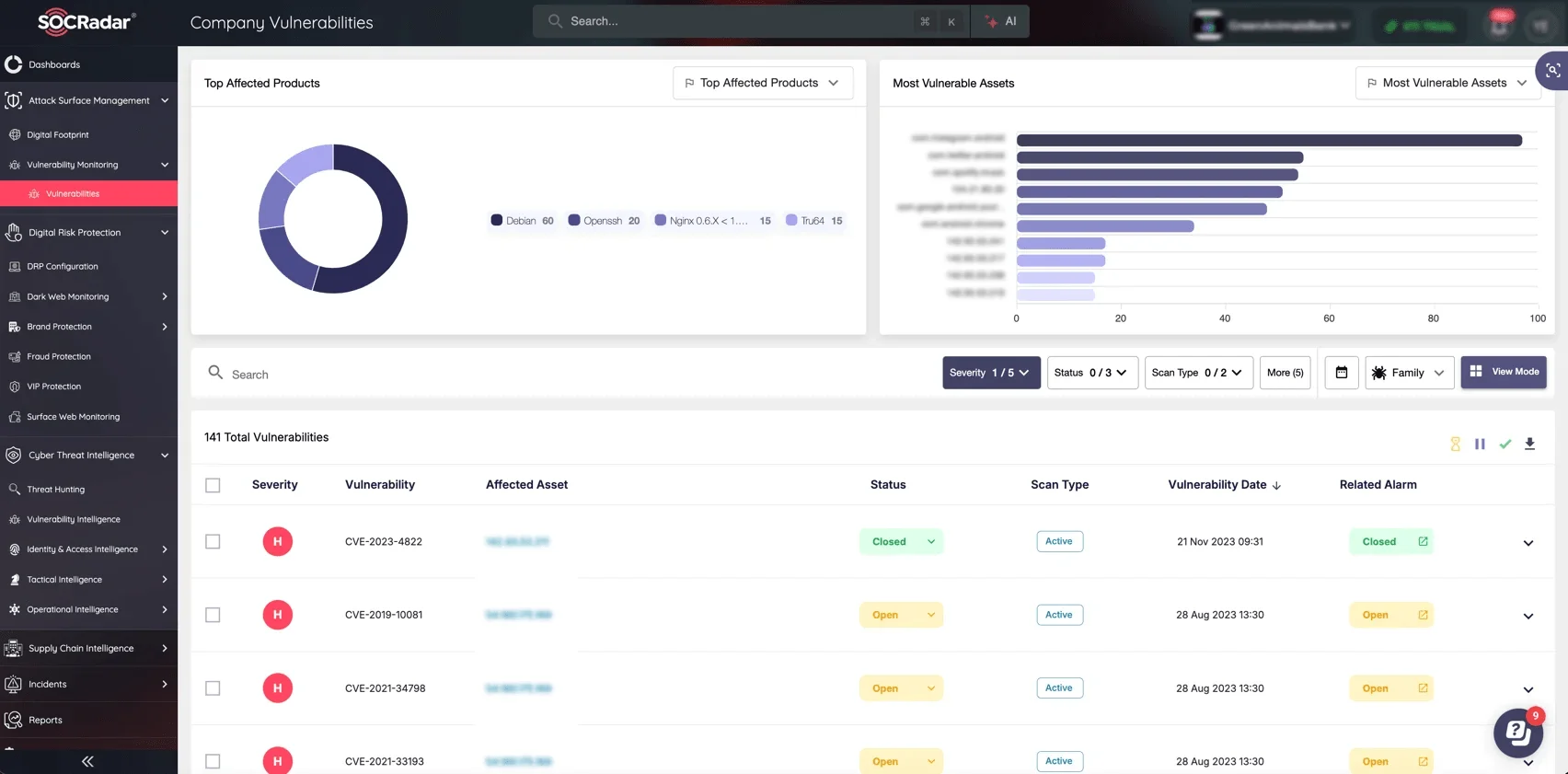
SOCRadar’s Attack Surface Management, Company Vulnerabilities
Digital Risk Protection
Protect your brand and online presence against impersonation attempts, domain spoofing, or abuse of your name in malicious campaigns.
Ransomware Group Tracking
Follow Beast and other ransomware operations to anticipate changes in their targeting, infrastructure, and payloads, enabling proactive defense planning.
SOCRadar empowers organizations to detect early, respond fast, and stay ahead of ransomware threats like Beast—no matter which affiliate is behind the keyboard.
What Are the MITRE ATT&CK TTPs of Beast Ransomware?
| Tactic | Technique ID | Technique Name |
| Execution | T1047 | Windows Management Instrumentation |
| T1106 | Native API | |
| Persistence | T1543.003 | Create or Modify System Process: Windows Service |
| Privilege Escalation | T1078.001 | Valid Accounts: Default Accounts |
| T1078.002 | Valid Accounts: Domain Accounts | |
| Defense Evasion | T1406.002 | Obfuscated Files or Information: Software Packing |
| T1620 | Reflective Code Loading | |
| T1070.004 | Indicator Removal on Host: File Deletion | |
| T1036 | Masquerading | |
| Discovery | T1083 | File and Directory Discovery |
| T1057 | Process Discovery | |
| T1135 | Network Share Discovery | |
| T1016 | System Network Configuration Discovery | |
| Lateral Movement | T1021.002 | Remote Services: SMB/Windows Admin Shares |
| T1055 | Process Injection | |
| Collection | T1119 | Automated Collection |
| Impact | T1486 | Data Encrypted for Impact |
| T1489 | Service Stop | |
| T1490 | Inhibit System Recovery |