

Oct 08, 2026

Table Of Content
Related Articles
PEEP: A Browser RAT Posing as a Chrome Extension
Sep 04, 2026
Exposing AnonyMousKIT: AI-Powered PhaaS Supply Chain
Aug 24, 2026


Jan 23, 2026
8 Mins Read

Summarize with:
US Threat Landscape Report: What MSSPs Must Prepare for in 2026
The U.S. faces a multifaceted cyber threat environment in 2026, driven by both regular threat actors and sophisticated state-backed groups. Threats range from financially motivated ransomware extortion to subtle infiltration of critical infrastructure. While sophisticated state backed groups mostly target critical infrastructure, as noted by the Department of Homeland Security and the 2025 Annual Threat Assessment of the U.S. Intelligence Community, our latest US Threat Landscape Report shows that the threat environment for businesses in the United States is largely shaped by economic motives, where attackers prioritize speed and resale value.
For MSSPs, this landscape requires service models built around early detection, fast response, and continuous exposure management.

Predominantly Domestic Threat Focus
We detected that the Dark Web activity targeting the United States is focused on the country. US-only threats account for 88.3 percent of observed activity around the United States. This makes US-based customers a constant focus for attackers. At the same time, for MSSPs, this means US coverage cannot be treated as a premium feature. It must be the baseline. MSSPs should assume constant targeting and design their monitoring and alerting approaches to operate under sustained pressure.
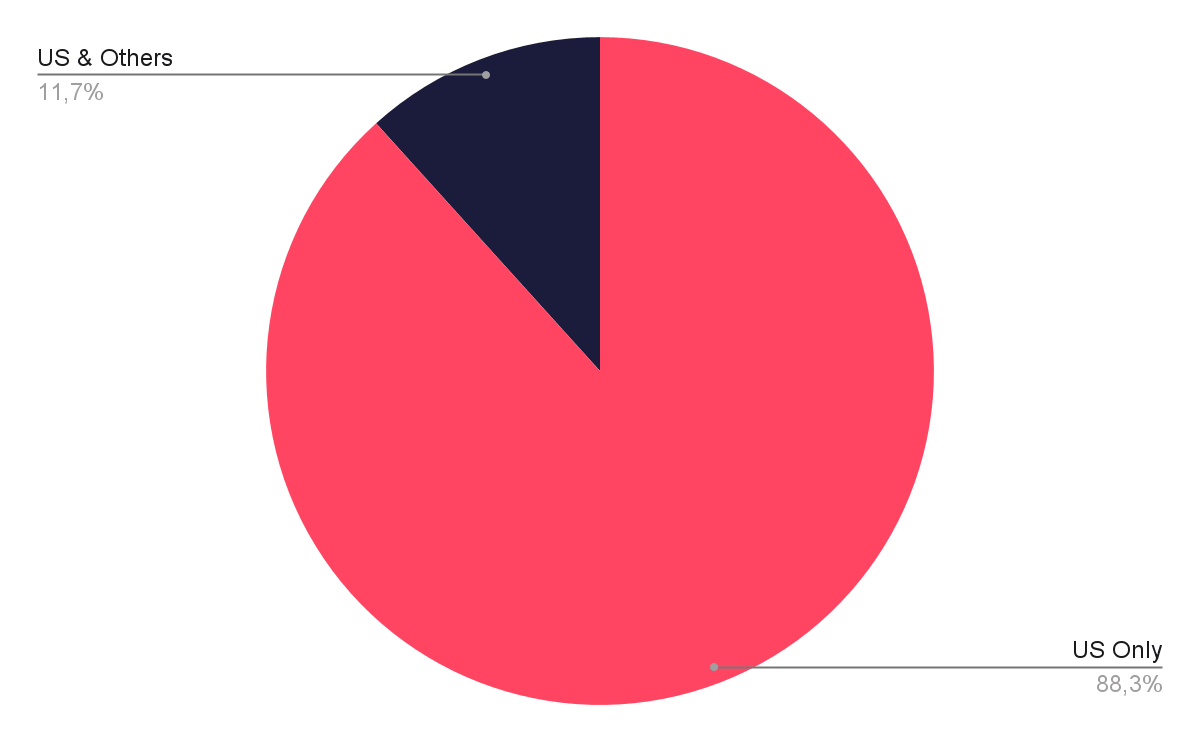
When we look at the posts targeting the United States, US-only threats account for 88.3% of observed activity
Detection & Defense: An important amount of this activity can be attributed to APTs. Combatting APTs requires proper monitoring and intelligence. Organizations need robust Endpoint Detection (EDR/XDR) that can spot anomalies like unusual logon times or privilege escalations. Network traffic analysis (for unknown C2 communications) and deception technologies can help reveal intruders. In order to decrease the possibility of an attack, changing the default credentials and updating outdated firmware is vital. In practice, incident response teams must assume breaches are inevitable, and focus on “dwell time” reduction.
MSSP Insights: MSSPs should tailor services for APT defense:
- Threat Hunting & Intel: Proactively hunt for IOCs of known APTs and share findings with clients. Maintain connections with CISA and ISACs to receive updates on nation-state TTPs.
- 24/7 Monitoring: Offer continuous monitoring with expert analysts who can correlate subtle signals (multiple authentication failures, rare process launches) across the client’s environment.
- Endpoint Hardening: Recommend and manage host-based hardening especially on high-value assets.
- Zero-Trust Architecture: Help clients implement zero-trust principles (strict device/user verification, micro-segmentation) so that even if credentials are compromised, attackers cannot easily roam.
Ransomware Risk is Fragmented and Persistent
Ransomware remains one of the most disruptive cyber threats and despite major law-enforcement actions (e.g. “Operation Cronos” disrupting LockBit), ransomware gangs adapt quickly to new environments.
Ransomware activity targeting the US is highly fragmented. A small number of groups appear frequently, but most incidents are linked to many minor or short lived actors. This makes comprehensive actor tracking difficult and limits the value of group related intelligence. For MSSPs, the challenge is scale rather than attribution. SOCRadar can help by providing consolidated visibility across campaigns and normalizing signals from multiple sources.
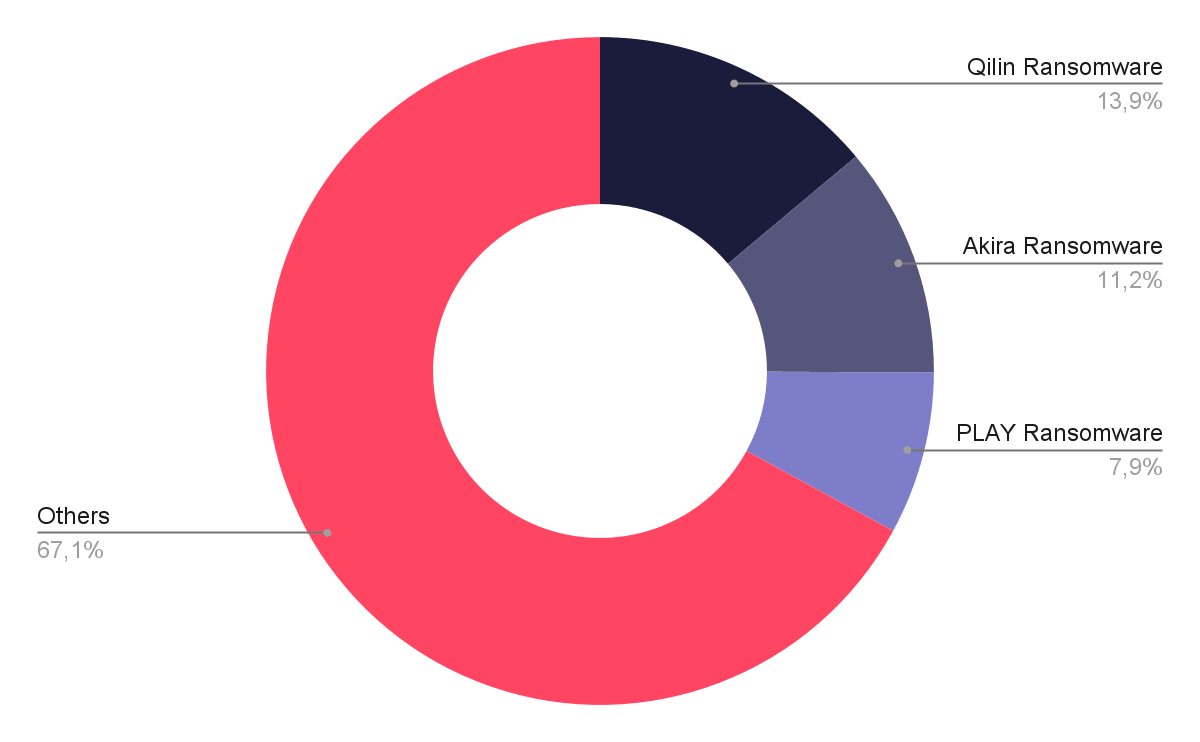
The “Others” category accounts for 67.1%, which points to a large number of smaller or short lived groups
Detection & Defense: Network segmentation and frequent offline backups are essential since they mitigate impact if attackers encrypt data. MSSPs should emphasize continuous patch management and deploy advanced endpoint detection (to catch malicious processes before encryption). Behavioral analytics can help flag ransomware’s lateral movements. Importantly, victims should prepare incident response plans, since quick containment (within hours) drastically cuts breach costs.
MSSP Insights: MSSPs must adjust to a ransomware environment where law enforcement disruption cycles force gangs to change tactics. Some of the key actions include:
- Proactive Hunting: Use XDR/MDR tools to hunt for early signs of intrusion (phishing lures, stolen credentials, rogue tools) before encryption.
- Threat Intel Sharing: Stay abreast of takedowns and new ransomware variants via intelligence feeds.
- Customer Training: Emphasize user awareness to reduce phishing (since many ransomware breaches begin with credential theft). Simulated phishing exercises can measure and improve readiness.
- Resilience Services: Offer backup & recovery solutions and tabletop IR exercises, enabling clients to restore systems without capitulation to ransom demands.
Phishing Remains the Main Entry Vector
Phishing remains a first-stage weapon in most attacks. Social-engineering emails (and now voice/video messages) have grown far more sophisticated, thanks in part to AI. These attacks support both access theft and data compromise. Public administration and information services are the most targeted sectors. Most phishing pages use HTTPS, which weakens user trust signals. MSSPs should not frame encryption as a safety indicator. Email security, domain analysis, and phishing simulation should be core managed services, especially for high trust sectors.
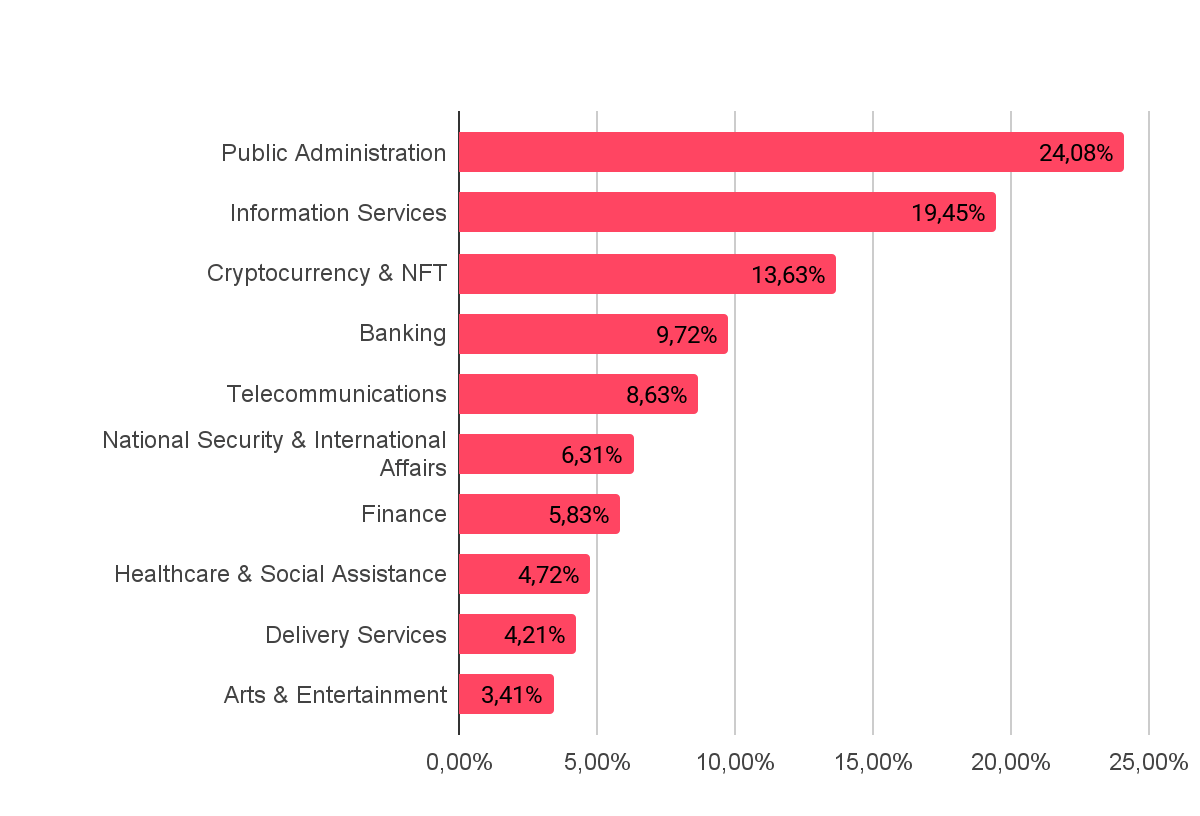
Phishing activity concentrates on sectors where trust and urgency drive user behavior
Detection & Defense: Email authentication (DMARC/SPF/DKIM) should be enforced to block spoofed senders and consistent MFA usage blocks credential reuse. Additionally, user training is critical and simulated phishing drills can reduce click rates by educating staff on real-world tactics. Because such schemes often involve urgent requests, organizations can implement verification policies.
MSSP Insights: Given the soaring human factor in breaches, MSSPs should:
- Offer Advanced Email Security: Deploy solutions that scan emails to spot unusual language or attachments, and quarantine or flag suspicious messages.
- Conduct Employee Training: Package and deliver ongoing security awareness training and phishing simulations to clients. Emphasize latest scam formats (deepfake calls, tax scams, etc.).
- Provide Incident Readiness: Ensure clients have clear procedures for reported phishing attempts including rapid account lockout and forensic investigation if phishing succeeds. Early detection limits impact and financial loss.
Monetization Drives the Threat Ecosystem
Selling dominates Dark Web activity at 70.76 percent. Data and database leaks represent 61.53 percent of threat types, while access sales reach 29.31 percent. This shows a clear monetization pipeline. For MSSPs, the value lies in disrupting this pipeline. Services should focus on detecting access misuse and data staging before assets reach resale markets.
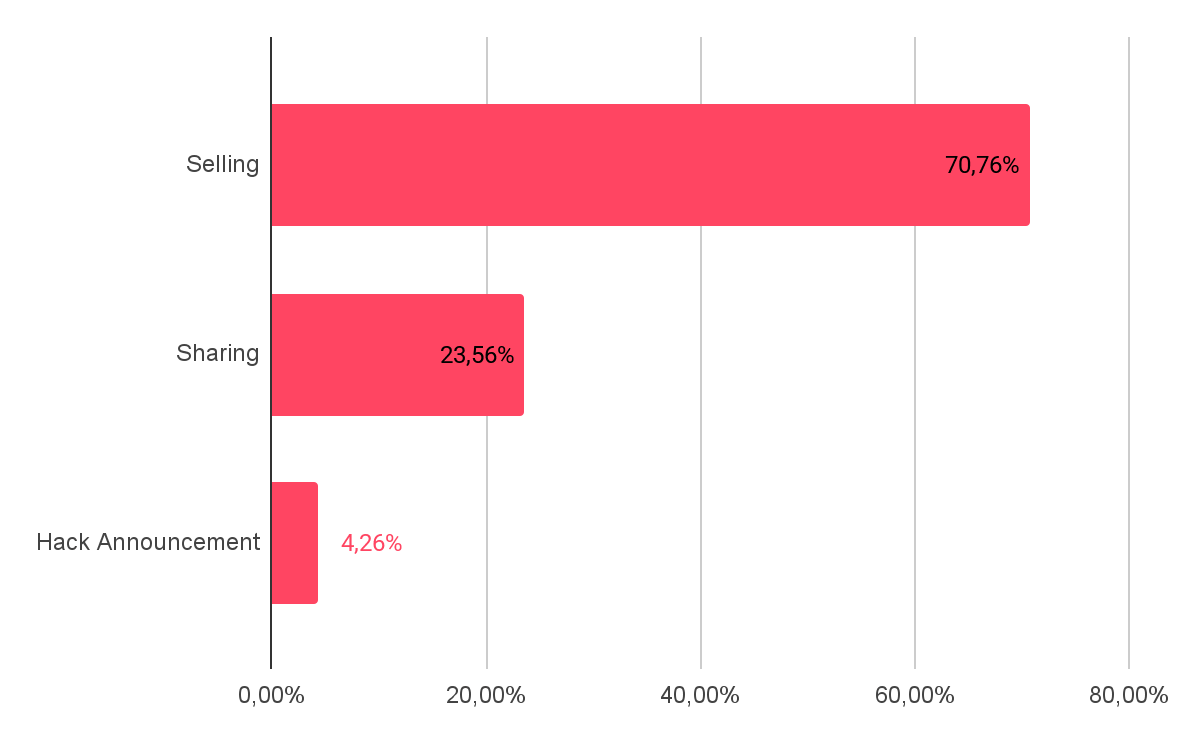
The category distribution shows that Dark Web activity is driven mainly by monetization
What MSSPs Should Prioritize
The data we gathered points to clear priorities. MSSPs should focus on early access detection, phishing resilience, and fast containment. Reporting should emphasize time to detect and time to contain, and not alert volume. Otherwise, the metrics will not align with attacker speed and client expectations.
As the above threats evolve, MSSPs play a vital role as force multipliers in defense. Some overarching recommendations:
- Holistic Cyber Hygiene: Encourage all clients to adopt baseline controls (MFA everywhere, least privilege, asset inventory including an SBOM, and up-to-date backups). Even when new threats emerge, these fundamentals greatly reduce risk.
- AI in Defense: Just as attackers use AI, MSSPs should employ AI/ML to sift through alerts and detect patterns humans miss. Automated analysis (for logs, emails, network flow) can accelerate discovery of both old and novel attacks.
- Collaboration & Compliance: Stay current with regulatory changes (like CISA’s evolving mandates) and help clients meet them. Also foster partnerships with law enforcement and peer MSSPs to share threat intelligence rapidly.
- Cloud and Identity Focus: As more workloads move to cloud and remote access expands, identity becomes the new perimeter. MSSPs should offer strong identity monitoring, CASB (Cloud Access Security Broker) services, and secure configuration of cloud resources.
- Crisis Preparedness: Given the inevitability of breaches, MSSPs should emphasize incident response readiness – offering retainer-based IR services, tabletop exercises, and log retention strategies. A rapid, practiced response can save millions in downtime and losses.
Conclusion
The US threat landscape favors low effort attacks that monetize quickly. MSSPs that focus on speed, visibility, and access control will be more effective than those focused on attribution or isolated tools. The report highlights one reality. MSSPs must operate at the pace of the underground economy to stay relevant and effective.
By understanding these trends and advising clients accordingly, MSSPs can help organizations navigate the 2026 threat landscape with resilience and confidence.