

Sep 29, 2026
Table Of Content
Related Articles


Jun 26, 2026
22 Mins Read

Summarize with:
Top 10 MSSPs in Brazil in 2026
Brazil’s cybersecurity market is growing fast, from an estimated USD 3.68 billion in 2025 toward USD 6.57 billion by 2031, driven by surging cyber threats, rapid digital transformation, and the enforcement of the Lei Geral de Proteção de Dados (LGPD). For organizations operating in Brazil, selecting a Managed Security Service Provider (MSSP) is one of the most consequential security decisions they can make.
This guide profiles 10 leading MSSPs active in Brazil in 2026. The list is not a ranking. These are providers that stand out for different reasons, different service specializations, different sector strengths, and different organization sizes. Readers are encouraged to evaluate them based on their own operational context and needs.
Why Brazil’s MSSP Market Matters in 2026
Brazil is Latin America’s largest digital economy, and the threat landscape that comes with it is intense. Government entities alone reported over 1.5 million cyberattack notifications in a recent year, and the volume continues to grow as digital payment volumes through Pix exceed 3 billion monthly transfers.
Several structural forces are accelerating demand for managed security services in 2026:
Regulatory pressure: The LGPD (Federal Law No. 13,709/2018) has been in full enforcement with administrative penalties since 2020. Brazil’s National Cybersecurity Policy, introduced in late 2023, added sector-specific mandates across finance, healthcare, and critical infrastructure. Non-compliance carries material financial and reputational consequences, and MSSPs offer the fastest path to a demonstrable compliance posture.
Talent shortage: SOC analysts are scarce outside Sao Paulo. Most organizations, including large enterprises, cannot staff a complete internal security operations function. MSSPs fill that gap with experienced analysts, mature detection logic, and around-the-clock coverage.
Cloud adoption: Cloud-based security is expanding at a 17.25% CAGR in Brazil as organizations comply with Cloud First mandates and migrate workloads. MSSPs with cloud-native capabilities are in particularly high demand across banking, healthcare, and retail.
Attack sophistication: Brazilian threat actors deploy a distinctive set of tools: Prilex (ATM malware), Guildma and Grandoreiro (banking trojans), and various ransomware affiliate groups that specifically target Brazilian enterprises. Generic detection tooling is insufficient. MSSPs that carry Brazil-specific threat intelligence are meaningfully more effective in this environment.
What Is an MSSP?
A Managed Security Service Provider (MSSP) is an external cybersecurity firm that delivers outsourced security operations on behalf of client organizations. The defining characteristic is operational continuity: continuous monitoring, threat detection, incident response, and compliance support, rather than one-time assessments or product sales.
In Brazil’s context, the services that matter most are:
24/7 SOC (Security Operations Center). Continuous monitoring of network traffic, endpoint telemetry, and security event logs, staffed by Portuguese-speaking analysts who understand local threat actor TTPs and regulatory requirements.
Managed Detection and Response (MDR). Active threat hunting beyond passive monitoring. MDR providers detect threats that bypass traditional defenses and respond to contain them, rather than simply alerting on them.
LGPD Compliance Support. Data classification, breach notification workflows, Data Protection Officer (DPO) advisory, and audit-ready documentation for any organization processing Brazilian personal data.
Threat Intelligence. Contextual intelligence on threat actors, campaigns, and indicators of compromise (IoCs) relevant to Brazil. Providers that produce or consume Brazil-specific threat intelligence deliver substantially better detection accuracy.
Incident Response. When a breach occurs, a local IR team with Portuguese-language capability, jurisdiction knowledge, and pre-established escalation paths is critical. Several Brazilian MSSPs offer dedicated IR retainers.
Quick Reference Table
| Provider | Type | Primary Strength | Best For | Website |
| ISH Tecnologia | Local | Scale, SOC, MDR, critical infrastructure | Large enterprise, government | ish.com.br |
| Tempest Security Intelligence | Local | Threat intelligence, fraud prevention, AI-SOC | Finance, telecom | tempest.com.br |
| Cipher (Prosegur Cybersecurity) | Global | Global SOC network, xMDR, OT/IoT | Enterprise, payment industry | cipher.com |
| e-Safer | Local | SOC 24×7, CTI, fraud prevention, proprietary SIEM | Finance, healthcare, retail | e-safer.com.br |
| Stefanini Cyber | Local/Global | MDR, SOC, compliance, multinational reach | Multinational enterprises | stefanini.com |
| Asper | Local | Identity and access management, Cyber Fusion Center SOC, MDR | Identity-centric enterprise, finance, healthcare | asper.tec.br |
| SEK Security Ecosystem Knowledge | Regional | Threat detection, MDR, Latin America coverage | Enterprise, regulated sectors | sek.io |
| Conviso Application Security | Local | Application security, ASPM, secure SDLC, pentesting | Banks, fintechs, software and e-commerce | convisoappsec.com |
| Future Technologies Informatica | Local | SOCaaS, MDR, ISO 27001, 30-minute SLA | Mid-market, enterprise | future.com.br |
| Embratel / Claro Empresas | Telecom | Network-native SOC, SIEM-as-a-service | Mid-market, carrier-integrated security | embratel.com.br |
Top 10 MSSPs in Brazil in 2026
1. ISH Tecnologia
Website: ish.com.br Founded: 1996 | HQ: Vitoria, Espirito Santo | Employees: ~900 | Clients: 600+
ISH Tecnologia is one of the most recognized managed security service providers in Latin America, having ranked 22nd in MSSP Alert’s Top 250 global ranking and received the 2023 Frost and Sullivan Brazilian Company of the Year Award in the managed and professional security services category. The company operates across 9 offices, 3 SOCs, and 3 data centers, serving around 20% of Brazil’s 1,000 largest companies alongside over 400 mid-sized organizations and public sector bodies.
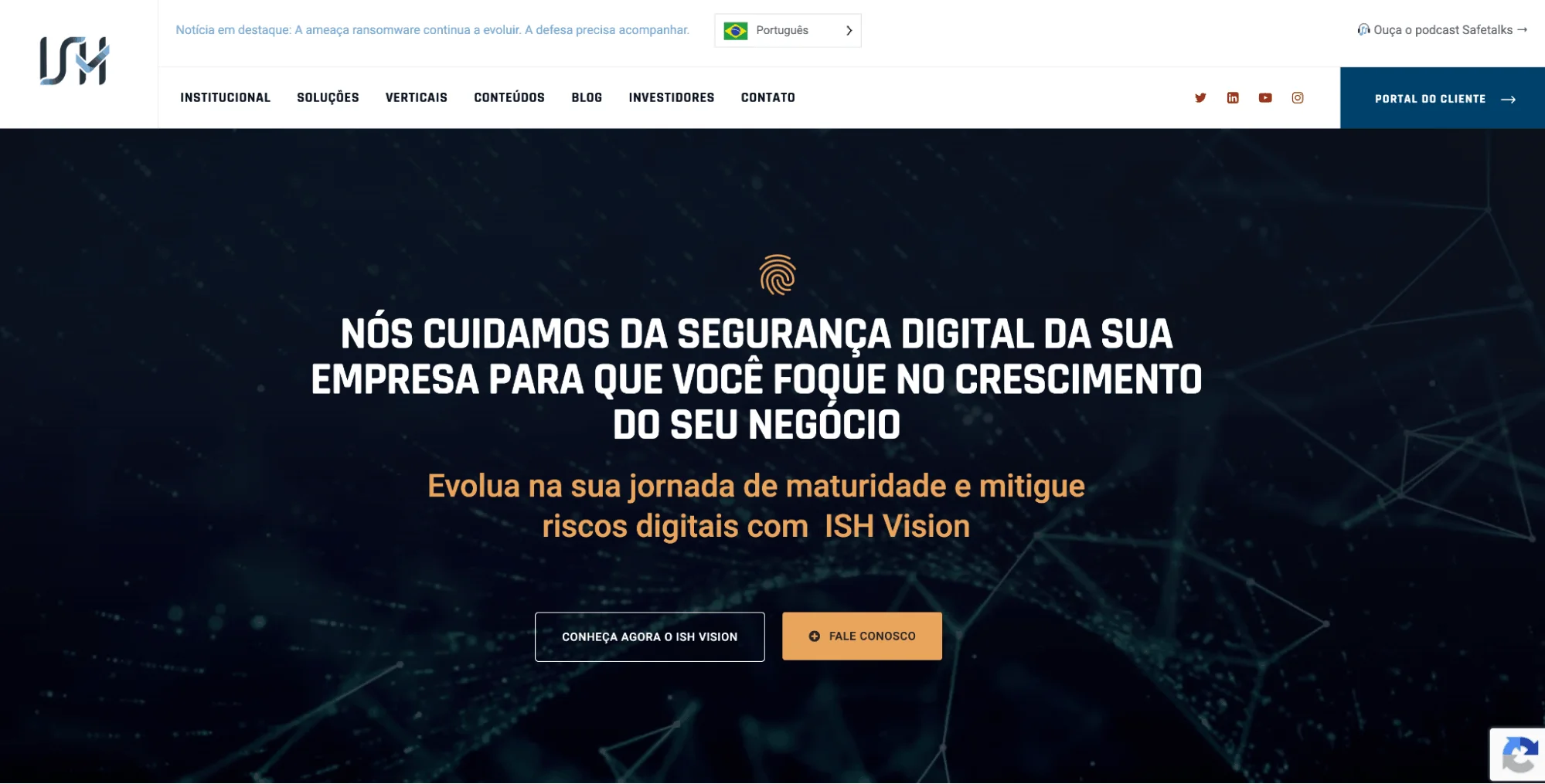
Website of ISH Tecnologia
ISH’s service portfolio spans the full security lifecycle: vulnerability identification, risk assessment, network security, penetration testing, incident response, and security consulting. The company has also been recognized as a leader in five quadrants of the ISG Provider Lens Cyber Security Brazil 2024 report, reflecting consistent performance across multiple service categories.
Its public sector presence is particularly notable. ISH serves federal and state government agencies with sensitive infrastructure, having built the compliance posture and operational depth these environments demand. The company also maintains a subsidiary in the United States and has achieved ISO 27001:2022 certification.
Core Services: 24/7 SOC, MDR, Vulnerability Management, Incident Response, Penetration Testing, Threat Intelligence, Cloud Security, Security Consulting
Ideal for: Large enterprises and public sector organizations that need a proven Brazilian partner with domestic scale, government experience, and broad service coverage.
2. Tempest Security Intelligence
Website: tempest.com.br Founded: 2000 | HQ: Recife and Sao Paulo (+ London) | Employees: ~400 | Clients: 300+
Tempest was founded in Recife in 2000 and has grown into one of Brazil’s most technically respected cybersecurity companies. In 2020, Embraer acquired a majority interest in the company through the Aerospace Investment Fund (FIP Aeroespacial), created alongside BNDES, FINEP, and the Sao Paulo Development Agency. Tempest continues to operate autonomously under its own brand and leadership.
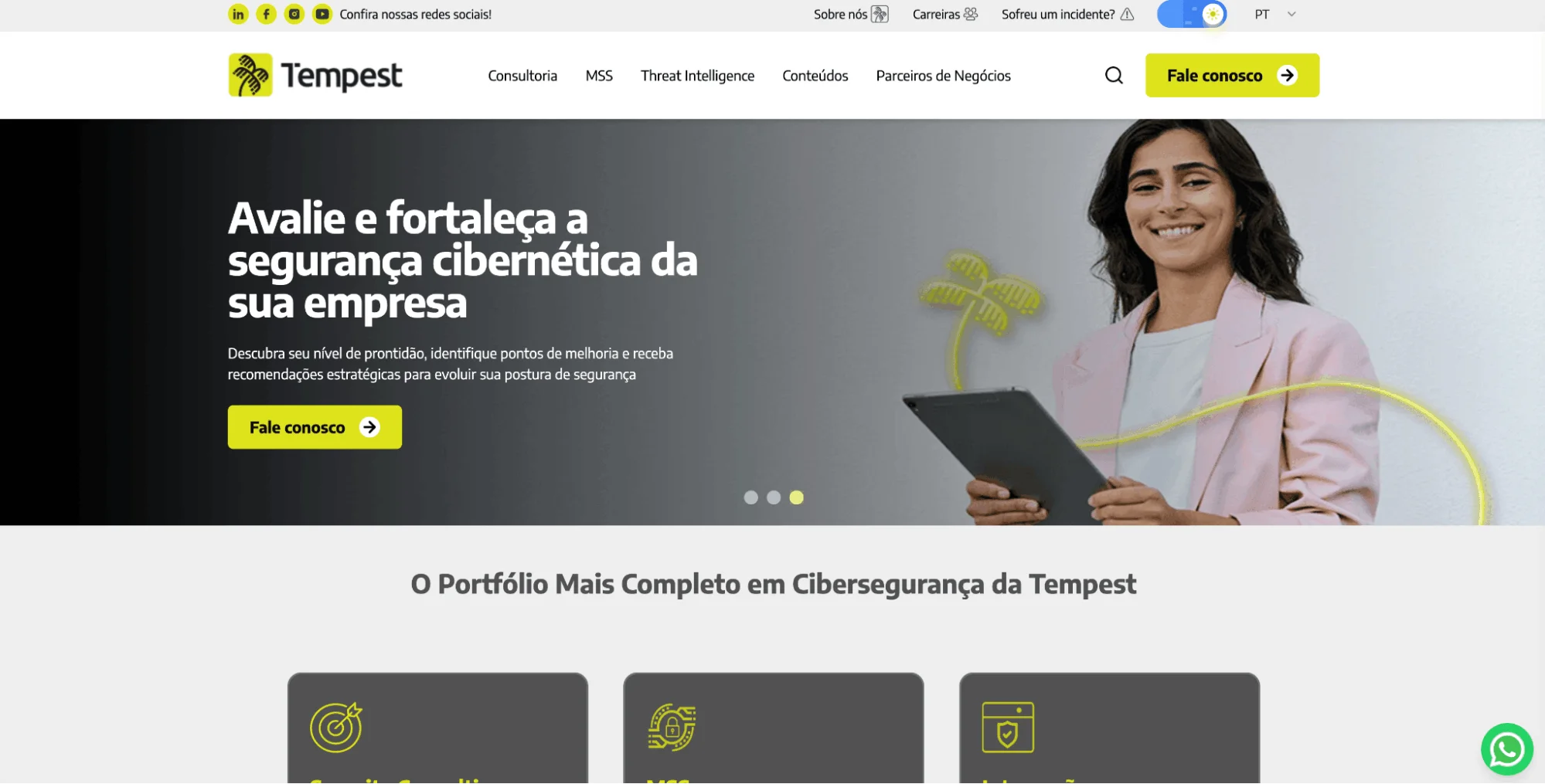
Website of Tempest Security Intelligence
The company’s threat intelligence team actively tracks Brazilian-specific threat actor groups, banking trojans including Guildma and Grandoreiro variants, and digital fraud ecosystems. This intelligence feeds directly into its AI-enabled SOC and MDR operations, enabling detection of Brazilian-relevant TTPs that generic global threat feeds miss. Tempest’s digital fraud prevention capabilities are particularly well-suited to financial institutions dealing with Pix-themed fraud campaigns and account takeover attacks targeting Brazilian banking customers.
Tempest operates offices in Recife, Sao Paulo, and London, serving clients across Brazil, Latin America, and Europe.
Core Services: AI-Enabled SOC, MDR, Digital Fraud Prevention, Incident Response, Threat Intelligence, Red Team, Penetration Testing, Digital Identity Security
Ideal for: Financial institutions, telecoms, and defense-adjacent organizations that need Brazil-native threat intelligence and a provider with both national depth and international reach.
3. Cipher (Prosegur Cybersecurity)
Website: cipher.com Founded: 2000 | HQ: Sao Paulo + Miami (Global: Madrid) | Clients: Petrobras, Telefonica, Caixa Economica
Cipher became part of Prosegur, the Spanish physical security multinational, through acquisition in 2018. That transaction brought six global SOCs, a mature SIEM infrastructure, and integration between cyber and physical security intelligence into a single operational model. In Brazil, Cipher has built a particularly strong footprint in payment security and operational technology (OT) environments.
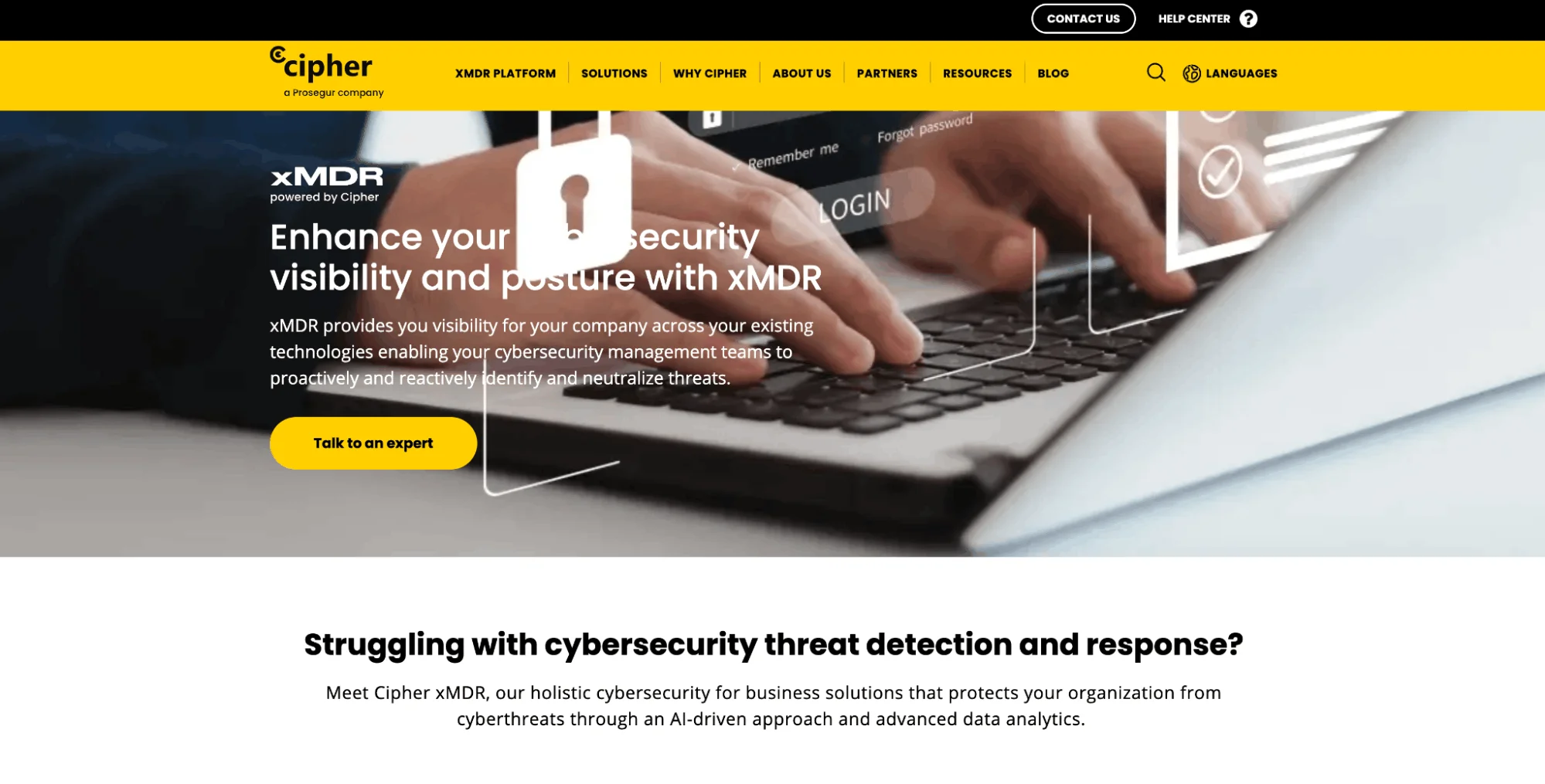
Website of Cipher (Prosegur Cybersecurity)
Cipher’s flagship xMDR (Extended Managed Detection and Response) platform applies AI-driven threat analysis with 24/7 human analyst coverage across endpoint, network, cloud, and OT environments. For retail and banking clients, its payment security expertise, including PCI DSS compliance advisory and real-time fraud detection for digital and card-present channels, is a meaningful differentiator. The company maintains dedicated research and development labs in Brazil and Spain that generate proprietary threat intelligence feeding into its detection logic.
For organizations with both physical and cyber risk, such as utilities, logistics operators, and retail chains, the Prosegur-Cipher integrated model offers a unified risk perspective that purely cyber-focused MSSPs cannot replicate.
Core Services: xMDR, 24/7 Global SOC, OT/IoT Security, Payment Security, PCI DSS Compliance, Threat Intelligence, Cloud Security, Security Consulting
Ideal for: Enterprises in payment-intensive industries, critical infrastructure, and OT environments that require a global SOC network and integrated physical-cyber risk management.
4. e-Safer
Website: e-safer.com.br Market Presence: 12+ years | HQ: Sao Paulo | Clients: 300+ across 10 countries
e-Safer operates a 24x7x365 SOC and serves over 300 clients across 10 countries, with a client portfolio concentrated in Brazil’s most heavily regulated sectors. Its financial services roster includes Itau, Bradesco, Santander, Banco do Brasil, Banco Safra, Cielo, Digio, and Banco BMG. Healthcare clients include Dasa, Amil, and Unimed Rio. Telecoms include TIM, Oi, and Claro.
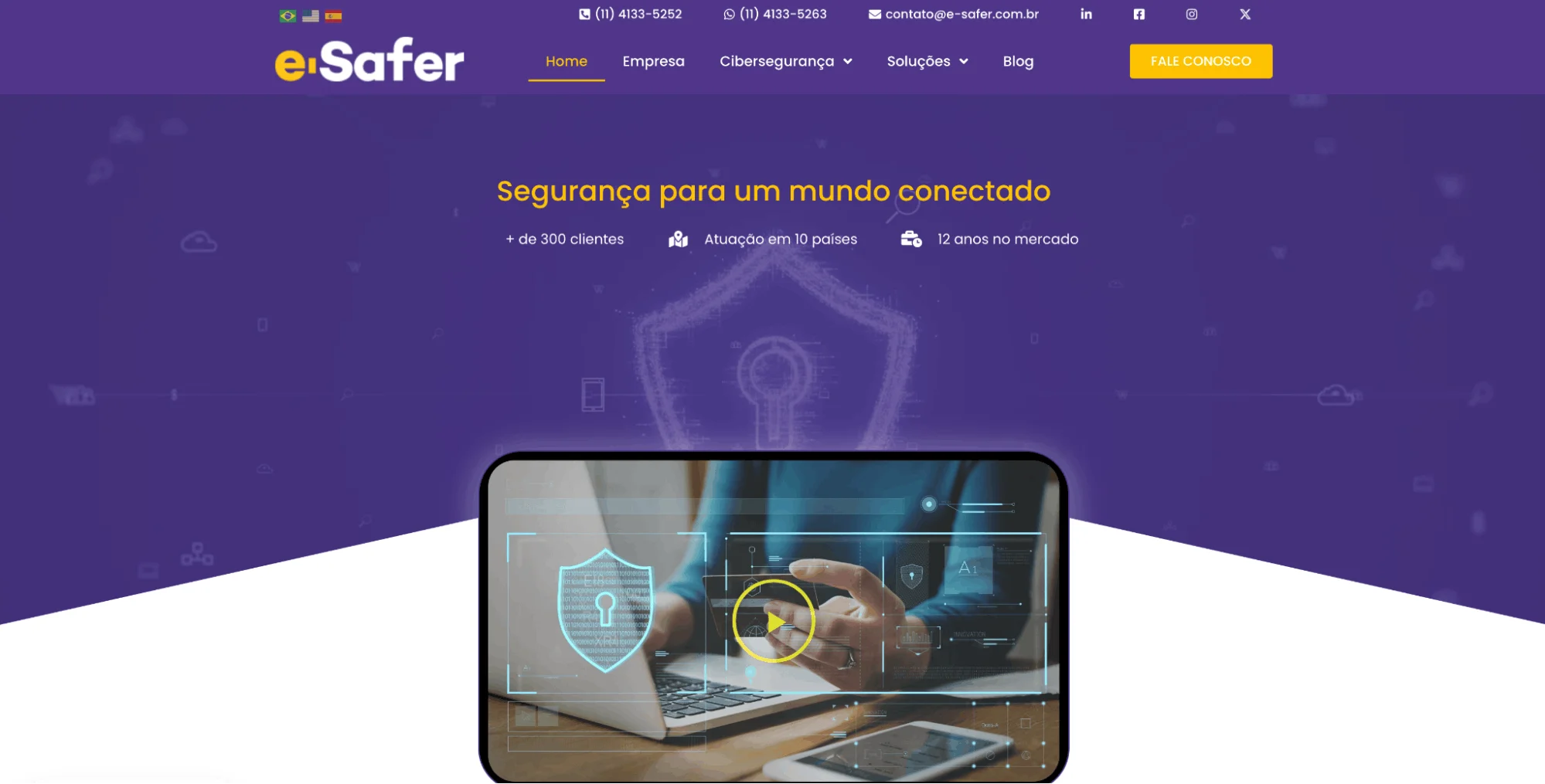
Website of e-Safer
The company has developed its own security tooling rather than relying exclusively on off-the-shelf platforms. SIEM Trio is a proprietary intelligence layer that transforms security event data into actionable knowledge. Rastro Digital is a cyber threat intelligence and digital footprint monitoring system. WebWatch handles website monitoring and defacement detection. Riskone is e-Safer’s GRC platform for governance, risk, and compliance management.
e-Safer holds the distinction of being classified as a Strategic Defense Company (Empresa Estrategica de Defesa) by Brazilian defense authorities, with its SIEM Trio platform recognized as a Strategic Defense Product. Its multi-standard certification posture, spanning ISO 27701 for privacy management and ISO 37001 for anti-bribery, reflects an institutional compliance depth that few domestic MSSPs have achieved.
e-Safer is also a SOCRadar partner, integrating SOCRadar’s threat intelligence platform into its managed security operations to extend dark web and external threat visibility across its client base.
Core Services: SOC 24x7x365, MDR, Proprietary SIEM (Trio), Cyber Threat Intelligence (Rastro Digital), Fraud Prevention, Zero Trust, GRC (Riskone), Application Security Assessment, Vulnerability Management, LGPD and DPO Advisory
Ideal for: Financial institutions, healthcare providers, and any regulated organization that requires a fully Brazilian MSSP with deep compliance credentials, proprietary threat tooling, and proven experience across the country’s most demanding sectors.
5. Stefanini Cyber
Website: stefanini.com Parent: Stefanini Group | HQ: Sao Paulo | Global Footprint: 41 countries
Stefanini Cyber is the dedicated cybersecurity arm of the Stefanini Group, one of Brazil’s most globally established IT services companies with operations in 41 countries. This parentage gives Stefanini Cyber an unusual combination of attributes: it can deliver managed security services at multinational scale while maintaining genuinely deep Brazilian market knowledge, Portuguese-language operations, and LGPD compliance expertise built from years of operating in the local regulatory environment.
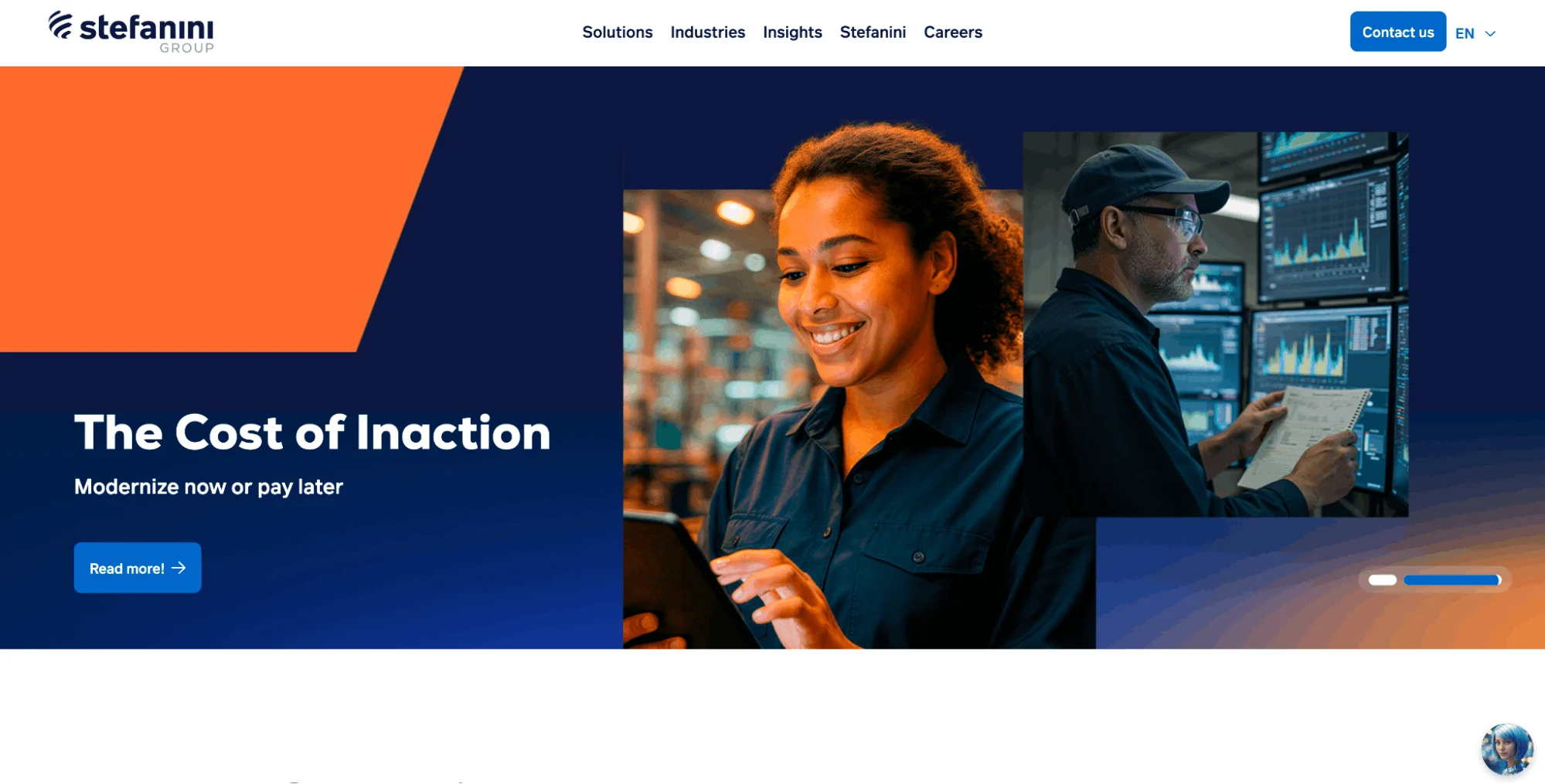
Website of Stefanini Cyber
The service model centers on SOC operations, MDR, vulnerability management, identity and access management (IAM), cloud security, and compliance support. Stefanini’s SOC leverages a combination of proprietary analytics and leading SIEM and SOAR platforms, staffed by analysts with sector-specific expertise across finance, manufacturing, and healthcare. For multinational organizations with Brazilian operations that already work with Stefanini for broader IT services, extending that relationship into cybersecurity reduces integration complexity and vendor management overhead.
Core Services: SOC Operations, MDR, Vulnerability Management, IAM, Cloud Security, LGPD and ISO 27001 Compliance, Security Consulting
Ideal for: Multinational enterprises that need a single Brazilian-headquartered vendor capable of delivering managed security consistently across multiple countries and time zones.
6. Asper
Website: asper.tec.br Founded: 2015 | HQ: Sao Paulo | Offices: Rio de Janeiro, Brasilia, Florianopolis, New York
Asper is a fast-growing Brazilian managed security service provider, founded in Sao Paulo in 2015. It operates a Cyber Fusion Center model that extends the traditional SOC with automation, threat analysis, and continuous 24/7 response from operations centers in Sao Paulo and Rio de Janeiro. Asper has been ranked 24th in the MSSP Alert Top 250 global listing and was recognized as a Leader in Managed Security Services – SOC for large accounts in the ISG Provider Lens Cyber Security 2023 study, with further recognition as a Product Challenger in technical security services and in vulnerability assessment and penetration testing.
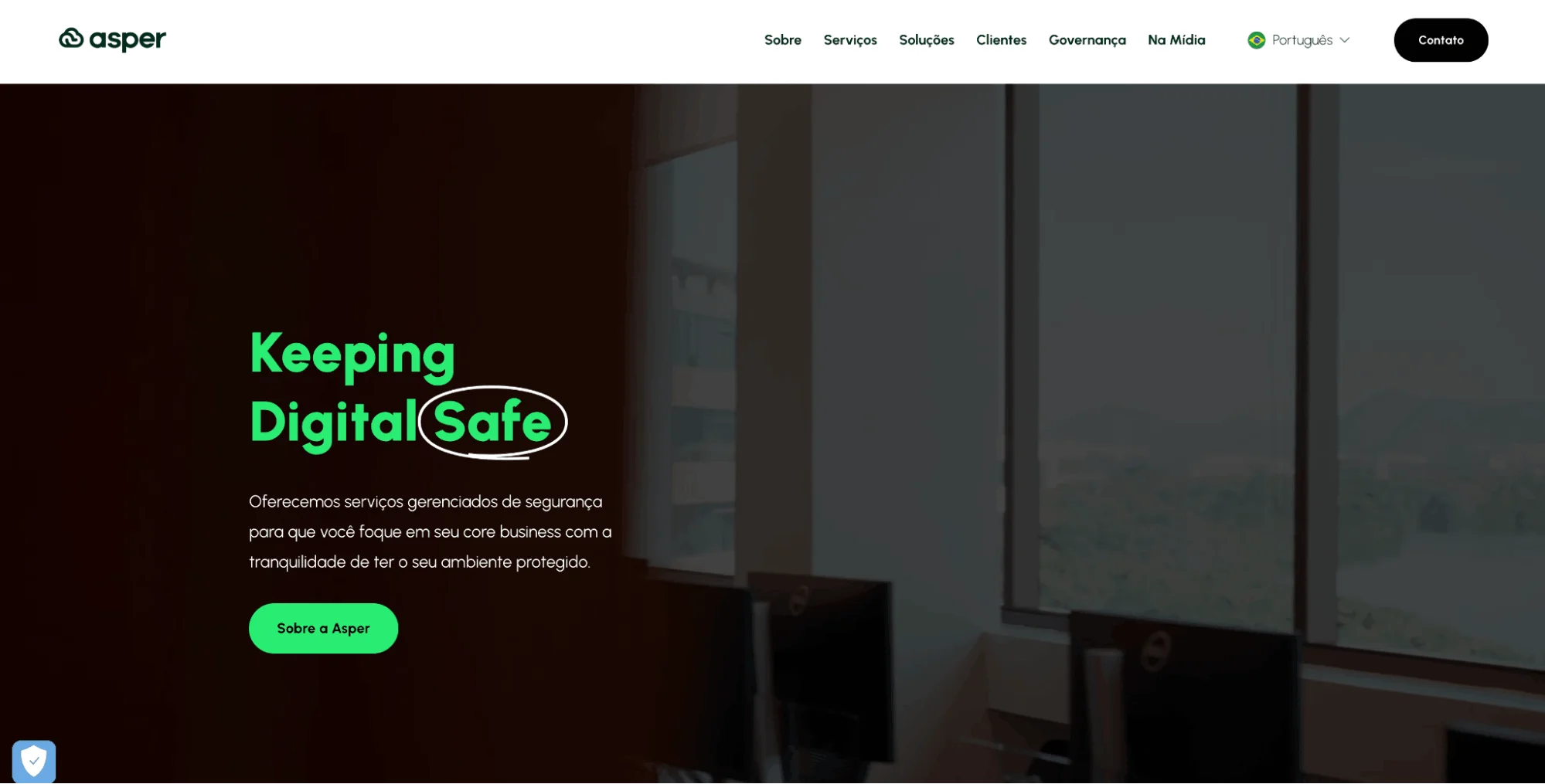
Website of Asper
The company’s defining strength is identity and access management. Asper places IAM and privileged access at the center of its managed services, integrating identity platforms directly into SOC operations so that detection and response are oriented around identity-based attacks, one of the most common initial access vectors in Brazilian enterprise breaches. Around that core, its managed portfolio spans MDR, vulnerability management, penetration testing, and incident response.
Asper reported around $85 million in global revenue in 2024 and serves clients across finance, healthcare, insurance, and manufacturing. The company opened a New York office in late 2024 as part of an international expansion that now includes contracts in the United States, United Kingdom, Mexico, and Australia, while keeping its operational base and analyst teams in Brazil.
Core Services: Cyber Fusion Center (24/7 SOC), MDR, Identity and Access Management, Privileged Access Management, Vulnerability Management, Penetration Testing, Incident Response, Security Consulting
Ideal for: Enterprises that treat identity as their primary attack surface and want a fast-growing Brazilian MSSP with a modern SOC, strong IAM specialization, and independently recognized service quality.
7. SEK Security Ecosystem Knowledge
Website: sek.io Founded: 1999 | HQ: Barueri, Sao Paulo | Employees: 900+ | Clients: 700+ across Latin America
SEK has over 20 years of cybersecurity experience and operates across five Latin American markets: Brazil, Chile, Argentina, Colombia, and Peru. The company runs three Cyber Defense Centers and two Cyber Response Centers, with advanced research centers in the United States and Portugal. SEK has also been included in the MSSP Alert Top 100 ranking, reflecting its regional scale and operational maturity.
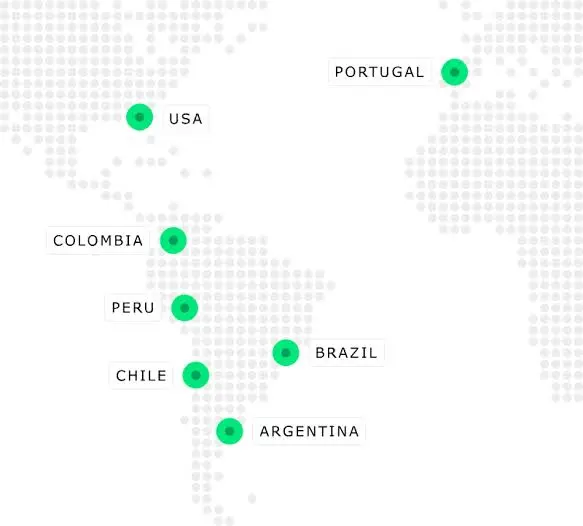
SEK’s activity map
SEK’s model focuses on bringing together the best available security technologies with a team of specialized analysts, rather than building around proprietary platforms. Its Cyber Defense Centers provide managed detection and response using SIEM platforms, and the company’s threat intelligence team produces research including monthly vulnerability digests relevant to Latin American organizations. In 2024, SEK acquired PROOF, a Brazilian security firm, expanding its managed services capacity in Brazil by more than 50%.
The company serves 700+ clients including some of the region’s largest financial institutions, and its service portfolio covers MDR, vulnerability testing, red team services, threat blocking, resilience monitoring, and identity and access management.
Core Services: MDR, Cyber Defense Centers, Threat Intelligence, Vulnerability Management, Red Team, Resilience Monitoring, IAM, Security Consulting
Ideal for: Enterprise organizations seeking a Latin America-focused MSSP with demonstrated regional scale, multi-country operations, and an ecosystem integration approach rather than proprietary platform lock-in.
8. Conviso Application Security
Website: convisoappsec.com Founded: 2008 | HQ: Curitiba (+ Sao Paulo) |
Conviso is a long-established Brazilian application security specialist, founded in Curitiba in 2008 and focused on a discipline that most generalist MSSPs treat as a secondary service: securing software across the development lifecycle. With more than 17 years in the market, Conviso serves the largest banks in Brazil along with financial institutions and e-commerce operators across more than 22 countries.
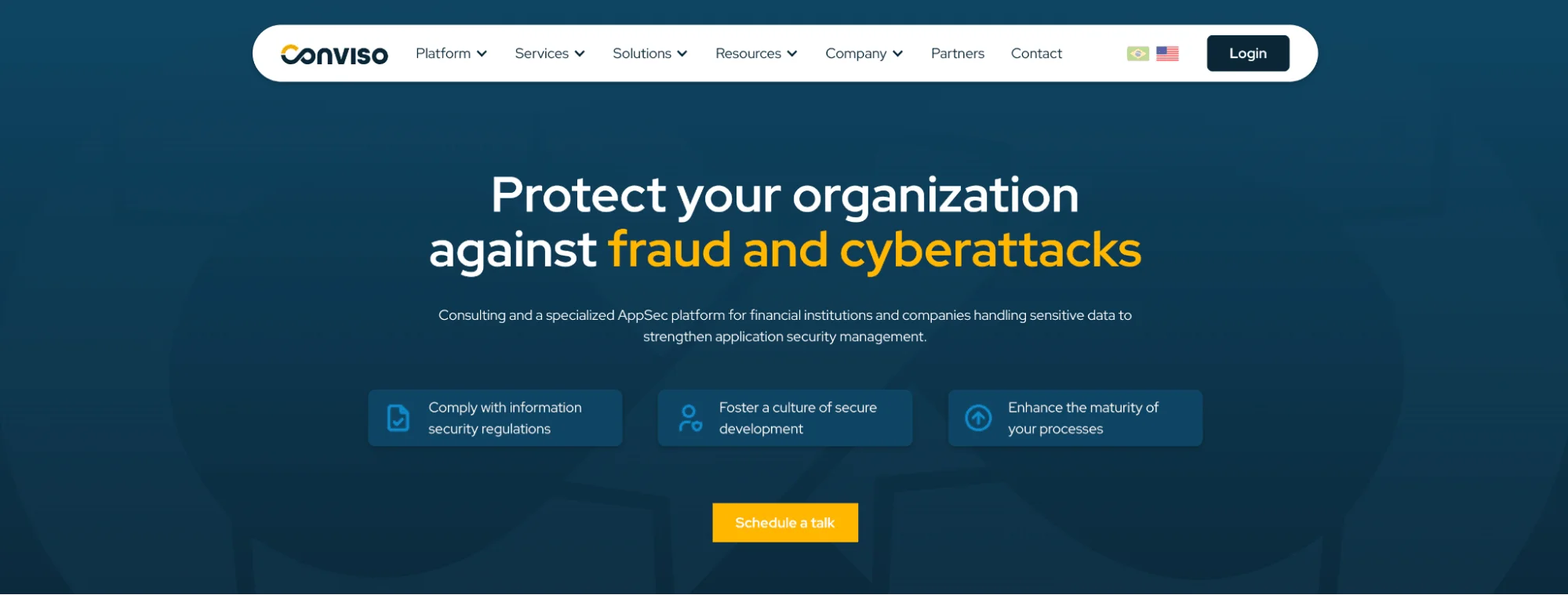
Website of Conviso Application Security
The company’s approach is dev-first. Its proprietary Conviso Platform is an Application Security Posture Management (ASPM) solution that consolidates vulnerabilities, integrates security testing into development pipelines, and tracks application security maturity using the OWASP SAMM framework. Around that platform, Conviso delivers AppSec program design, penetration testing, red teaming, cloud security assessment, threat modeling, and developer training. Its technical pedigree is notable: Conviso was the first company in Latin America certified by Microsoft as a Microsoft SDL specialist and the first Brazilian company with a product certified by MITRE.
For organizations whose primary risk lives in their own applications and APIs, particularly banks and fintechs exposed to fraud, Conviso fills a gap that SOC and network-focused MSSPs do not address. Application vulnerabilities remain a leading breach vector, and embedding security into the software development process delivers protection that perimeter monitoring alone cannot provide.
Core Services: Application Security Posture Management (Conviso Platform), Secure SDLC Programs, Penetration Testing, Red Teaming, Cloud Security Assessment, Threat Modeling, PCI DSS Advisory, AppSec Training
Ideal for: Banks, fintechs, software companies, and e-commerce operators whose primary attack surface is their own applications and APIs, and who need specialized AppSec depth alongside their SOC and network monitoring.
9. Future Technologies Informatica
Website: future.com.br Founded: 1997 | HQ: Petropolis, Rio de Janeiro | Employees: 200-500
Future Technologies Informatica has been delivering IT and managed security services from Petropolis, Rio de Janeiro since 1997. The company holds ISO 27001 certification and supports LGPD, ISO 27001, and PCI DSS compliance frameworks, covering the three standards most commonly required across Brazil’s financial services, retail, and healthcare sectors.
Future Technologies offers SOC as a Service (SOCaaS), MDR, endpoint protection, network security monitoring, vulnerability management, cloud security, and incident response, built around technology platforms from Fortinet, Trend Micro, and Microsoft Defender. Its 30-minute incident response SLA is among the most aggressive commitments in the Brazilian mid-market MSSP space.

Logo of Future Technologies Informatica
The company serves clients across five sectors: financial services, healthcare, retail and e-commerce, manufacturing, and government and public sector. This cross-sector experience gives Future Technologies familiarity with the different regulatory requirements and risk profiles that apply across Brazil’s major industries.
Core Services: SOCaaS, MDR, Endpoint Protection, Network Security Monitoring, Vulnerability Management, Cloud Security, Incident Response, LGPD Compliance Support
Ideal for: Mid-market Brazilian organizations seeking an ISO-certified, operationally experienced MSSP with a strong SLA commitment and multi-sector regulatory experience.
10. Embratel / Claro Empresas
Website: embratel.com.br Parent: America Movil / Claro Group | HQ: Rio de Janeiro | Coverage: National
Embratel, operating as Claro Empresas for enterprise services, brings a structurally different advantage to the MSSP market: network-native security monitoring at national scale. As one of Brazil’s largest telecommunications carriers, Embratel has visibility into network traffic patterns that no pure-play cybersecurity company can replicate, making its SOC and SIEM-as-a-service offerings particularly effective for detecting DDoS attacks, network-layer intrusions, and anomalous traffic.
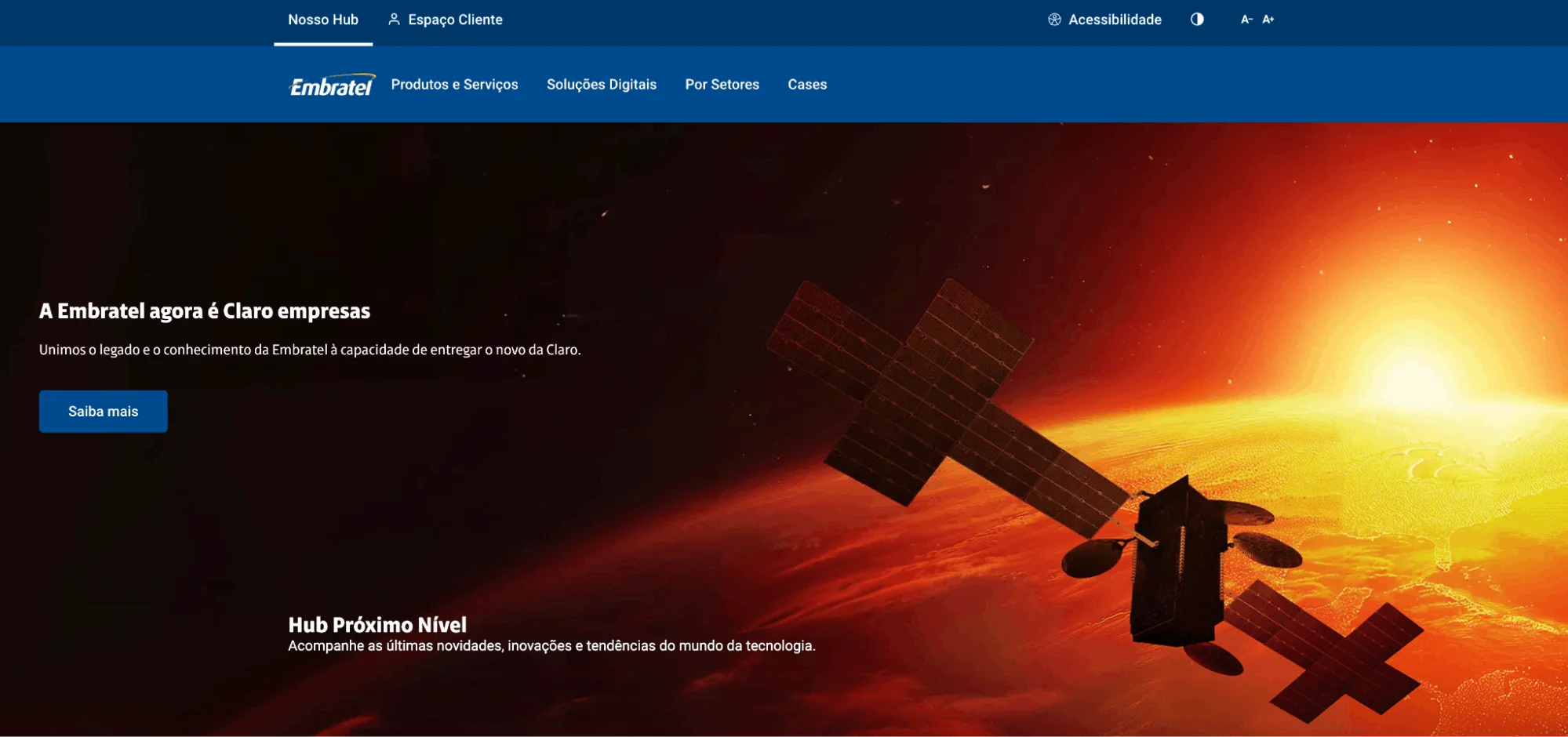
Website of Embratel
Embratel’s managed security services include SOC monitoring, SIEM deployment and management, firewall management, threat detection, DDoS protection, and vulnerability management, delivered across its own national fiber and cloud infrastructure. For organizations that already use Embratel for connectivity, integrating security monitoring with the underlying network removes the blind spots that arise when security and network operations are managed by separate vendors.
The telecom-bundled model also offers a cost-effective path for mid-market Brazilian companies: security services packaged with connectivity contracts reduce vendor complexity and can deliver better total cost of ownership than standalone MSSP contracts.
Core Services: Network-Native SOC, SIEM-as-a-Service, DDoS Protection, Firewall Management, Threat Detection, Vulnerability Management, Cloud Security
Ideal for: Organizations where Embratel/Claro is the primary connectivity provider, and mid-market Brazilian enterprises seeking a carrier-integrated security model with simplified vendor management.
How to Choose the Right MSSP in Brazil
The providers on this list differ significantly in focus, scale, and service depth. The right choice depends on your organization’s size, threat profile, regulatory obligations, and what you already have in place internally. A few dimensions to weigh carefully:
Brazilian regulatory fluency
Any MSSP serving Brazilian clients should demonstrate practical, not theoretical, knowledge of LGPD requirements: breach notification timelines, DPO obligations, and the current enforcement posture of the ANPD. Compliance is not a checkbox exercise, and a provider that cannot map their service delivery to your specific LGPD obligations is a risk.
Local threat intelligence
Generic global threat feeds do not adequately cover the Brazilian underground. Banking trojans, Pix-themed phishing infrastructure, and credential markets targeting Brazilian data have their own distinct patterns. Ask any MSSP candidate whether they produce or integrate Brazil-specific threat intelligence, and request concrete examples of locally relevant indicators they have recently detected and actioned.
SOC location and language
A SOC with Portuguese-speaking analysts operating on Brazilian time zones responds faster and communicates more effectively than a global SOC working different hours in a different language. Ask specifically where the analysts who will monitor your environment are based, and how incidents are escalated outside business hours.
Service scope match
Match the provider’s demonstrated strength to your actual gap. SOC and MDR gaps point toward ISH, Tempest, e-Safer, Future Technologies, or SEK. Identity and access management combined with a managed SOC points toward Asper. OT and payment security toward Cipher. Multinational coverage toward Stefanini. Application security and secure development point toward Conviso. Network-integrated security toward Embratel.
References in your sector
Ask for references from organizations of comparable size in your industry. How a provider performs under the pressure of a live incident, not how it performs in a proposal, is the most reliable predictor of the relationship you will have.
LGPD and Its Impact on MSSP Selection
The Lei Geral de Protecao de Dados (LGPD) has been in full administrative enforcement since August 2021. The ANPD (Autoridade Nacional de Protecao de Dados) has been actively issuing guidance, investigating complaints, and expanding its enforcement posture, and Brazil’s National Cybersecurity Policy introduced in 2023 has added further sector-specific obligations.
For organizations evaluating MSSPs, LGPD creates several specific requirements that directly affect the selection criteria:
Breach notification. LGPD requires notification to the ANPD and affected data subjects within a reasonable timeframe after a security incident involving personal data, generally interpreted as 72 hours for incidents with significant potential harm. An MSSP must detect incidents rapidly and support the notification workflow within that window.
Data processing agreements. Any MSSP that accesses, processes, or stores personal data on behalf of a client is an “operator” (operador) under LGPD and must operate under a formal data processing agreement. Providers without LGPD-compliant DPA templates create compliance liability.
Security measures documentation. LGPD requires organizations to demonstrate that they have implemented “adequate security measures” to protect personal data. An MSSP’s service should generate the audit trails and evidence needed to satisfy this requirement, not just for internal governance, but for potential regulatory scrutiny.
Among the providers on this list, e-Safer (ISO 27701 certified, dedicated DPO advisory services), Tempest, Cipher, and Future Technologies have the most developed LGPD compliance support capabilities for organizations across regulated sectors.
Frequently Asked Questions
What is an MSSP and how does it differ from a traditional IT security vendor?
A Managed Security Service Provider delivers outsourced, ongoing security operations, including continuous monitoring, threat detection, incident response, and compliance support, rather than selling security products or performing one-time assessments. The MSSP takes operational responsibility for detecting and responding to threats on your behalf, typically through a 24/7 SOC.
Which providers on this list are the largest in Brazil?
ISH Tecnologia is the largest domestic MSSP by headcount and client base, with approximately 900 employees, 600+ clients, 3 SOCs, and recognition in both MSSP Alert’s Top 250 global ranking and Frost and Sullivan’s Brazilian Company of the Year award. For organizations seeking global scale with Brazilian operations, Cipher (Prosegur Cybersecurity) brings a worldwide SOC network and multinational delivery capability.
Do MSSPs in Brazil help with LGPD compliance?
Yes. Most leading Brazilian MSSPs offer LGPD compliance advisory, breach notification support, data processing agreements, and audit-ready security documentation. e-Safer holds ISO 27701 certification, the international privacy management standard that maps directly to LGPD obligations, and offers dedicated DPO advisory services. Tempest, Cipher, and Future Technologies also include LGPD compliance support in their service portfolios.
What makes Brazil’s threat landscape different from other markets?
Brazil has a well-developed domestic cybercriminal ecosystem that produces threat tooling specifically targeting Brazilian financial systems. Banking trojans such as Guildma, Grandoreiro, and Mekotio were developed by and for the Brazilian market. Pix, Brazil’s real-time payment system, has become a primary target for social engineering and phishing campaigns. CPF and CNPJ data trades actively on dark web marketplaces. MSSPs that carry Brazil-specific threat intelligence are substantially more effective in this environment than providers relying on generic global feeds.
Why is e-Safer relevant for organizations that use SOCRadar?
e-Safer is a SOCRadar partner and integrates SOCRadar’s threat intelligence platform into its managed security operations. For Brazilian clients working with e-Safer, this integration extends dark web monitoring and external threat visibility into the managed security workflow, providing earlier warning of data exposure and threat actor activity targeting their organization.
What is Future Technologies Informatica?
Future Technologies Informatica is a Brazilian IT and managed security company founded in 1997, headquartered in Petropolis, Rio de Janeiro. It offers SOCaaS, MDR, endpoint protection, network security monitoring, vulnerability management, cloud security, and incident response to mid-market and enterprise clients. It holds ISO 27001 certification, supports LGPD, ISO 27001, and PCI DSS compliance frameworks, and operates with a 30-minute incident response SLA.
Should Brazilian organizations use a domestic or global MSSP?
Domestic MSSPs such as ISH, Tempest, e-Safer, and Asper offer stronger knowledge of Brazil-specific threats, Portuguese-language operations, and local regulatory context. Global MSSPs such as Cipher provide multinational scale and cross-border threat intelligence, useful for organizations with operations across multiple countries. Many larger Brazilian enterprises use a layered approach, engaging a domestic MSSP for local operations and a global provider or threat intelligence platform for broader coverage.
SOCRadar provides extended threat intelligence covering Brazilian threat actor communities, dark web forums, Telegram channels, and data leak sites targeting organizations operating in Brazil. Its dark web monitoring capabilities help detect early exposure of Brazilian organizational data before that exposure escalates into a breach. Request a demo or run a free dark web scan to understand your current exposure baseline.