

Mar 10, 2026

Jul 10, 2026
5 Mins Read
Sep 13, 2026
Table Of Content
Related Articles
SMS Bombing
Threat Actors
Jan 08, 2026
Dark Web Monitoring
Feb 19, 2026

Ransomware
Jan 31, 2026
OSINT Framework
Apr 17, 2026

What Is Data Integrity?
Data integrity is the accuracy, completeness, consistency, and trustworthiness of data throughout its creation, storage, processing, transmission, and use.
Integrity is different from confidentiality and availability, although the three depend on one another. Data can remain secret and accessible while still being unsafe if an attacker, faulty process, or operator changes it without detection.
Key Takeaways
- Data integrity is the accuracy, completeness, consistency, and trustworthiness of data throughout its creation, storage, processing, transmission, and use.
- Integrity is different from confidentiality and availability, although the three depend on one another. Data can remain secret and accessible while still being unsafe if an attacker, faulty process, or operator changes it without detection.
- Unauthorized or accidental modification is a primary concern.
- Strong programs combine prevention, continuous visibility, ownership, and tested response.
How It Works
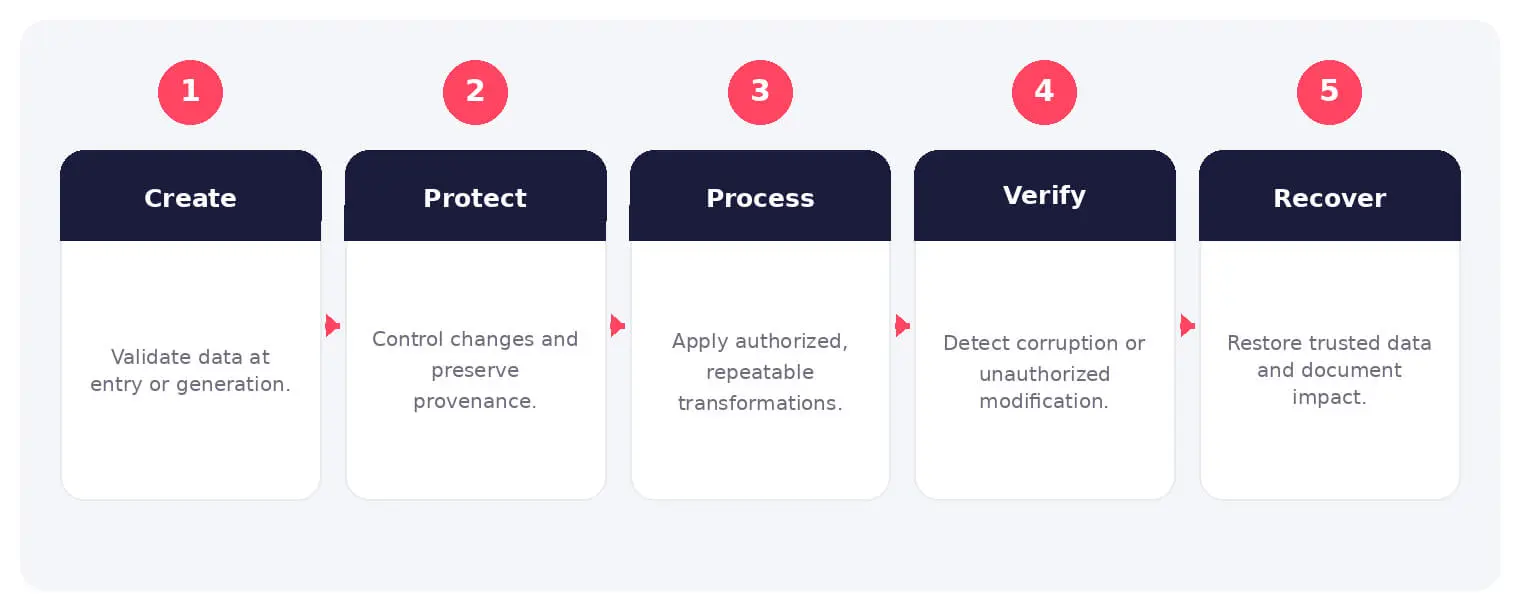
The operating flow above turns a broad security objective into observable steps. Exact implementations vary, but each stage needs an owner, trusted inputs, documented policy, and evidence that analysts can use during investigation and review.
Integrity is different from confidentiality and availability, although the three depend on one another. Data can remain secret and accessible while still being unsafe if an attacker, faulty process, or operator changes it without detection.
Common Types and Capabilities
- Physical and logical integrity
- Entity and referential integrity
- File, message, and database integrity
- Process, lineage, and audit integrity
Security and Business Risks
- Unauthorized or accidental modification
- Corruption during storage or transfer
- Incomplete records and broken relationships
- Untrusted analytics and operational decisions
Warning Signs and Detection
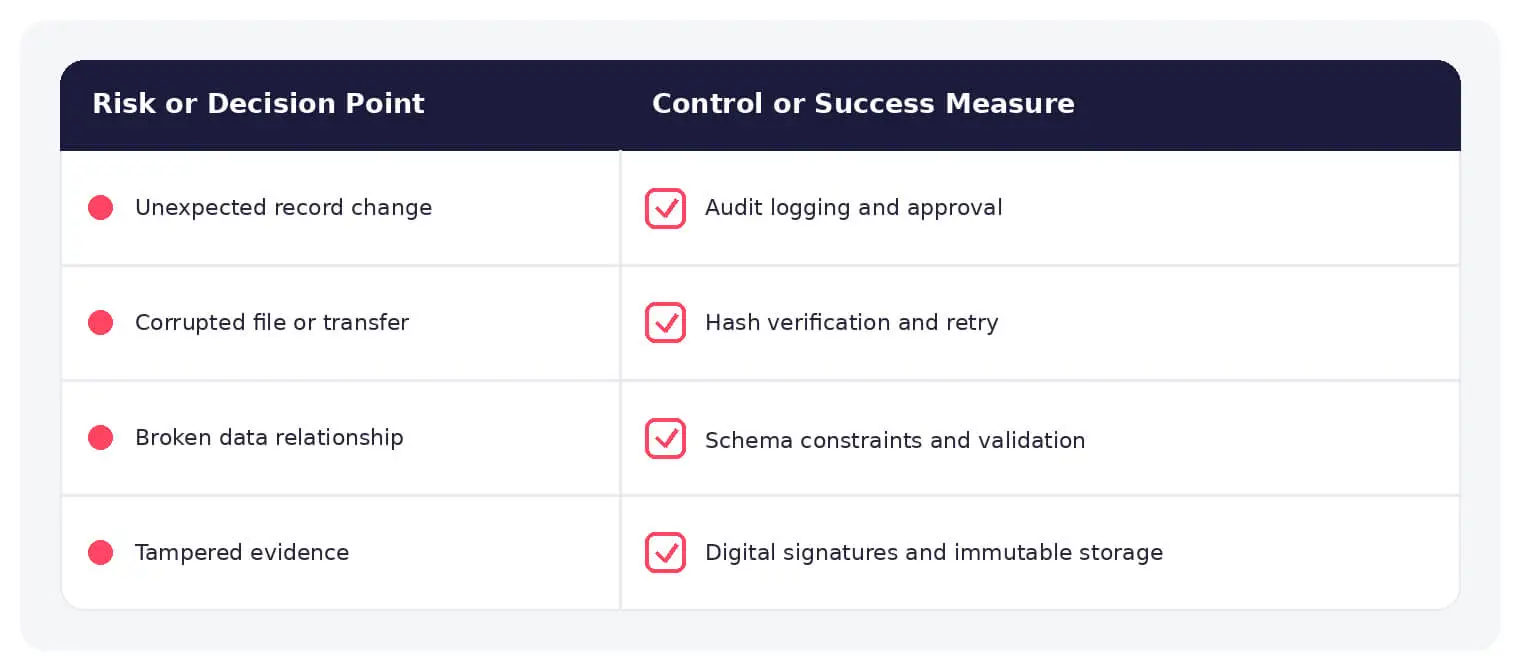
Investigate checksum changes, unexpected database writes, altered permissions, missing records, inconsistent replicas, unusual service accounts, broken lineage, audit-log gaps, and failed validation rules.
Best Practices
Use validation constraints, least privilege, separation of duties, cryptographic hashes and signatures, immutable logs, versioning, tested backups, change control, and reconciliation.
How SOCRadar Can Help
SOCRadar adds outside-in asset visibility, threat intelligence, exposure context, and continuous monitoring that help security teams validate and prioritize risks related to data integrity. This context complements internal cloud, data, network, and identity controls.
Explore SOCRadar Extended Threat Intelligence or request a demo to strengthen threat-informed prevention and response.
Frequently Asked Questions
What Is Data Integrity?
Data integrity means information remains accurate, complete, consistent, and trustworthy across its entire lifecycle — creation, storage, processing, transmission, and use. It is the assurance that data has not been altered by unauthorized actors, faulty processes, or accidental error, and that legitimate changes are traceable.
How Is Data Integrity Different From Confidentiality and Availability?
Confidentiality keeps data hidden from unauthorized access, and availability keeps it reachable when needed. Integrity keeps it correct: data can be both secret and accessible yet still unsafe if an attacker, faulty process, or operator changes it without detection. The three properties depend on one another, but each addresses a different failure mode.
What Are the Main Types of Data Integrity?
Data integrity is usually discussed across several layers:
- Physical integrity — protection against hardware failure, power loss, and corruption during storage or transfer.
- Logical integrity — rules such as entity and referential constraints that keep records complete and consistent.
- File, message, and database integrity — detection of changes using checksums, hashes, and signatures.
- Process, lineage, and audit integrity — traceability of who changed what, when, and through which process.
What Commonly Causes Data Integrity Failures?
Causes are both malicious and non-malicious: unauthorized modification by attackers, accidental edits or deletions by operators, corruption during storage or transfer, software bugs, and incomplete records or broken relationships between datasets. Faulty replication and hardware degradation can also corrupt data without any attacker involvement, which is why integrity programs need to address human error as well as threats.
How Can Data Integrity Be Verified in Practice?
Teams verify integrity by comparing current data against trusted references. Common techniques include checksums and cryptographic hashes to detect file or message changes, digital signatures to confirm origin and authenticity, validation constraints to enforce database rules, and reconciliation against a source-of-record system to catch drift between replicas.
What Warning Signs Point to a Data Integrity Problem?
Warning signs include checksum mismatches, unexpected database writes, altered file permissions, missing records, inconsistent replicas, unusual service account activity, broken data lineage, gaps in audit logs, and failed validation rules. A single anomaly may be benign, but several appearing together — or repeated failures of the same control — warrant investigation.
How Should a Team Respond to a Suspected Data Integrity Incident?
Limit further writes to affected systems while preserving logs, snapshots, and the current state for analysis. Compare suspect data against verified backups or source-of-record systems to establish scope, and restore clean copies where corruption is confirmed. Identify the root cause — human error, faulty process, or attacker activity — before normal operations resume.
Which Controls Help Preserve Data Integrity Over Time?
No single control covers every integrity risk, so effective programs combine prevention with visibility. Core measures include least privilege and separation of duties, validation constraints to block malformed records, cryptographic hashes and signatures, versioning with immutable logs, formal change control, and regularly tested backups for recovery.
Why Does Data Integrity Matter for Business and Compliance?
Analytics, automation, and operational decisions are only as reliable as the data behind them, and silent changes often surface as bad outcomes long after the modification occurred. Many regulatory frameworks also require accurate, auditable records, so integrity failures can create compliance and legal exposure alongside operational damage.
Is Data Integrity the Same as Data Quality?
They overlap but are not identical. Data integrity is the security property that keeps data from being changed without authorization, while data quality measures whether information is fit for its intended purpose — accurate, complete, timely, and relevant. Strong integrity supports quality, but quality also depends on how data was captured, modeled, and maintained.
Do Backups Alone Guarantee Data Integrity?
No. A backup preserves data as it existed when the copy was made, so corruption or unauthorized changes that occurred beforehand are carried into the backup as well. Backups should be tested regularly, verified against known-good points in time, and paired with hashing, monitoring, and access controls to detect and limit tampering.