Identity and Access Management (IAM) ensures that the right human and machine identities receive appropriate access to resources for an authorized purpose.
IAM covers the identity lifecycle, authentication, authorization, federation, privileged access, governance, and evidence. Strong IAM limits both initial compromise and what an attacker can do with a stolen account or token.
Key Takeaways
Identity and Access Management (IAM) ensures that the right human and machine identities receive appropriate access to resources for an authorized purpose.
IAM covers the identity lifecycle, authentication, authorization, federation, privileged access, governance, and evidence. Strong IAM limits both initial compromise and what an attacker can do with a stolen account or token.
Account takeover and MFA bypass is a primary concern.
Effective security combines prevention, continuous visibility, ownership, and tested response.
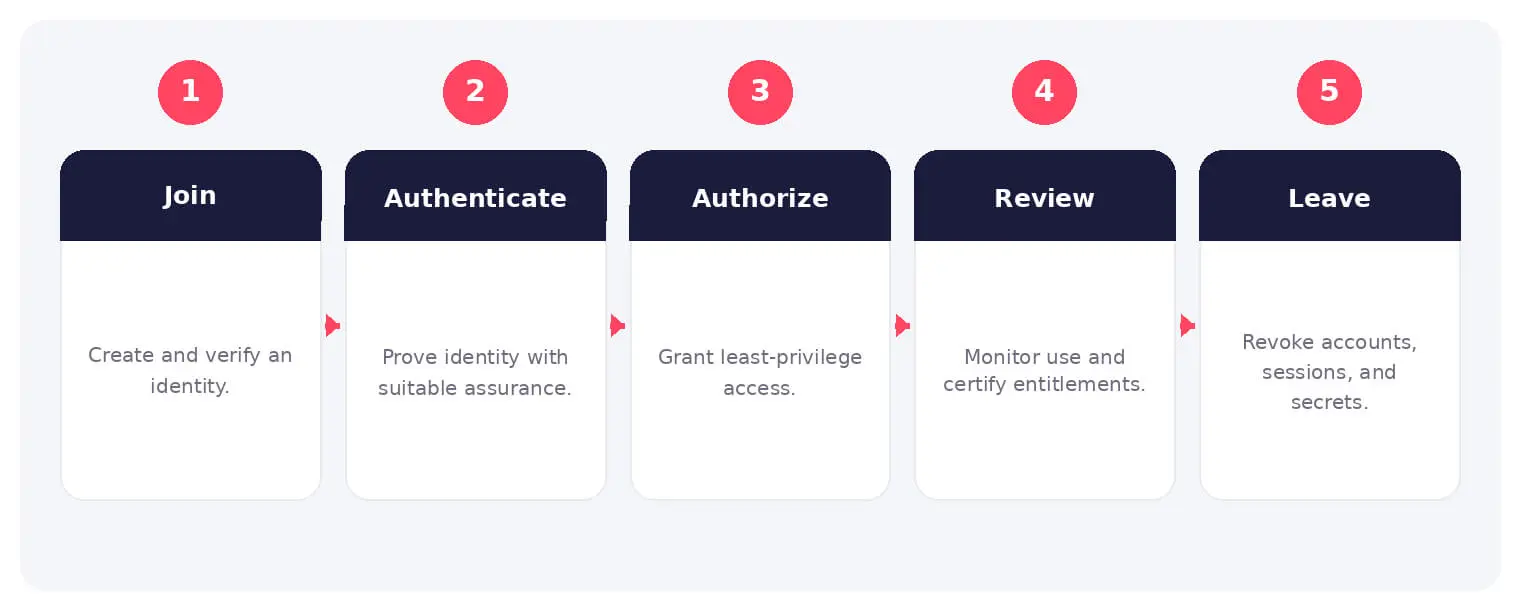
The main stages and decision points associated with identity and access management.
How It Works
The operating flow above turns the concept into observable steps. Exact implementations vary, but each stage needs accountable ownership, trusted inputs, documented policy, and evidence that analysts can use during investigation and review.
IAM covers the identity lifecycle, authentication, authorization, federation, privileged access, governance, and evidence. Strong IAM limits both initial compromise and what an attacker can do with a stolen account or token.
Common Types and Capabilities
Identity lifecycle and directories
Authentication and single sign-on
Authorization and access governance
Privileged and machine identity management
Security and Business Risks
Account takeover and MFA bypass
Excessive or toxic permissions
Orphaned users and service accounts
Stolen tokens and privileged misuse
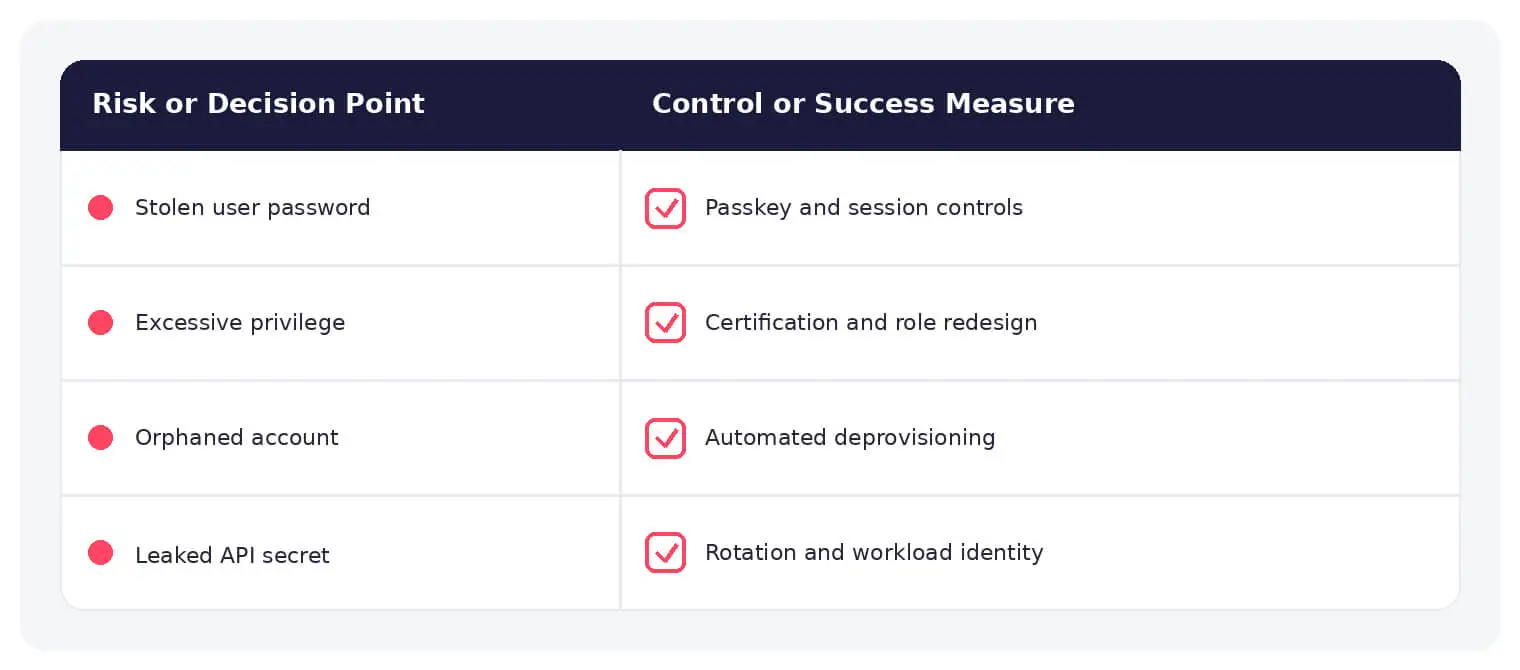
Common identity and access management risks paired with practical defensive controls.
Warning Signs and Detection
Monitor impossible travel, new devices, repeated MFA prompts, unusual token use, privilege grants, dormant-account activity, mailbox changes, service-account anomalies, disabled controls, and access inconsistent with job function.
Best Practices
Use phishing-resistant MFA, conditional access, least privilege, just-in-time administration, automated joiner-mover-leaver workflows, periodic certification, short-lived machine credentials, and rapid session revocation.
How SOCRadar Can Help
SOCRadar adds external visibility, threat intelligence, exposure context, and continuous monitoring to help teams validate and prioritize risks related to identity and access management. This context complements internal endpoint, identity, and network controls.
Explore SOCRadar Identity and Access Intelligence or request a demo to strengthen threat-informed prevention and response.
Frequently Asked Questions
What is the main purpose of identity and access management?
Identity and Access Management (IAM) ensures that the right human and machine identities receive appropriate access to resources for an authorized purpose.
What is a common security risk?
Account takeover and MFA bypass.
What should security teams monitor?
Monitor impossible travel, new devices, repeated MFA prompts, unusual token use, privilege grants, dormant-account activity, mailbox changes, service-account anomalies, disabled controls, and access inconsistent with job function.
What is the first practical step?
Use phishing-resistant MFA, conditional access, least privilege, just-in-time administration, automated joiner-mover-leaver workflows, periodic certification, short-lived machine credentials, and rapid session revocation.