



Oct 07, 2026
Table Of Content
How to Stop a DDoS Attack? (2026 Edition)
What Is a DDoS Attack?
Why DDoS Defense Looks Different in 2026?
Botnets Still Power DDoS at Scale
DDoS Examples That Shaped Recent Defenses
What Are The Types of DDoS attacks?
Common DDoS Vectors and Mitigation Methods
What Can a DDoS Attack Cost You?
How to Mitigate DDoS Attacks in 2026
A Practical Playbook on How to Stop a DDoS Attack
How SOCRadar Helps You Stay Ahead of DDoS in 2026
Conclusion
Related Articles

NetScaler C2: CVE-2026-88771 Exploitation Operation





Jan 23, 2026
11 Mins Read
Sep 25, 2026

Summarize with:
How to Stop a DDoS Attack? (2026 Edition)
DDoS attacks have become one of the fastest ways to disrupt online services without needing to exploit a software flaw. Instead of breaking into systems, attackers overwhelm the traffic and request-handling capacity that keeps websites, APIs, and customer portals available. For defenders, the challenge is no longer just “big floods”. It is speed, coordination, and the ability to keep critical services reachable while attackers shift tactics in real time.
In 2026, DDoS also continued to serve as a pressure tactic during political tension and high-visibility events. Hacktivist campaigns and coordinated groups can quickly target public-facing services to generate headlines, frustrate users, and create operational noise. That makes DDoS planning less about one-time incident response and more about building resilience into how services are delivered, monitored, and protected.
A threat intelligence reporting reinforces how consistent this threat remained at global scale and how often it spiked around real-world triggers. NETSCOUT’s first-half 2025 findings highlighted that DDoS surges frequently aligned with major events and geopolitical developments, showing how quickly attackers moved from motivation to execution. The same reporting also reflected the ongoing rise of bot-driven operations, where attackers relied on large pools of compromised devices to sustain pressure and rotate techniques.
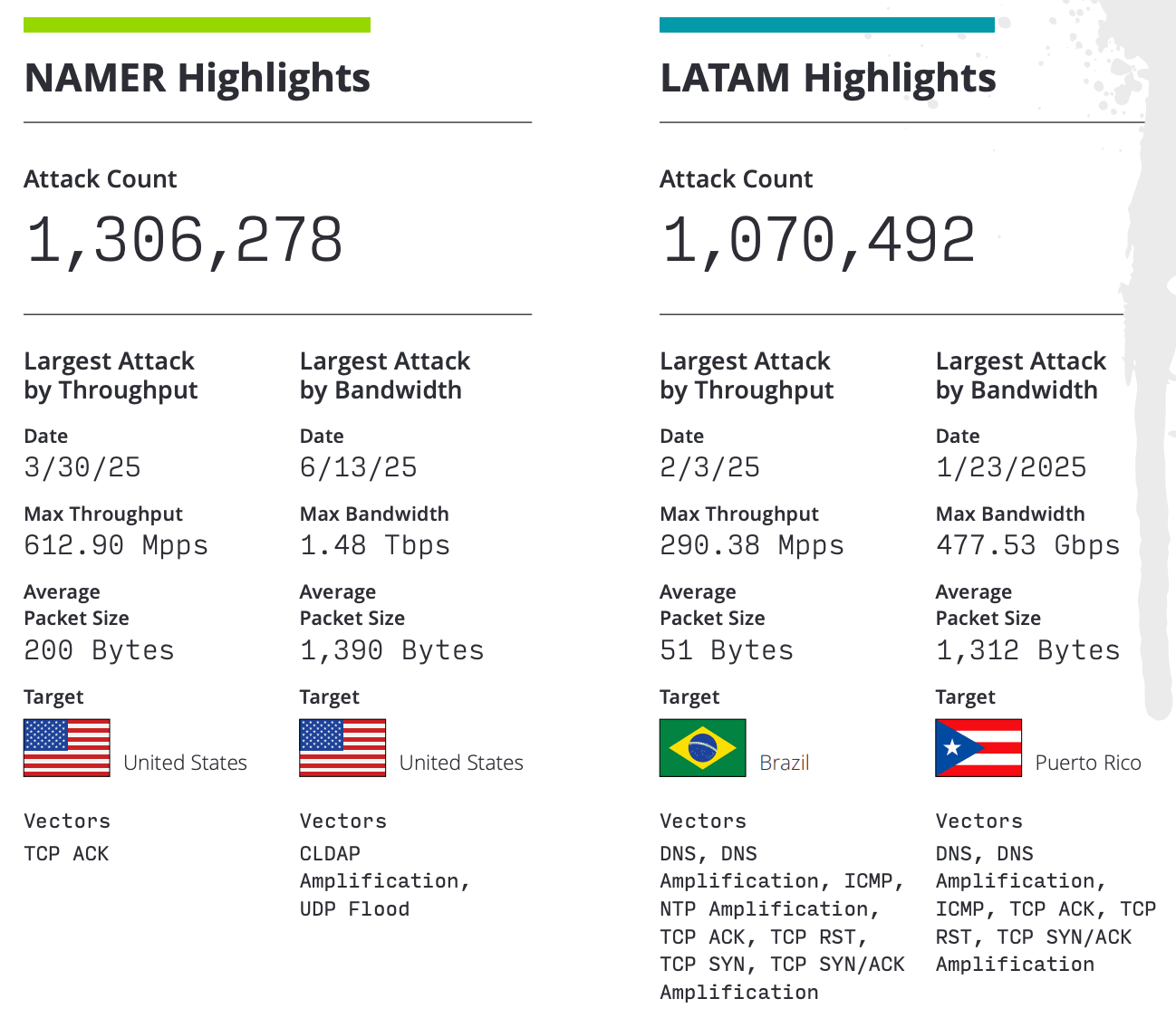
DDoS attack patterns across global regions according to NETSCOUT H1 report
The takeaway for a 2026 playbook is clear: treat DDoS as a repeatable operational risk. The baseline volume stayed high, recording more than 8 million attacks in the first half of 2025, and peaks reaching multi-terabit and billion-packets-per-second levels, which shows how quickly a single campaign can exceed typical capacity planning. These conditions favor defenders who automate mitigation at the edge, prepare for multi-vector activity, and protect the endpoints that cost the most to serve, long before an attack begins.

What Is a DDoS Attack?
A Distributed Denial-of-Service attack floods a target with traffic or requests from many sources at once. Attackers aim to exhaust capacity so users cannot reach a website, API, or online service. They typically pursue disruption, pressure, retaliation, extortion, or distraction.
Most DDoS outcomes fall into three buckets:
- Bandwidth saturation that clogs upstream links
- State exhaustion that drains connection tables on firewalls, load balancers, and servers
- Application exhaustion that burns CPU, threads, or database resources using Layer 7 requests
Why DDoS Defense Looks Different in 2026?
Attacks hit harder in shorter windows
Many DDoS campaigns now arrive as short, high-impact bursts that last seconds or minutes, then disappear. That timing changes everything. If your team relies on manual triage, you may only confirm the attack after the worst impact has already passed. A 2026-ready approach prioritizes automated detection and mitigation, plus service design that keeps core user paths reachable even during sudden spikes.
Extreme scale is no longer rare
Defenders have to plan for very large traffic volumes becoming part of the normal threat landscape, not an outlier. Attackers can now generate floods that stress bandwidth and packet-processing capacity at the same time, which can overwhelm systems that are only planned for steady growth or predictable peak traffic. In practical terms, resilience depends on upstream capacity, edge filtering, and architectures that avoid a single chokepoint.
Hacktivist campaigns stayed persistent
DDoS remained a go-to tactic for politically motivated groups because it is fast, public, and easy to repeat. These campaigns often target government portals, transportation, finance, telecoms, and public services, where even brief downtime can damage trust and create real-world disruption. For defenders, this means DDoS risk isn’t limited to one industry. It can surge around geopolitical events, media coverage, or coordinated online calls to action.
If your 2026 playbook still assumes a single “big flood” with plenty of response time, it will miss what strains teams today: burst attacks, blended vectors, and rapid campaign shifts that pressure multiple layers at once.
Botnets Still Power DDoS at Scale
Attackers rarely generate enough traffic from a single source. They rely on botnets: networks of compromised devices that act under remote control. Botnets matter because they give attackers scale, reach, and the ability to keep a campaign going even when defenders start blocking traffic.
Botnets help attackers:
- Spread traffic across many IPs and networks, making simple blocking less effective
- Rotate sources when mitigation rules kick in
- Combine vectors in one campaign, pressuring bandwidth, connection state, and application endpoints at the same time
Botnet-driven DDoS is designed to be repeatable. Defenders need controls that work at the edge and at multiple layers, not just basic IP filtering.
DDoS Examples That Shaped Recent Defenses
29.7 Tbps Aisuru Attack Disclosed in Late 2025
Cloudflare’s Q3 2025 DDoS threat report described the 29.7 Tbps record event as an Aisuru attack. The report characterized it as a UDP carpet-bombing campaign that bombarded large numbers of destination ports per second and randomized packet attributes in an attempt to evade defenses. Cloudflare noted it mitigated the attack autonomously, which reflects how automation at the edge has become essential against hyper-volumetric botnet activity.
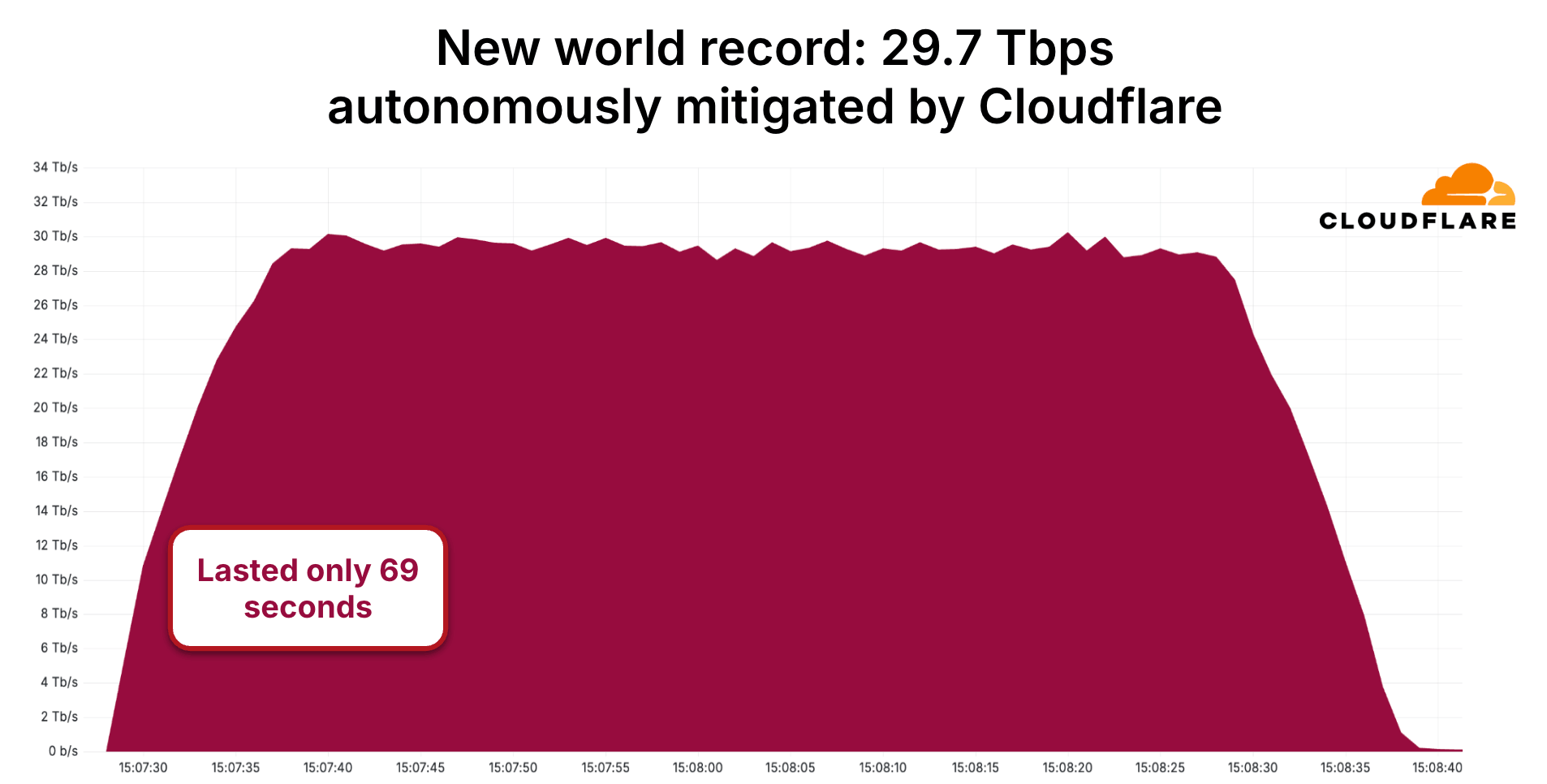
Cloudflare’s Q3 2025 DDoS threat report mitigated DDoS
7.3 Tbps Attack Analysis Published in 2025
Cloudflare published a detailed write-up on a 7.3 Tbps DDoS attack it said occurred in mid-May 2025 and was mitigated autonomously. The post emphasized how extreme “burst” delivery can be, describing how the traffic volume was pushed in seconds, not hours.
2026 Started With Renewed Warnings About Sustained Hacktivist DDoS
In January 2026, the UK government (via an NCSC alert) warned that Russian-aligned hacktivists continued targeting UK organizations with disruptive DoS/DDoS activity, highlighting NoName057(16) and its DDoSia ecosystem.
What Are The Types of DDoS attacks?
Analysts often group DDoS into three main types. Real campaigns commonly blend them.
Volume-Based Attacks
Volume-based attacks try to saturate bandwidth with raw traffic. UDP floods and ICMP floods fit here. Attackers win when they fill links faster than you can filter the traffic.
Application-Layer Attacks
Application-layer attacks focus on Layer 7 endpoints like login flows, checkout, search, and APIs. These requests often look legitimate. They still drain resources because they force server-side work like authentication checks, database queries, or backend calls.
Common examples include HTTP GET floods, HTTP POST floods, and low-and-slow behaviors that keep connections busy.
Protocol and State-Exhaustion Attacks
Protocol attacks aim to exhaust resources in the network stack or intermediate devices. SYN floods remain relevant because they can fill connection tables and stress load balancers and firewalls, especially when attackers combine them with other traffic.
Common DDoS Vectors and Mitigation Methods
UDP Flood
Attackers send large volumes of UDP packets to overwhelm capacity. They may target a range of ports or use patterns that complicate filtering.
Mitigation actions
- Filter or rate-limit UDP traffic you do not need
- Use upstream DDoS mitigation so traffic gets filtered before it reaches your origin
- Prefer Anycast and distributed edge capacity to absorb traffic closer to the sources
SYN Flood
Attackers send SYN packets to create many half-open connections. If the target allocates state per attempt, it runs out of resources and blocks legitimate sessions.
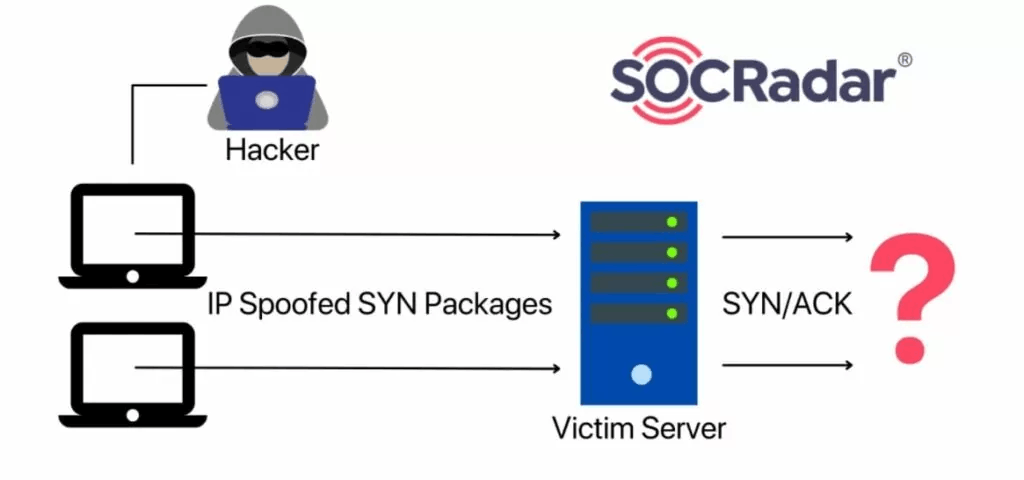
SYN Flood Attack
Mitigation actions
- Use SYN cookies or SYN proxy features where appropriate
- Tune timeouts and connection tracking limits on load balancers and firewalls
- Offload mitigation to edge providers that can handle large connection rates
ICMP Flood
Attackers flood ICMP packets to consume bandwidth and device resources.
Mitigation actions
- Rate-limit ICMP at the edge while allowing essential diagnostics
- Use upstream filtering to prevent link saturation
HTTP Flood
Attackers flood endpoints with GET and POST requests. They often mimic browser patterns and rotate user agents, paths, and headers.
Mitigation actions
- Put high-cost endpoints behind WAF rules and bot controls
- Rate-limit per IP, session, token, ASN, or geo when you can
- Add caching and CDN strategies to reduce origin work
- Protect APIs with gateway throttling and authentication
What Can a DDoS Attack Cost You?
DDoS impact goes beyond downtime.
- Revenue loss from failed sessions and outages
- Operational cost from emergency scaling and mitigation work
- Reputation damage when customers see instability
- Security distraction because attackers sometimes use DDoS as cover for other activity
How to Mitigate DDoS Attacks in 2026
A layered approach still works, but your layers must support fast automation.
External Layer
This layer filters traffic before it reaches your core systems.
- ISPs for upstream filtering or emergency traffic controls
- CDNs to distribute traffic and protect origin servers
- Scrubbing centers to cleanse traffic and forward clean flows
- DNS protection to keep resolution stable under pressure
Perimeter Layer
This layer includes your load balancers, firewalls, and edge gateways.
- Enable connection-level protections and sane timeouts
- Validate protocols and drop malformed traffic
- Add capacity planning for state tables and concurrent connections
Internal Layer
This layer focuses on application protection and service resilience.
- WAF policies for Layer 7 floods
- API gateways with throttling and auth enforcement
- Safer defaults for expensive endpoints like search and login
- Circuit breakers and graceful degradation to keep core functions available
A Practical Playbook on How to Stop a DDoS Attack
- Confirm you are seeing DDoS, not a normal spike
Look for sudden bandwidth jumps, packet-rate surges, connection table growth, increased 4xx and 5xx errors, and sharp latency increases. Compare traffic patterns against baselines.
- Engage upstream mitigation immediately when links saturate
If your transit links saturate, internal tuning will not save you. Escalate to your ISP, CDN, or scrubbing provider fast.
- Block or rate-limit at the edge first
Apply rules where they reduce load before traffic reaches your origin. Burst attacks often end before manual response helps, so prioritize automated detection and mitigation.
- Protect your most expensive endpoints
Focus on endpoints that trigger heavy work:
- Authentication and password reset flows
- Search and filtering
- Checkout and payment steps
- API routes that call backend services
Apply WAF protections, caching, and throttling where they matter most.
- Separate critical services and admin access
Keep admin panels, monitoring, and internal APIs isolated from public traffic paths. Attackers should not be able to knock out your control plane while they flood your public endpoints.
- After the incident, tune for the next one
Capture metrics, attack characteristics, and what failed first. Update runbooks, refine rate limits, and validate automation.
How SOCRadar Helps You Stay Ahead of DDoS in 2026
If you want to connect DDoS defense planning with live context, SOCRadar’s new DDoS Report on SOCRadar Labs helps teams track what’s happening across Europe in near real time, so you can tune defenses based on active attack methods, not yesterday’s assumptions. It’s built to support operational decisions, not just awareness.
It can help you:
- Monitor live DDoS activity with a continuously updated view of campaigns, including a live attack feed and clear threat level signals
- Understand which attack vectors are trending (for example, HTTP floods vs. SYN-style traffic) so you can align WAF, rate limits, and upstream filtering with what’s active
- Use geographic and sector views to see where pressure is concentrated and which industries are being targeted, then benchmark your own risk
- Switch between time ranges to separate one-off spikes from sustained patterns and campaign waves
- Pair findings with Attack Surface Management to identify which internet-facing assets matter most and prioritize protection for the services most likely to cause downtime if hit
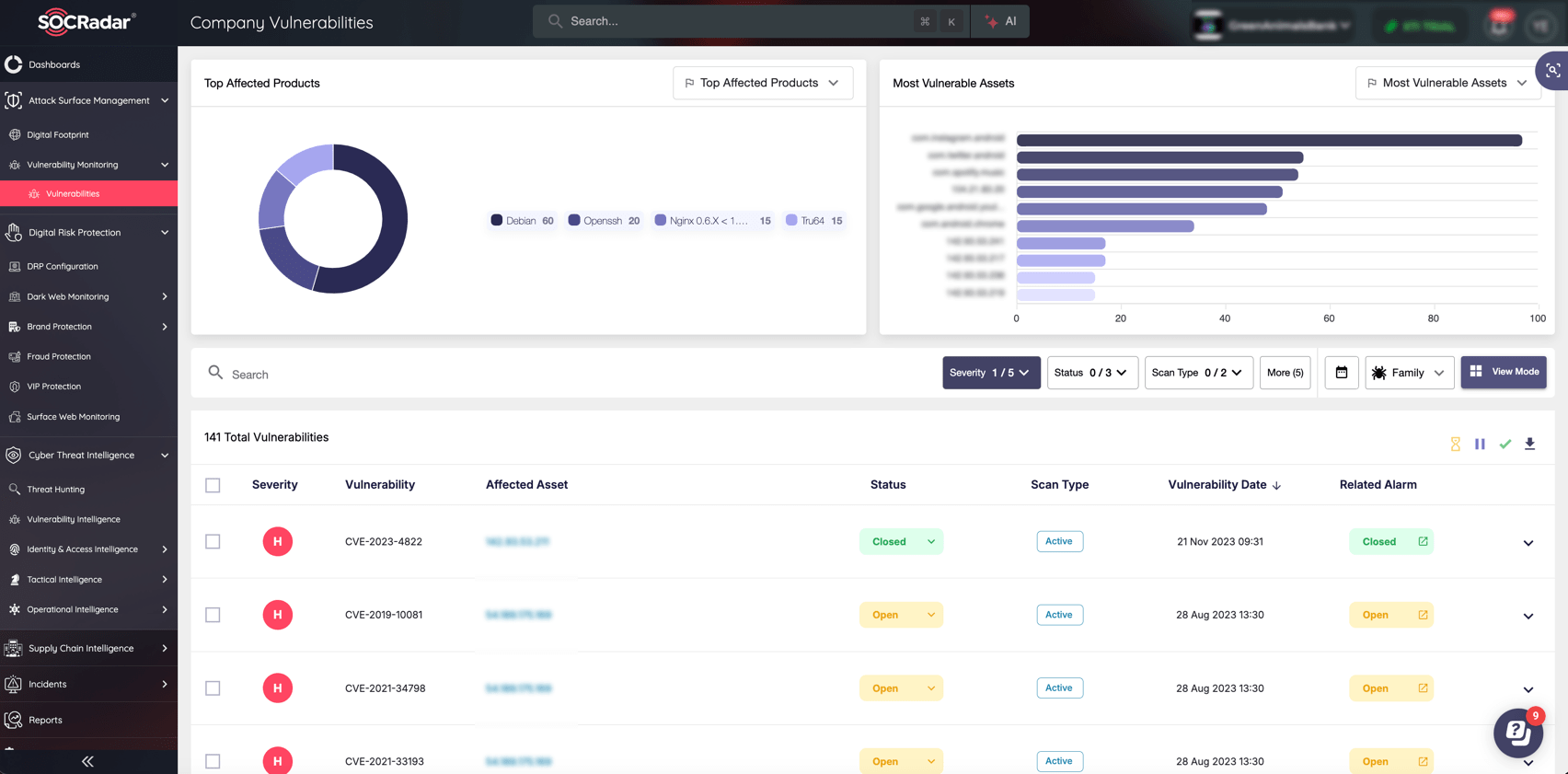
SOCRadar Attack Surface Management module
This approach keeps DDoS from being treated as a standalone “network problem.” Instead, you tie real-time threat activity to your exposed surface and focus defenses where disruption would hurt the most.
Conclusion
In 2026, DDoS is not a rare crisis. It is a repeatable reliability threat that attackers can trigger on demand, often with little warning and very little dwell time. That reality changes what “prepared” looks like. The teams that hold up under pressure are not the ones with the longest runbooks. They are the ones that designed their environments to absorb and reroute abnormal traffic, and to keep critical user journeys working even when everything else gets noisy.
A strong DDoS strategy now depends on three things: edge automation, multi-layer coverage, and service-level resilience. You need protection that filters and rate-limits before traffic reaches your origin, controls that prevent state exhaustion in network devices, and safeguards that keep high-cost endpoints like login and API routes from collapsing under request floods. When you combine that with clear escalation paths to upstream providers, tested failover plans, and post-incident tuning, DDoS becomes something you can operate through, not just react to.
If there’s one final takeaway, it’s this: build as if the next DDoS wave will be short, blended, and intentional. When you engineer for that baseline, “record” events matter less, and uptime becomes a design outcome, not a lucky one.