

Oct 05, 2026
Table Of Content
Top Dark Web Telegram Groups & Channels 2026
Quick Reference: Top Telegram Channels
How Threat Actors Use Telegram
Top 10 Telegram Groups Cybersecurity Teams Should Monitor
What Security Teams Should Monitor on Telegram
Why Telegram Became a Hub for Cybercrime Ecosystems
How Security Teams Can Monitor Telegram Safely
Frequently Asked Questions
Integrating Telegram Monitoring into CTI Programs
Related Articles
Dark Web Profile: Blue Locker Ransomware
Sep 25, 2026
ShinyHunters Claims Access to FBI Systems
Sep 24, 2026
Clop Hack: ShinyHunters Hijacks Data Leak Site
Sep 21, 2026
Jun 23, 2026
23 Mins Read

Summarize with:
Top Dark Web Telegram Groups & Channels 2026
Note: This article is intended for cybersecurity awareness and research purposes only. It does not promote or endorse illegal content.
The top Dark Web Telegram channels and groups monitored in 2026 are CTI Now, NoName057(16), RipperSec, Observer Cloud, Omega Cloud, Data Leak Monitoring, BidenCash Shop, EMP/mailpass/sqli Chat, Dark Storm Team, and Z-Pentest Alliance, based on how frequently they surface in ransomware tracking, credential leak investigations, hacktivist campaign monitoring, and broader cyber threat intelligence work. Several of these channels have already been removed and reconstructed at least once.
Telegram’s importance as an intelligence source grew after law enforcement operations disrupted major underground forums between 2024 and 2026, including repeated BreachForums takedowns and the LeakBase seizure. Many threat actors shifted parts of their operations to Telegram as a fallback layer for communication, leak distribution, and affiliate recruitment.
Each channel serves a different function: from aggregating cybersecurity news and tracking ransomware victim claims, to distributing stealer logs and coordinating DDoS campaigns.
Quick Reference: Top Telegram Channels
The following table summarizes the top active Telegram channels and groups used by threat actors, hacktivists, and cybercrime communities in 2026, organized by primary focus and threat type.
| Group / Channel | Primary focus | Threat type | Activity level |
| NoName057(16) | Hacktivist operations | DDoS / Geopolitical campaigns | High |
| RipperSec | Pro-Palestinian operations | DDoS / Hacktivism | High |
| Observer Cloud | Log aggregation | Credential leaks / Combo lists | High |
| Omega Cloud | Stealer log distribution | Credential theft / Stealer logs | High |
| Data Leak Monitoring | Leak tracking | Data leaks / Ransomware monitoring | Very high |
| BidenCash Shop | Stolen card monitoring | Financial fraud / Card data | High |
| EMP/mailpass/sqli Chat | Cybercrime discussion | Credential trading / SQLi | Medium |
| Dark Storm Team | Hacktivist operations | DDoS / Hacking services | High |
| Z-Pentest Alliance | Infrastructure targeting | OT intrusion / Hacktivism | Medium |
| CTI Now | News tracking | General cybersecurity threats | Very high |
Note: Telegram channels are frequently removed or migrated. This table reflects status as of 2026. Channels may change names or move at any time.
How Threat Actors Use Telegram
Telegram has evolved into a preferred communication platform for cybercriminals, ransomware operators, and hacktivist collectives. It combines scalability, semi-anonymous communication, rapid broadcasting, and low friction for channel creation. All of them make it attractive for underground cyber communities.
Threat actors commonly use Telegram for:
- Ransomware victim announcements: Groups publish extortion claims and victim names, often before data appears on dedicated leak sites.
- Affiliate recruitment: Ransomware syndicates and cybercrime operations recruit developers, initial access brokers, and affiliates directly through Telegram channels.
- Breach and leak distribution: Stolen databases, credential dumps, and stealer logs are shared through both public channels and private groups.
- Malware and phishing kit sharing: Threat actors distribute ready-made phishing kits, infostealers, and exploit tools through automated bots and group postings.
- Coordination during geopolitical campaigns: Hacktivist groups use Telegram for targeting discussions, operational updates, and DDoS campaign coordination.
- Migration after forum takedowns: Following major law enforcement cybercrime operations against underground forums such as BreachForums and LeakBase between 2024 and 2026, many threat actors shifted operations toward Telegram-based ecosystems.
Unlike traditional underground forums that require Tor access, Telegram operates on the surface web while still supporting private groups and large-scale audience reach. This combination has made Telegram an increasingly critical source for cyber threat intelligence, OSINT investigations, attack surface monitoring, and breach intelligence workflows.
Why Telegram Keeps Rebuilding After Disruptions
A defining feature of Telegram-based cybercrime is the speed at which channels come back after takedowns. When moderation actions or policy enforcement remove a group, threat actor networks typically reestablish under new names within hours or days. In many cases, the replacement channel is operational before most subscribers even notice the original is gone.
This rapid reconstruction relies on infrastructure that threat actors build in advance:
- Backup channels and mirrors: Many groups maintain secondary channels that stay dormant until the primary channel is removed. Once a takedown happens, the backup activates and begins redirecting followers.
- Automated redirect bots: Telegram bots can automatically message subscribers of a removed channel with the new link. This preserves audience continuity even when the channel name and handle change completely.
- Cross-platform announcement networks: Groups post backup links on allied channels, dark web forums, and alternative messaging platforms like Discord or Matrix. This distributed approach means that no single takedown can sever all connection points between a group and its audience.
- Decentralized administration: Many groups split administrative control across multiple accounts and operators. If one admin is compromised or banned, others can spin up a new channel independently.
The practical effect is that channel-level takedowns cause temporary disruption but rarely eliminate a group’s operational capacity. NoName057(16) lost its subscribers many times, yet rebuilt it again and again. Z-Pentest Alliance and Dark Storm Team followed similar patterns after their own removals.
Top 10 Telegram Groups Cybersecurity Teams Should Monitor
1. Dark Storm Team
Members: 500 | Focus: DDoS / Hacking services for hire | Connections: Anonymous Sudan (former)
Dark Storm Team is a hacktivist group known for pro-Palestinian cyber operations and past collaboration with Anonymous Sudan, which was dismantled by law enforcement in 2024. The group has conducted attacks against targets in Denmark, Egypt, France, Israel, the UAE, and the United States, frequently coordinating with other threat actor groups to amplify impact.
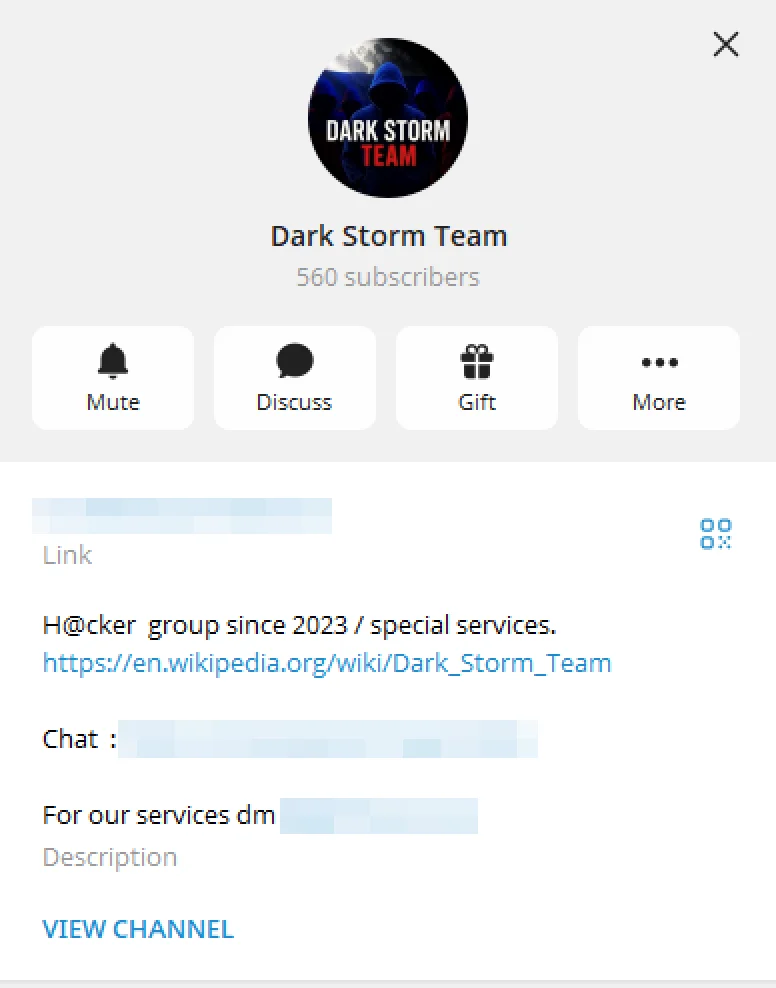
Dark Storm Team’s Telegram Channel
What distinguishes Dark Storm Team from purely ideological hacktivist groups is its commercial component. The group actively promotes hacking services for hire through its Telegram channel, offering DDoS attacks against protected websites and database dumps from organizations including banks and airports. All transactions are conducted through cryptocurrency, with coordination handled via Telegram contacts.
This combination of ideological motivation and commercial services makes Dark Storm Team harder to predict than groups driven by a single motive. Its targeting can shift based on both political developments and paying customers, which broadens the range of organizations that might be affected.
The group’s Telegram channel was previously removed due to Telegram policy changes, but Dark Storm Team reestablished its presence and continued operations. Its connection to the now-defunct Anonymous Sudan provided early operational experience and targeting methodology that continues to influence the group’s approach.
Why it matters for defenders: Dark Storm Team blurs the line between ideological hacktivism and cybercrime-as-a-service. Organizations in the group’s target countries should monitor its channel for both campaign announcements and indicators that their sector is being discussed as a potential service target.
To mitigate the risks posed by exposed credentials, organizations must actively monitor and respond to identity-related threats. SOCRadar’s Identity & Access Intelligence module enables security teams to detect compromised credentials across various Dark Web sources, including stealer logs, data breaches, and Telegram-based cybercrime ecosystem.
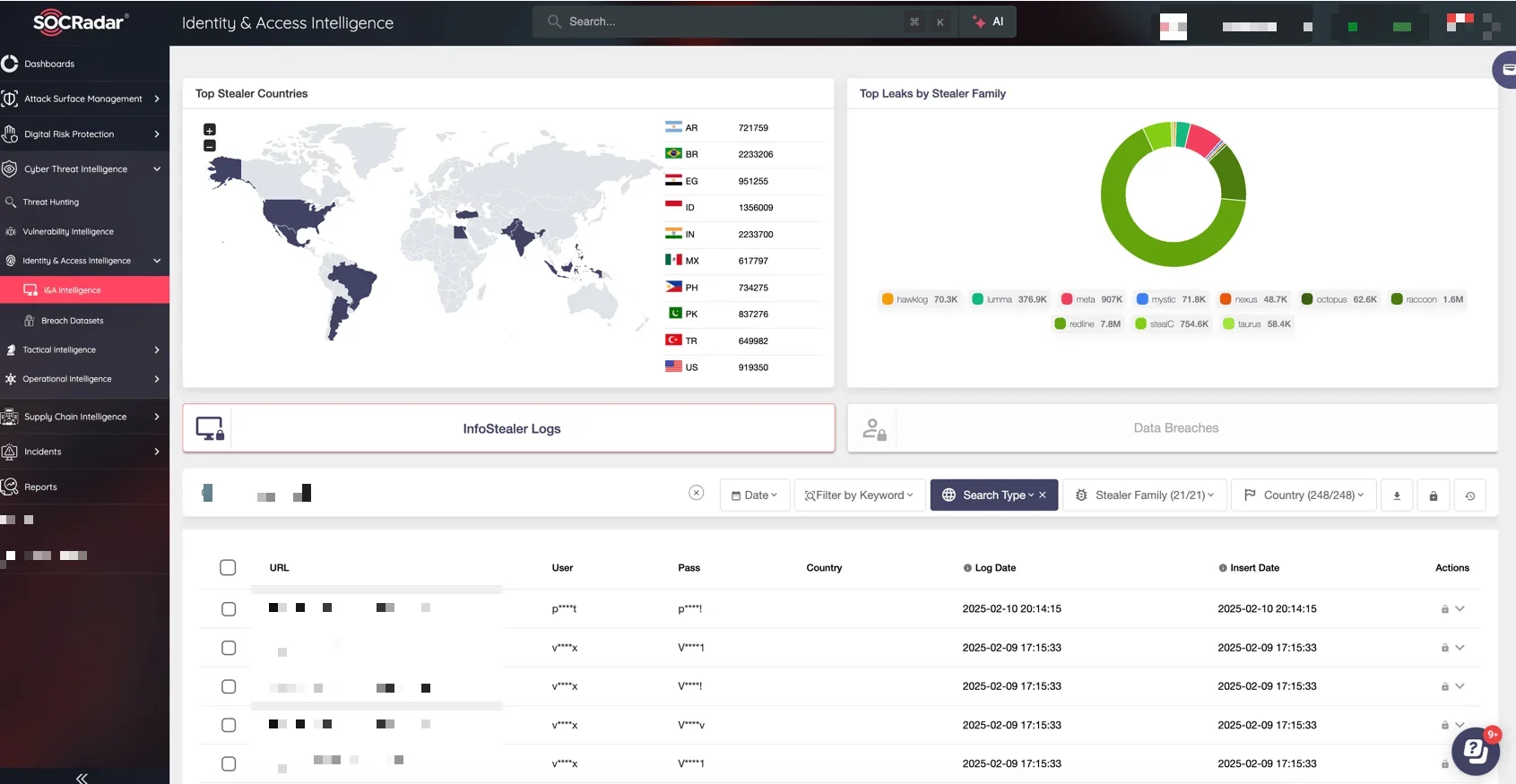
SOCRadar’s Identity & Access Intelligence module page
By leveraging this intelligence, organizations can proactively secure accounts, enforce password resets, and prevent unauthorized access attempts before they escalate into full-scale breaches.
2. NoName057(16)
Subscribers: 2,200 | Focus: Pro-Russian hacktivism
NoName057(16) is a pro-Russian hacktivist group that emerged during the early months of the Russia-Ukraine war. Since 2022, the group has conducted sustained DDoS campaigns primarily targeting Ukraine, NATO-aligned countries, and nations providing military or economic support to Ukraine. Targets have included government portals, financial institutions, transportation systems, and critical infrastructure across Europe and North America.
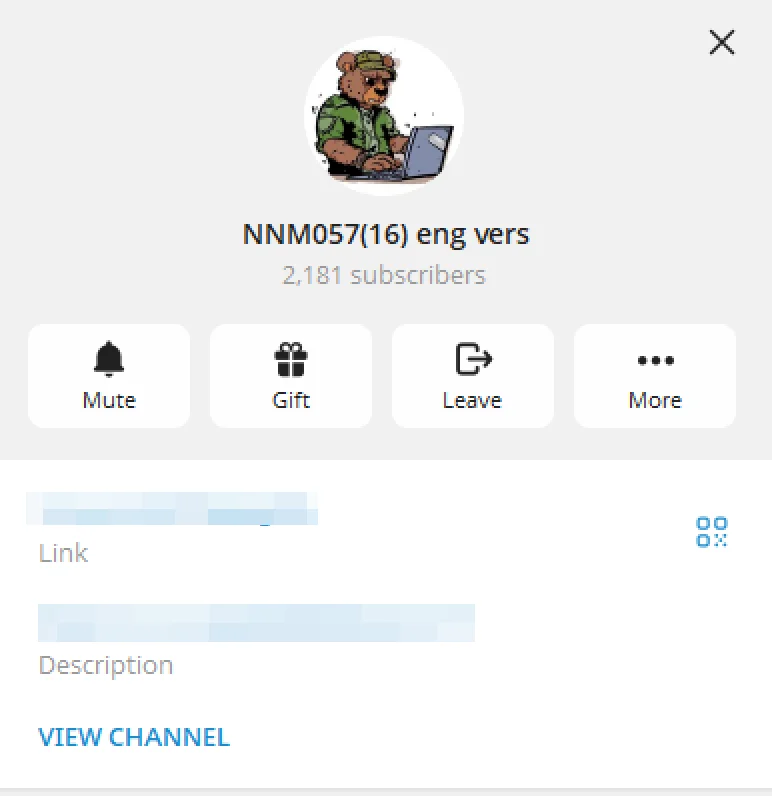
Telegram channel of NoName057(16)
The group’s operational model centers on its DDoSia Project, a volunteer-driven DDoS tool distributed through Telegram. Participants download the tool, contribute their bandwidth to coordinated attacks, and receive cryptocurrency payments based on the volume and effectiveness of their contribution. This crowdsourced approach allows NoName057(16) to scale attack capacity without maintaining dedicated botnet infrastructure.
The channel has gone through multiple disruptions. Telegram’s updated moderation policies led to the removal of its primary channel, which previously held over 30,000 subscribers. The group rebuilt under a new handle within days, recovering roughly 2,200 subscribers so far. This pattern of rapid reconstruction is consistent across hacktivist groups operating on Telegram and illustrates why static channel lists lose value quickly.
NoName057(16) also operates multiple secondary channels for different languages and operational functions, including dedicated DDoSia distribution channels and regional targeting coordination groups.
Why it matters for defenders: NoName057(16) publicly announces targets before and during campaigns. Monitoring their channels gives security teams advance warning of DDoS operations, particularly for organizations in NATO-aligned countries, government services, financial institutions, and critical infrastructure.
3. RipperSec
Members: 1,000 | Focus: Pro-Palestinian hacktivism
RipperSec is a Malaysia-based pro-Palestinian hacktivist group that has been active on Telegram since mid-2023. The group targets Israel and its allies, but its operations have expanded through alliances with pro-Russian threat actors, broadening its targeting scope beyond the Israel-Palestine conflict.
RipperSec’s new DDoS channel
While DDoS attacks are RipperSec’s primary method, the group has also conducted website defacement campaigns and claimed intrusions into SCADA-like systems. These operational upgrades reflect a broader trend among hacktivist groups moving beyond simple volumetric attacks toward more disruptive capabilities.
RipperSec’s most notable technical contribution is MegaMedusa, a NodeJS-based Layer-7 Web DDoS tool developed by a group member. MegaMedusa is designed for accessibility: it runs on Debian, Ubuntu, Kali Linux, Termux, and Windows, which means users with minimal technical skill can launch scalable application-layer DDoS attacks. The tool’s cross-platform compatibility has contributed to its spread beyond RipperSec’s own membership.
The group’s alliance network is a significant attribute. Coordination with pro-Russian hacktivist groups gives RipperSec access to shared targeting lists, amplification support, and operational knowledge that extends its reach well beyond what a group of its size would normally achieve.
Why it matters for defenders: RipperSec’s cross-platform DDoS tooling and alliances with pro-Russian groups mean its targeting scope extends beyond the Israel-Palestine conflict. Organizations in allied nations and sectors previously targeted by RipperSec’s partners should treat this channel as an early warning source for coordinated hacktivist campaigns.
4. Observer Cloud
Members: 1,700 | Focus: Log aggregation / Combo lists
Observer Cloud is a Telegram-based aggregation channel that collects and republishes credential logs and combo lists sourced from other Telegram channels and underground communities. The channel does not generate its own data. Instead, it functions as a centralized redistribution point, gathering leaked credentials from scattered sources and consolidating them for easy access.
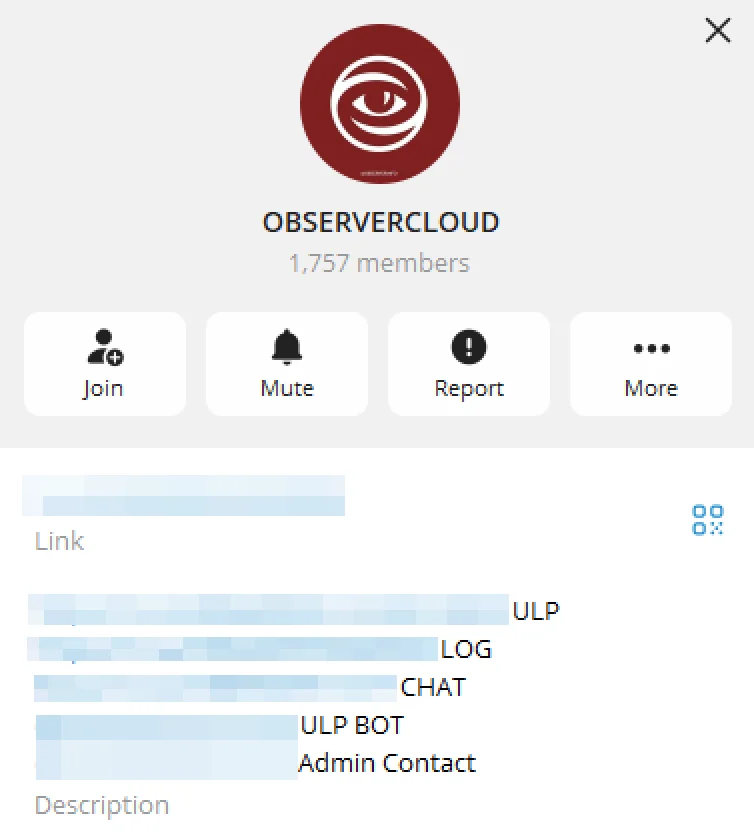
Observer Cloud’s Telegram channel
This aggregation model is what makes Observer Cloud operationally significant. Stolen credentials that might otherwise sit in low-visibility channels get amplified to a much larger audience once reposted here. The channel’s 12,750+ subscriber base means that credential exposure accelerates rapidly once material appears on the feed.
Beyond its core log-sharing function, Observer Cloud offers custom-built tools, maintains a scam list to flag unreliable sellers, and runs chat groups for discussions and transactions related to logs. The community has continued to expand, building out its infrastructure to strengthen its position in the underground credential trading ecosystem.
Why it matters for defenders: Observer Cloud is a high-visibility aggregation point for stolen credentials. Monitoring it helps security teams detect early exposure of organizational credentials before they spread into downstream cybercrime channels and active attack campaigns.
Is Your Data on the Dark Web? Get a Free Dark Web Report
As cybercriminals continue to exploit Dark Web markets, Telegram channels, and underground forums, organizations must take a proactive approach to identifying potential risks. Many underground platforms facilitate the sale of stolen credentials, financial data, and corporate information, making it crucial for businesses to monitor whether their sensitive assets have been exposed.
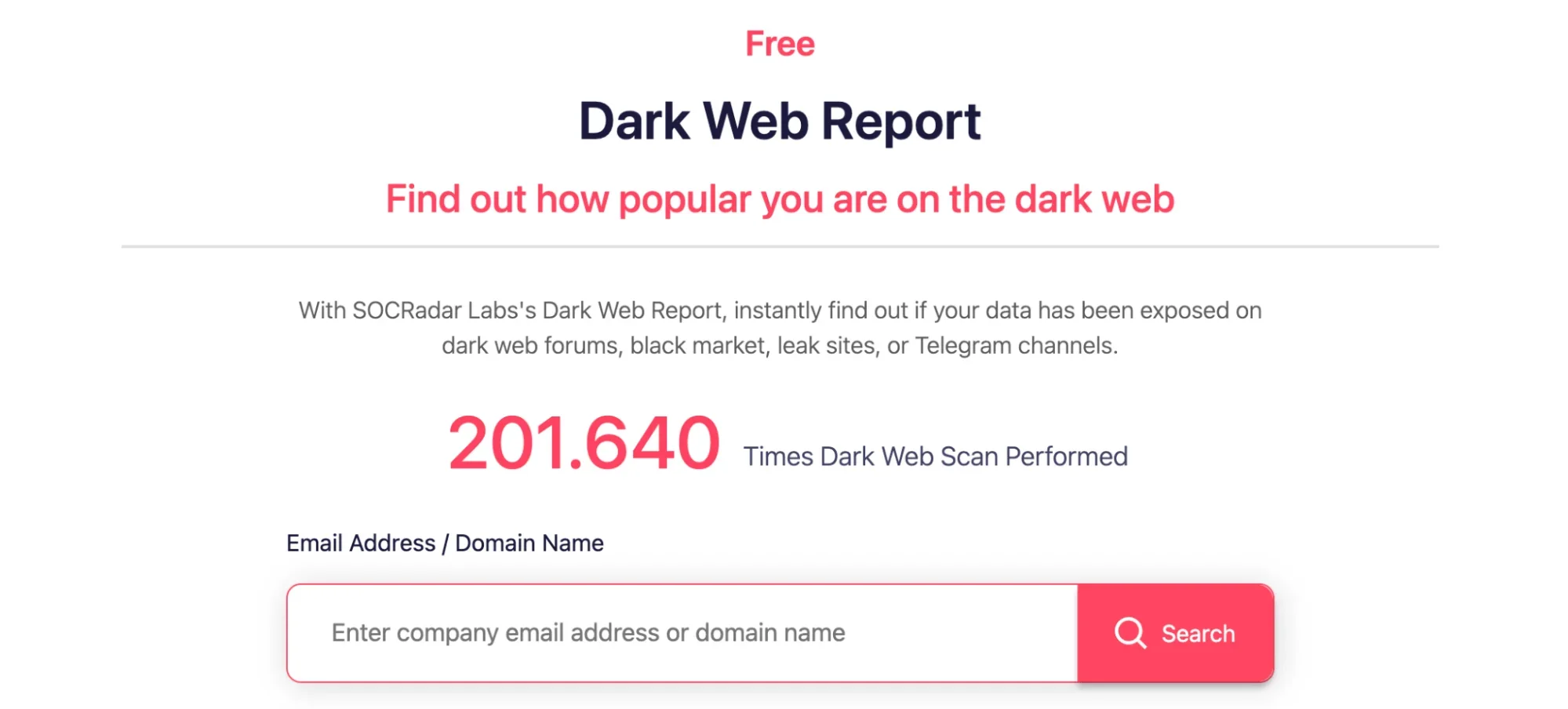
SOCRadar Labs Free Dark Web Report
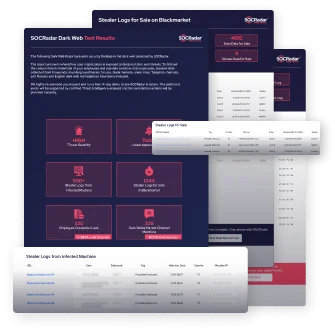
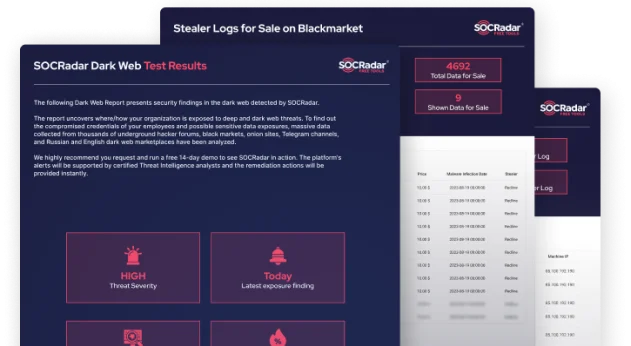
With SOCRadar’s Free Dark Web Report, you can instantly check if your email addresses, domain names, or company assets have been leaked on Dark Web forums, black markets, leak sites, or Telegram channels. This free tool provides insights into:
- Dark Web Threat Severity – Understand how exposed your organization is.
- Dark Web Mentions – Find out who is talking about your company on underground platforms.
- Employee Credentials – Detect whether your employees’ credentials have been compromised.
- Data from Infected Machines – Identify malware infections affecting your network.
- Latest Exposure – Discover the last time your sensitive data appeared in leaks.
- Data for Sale – Check if cybercriminals are selling your information on black markets.
5. Omega Cloud
Members: 6,200 | Focus: Stealer log distribution
Omega Cloud is a Telegram-based platform that distributes stealer logs obtained from infostealer malware infections. The channel operates a tiered service model. A free tier provides limited access to logs, while paid subscriptions unlock higher-volume feeds and real-time delivery.
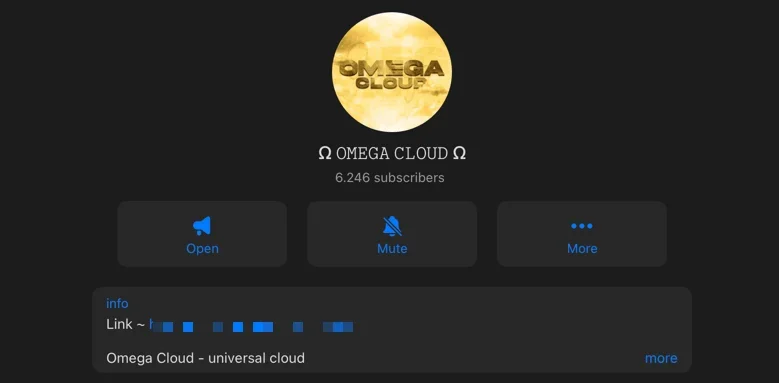
Omega Cloud’s Telegram Channel
The platform offers Live Traffic, delivering logs in real time, and Private Cloud, which provides up to 5,000 logs daily, amounting to 120,000 logs per month. Additionally, Omega Cloud maintains a database exceeding 2 billion records, accessible through a subscription-based model.
The regional focus is notable. Omega Cloud’s logs are heavily weighted toward Europe, the United States, Canada, and Brazil, with credentials sourced from platforms like YouTube and Google Ads. This geographic targeting means the channel is particularly relevant for organizations with employees, customers, or infrastructure in those regions.
Why it matters for defenders: Omega Cloud’s scale and real-time delivery model mean compromised credentials can reach buyers within hours of theft. Organizations with employees or customers in Europe, the US, Canada, or Brazil should treat this channel as a priority monitoring target for credential exposure.
6. Data Leak Monitor
Members: 26,500 | Focus: Leak tracking / Ransomware monitoring
Data Leak Monitor is one of the larger Telegram channels dedicated to tracking data leaks, breach announcements, and ransomware victim claims. With over 26,500 subscribers, the channel reposts content from ransomware groups, underground forums, and other cybercrime communities, acting as a secondary distribution layer for breach-related intelligence.
Data Leak Monitor Telegram Channel
The channel’s value comes from its speed and subscriber reach. When a ransomware group publishes a new victim claim or a breach sample surfaces on an underground forum, Data Leak Monitoring often picks it up and reposts it to a much wider Telegram audience within hours. For organizations that are not directly monitoring ransomware leak sites or underground forums, this channel can serve as an early signal that something has surfaced.
The limitation is coverage depth. The channel does not track all major underground platforms. Several key forums listed in SOCRadar’s Top 10 Dark Web Hacker Forums research are absent from its monitoring scope. This means relying on Data Leak Monitoring alone would leave gaps in breach visibility.
Why it matters for defenders: Data Leak Monitoring functions as a secondary early warning layer for ransomware victim announcements and breach disclosures. Its high subscriber count and active reposting make it one of the faster distribution points for leak-related intelligence on Telegram.
7. BidenCash Shop
Members: 14,000 | Focus: Stolen card data monitoring | Connections: BidenCash Dark Web market
BidenCash is a dark web carding marketplace that runs a dedicated Telegram channel as a showcase for its automated card monitoring system. The system scans Telegram, Discord, and hacker forums for stolen credit card data, and the Telegram channel publishes real-time updates when card data is detected across these platforms.
Telegram channel of BidenCash
The channel is unusual in how openly it operates. Some posts visibly display card numbers and financial details. BidenCash claims to impose fines or bans on suppliers whose card listings are repeatedly found circulating on public sources, framing the monitoring system as a quality control mechanism for its marketplace operations.
Why it matters for defenders: The BidenCash Telegram channel provides direct visibility into how stolen financial data circulates across platforms. Monitoring it helps fraud teams and financial sector security analysts identify exposed card data and track the operational patterns of one of the more active carding marketplaces.
8. EMP/mailpass/sqli Chat
Members: 9,300 | Focus: Credential trading / Cybercrime discussion
EMP/mailpass/sqli Chat started in April 2019 as a Russian-language group and has since expanded into a multilingual cybercrime discussion platform. With roughly 9,300 members, the group covers a broad range of underground activity: stolen account sales, financial fraud, SQL injection techniques, malware deployment, stealer data distribution, and trading compromised credentials for platforms ranging from streaming services and social media to financial accounts and VPN access.
EMP/mailpass/sqli Chat Telegram group
The channel’s longevity is worth noting. Many Telegram-based cybercrime groups appear and disappear within months. EMP/mailpass/sqli Chat has maintained continuous activity for over five years, which suggests a stable core community and moderation structure that has survived multiple rounds of Telegram policy enforcement.
The group functions as both a discussion forum and a marketplace. Members share logs, stealer data, and access credentials alongside technique discussions. Some members offer daily-updated data sources and private datasets for a fee. Buyers and sellers connect directly, with the group acting as the initial matchmaking layer.
The breadth of topics is the defining characteristic. Unlike channels that specialize in one type of cybercrime (carding, DDoS, ransomware), EMP/mailpass/sqli Chat covers the full spectrum of credential-related crime. This makes it useful for understanding how stolen data moves from initial theft through various monetization stages.
Why it matters for defenders: EMP/mailpass/sqli Chat’s longevity and broad scope make it a useful indicator of current credential trading patterns and active exploitation techniques. Its mix of discussion and commerce provides context about how stolen data moves from initial theft to monetization.
9. Z-Pentest Alliance
Members: 300 | Focus: OT/ICS intrusion | Connections: Cyber Army of Russia (defunct), NoName057(16)
Z-Pentest Alliance is a Russia-linked threat group that targets critical infrastructure, with a specific focus on operational technology (OT) environments. Since October 2024, the group has claimed intrusions into oil and gas facilities, water treatment plants, and industrial control systems. Unlike most hacktivist groups that rely on DDoS campaigns, Z-Pentest demonstrates actual intrusion capability, publishing screenshots and videos of interactions with critical process automation tools.
Telegram channel of Z-Pentest Alliance
This operational approach represents a significant escalation in hacktivist activity. Most hacktivist groups cause temporary service disruption through volumetric attacks. Z-Pentest’s claimed access to industrial control systems suggests the potential for physical-world impact, even if the group’s actual ability to cause damage remains debated.
Z-Pentest built visibility through collaborations with the now-defunct Cyber Army of Russia (formerly one of the most prominent pro-Russian threat groups) and NoName057(16). These alliances provided targeting intelligence, operational coordination, and audience amplification that a 300-member group would not achieve independently.
Following Telegram’s policy changes, Z-Pentest’s original channel was taken down. The group established a new channel under the same name to maintain continuity. This rapid reconstruction followed the same pattern seen across other hacktivist groups operating on the platform.
Why it matters for defenders: Z-Pentest Alliance is one of the few hacktivist-aligned groups that demonstrates actual OT intrusion capability rather than relying on DDoS alone. Organizations operating industrial control systems, particularly in energy, water, and manufacturing, should treat this channel as a direct threat indicator.
10. CTI Now
Subscribers: ~35,000 | Focus: CTI news aggregation
CTI Now is a Telegram channel focused on aggregating and distributing cybersecurity news from major industry sources. With nearly 35,000 subscribers, The Telegram channel functions as a high-volume news feed, sharing headlines and article links covering vulnerability disclosures, data breaches, threat actor campaigns, and security tool developments.
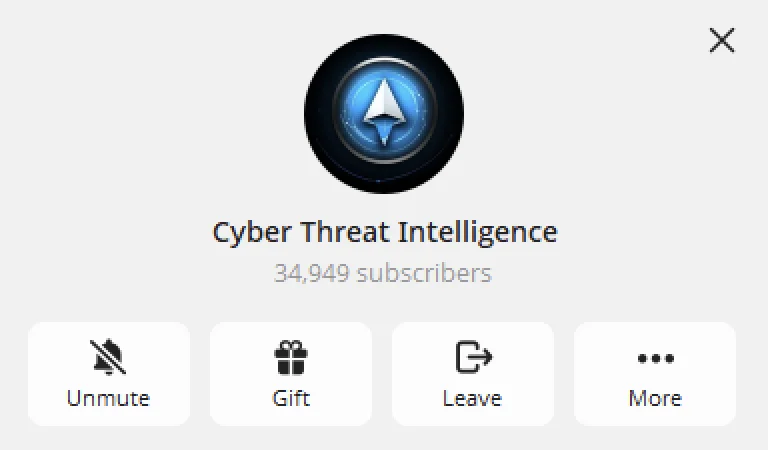
Telegram Channel of CTI Now
According to its bio, “Cyber Threat Intelligence (CTI) is an organised, analysed and refined information about potential or current attacks that threaten an organisation(s) or individual(s).”
The channel posts upwards of 30 articles per day, pulling from sources such as BleepingComputer, SecurityWeek, Security Affairs, CyberScoop, Schneier on Security, and SANS Internet Storm Center. Posts are automated, meaning the channel operates as a passive RSS relay rather than producing original analysis.
CTI Now has a clear limitation: everything it posts is sourced from public reporting. It does not surface underground intelligence, threat actor chatter, or pre-disclosure breach signals. Treating it as a standalone intelligence source would miss the deeper layers of threat activity that only appear in underground ecosystems.
Why it matters for defenders: CTI Now serves as a low-effort early warning layer for SOC teams. Active exploitation reports, major breach disclosures, and law enforcement actions often surface here within hours. It supplements direct threat intelligence feeds by consolidating public reporting into a single monitored source.
Note on Content Scope: SOCRadar’s research and monitoring activities focus strictly on cybercrime and threat actor behaviors relevant to organizational security.
What Security Teams Should Monitor on Telegram
Simply following cyber threat channels is not sufficient for generating actionable intelligence. The real value comes from identifying specific indicators relevant to organizational risk and correlating them with broader threat intelligence workflows.
Security teams should prioritize monitoring for:
- Leaked credentials and combo lists tied to organizational domains or employee accounts
- Ransomware victim mentions that reference your industry, sector, or supply chain partners
- Phishing kit distribution and discussions about phishing infrastructure development
- Executive impersonation attempts and brand mentions in underground discussions
- Initial access broker activity, including offers for VPN, RDP, and corporate network footholds
- Stealer log exposure containing compromised identity data from your organization’s ecosystem
- Malware distribution campaigns targeting technologies in your infrastructure stack
- Geopolitical escalation indicators that may trigger hacktivist campaigns against your sector
Because Telegram produces a high volume of unverified claims and reposted content, contextual enrichment and correlation with broader threat intelligence sources such as dark web forums, ransomware leak sites, and IOC databases are critical for filtering signal from noise.
Why Telegram Became a Hub for Cybercrime Ecosystems
Telegram grew in importance for cybercriminals because it fills a different role than traditional underground forums. Forums still serve as reputation-based marketplaces and long-form discussion platforms. Telegram handles the fast-moving side of operations:
- Rapid communication between group members and affiliates
- Instant leak amplification to large audiences within minutes of a breach claim
- Audience building through public channels that attract thousands of subscribers quickly
- Operational coordination for DDoS campaigns, targeting discussions, and attack logistics
- Fast channel migration after moderation takedowns, with replacement channels live within hours
Moderation Changes and Migration Patterns
In September 2024, Telegram introduced AI-based content moderation, making it more difficult for threat actors to share and access illegal materials. Many hacktivist and cybercriminal groups began exploring alternative platforms such as Signal, Discord, and decentralized messaging networks.
For a broader analysis on how Telegram’s policies are reshaping the cybercrime ecosystem, see:The Exodus Began: Alternatives for Telegram.
Despite these moderation changes, Telegram remains one of the most active distribution layers for cybercrime activity. The platform’s scale, accessibility, and the speed at which channels can reconstruct after takedowns continue to make it attractive for threat actors.
Forum Disruptions Accelerated Migration
Following major law enforcement cybercrime operations against underground forums between 2024 and 2026 including repeated takedowns of BreachForums, LeakBase, and other cybercrime communities, many threat actors shifted portions of their operations toward Telegram-based ecosystems. Telegram became a fallback communication and distribution layer for actors whose primary infrastructure was disrupted.
This migration pattern means that Telegram monitoring has become an essential component of comprehensive dark web intelligence programs, alongside traditional forum monitoring and ransomware leak site tracking.
How Security Teams Can Monitor Telegram Safely
Directly monitoring sources and underground Telegram ecosystems creates legal, operational, and security risks for organizations. Analysts who engage directly with threat actor communities may expose organizational identity, violate platform terms, or inadvertently interact with illegal content.
Security teams typically rely on:
- Cyber threat intelligence (CTI) platforms that aggregate and normalize Telegram-based threat data alongside dark web forum activity
- Dark web monitoring solutions with automated collection and enrichment capabilities
- Attack surface monitoring tools that correlate Telegram-based mentions with organizational asset exposure
- OSINT enrichment systems for contextualizing claims and validating threat actor credibility
- IOC correlation platforms that connect Telegram-sourced indicators with broader threat feeds
These tools help analysts track Telegram-based threat activity while filtering noise, reducing operational risk, and prioritizing actionable intelligence for SOC workflows and incident response.
SOCRadar’sDark Web Monitoring module continuously scans Telegram channels, dark web forums, and cybercriminal marketplaces, detecting leaked credentials, compromised corporate data, and emerging cyber threats. By providing actionable intelligence, it enables organizations to respond to potential security incidents before they escalate.
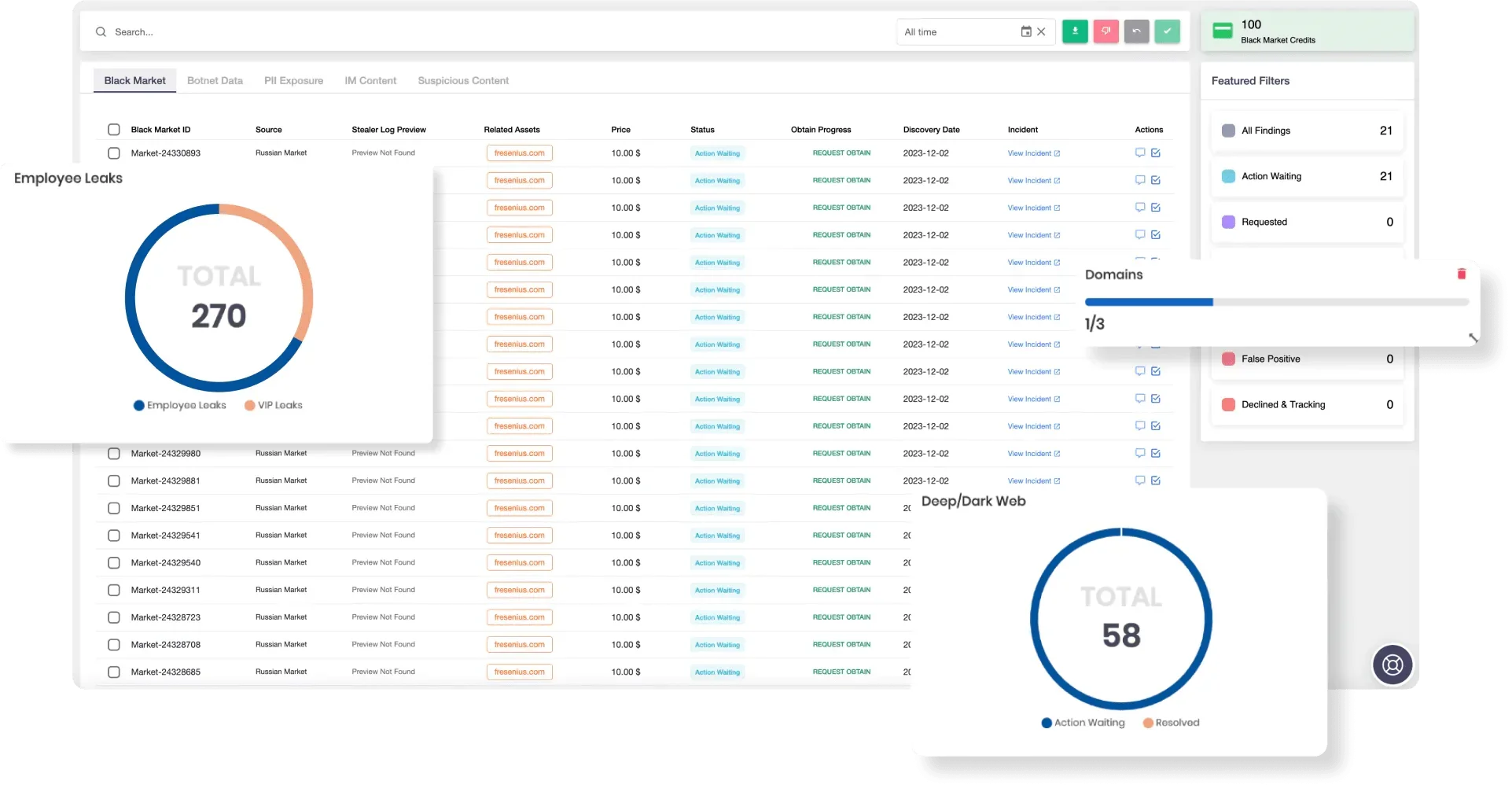
SOCRadar Dark Web Monitoring
To mitigate the risks posed by exposed credentials, SOCRadar’s Identity & Access Intelligence module enables security teams to detect compromised credentials across stealer logs, data breaches, and Telegram-based cybercrime ecosystem, supporting proactive account security and preventing unauthorized access attempts.
Frequently Asked Questions
Is Telegram part of the dark web?
No. Telegram operates on the surface web and standard mobile networks. However, many cybercriminals and threat actor networks use Telegram for communication, leak distribution, and operational coordination, which is why cybersecurity teams treat it as an important intelligence source alongside traditional dark web monitoring.
Why do cybercriminals use Telegram?
Threat actors use Telegram because it supports rapid communication, large audiences, anonymous channel creation, automated bots, and fast channel migration after moderation takedowns. These features lower the barrier for cybercrime coordination compared to traditional Tor-based forums.
How do security teams monitor Telegram channels?
Security teams use cyber threat intelligence communities, OSINT tools, dark web monitoring solutions, and automated telemetry analysis to monitor Telegram-based threat activity. Direct manual monitoring of underground channels creates legal and operational risks, which is why organizations typically rely on specialized tools that aggregate and contextualize this data.
Why are ransomware groups active on Telegram?
Telegram allows ransomware operators to quickly publish victim claims, leak announcements, extortion messages, and affiliate recruitment posts to large audiences. Many ransomware groups use Telegram as a first-stage announcement channel before publishing full data sets on dedicated leak sites.
What risks do organizations face from Telegram-based leaks?
Organizations may face credential exposure, reputational damage, phishing campaign targeting, ransomware attacks, executive impersonation, and early breach disclosures. Leaked data on Telegram often gets amplified and redistributed across multiple cybercrime ecosystems, increasing the window of exposure.
What types of Dark Web Telegram groups exist?
Telegram-based cybercrime communities vary by focus. Data leak channels publish stolen databases and breach samples. Access broker groups sell VPN, RDP, and corporate network footholds. Ransomware operators recruit affiliates and announce victims. Hacktivist groups coordinate DDoS campaigns and geopolitical operations. Fraud communities trade stolen financial data, phishing kits, and SIM swap services. Each category presents different risk levels, making classification essential for effective threat monitoring.
How can organizations detect if they are mentioned in underground Telegram channels?
Organizations can use cyber threat intelligence platforms and dark web monitoring solutions that scan Telegram-based communities for mentions of company domains, executive names, employee credentials, and brand-related keywords. Automated keyword tracking combined with analyst review provides the most effective early detection approach.
Integrating Telegram Monitoring into CTI Programs
Telegram-based cybercrime ecosystems continue evolving rapidly in 2026. While channels disappear and reconstruct frequently, Telegram remains one of the fastest-moving intelligence surfaces for ransomware activity, leak discussions, hacktivist operations, and underground cyber threat coordination.
For cybersecurity teams, the challenge is no longer simply accessing Telegram-based intelligence. The real challenge is filtering high-signal threat activity from overwhelming volumes of unverified noise. Organizations that combine Telegram monitoring with broader CTI programs, breach intelligence feeds, and attack surface monitoring workflows are better positioned to detect emerging threats before they escalate into major incidents.
As threat actors continue to merge underground operations with mainstream messaging platforms, Telegram monitoring has become a necessary component of any mature cyber threat intelligence program.