How Are You Blocking Open Source Reconnaissance Tools?
Today, a large portion of internet traffic is generated by automated systems that continuously scan and interact with internet-facing infrastructure. These systems are known as reconnaissance tools, or benign scanners, and are designed to map the internet for legitimate purposes, such as security research, vulnerability discovery, and service monitoring. Every month, Shodan, FOFA, ZoomEye, GreyNoise, and dozens of similar platforms index hundreds of millions of records, cataloging open ports, service banners, SSL certificates, and even industrial control system firmware versions across the entire IPv4 space.
The problem is that attackers use the same tools. When investigators analyzed 197,000 leaked chat messages from the Black Basta ransomware group, they found systematic queries across these platforms before every campaign. These queries targeted exposed VPNs, firewalls, and remote access gateways. Volt Typhoon follows the same playbook against critical infrastructure. Your assets are already indexed. The question is whether you can see what the attackers see before they act on it.
What Are Benign Scanners?
A benign scanner is an automated system that interacts with publicly accessible internet infrastructure to collect metadata about services and devices. These systems typically operate at internet scale, continuously probing large portions of the global address space. The data they collect includes open ports, service banners, TLS certificates, device fingerprints, software versions, and broader network metadata. Security researchers, attack surface monitoring platforms, and threat intelligence teams rely on this information to understand exposure across the internet.

Internet-Wide Scanners
Internet-wide scanners continuously probe large portions of the global internet to identify exposed services and devices. Platforms such as Shodan, Censys, BinaryEdge, and ZoomEye collect service metadata at scale and make it searchable, giving researchers and security teams a structured view of the global attack surface.
Web Crawlers and Indexing Bots
Web crawlers automatically browse publicly accessible websites to collect and index content. They are typically operated by search engines, content indexing platforms, and AI training infrastructure. Although their intent is legitimate, crawler traffic can generate high request volumes and may resemble automated scraping or reconnaissance activity.
Vulnerability Scanners
Many security organizations run distributed scanners designed to identify exposed vulnerabilities across internet-facing infrastructure. These scanners typically perform open port discovery, service fingerprinting, version detection, and vulnerability verification, with the primary goal of improving global visibility into vulnerable systems.
Monitoring and Compliance Scanners
Some scanners are deployed specifically to verify system availability, security posture, or configuration compliance. Common use cases include uptime monitoring, certificate expiry tracking, service availability checks, and compliance validation. These systems connect to services periodically to confirm that infrastructure is operating as expected.
Major Internet Scanning Platforms
The following platforms represent the most widely used internet scanning ecosystems. Platforms that publish their scanner IP ranges allow security teams to whitelist or classify their traffic accurately.
| Platform | Key Data Collected |
| Shodan | service banners, open ports, SSL/TLS certificates, HTTP headers & titles, vulnerability fingerprints, geolocation, ASN/ORG info |
| Censys | TLS certificates, certificate transparency logs, service banners, protocol metadata, domain-IP mapping, host inventory |
| ZoomEye | open ports, service data, web & device fingerprints, OS detection, banner data |
| FOFA | web fingerprints, HTTP response data, domain & subdomain mapping, IP:port mapping, application identification |
| Quake 360 | service banners, device fingerprints, vulnerability indicators, protocol data, asset exposure data |
| BinaryEdge | open ports, service data, vulnerability scan results, default credential exposure, service screenshots, risk scoring, dark web signals |
| Netlas | HTTP response content, SSL certificates, DNS records, WHOIS data, service banners, credential exposure signals, threat intelligence correlations |
| SOCRadar | External assets, threat intelligence, vulnerabilities, Dark Web data |
Why Benign Scanners Trigger Security Alerts
From a network telemetry perspective, benign scanners behave in ways that are nearly identical to malicious reconnaissance activity. Typical behaviors include:
- Port scanning
- Service enumeration
- Banner grabbing
- Repeated connection attempts
Security tools have no reliable way to distinguish intent from behavior alone. As a result, benign scanner traffic routinely triggers alerts in:
- Firewalls
- IDS/IPS systems
- SIEM platforms
- Network detection tools
For security teams, this creates a persistent noise problem. When legitimate scanning activity floods alert queues, analysts spend time investigating traffic that poses no real threat, reducing the capacity to focus on genuine incidents.
What Challenges Do Benign Scanners Create for Security Operations Teams
One of the biggest operational challenges for SOC teams is distinguishing between malicious reconnaissance activity and legitimate scanning infrastructure. Organizations may receive scanning traffic from dozens of benign platforms on any given day, and without proper classification, that volume creates real friction.
The downstream effects include:
- False positive alerts
- Unnecessary incident investigations
- Operational noise that competes with genuine threat signals
The core problem is not the volume of alerts. It is the lack of context. When analysts cannot quickly determine whether an IP belongs to a known benign scanner or an active threat actor, every alert demands the same level of attention. That is not a sustainable model for any security operations team.
How Do Internet Scanners Expose Your Infrastructure?
Beyond operational noise, benign scanners also reveal important details about publicly exposed infrastructure. When an organization exposes a system to the internet, scanning platforms can detect and index it within minutes. Once indexed, that information becomes searchable and accessible to anyone.
Attackers frequently leverage platforms such as Shodan to discover potential targets before launching a campaign. Using simple queries, they can identify:
- Exposed databases
- Open remote management services
- Vulnerable applications
- Misconfigured cloud infrastructure
Using techniques such as favicon hashing, internet-wide scanning platforms can identify and group similar services across the internet, including specific vendor technologies such as Fortinet devices.This enables users to quickly discover large numbers of internet-facing assets belonging to the same technology stack.Even without authentication, metadata such as SSL certificates, service banners, and HTTP responses can reveal critical details about exposed infrastructure.

Internet-facing Fortinet devices identified via Shodan using favicon-based fingerprinting, demonstrating how publicly exposed security infrastructure can be discovered and grouped at scale.
Using techniques such as favicon hashing, internet-wide scanning platforms can identify and group similar services across the internet, including specific vendor technologies such as Fortinet devices. This enables users to quickly discover large numbers of internet-facing assets belonging to the same technology stack.

Searching for a product name on an internet scanning platform instantly returns a global map of every deployment, grouped by country, fingerprint, and version.
The same logic applies across other platforms. A single product name query on FOFA can surface tens of thousands of matching deployments within seconds, grouped by country and fingerprint.
Even without authentication, metadata such as SSL certificates, service banners, and HTTP responses can reveal critical details about exposed infrastructure.

Without any authentication, scanning platforms index and expose the full technical profile of internet-facing assets, including headers, cookies, and certificates.
By leveraging vulnerability-based queries (e.g., CVE identifiers), scanning platforms enable users to directly identify systems that may be affected by known vulnerabilities.This significantly lowers the barrier for attackers, allowing them to locate potential targets without performing active scanning themselves.

Vulnerable internet-facing systems identified through Shodan using CVE-based queries, highlighting how attackers can directly search for exposed and potentially exploitable services.
This illustrates a risk that many organizations underestimate. The exposure does not require a breach. The infrastructure is simply visible, and scanning platforms make that visibility structured, searchable, and permanent.
Is Blocking Scanners the Best Approach?
Some organizations attempt to block scanners entirely using firewall rules or IP blocklists. While this may reduce scanning traffic, it does not eliminate exposure. If a service is publicly accessible, it can still be discovered by other scanners or by attackers operating outside any known blocklist.
Scanner infrastructure also changes continuously:
- IP addresses rotate
- Scanning nodes move across cloud providers
- New scanning platforms emerge regularly
Maintaining a comprehensive and current blocklist is an ongoing operational burden with diminishing returns. For many security teams, a more effective approach is classification rather than blind blocking. Understanding which traffic originates from known benign scanners allows analysts to deprioritize that noise and focus attention on traffic that represents genuine risk.
How Transparent Are Major Scanning Platforms About Their Infrastructure
The difference between noise and threat often comes down to one question: does this scanner identify itself? Projects that publicly document their IP ranges give security teams a reliable way to identify legitimate activity and skip unnecessary investigations. Without this transparency, every inbound scan looks identical. Analysts cannot tell a research probe apart from an adversary mapping their attack surface.
How to Block Shodan Scans
Shodan does not publish a single canonical IP list. Its scanner nodes use resolvable hostnames, and the security community maintains community-compiled blocklists based on these. Organizations can block known Shodan ranges at the firewall level, but should expect the list to require regular updates as nodes rotate.

A file listing known Shodan.io scanner IP ranges, compiled from publicly resolvable hostnames and widely referenced in security and firewall configurations.
How to Block Censys Scans
Censys publishes its scanner CIDR blocks directly in its official support documentation. Organizations can import these ranges into firewall rules or SIEM allowlists. Censys also offers a formal opt-out process for infrastructure owners who want to exclude their assets from scanning.

A file listing known Censys, Inc. scanner IP prefixes, compiled from public routing databases and widely referenced in security and firewall configurations.
How to Block BinaryEdge Scans
BinaryEdge builds its scanning infrastructure on ephemeral “Minion” nodes that rotate continuously. It runs a live API endpoint that always returns the current active scanner IPs. Static blocklists built from BinaryEdge IPs go stale within hours.

BinaryEdge’s live scanner feed returning hundreds of active Minion IPs in real time. The list rotates continuously, making any static snapshot unreliable within hours.
How Does SOCRadar Handle Scanner Transparency?
The SOCRadar Curiosity Wide Scan Project is one such initiative, openly publishing its scanning infrastructure for reference.

IP ranges published by the SOCRadar Curiosity Wide Scan Project.
How Can Security Teams Operationalize Benign Scanner Intelligence?
Understanding benign scanner activity is only the first step. The real value comes from integrating this intelligence into security workflows. Security teams regularly encounter scanning activity from legitimate infrastructure including internet-wide scanners, research projects, crawler bots, vulnerability scanners, and monitoring services. Without proper classification, this traffic generates significant alert volume across security monitoring systems.
To address this, organizations can leverage curated threat intelligence feeds that continuously track legitimate scanning infrastructure. SOCRadar Premium Feeds provide structured intelligence designed to help security teams identify and classify benign scanning activity across their environments. These feeds maintain continuously updated datasets covering:
- Known benign scanner IP ranges
- Crawler infrastructure networks
- Internet-wide scanning platforms
- Research and university scanner nodes
- Vulnerability scanning infrastructure
By integrating this intelligence into SIEM, XDR, NDR, and network monitoring platforms, organizations can automatically classify legitimate scanning activity and reduce operational noise. This allows analysts to focus on genuine threats instead of investigating known benign infrastructure.
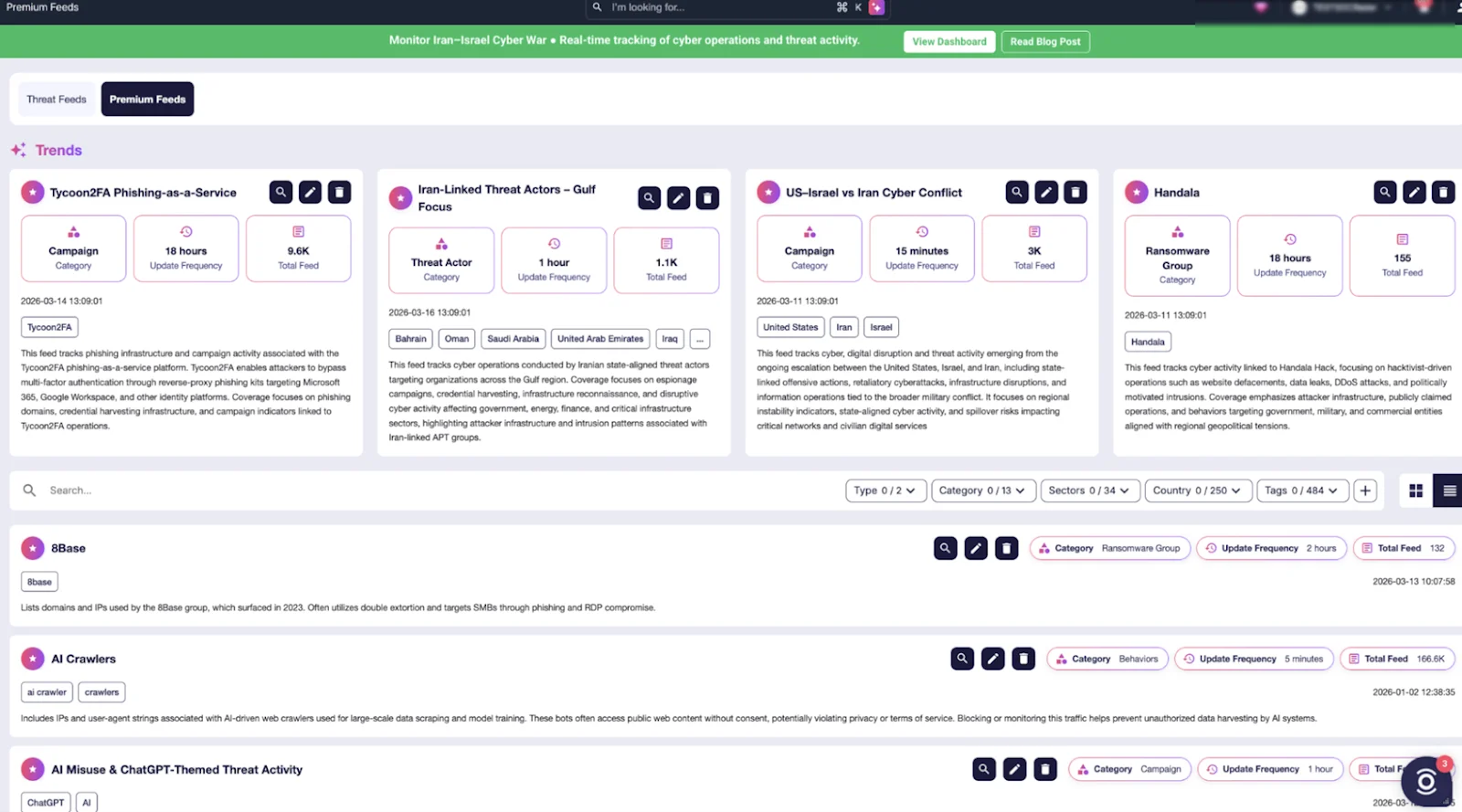
The Premium Feeds interface showcasing continuously updated intelligence feeds across multiple threat intelligence categories, enabling security teams to monitor campaigns, threat actors, and behavioral indicators such as benign scanners and AI crawlers.
Beyond alert suppression, benign scanner intelligence can support several additional workflows including SOC alert suppression, network telemetry enrichment, infrastructure exposure visibility, and automated traffic classification.
For more details about SOCRadar Premium Feeds and their capabilities, refer to theofficial documentation.
How Can Security Teams Use Benign Scanner Intelligence?
Benign scanner intelligence can support multiple operational workflows across a security team.
SOC Alert Noise Reduction
Many scanner interactions trigger alerts including port scanning detection, reconnaissance alerts, and service probing alerts. By correlating events with known benign scanner infrastructure, security teams can suppress unnecessary alerts and significantly reduce investigation noise.

Benign Scanner IP Intelligence Feed, continuously updated with legitimate internet scanners and crawler infrastructure.
Network Visibility and Exposure Awareness
Interactions from benign scanners can also reveal publicly exposed infrastructure that organizations may not be aware of. Monitoring these interactions can help identify:
- Exposed services
- Misconfigured systems
- Unexpected internet-facing assets
Threat intelligence feeds containing known benign scanners enrich network telemetry and provide context around scanning activity, turning passive noise into actionable visibility.

Filtering Premium Feeds by the “Benign Scanners” category, displaying curated intelligence feeds containing IP ranges associated with legitimate internet scanning infrastructure such as research scanners, crawler bots, and security scanning platforms.
Conclusion
Benign scanners are an integral part of the modern internet ecosystem. They improve visibility into exposed infrastructure, support security research, and contribute to global internet measurement. However, their behavior closely overlaps with malicious reconnaissance techniques, making them difficult to distinguish within network telemetry.
Organizations that adopt a classification-based approach to scanning activity can significantly reduce operational noise while maintaining visibility into real threats. The goal is not to block everything, but to understand what is scanning your infrastructure, why, and whether it represents a genuine risk.
SOCRadar Premium Feeds provide continuously updated intelligence across multiple scanning ecosystems, enabling security teams to operationalize benign scanner identification and improve detection accuracy within their security operations.