

Mar 10, 2026

Jan 31, 2026
3 Mins Read
Sep 11, 2026
Table Of Content
Related Articles

SMS Bombing

Threat Actors
Jan 08, 2026
Dark Web Monitoring
Feb 19, 2026

Ransomware
Jan 31, 2026
OSINT Framework
Apr 17, 2026

What Is a Firewall?
A firewall evaluates network traffic against security policy and allows, blocks, rejects, or records connections between systems or trust zones.
Firewalls can enforce rules by address, port, protocol, application, identity, domain, and content. They reduce reachable paths, but they cannot correct vulnerable applications, stolen credentials, or every threat hidden in permitted traffic.
Key Takeaways
- A firewall evaluates network traffic against security policy and allows, blocks, rejects, or records connections between systems or trust zones.
- Firewalls can enforce rules by address, port, protocol, application, identity, domain, and content. They reduce reachable paths, but they cannot correct vulnerable applications, stolen credentials, or every threat hidden in permitted traffic.
- Overly broad or stale rules is a primary concern.
- Effective security combines prevention, continuous visibility, ownership, and tested response.
How It Works
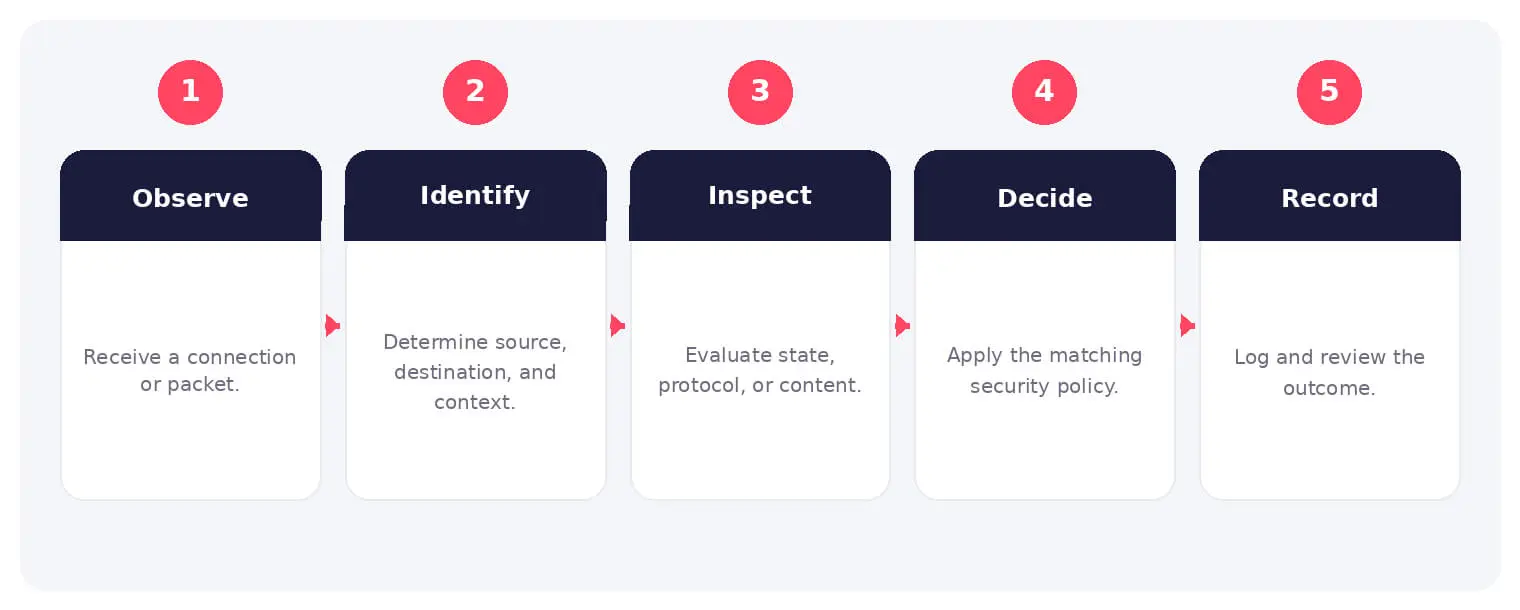
The operating flow above turns the concept into observable steps. Exact implementations vary, but each stage needs accountable ownership, trusted inputs, documented policy, and evidence that analysts can use during investigation and review.
Firewalls can enforce rules by address, port, protocol, application, identity, domain, and content. They reduce reachable paths, but they cannot correct vulnerable applications, stolen credentials, or every threat hidden in permitted traffic.
Common Types and Capabilities
- Packet-filtering and stateful firewalls
- Next-generation firewalls
- Web application firewalls
- Host, network, and cloud firewalls
Security and Business Risks
- Overly broad or stale rules
- Exposed management interfaces
- Policy bypass and encrypted threats
- Misconfiguration that disrupts service
Warning Signs and Detection
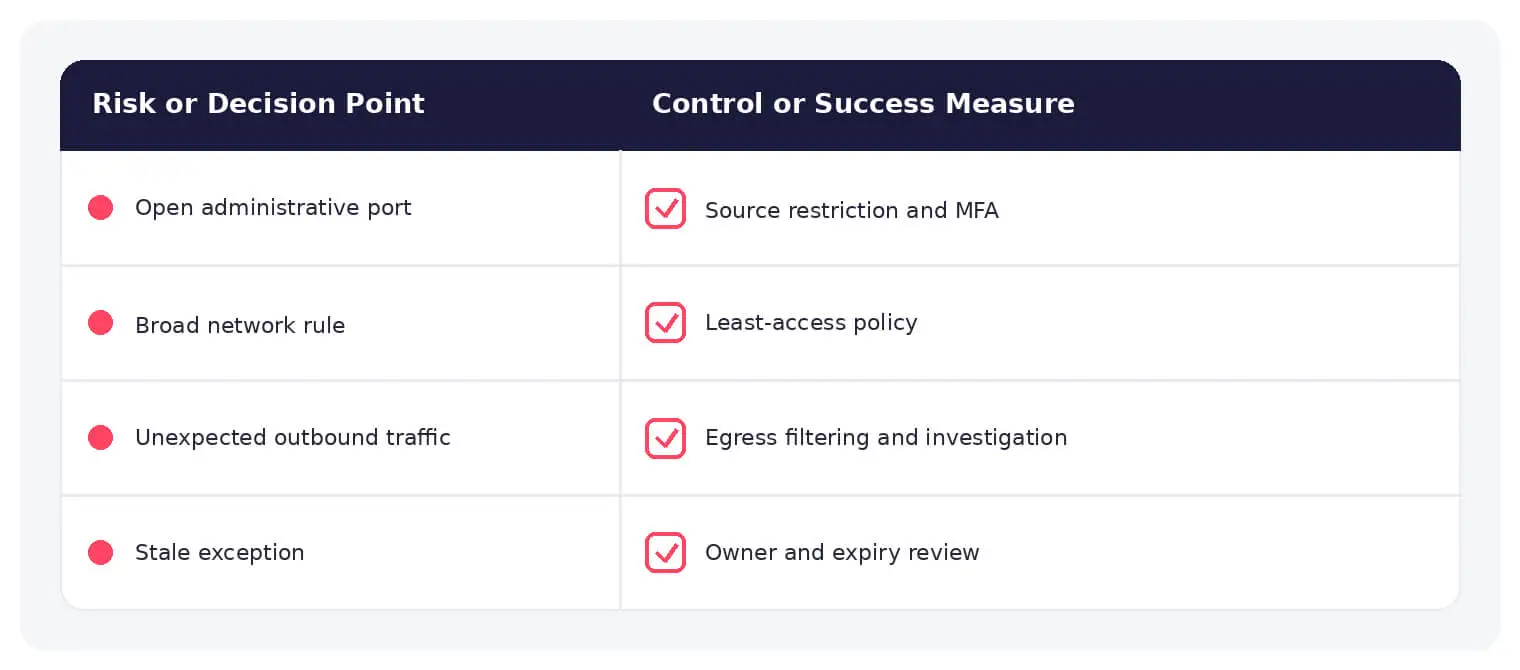
Review internet-exposed ports, any-to-any rules, unexpected outbound traffic, repeated denies, policy changes, shadowed rules, disabled inspection, failed updates, management logons, and assets outside enforcement.
Best Practices
Use default-deny where practical, segment trust zones, restrict administration, manage policy changes, inspect egress, log decisions, remove obsolete rules, patch appliances, and test failover.
How SOCRadar Can Help
SOCRadar adds external visibility, threat intelligence, exposure context, and continuous monitoring to help teams validate and prioritize risks related to firewall. This context complements internal endpoint, identity, and network controls.
Explore SOCRadar Attack Surface Management or request a demo to strengthen threat-informed prevention and response.
Frequently Asked Questions
What is the main purpose of firewall?
A firewall evaluates network traffic against security policy and allows, blocks, rejects, or records connections between systems or trust zones.
What is a common security risk?
Overly broad or stale rules.
What should security teams monitor?
Review internet-exposed ports, any-to-any rules, unexpected outbound traffic, repeated denies, policy changes, shadowed rules, disabled inspection, failed updates, management logons, and assets outside enforcement.
What is the first practical step?
Use default-deny where practical, segment trust zones, restrict administration, manage policy changes, inspect egress, log decisions, remove obsolete rules, patch appliances, and test failover.