
What Is Firewall as a Service (FWaaS)?
Firewall as a Service (FWaaS) delivers firewall inspection and policy enforcement through a cloud-based service rather than relying only on appliances at each location.
FWaaS can apply consistent controls to branches, remote users, cloud workloads, and internet access. It is often part of Secure Access Service Edge, but architectures differ and must be evaluated for routing, identity, inspection, resilience, and data handling.
Key Takeaways
- Firewall as a Service (FWaaS) delivers firewall inspection and policy enforcement through a cloud-based service rather than relying only on appliances at each location.
- FWaaS can apply consistent controls to branches, remote users, cloud workloads, and internet access. It is often part of Secure Access Service Edge, but architectures differ and must be evaluated for routing, identity, inspection, resilience, and data handling.
- Traffic bypass and routing gaps is a primary concern.
- Effective security combines prevention, continuous visibility, ownership, and tested response.
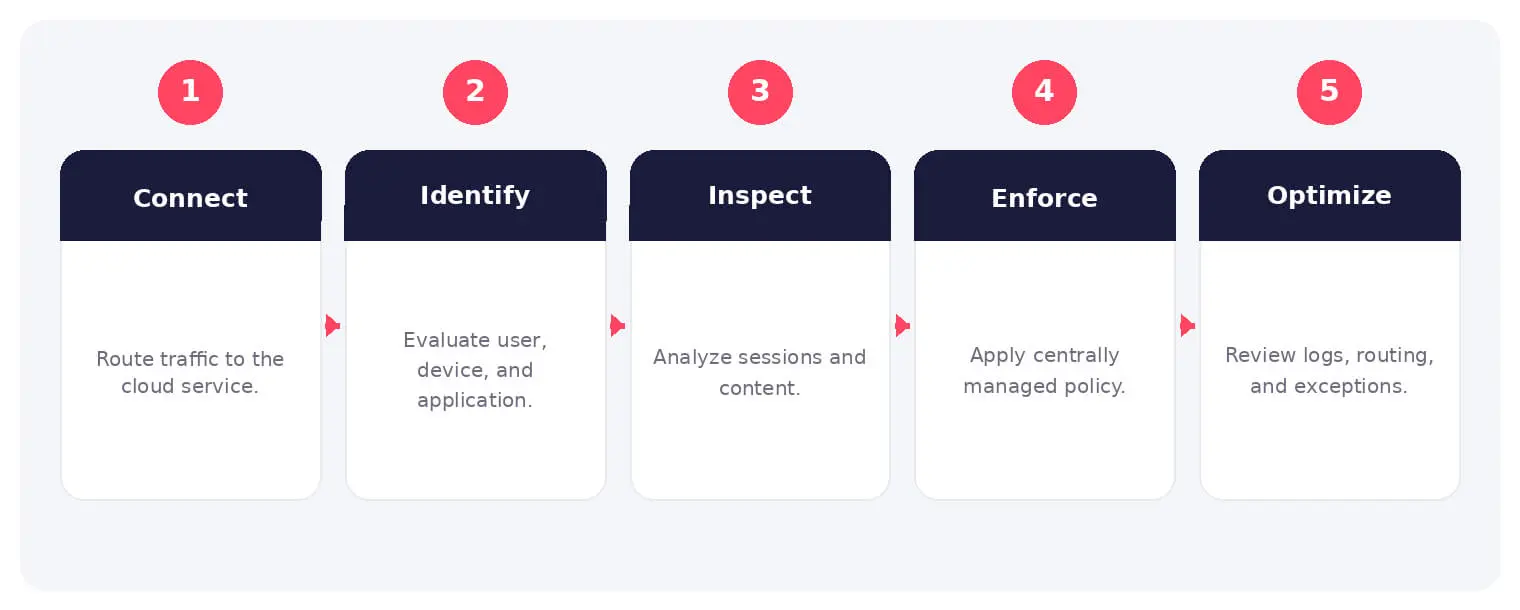
How It Works
The operating flow above turns the concept into observable steps. Exact implementations vary, but each stage needs accountable ownership, trusted inputs, documented policy, and evidence that analysts can use during investigation and review.
FWaaS can apply consistent controls to branches, remote users, cloud workloads, and internet access. It is often part of Secure Access Service Edge, but architectures differ and must be evaluated for routing, identity, inspection, resilience, and data handling.
Common Types and Capabilities
- Cloud-delivered network firewall
- Secure web and DNS controls
- Application and identity-aware policy
- SASE and security service edge integration
Security and Business Risks
- Traffic bypass and routing gaps
- Latency or provider dependency
- Inconsistent policy migration
- Inspection and privacy limitations
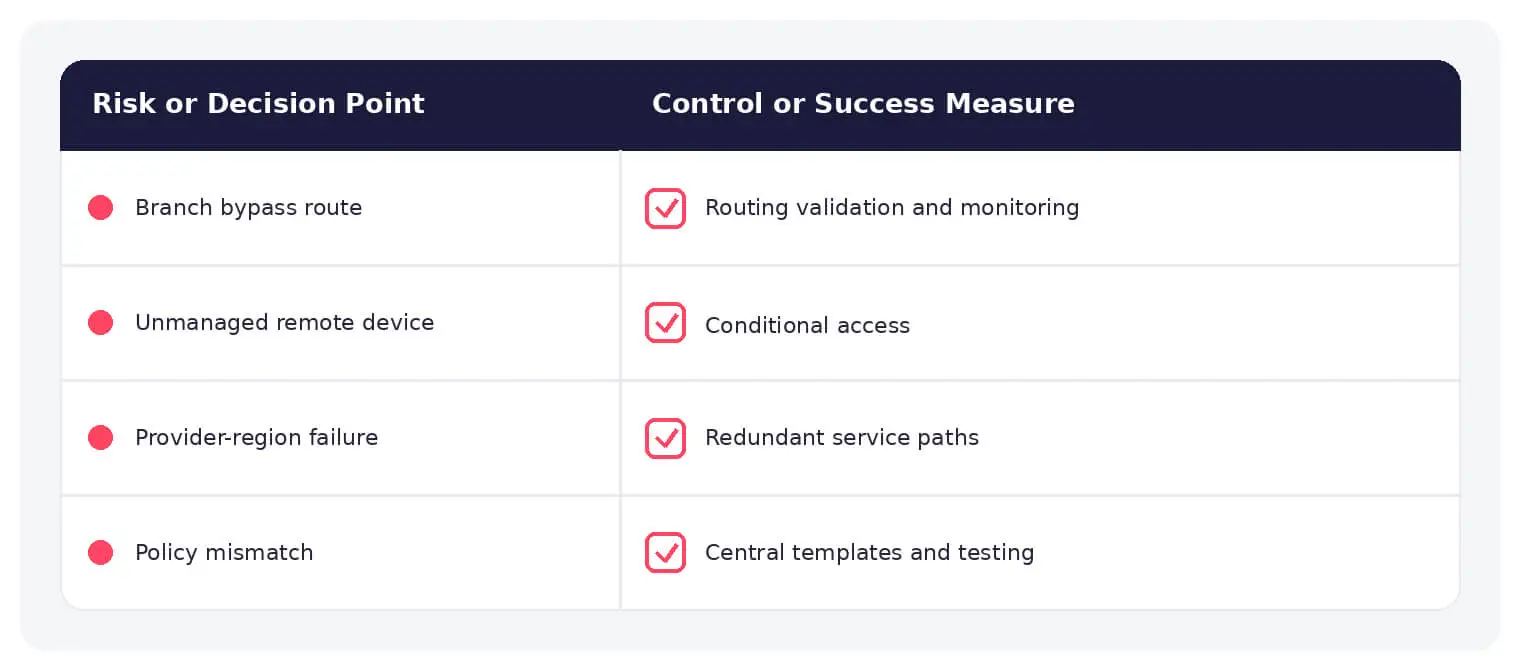
Warning Signs and Detection
Monitor tunnels and connectors, bypass routes, unmanaged egress, policy drift, failed inspection, unexpected geographies, service latency, certificate issues, administrative changes, and gaps between branches and cloud environments.
Best Practices
Map every traffic path, integrate identity and device posture, use redundant connectivity, define fail-open behavior, protect administration, inspect egress, test performance, and review policy and provider assurance.
How SOCRadar Can Help
SOCRadar adds external visibility, threat intelligence, exposure context, and continuous monitoring to help teams validate and prioritize risks related to firewall as a service. This context complements internal endpoint, identity, and network controls.
Explore SOCRadar Attack Surface Management or request a demo to strengthen threat-informed prevention and response.
Frequently Asked Questions
What is the main purpose of firewall as a service?
Firewall as a Service (FWaaS) delivers firewall inspection and policy enforcement through a cloud-based service rather than relying only on appliances at each location.
What is a common security risk?
Traffic bypass and routing gaps.
What should security teams monitor?
Monitor tunnels and connectors, bypass routes, unmanaged egress, policy drift, failed inspection, unexpected geographies, service latency, certificate issues, administrative changes, and gaps between branches and cloud environments.
What is the first practical step?
Map every traffic path, integrate identity and device posture, use redundant connectivity, define fail-open behavior, protect administration, inspect egress, test performance, and review policy and provider assurance.

Oct 16, 2026
CVE-2026-102764: BeyondTrust Zero-Day Exploited
BeyondTrust has disclosed CVE-2026-102764, a critical Remote Support vulnerability exploited as a zero-day weeks before customers received a patch. The attack began…
Oct 15, 2026
Cisco Secure Email & PAN-OS Zero-Days Exploited
Cisco Secure Email & PAN-OS Zero-Days Exploited Cisco and Palo Alto Networks have patched two actively exploited zero-day vulnerabilities that can lead…
Oct 15, 2026
SOCRadar Splunk Integration: New MSSP and Vulnerability Apps
SOCRadar Splunk Integration: New MSSP and Vulnerability Apps Your analysts live in Splunk. Your external risk does not: SOCRadar alarms for dozens…
Intelligence in your inbox every Thursday.
Join 30,000+ security professionals reading SOCRadar research.
Subscribe