DWP Cyber Incident Takes Universal Credit and PIP Services Offline
The UK’s Department for Work and Pensions (DWP) had taken a wide range of its online services offline by the morning of November 27, 2026, after identifying what it calls a cyber incident affecting its systems. Claimants have since been unable to sign in to Universal Credit accounts, apply for Personal Independence Payment (PIP) or the State Pension online, or use the Tell Us Once service to report a death.
The DWP cyber incident has not touched scheduled payments. The department says regular benefit and pension payments are not affected and will be paid as normal. The DWP is investigating with the National Cyber Security Centre (NCSC) and the Government Cyber Coordination Centre (GC3), and it has not said what kind of incident it is dealing with, whether personal data was accessed or when services will return.
DWP Online Services Hit by the Outage
The department has not published a full list of affected DWP online services. Based on its statement and live reporting, these are the services claimants could not use:
| Service | What People Use It For | Status (November 27, 2026) |
|---|---|---|
| Universal Credit online account | Reporting changes in circumstances, checking payment dates, messaging caseworkers, requesting an advance on a first payment | Sign-in unavailableUsers see a temporary disruption notice |
| PIP applications | Checking whether to apply and starting a claim | Unavailable |
| State Pension applications | Applying for the State Pension online | Unavailable |
| Tell Us Once | Reporting a death to several government bodies in one step | Unavailable |
| Regular benefit and pension payments | Scheduled payments to claimants and pensioners | Not affectedThe DWP says |
The practical cost falls on people with reporting deadlines. In live reporting, it was stated that one Universal Credit household said it could not submit a monthly self-employed income figure and feared a penalty for missing it. Work and Pensions Committee chair Debbie Abrahams backed the decision to take systems offline but called for the outage’s impact on claimants to be investigated so they receive timely, accurate advice. For now, the DWP’s only guidance is to try again later.
Reading the DWP Statement: Incident, Not Yet a Confirmed Breach
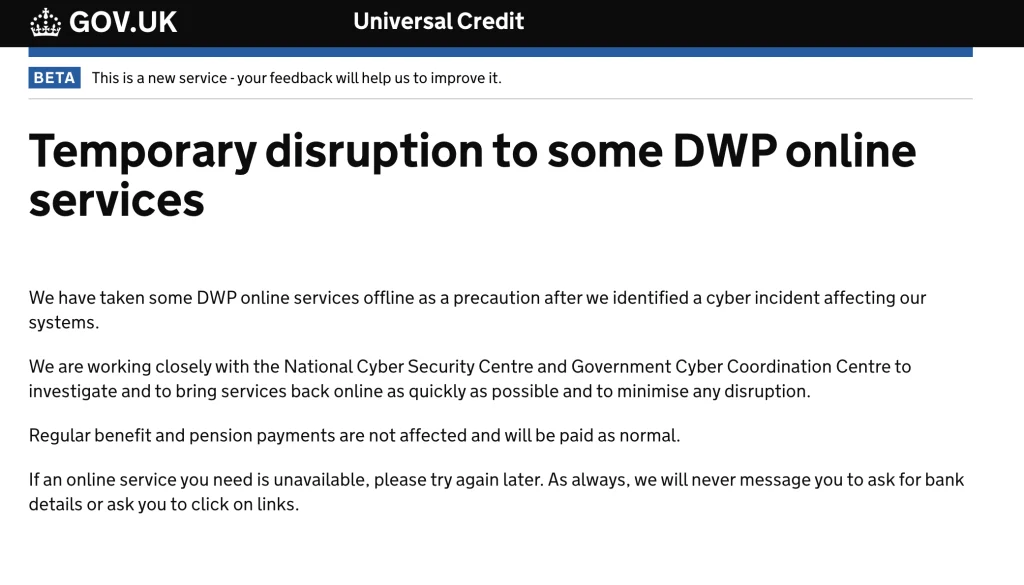
The department’s statement on GOV.UK, published at 08:11 GMT, is short. It confirms that a cyber incident affected DWP systems, that some online services were withdrawn as a precaution, and that payments continue. Government officials separately told reporters they had detected suspicious activity before taking services down, and that it was not yet clear which areas, if any, had been directly affected.
At the time of writing, the main questions are unanswered:
- Nature of the incident: The DWP has not mentioned ransomware, data theft or unauthorized access, and it has not confirmed that the activity was malicious
- Personal data: The department has not said whether claimant or pensioner data was accessed
- Responsibility: No group has claimed the incident, and no threat actor has been named
- Recovery: No timeline for restoring services has been given
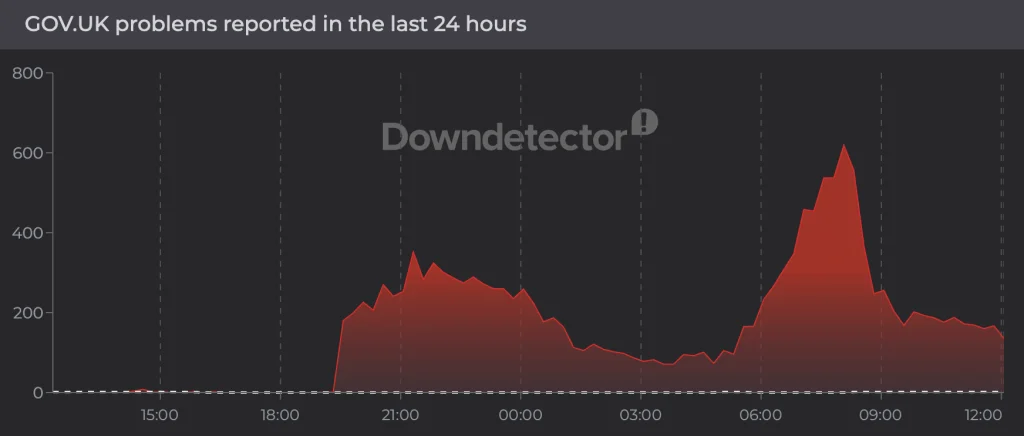
Outage data adds a further open question about timing. Downdetector reports of GOV.UK problems began rising on the evening of Thursday, November 26, then climbed to a higher peak on Friday morning, around the time the DWP published its statement. Whether the overnight problems are linked to the incident has not been established.
Why Departments Take Services Offline Before the Facts Are In
Pulling internet-facing services offline is a standard containment move. It cuts an intruder’s path in and out, limits movement between connected systems and helps responders preserve evidence while they work out the scope. For a department running benefit, pension and bereavement services online, scoping the activity before reopening them is the priority.
The decision alone does not reveal how serious an incident is, and two recent UK cases show both possible outcomes:
- Co-op in 2025: The retailer shut down parts of its IT in late April 2025 after detecting attempted unauthorized access; in July 2025 its chief executive confirmed that the data of all 6.5 million members had been stolen, although the early shutdown kept ransomware from encrypting its systems
- PHP2Shell in October 2026: After the critical PHP2Shell flaws (CVE-2026-109618 and CVE-2026-109619) were disclosed, a government minister said in the House of Lords on October 22, 2026, that 32 government services were unavailable and four partially unavailable, largely as a precaution while fixes were applied; the government stressed that offline services did not mean they had been hacked
The DWP’s own wording sits between these two cases. A precautionary shutdown after spotting suspicious activity is consistent with early containment, and also with an intrusion whose reach is still being mapped.
Legacy IT and an NCSC Warning Weeks Earlier
The incident follows two warnings that bear directly on it. On November 3, 2026, NCSC chief executive Richard Horne launched the agency’s Annual Review 2026 by warning of a real prospect of an unprecedented rise in cyber incidents in the coming months. He placed the cause less on new AI attack techniques than on vulnerabilities tolerated for too long, which can now be found and exploited at greater speed and scale.
A day later, DWP Permanent Secretary Sarah Healey told the Work and Pensions Committee that the security of DWP systems was paramount, given the personal information and money flowing through them. Answering a separate question at the same hearing, she said the department is “quite often” working on “extremely old computer systems,” remarks highlighted in live coverage of the incident.
Neither remark explains the DWP cyber incident, and its cause remains unknown. Together, they describe the conditions defenders worry about most: a very large, interconnected estate holding personal and bank details for millions of people, with older systems that are harder to patch, monitor and isolate quickly.
Benefit Scams Are the Immediate Risk for Claimants
A national outage gives scammers a credible pretext, and benefit claimants are a frequent target. Likely lures include texts or emails saying payments are on hold until an account is “re-verified,” offers of compensation for the disruption and calls from people posing as DWP staff who can restore access.
The DWP included a reminder in its first statement: it will never message people to ask for bank details or to click on links. Claimants and their families can protect themselves with a few steps:
- Go to GOV.UK directly: Type the address yourself to check whether a service is back, instead of following links in messages
- Keep bank details out of messages: Do not share them in reply to any text, email or call, however urgent it sounds
- Report suspicious messages: Forward scam emails to [email protected] and scam texts to 7726
- Keep a record of failed attempts: Note the date and time and save screenshots of error pages if you miss a reporting deadline while services are down
Lessons for Defenders in Large Public Service Estates
Whatever the investigation finds, the first day of the DWP response offers practical points for organizations that run citizen-facing services on top of complex back ends:
- Plan the switch-off in advance: Decide which internet-facing services can be withdrawn without stopping core operations such as payments, and test that the separation holds
- Map legacy junctions: Document where older back-end systems connect to modern web front ends, since those links are the hardest to monitor and scope during an incident
- Pair outage notices with anti-phishing guidance: Build a scam warning into incident communication templates, as the DWP did in its first statement
- Start impersonation monitoring on day one: Lookalike domains and fake support pages tend to appear within hours of a public incident
Track Incident-Themed Lures and Data Claims With SOCRadar
When a major service provider goes offline, the follow-on risk usually arrives as impersonation and as claims about stolen data, and both need watching from the first day:
- Brand Protection: Flags lookalike domains and phishing pages impersonating your organization, the same playbook scammers use against government brands during outages like this one
- Dark Web Monitoring: Watches underground forums and leak sites for breach claims, data sales or leaks tied to an incident, so a claim is seen as soon as it surfaces
- Cyber Threat Intelligence: Tracks the actors and campaigns targeting public sector bodies and critical service providers, with the context needed to prioritize defenses
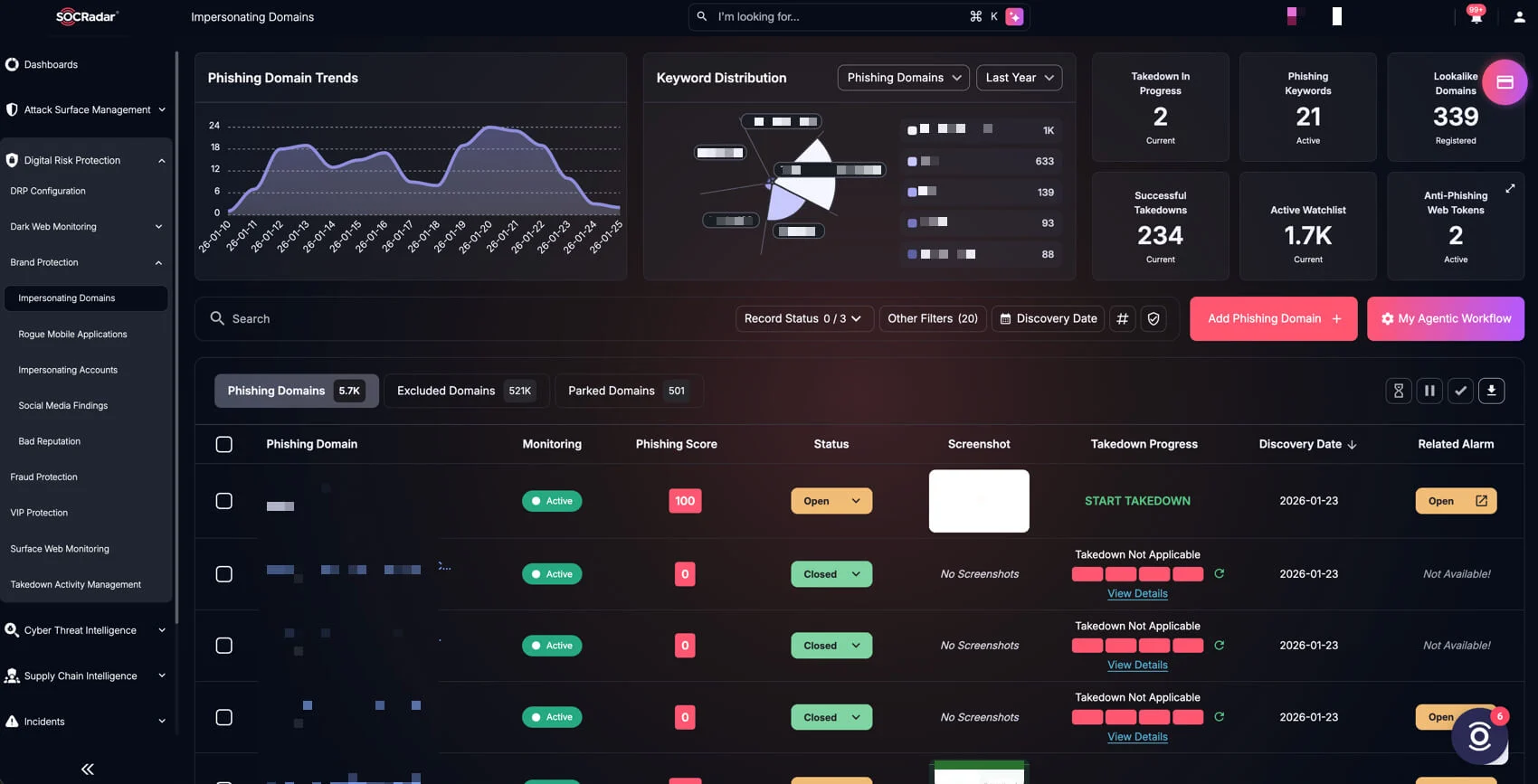
As the DWP investigation moves from containment to answers, SOCRadar keeps impersonation activity and underground claims in view so teams can respond the moment the picture changes.
Frequently Asked Questions
Was the DWP Hacked?
The DWP has not confirmed a hack. It says it identified a cyber incident affecting its systems and took some online services offline as a precaution. On November 27, 2026, it had not confirmed a data breach, ransomware or malicious activity, and no group had claimed responsibility.
Will Universal Credit and State Pension Payments Still Be Paid?
Yes. The DWP says regular benefit and pension payments are not affected by the cyber incident and will be paid as normal. The disruption covers online services such as Universal Credit account sign-in and PIP and State Pension applications, not scheduled payments.
Has Personal Data Been Stolen in the DWP Cyber Incident?
The DWP has not said whether any personal data was accessed. The department holds personal and financial information on millions of claimants and pensioners, and any finding on data access will come from its investigation with the NCSC and the Government Cyber Coordination Centre.
When Will DWP Online Services Be Back?
No restoration date has been given. The DWP says it is working to bring services back online as quickly as possible and asks people to try again later if a service they need is unavailable. Check GOV.UK directly for updates rather than following links in messages.
How Can I Tell If a DWP Message Is a Scam?
Treat any unexpected message about your benefits or the outage with suspicion. The DWP says it will never message you to ask for bank details or to click on links. Go to GOV.UK yourself instead of following links, and forward suspicious emails to [email protected] and texts to 7726.