

Mar 10, 2026
Jun 25, 2026
5 Mins Read
Sep 13, 2026
Table Of Content
Related Articles

SMS Bombing

Threat Actors
Jan 08, 2026
Dark Web Monitoring
Feb 19, 2026

Ransomware
Jan 31, 2026
OSINT Framework
Apr 17, 2026

What Is Cashout in Cybercrime?
Cashout is the stage in a cybercrime operation where stolen data, account access, payment instruments, or digital assets are converted into money, goods, or another usable form of value. It connects the technical compromise to the criminal profit.
Cashout often involves specialists beyond the original attacker, including money mules, reshippers, fraudulent merchants, cryptocurrency brokers, account buyers, and laundering services. Following the value flow can expose relationships that are not visible from malware or infrastructure alone.
Key Takeaways
- Money mules and bank-transfer fraud is a central category or use case.
- Reliable assessment depends on source, timing, ownership, and operational context.
- Detection should connect external findings with identity, device, network, and business signals.
- Response should protect affected people and remove every reusable access path.
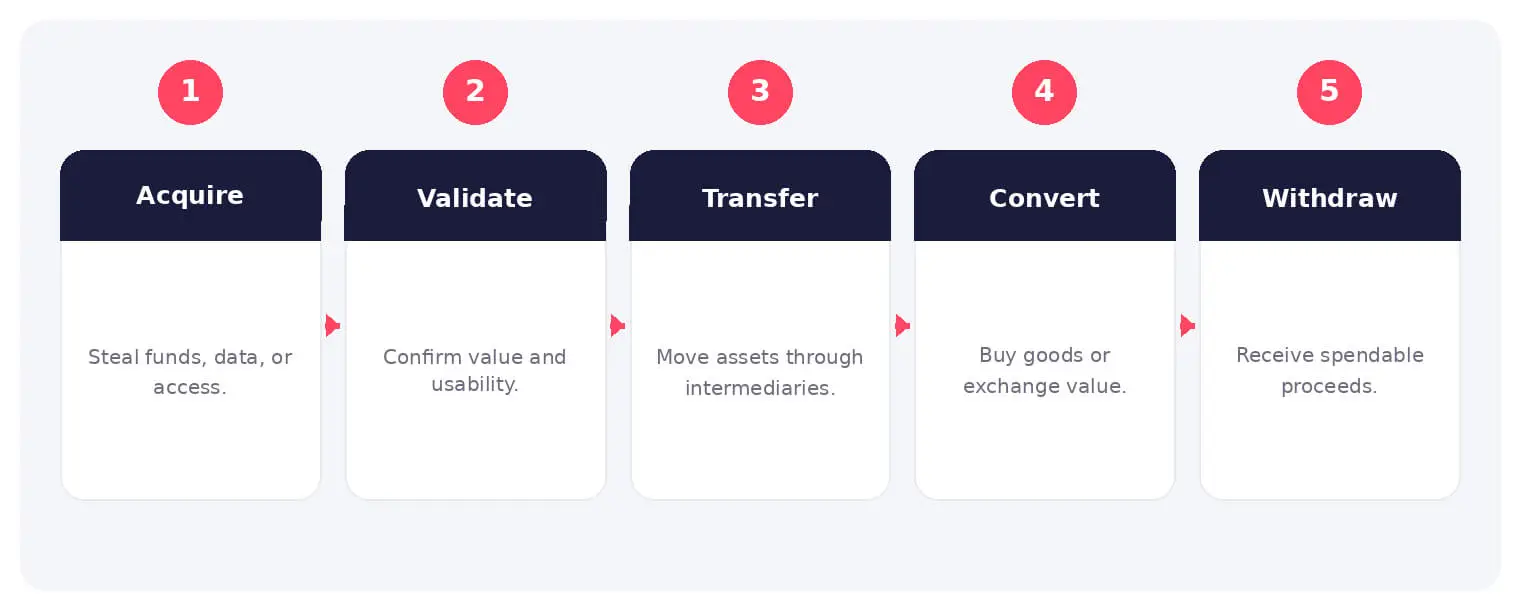
How Cashout in Cybercrime Works
The sequence shown above provides a practical operating model. Individual steps may overlap, repeat, or involve different services and participants, so analysts should validate each stage against available evidence.
Cashout often involves specialists beyond the original attacker, including money mules, reshippers, fraudulent merchants, cryptocurrency brokers, account buyers, and laundering services. Following the value flow can expose relationships that are not visible from malware or infrastructure alone.
Common Types and Use Cases
- Money mules and bank-transfer fraud
- Gift cards, digital goods, and reshipping
- Cryptocurrency swaps and laundering services
- Sale of accounts, credentials, and initial access
Security, Privacy, and Business Risks
- Direct financial loss and chargebacks
- Customer and employee account takeover
- Money-laundering and regulatory exposure
- Repeat fraud through connected accounts and devices
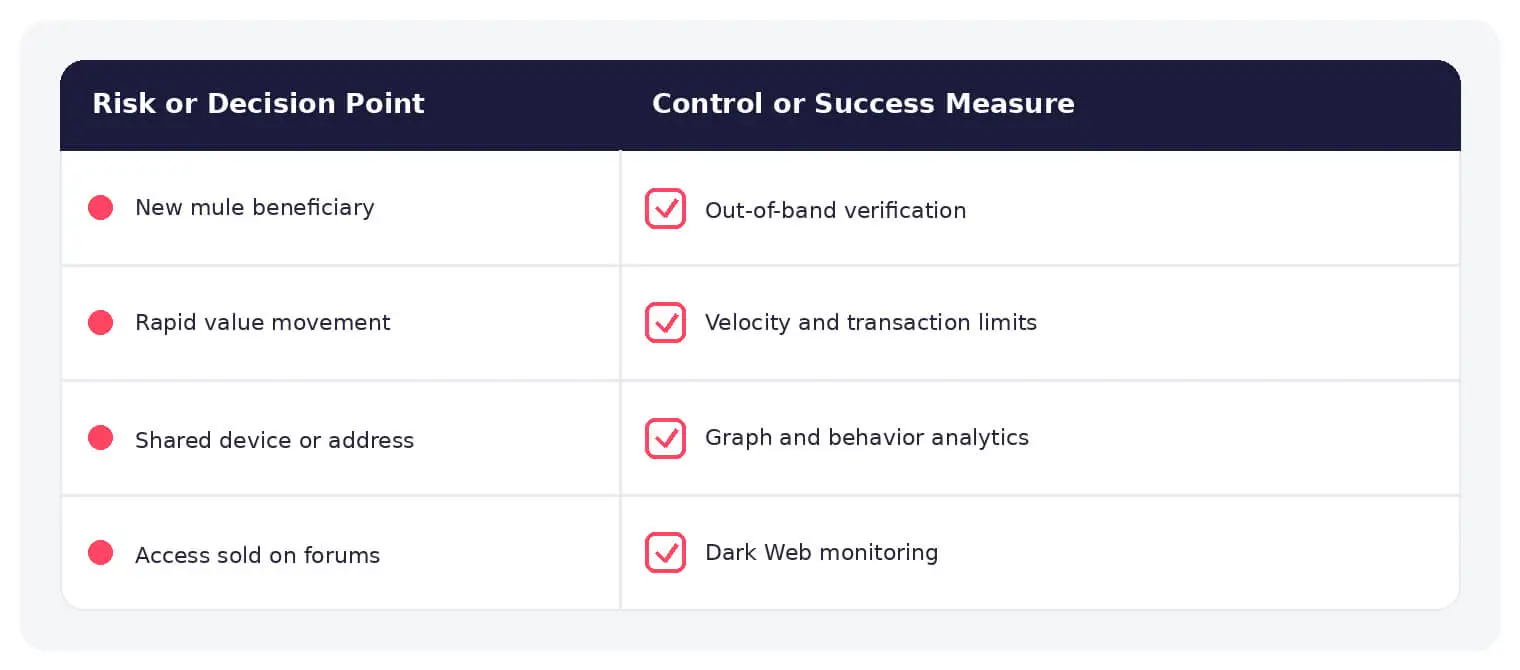
Warning Signs and Validation
Detect new beneficiaries, rapid transfers, many accounts linked to one device, unusual gift-card purchases, reshipping addresses, cryptocurrency off-ramps, and criminal-market advertisements. Correlate transaction, identity, device, and network signals.
Prevention and Response
Use transaction limits, step-up verification, mule and device graphing, delayed fulfillment for high-risk orders, session protection, payment-change verification, and monitoring for stolen accounts and data offered in criminal channels.
How SOCRadar Can Help
SOCRadar combines external intelligence, Dark Web visibility, brand monitoring, attack-surface discovery, and contextual enrichment to help teams identify exposure and investigate activity connected to cybercrime cashout.
Explore SOCRadar Dark Web Monitoring or request a demo to strengthen external threat detection and response.
Frequently Asked Questions
What Does Cashout Mean in Cybercrime?
Cashout is the stage of a cybercrime operation where stolen data, account access, payment instruments, or digital assets are converted into money, goods, or other usable value. It is the point where a technical compromise becomes criminal profit, and it often involves specialists such as money mules, reshippers, and laundering services rather than the original intruder alone.
How Is Cashout Different From Money Laundering?
Cashout is the conversion of criminal proceeds into spendable value, while money laundering focuses on concealing the source and ownership of those proceeds. Laundering is frequently one component of a cashout operation, but the two are not identical; for example, spending stolen card data directly on goods is a cashout step without a laundering layer.
Why Do Cybercriminals Rely on Money Mules?
Mules open or lend bank accounts that receive stolen funds, creating distance between the victim, the organizer, and the financial trail. Many are recruited through fake job ads promising easy income for simple transfers, and their involvement adds layers that complicate tracing, freezing, and recovery.
How Do Attackers Monetize Stolen Payment Card Data?
Common routes include buying goods for resale, purchasing gift cards, processing fraudulent transactions through merchant accounts under criminal control, and selling card data in bulk on underground markets. The chosen route usually depends on card type, remaining balance, and how soon the issuer is likely to block the card.
Why Is Cryptocurrency a Preferred Cashout Channel?
Cryptocurrency enables fast, cross-border transfers without traditional banking controls, and mixing services and chain-hopping can obscure the trail. Transfers still remain recorded on public blockchains, so off-ramp exchanges and wallet-flow analysis are common points for detection and recovery efforts.
What Warning Signs Point to Cashout Activity?
Indicators include newly added beneficiaries followed by rapid transfers, many accounts linked to one device, unusual gift-card purchase volumes, repeated reshipping addresses, and stolen accounts or data advertised in criminal marketplaces. Detection is stronger when transaction, identity, device, and network signals are correlated instead of viewed in isolation.
What Should Organizations Do When They Detect Cashout Activity?
Apply step-up verification or temporary holds to affected accounts, delay fulfillment of high-risk orders, and preserve transaction, device, and session evidence for investigators. Report the activity to the relevant bank, payment processor, or national reporting body, and notify affected customers so they can secure connected accounts.
Which Controls Make Cashout Harder for Attackers?
Useful measures include transaction and velocity limits, verification for payee and payment-detail changes, device and mule graphing to link related accounts, delayed fulfillment for risky orders, and session protection on customer portals. Monitoring underground channels for stolen accounts and credentials adds an early-warning layer before funds move.
What Are the Business and Regulatory Risks of Cashout?
Direct consequences include financial loss, chargebacks, and customer or employee account takeover. Organizations that receive or forward criminal proceeds can also face anti-money-laundering and regulatory exposure, and repeat fraud through connected accounts and devices may continue if shared signals are never addressed.
How Does Initial Access Brokering Connect to Cashout?
Access brokers compromise and sell credentials, VPN access, or corporate footholds to other criminals, who monetize them through ransomware, business email compromise, or payment fraud. For buyers, cashout is the monetization stage, which is why stolen access appearing in criminal markets is an early indicator of later cashout attempts.