
What Is a Cybercriminal?
A cybercriminal is an individual or group that uses computers, networks, identities, or digital services to commit illegal activity. Cybercriminals range from lone operators using purchased tools to organized enterprises with developers, access brokers, affiliates, negotiators, and money-laundering partners.
The modern cybercrime economy separates specialized work into services. One actor may steal credentials, another may sell initial access, and a third may deploy ransomware or commit fraud. This division lowers the barrier to entry and makes criminal operations easier to scale.
Key Takeaways
- Financial gain is the dominant motive, but grievance, ideology, notoriety, and espionage can overlap.
- Cybercrime services let operators buy malware, phishing kits, credentials, infrastructure, and access.
- Actor tracking is strongest when behavior, infrastructure, marketplace activity, and victimology are combined.
- Defense must reduce initial access, limit post-compromise movement, and detect monetization early.
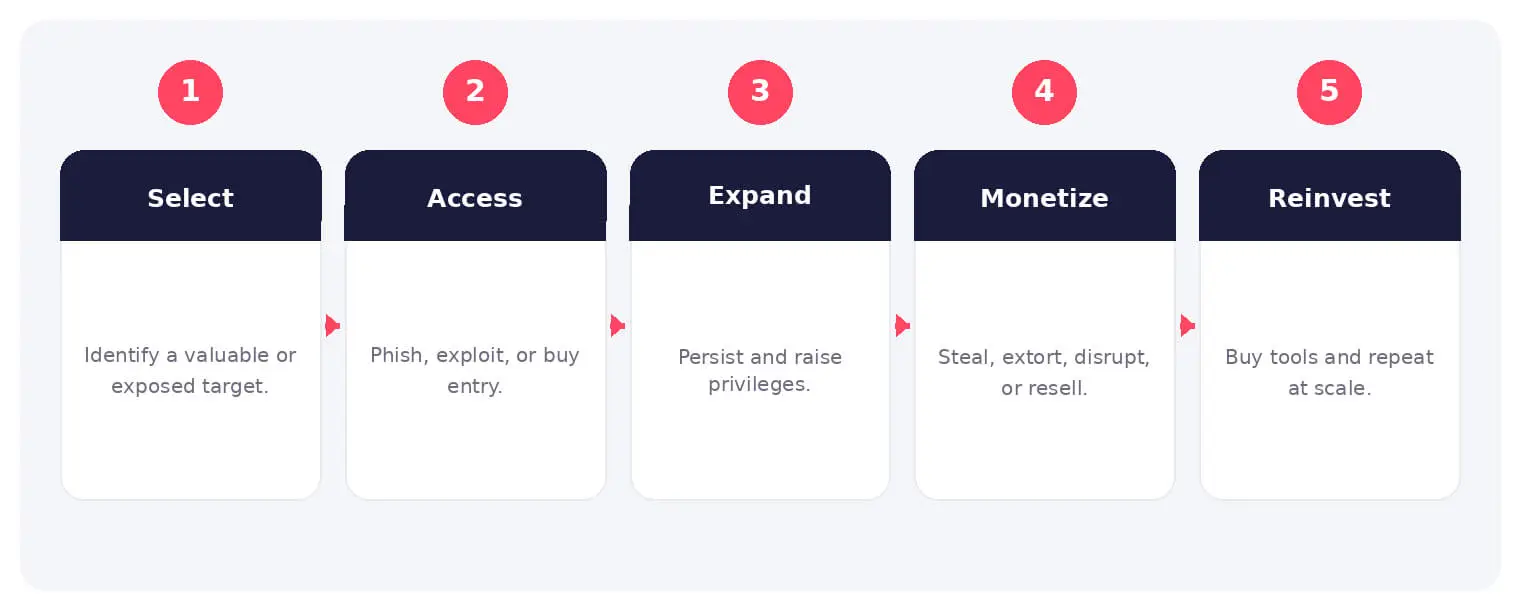
How a Cybercriminal Works
Cybercriminals identify targets through scanning, leaked data, social media, public records, and criminal marketplaces. Initial access frequently comes from phishing, credential abuse, exploitable systems, malicious software, or access purchased from another actor.
Stolen access is monetized through account takeover, fraud, ransomware, data extortion, resale, cryptomining, spam, proxy services, or theft of valuable information. Criminal groups often rotate names and infrastructure while retaining recognizable working patterns.
Common Types and Techniques
- Ransomware operators and affiliates
- Credential thieves, fraudsters, and access brokers
- Malware developers and service providers
- Insiders, hacktivists, and state-aligned criminals
Security and Business Risks
- Financial theft, extortion, and recovery expense
- Data exposure and account takeover
- Operational disruption and downstream compromise
- Legal duties and loss of customer trust
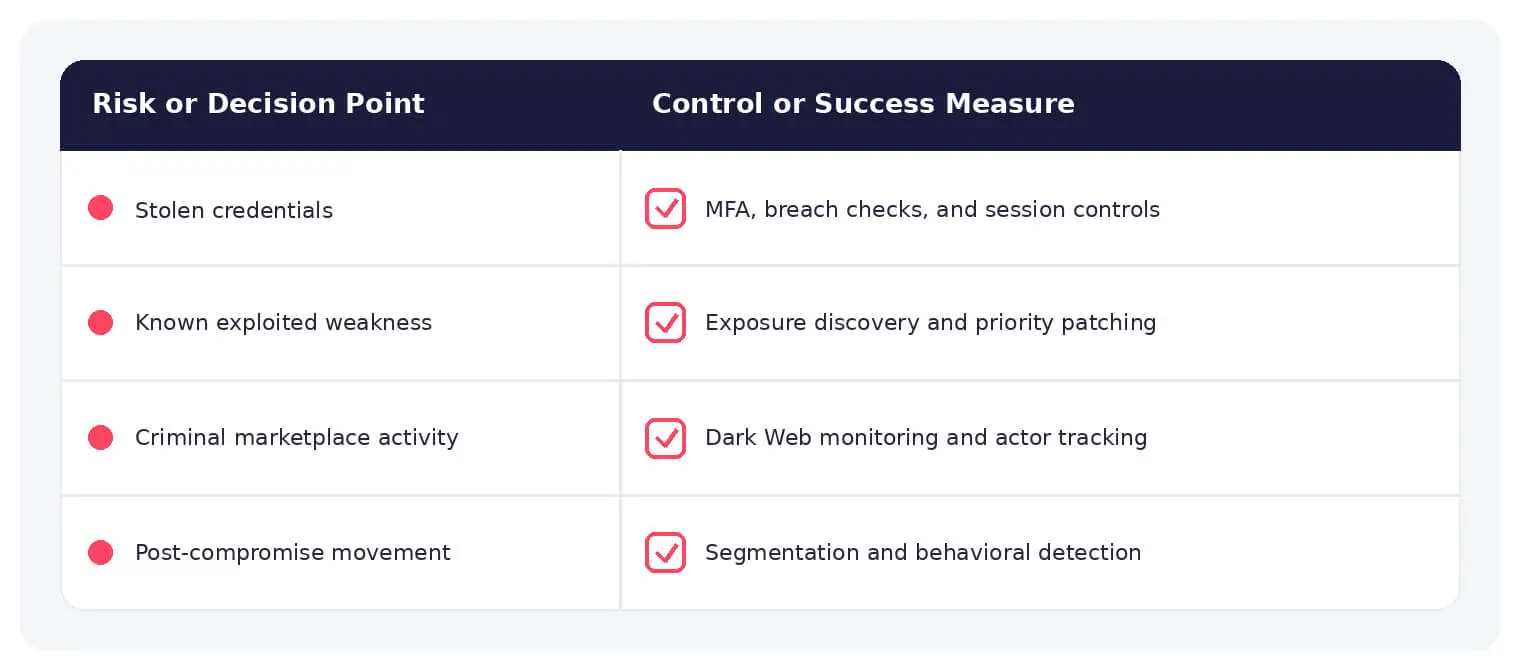
Warning Signs and Detection
Correlate unusual authentication, malware behavior, privilege changes, data staging, marketplace mentions, leaked credentials, and infrastructure relationships. Do not rely on an actor name alone because aliases and branding change frequently.
Prevention and Response
Enforce phishing-resistant MFA, patch exposed systems, restrict privileges, segment critical services, protect backups, train employees, monitor identity and endpoint behavior, and maintain a tested response plan informed by current actor tactics.
How SOCRadar Can Help
SOCRadar combines external asset visibility, threat intelligence, Dark Web monitoring, vulnerability context, and indicator enrichment to help teams identify exposure and investigate activity connected to cybercriminal.
Explore SOCRadar Cyber Threat Intelligence or request a demo to strengthen threat-informed prevention and investigation.
Frequently Asked Questions
Who Qualifies as a Cybercriminal?
Any individual or group that uses computers, networks, identities, or digital services to commit illegal activity qualifies as a cybercriminal. The label spans lone operators relying on purchased tools as well as organized enterprises with developers, access brokers, affiliates, negotiators, and money-laundering partners.
How Do Cybercriminals Gain Initial Access?
Entry paths include phishing, credential abuse against exposed login portals, exploitation of unpatched internet-facing systems, malicious software, and initial access purchased from brokers. Targeting usually starts with scanning, leaked data, social media, and public records. Because access can be bought, a single incident may involve several actors with different specialties.
How Does Cybercrime as a Service Work?
Criminal capabilities are sold or rented much like legitimate software. A buyer can obtain phishing kits, malware, stealer logs, or an established foothold, then run an attack without building every component. This division of labor lowers the barrier to entry and lets groups scale, with specialists handling development, access, execution, and laundering separately.
What Do Cybercriminals Do With Stolen Access and Data?
Stolen footholds are monetized through account takeover, payment fraud, ransomware deployment, data extortion, resale to other criminals, cryptomining, spam operations, and proxying traffic through infected devices. Valuable records such as customer databases or intellectual property may be sold directly. One intrusion can feed several revenue streams at once.
Which Warning Signs Point to Cybercriminal Activity?
No single signal is conclusive, so correlate unusual authentication patterns, unexplained privilege changes, data staging, malware behavior, and leaked credentials with mentions in criminal marketplaces. Underground monitoring adds early warning: SOCRadar Dark Web Monitoring, for example, flags stealer logs, ransomware claims, and leaked data tied to your domain so exposure can be addressed before it is exploited.
Why Is Tracking Cybercriminals by Name Alone Unreliable?
Actors frequently rebrand, rotate aliases, and replace infrastructure while keeping recognizable working patterns, and different affiliates can operate under the same ransomware brand. Tracking is stronger when behavior, infrastructure, marketplace activity, and victimology are evaluated together rather than pinned to a single label.
What Should You Do After a Suspected Cybercriminal Compromise?
Contain first: isolate affected systems and revoke active sessions and tokens, since password resets alone may not terminate stolen sessions on every platform. Preserve forensic evidence, determine what data was reachable, and engage incident response. If ransomware is involved, restore from protected, offline-verified backups and meet applicable notification duties. Rebuilding affected hosts may be warranted depending on the scope and forensic findings.
Which Preventive Controls Reduce Cybercriminal Risk?
No single control stops every intrusion, so layer defenses across the attack path:
- Enforce phishing-resistant MFA and patch internet-facing systems promptly.
- Restrict privileges and segment critical services to limit post-compromise movement.
- Protect backups from tampering and monitor identity and endpoint behavior.
Employee phishing training and a tested, current response plan round out the baseline.
What Business Impact Can Cybercriminal Activity Cause?
Direct costs include financial theft, extortion demands, and recovery expense. Incidents can also expose sensitive data, disrupt operations, implicate downstream partners, and create legal duties and loss of customer trust. Over time, reputational damage can outweigh the initial stolen amount or ransom.
Are All Hackers Cybercriminals?
No. The term hacker also describes security researchers and penetration testers who probe systems with permission and report findings responsibly. The dividing line is authorization and conduct under applicable law: unauthorized access, theft, or fraud is criminal regardless of technical skill or job title.

Oct 23, 2026
CVE-2026-114625: Actively Exploited VeloCloud Orchestrator Flaw Grants Superuser Access
CVE-2026-114625 is an actively exploited SQL injection flaw in VeloCloud Orchestrator that lets authenticated users gain superuser operator privileges…
Oct 22, 2026
PHP2Shell Exploit Tooling Found on Exposed Attacker Server
SOCRadar Threat Intelligence Unit (STRU) researchers found PHP2Shell exploit tooling on an attacker-controlled server whose working directory was exposed…

Oct 22, 2026
New LiteLLM Supply Chain Attack Hits PyPI and Docker
A new LiteLLM supply chain attack has turned version 1.107.0, an official release of the popular open-source LLM gateway, into a credential…
Intelligence in your inbox every Thursday.
Join 30,000+ security professionals reading SOCRadar research.
Subscribe