


Mar 10, 2026

May 07, 2026
6 Mins Read
Sep 13, 2026
Table Of Content
Related Articles

SMS Bombing

Threat Actors
Jan 08, 2026

Dark Web Monitoring
Feb 19, 2026

Ransomware
Jan 31, 2026

OSINT Framework
Apr 17, 2026

What Is Credential Stuffing?
Credential stuffing is an automated account takeover technique that tests stolen username and password pairs against other websites and applications. It succeeds because people reuse credentials and valid login attempts can resemble ordinary user traffic.
Credentials may come from earlier breaches, infostealer logs, phishing, malware, or combined lists. Attackers monetize successful access through fraud, data theft, resale, loyalty points, subscription abuse, or compromise of connected accounts.
Key Takeaways
- Credential stuffing uses previously stolen credentials rather than guessing every password.
- Attackers distribute attempts across IP addresses, devices, and time to evade simple rate limits.
- Phishing-resistant MFA, breached-password blocking, and bot detection work best together.
- Dark Web and stealer-log monitoring can expose identities before account takeover.
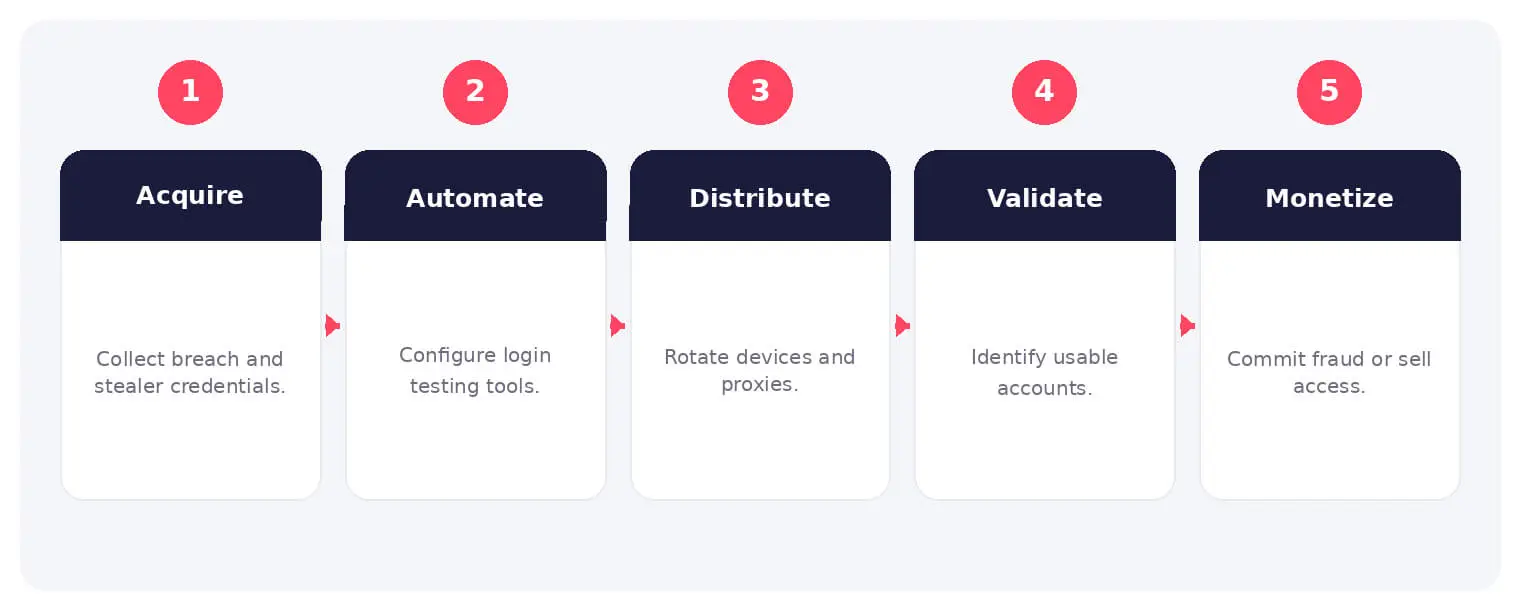
How Credential Stuffing Works
Attackers normalize credential pairs and use automated tools to test login endpoints. They imitate browsers, rotate residential proxies, vary headers, and slow attempts to blend with legitimate traffic.
Successful accounts are checked for balance, permissions, stored payment methods, personal data, or access to other systems. Attackers may change recovery details, create tokens, enroll devices, or sell verified access.
Common Types and Techniques
- Credential stuffing with breach combinations
- Infostealer-log testing with passwords and session data
- Distributed residential-proxy automation
- Post-login fraud and access resale
Security and Business Risks
- Customer or workforce account takeover
- Fraud, data theft, and abuse of stored value
- Compromise of connected applications and trusted communication
- Support cost, notification duties, and reputational damage
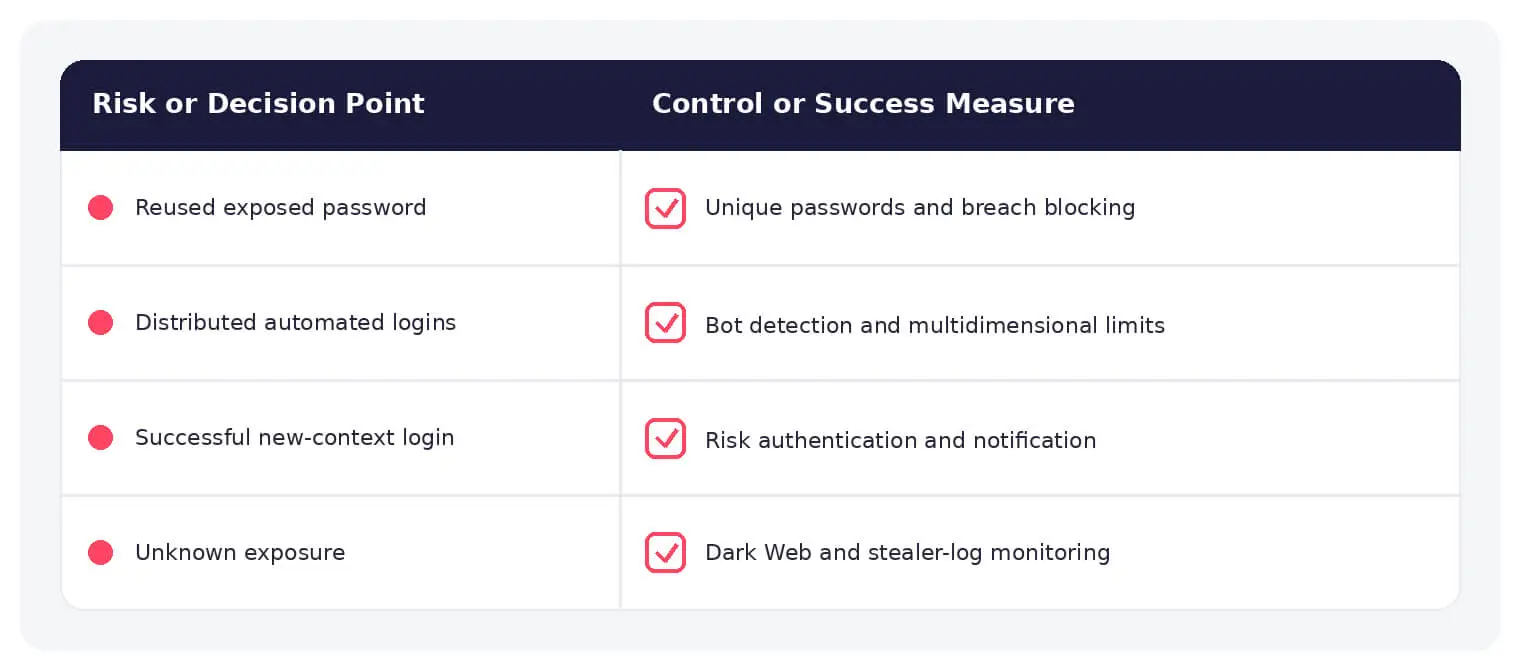
Warning Signs and Detection
Correlate login attempts across accounts, one credential from several networks, device or geography changes, failed logins followed by success, and unusual actions immediately after authentication. IP reputation alone is insufficient.
Prevention and Response
Use phishing-resistant MFA, block breached passwords, support password managers, protect account recovery, revoke sessions after resets, and apply bot management and adaptive challenges across identity, device, network, and behavior.
How SOCRadar Can Help
SOCRadar combines external asset visibility, threat intelligence, Dark Web monitoring, vulnerability context, and indicator enrichment to help teams identify exposure and investigate activity connected to credential stuffing.
Explore SOCRadar Dark Web Monitoring or request a demo to strengthen threat-informed prevention and investigation.
Frequently Asked Questions
What Is Credential Stuffing?
Credential stuffing is an automated account takeover technique that replays stolen username and password pairs against the login pages of unrelated services. It succeeds because many people reuse the same credentials, so a pair leaked in one breach can still unlock accounts elsewhere.
How Is Credential Stuffing Different From Brute Force or Password Spraying?
Brute force guesses many passwords against a single account, while password spraying tries a few common passwords across many accounts. Credential stuffing uses real, previously stolen username and password pairs, which gives it a far higher success rate per attempt than guessing.
Why Does Password Reuse Make Credential Stuffing So Effective?
Attackers only need one service to leak a password for that pair to become a risk on every other site where the user reused it. Valid logins from real users closely resemble stuffing attempts, allowing attackers to operate quietly at very large scale.
Where Do Attackers Get the Credential Lists for Stuffing Attacks?
Pairs are collected from earlier data breaches, infostealer logs traded underground, phishing kits, and malware infections, then merged and de-duplicated into large combo lists. Stealer logs are especially valuable because they can contain session cookies in addition to passwords.
How Do Attackers Evade Detection During Credential Stuffing?
They emulate real browsers, rotate residential proxies, vary headers and devices, and spread attempts across time to stay below simple rate limits. Because individual requests look like ordinary traffic, detection depends on correlating signals across many accounts rather than inspecting one login in isolation.
What Are Reliable Warning Signs of a Credential Stuffing Attack?
Look for bursts of failed logins across many accounts, one credential tested from several networks, geography or device changes, failed attempts followed by success on a single account, and unusual actions immediately after authentication. IP reputation alone is a weak signal, since residential proxies make automated traffic appear consumer-based.
What Should You Do if Your Credentials Appear in a Breach?
Change the password on the affected service and anywhere it was reused, then enable phishing-resistant MFA where available. Review active sessions and revoke unfamiliar ones, check recovery email and phone settings, and adopt a password manager to keep future credentials unique, since a reset alone may not terminate a session the attacker already holds.
How Should an Organization Respond During an Active Credential Stuffing Attack?
Identify accounts with successful logins during the attack window, revoke their sessions and tokens, force password resets, and review post-login activity such as recovery changes, new device enrollments, or payment actions. Then raise the cost of the attack with breached-password blocking, bot management, and adaptive challenges on risky logins.
Does MFA Stop Credential Stuffing?
MFA sharply reduces password-only takeover, especially with phishing-resistant methods such as FIDO2 security keys or passkeys. It does not close every path: MFA fatigue prompts, phishing proxies that capture tokens, recovery-flow abuse, and stolen session cookies remain viable, so session protection and monitoring are still required.
Which Defenses Complement MFA Against Credential Stuffing?
Block passwords known to appear in breach corpora at registration and password change, support password managers so users can maintain unique credentials, and deploy bot management that evaluates device, behavior, identity, and velocity signals together. Revoking sessions after resets adds protection when cookies or tokens may have been captured.
What Is the Business Impact of a Successful Credential Stuffing Attack?
Impacts include direct fraud, theft of stored value such as loyalty points, abuse of saved payment methods, exposure of customer data, and compromise of connected applications or trusted communication channels. Organizations also absorb support costs, breach notification duties, and reputational damage when customer or workforce accounts are taken over.
Can an Account With a Unique Password Still Be Compromised?
Yes. A unique password removes the reuse risk from other services, but the account can still fall if its own password is phished or stolen by infostealer malware, a session cookie is hijacked, or the recovery process is manipulated.
How Can Exposed Credentials Be Found Before Attackers Use Them?
Monitoring breach dumps, combolists, and stealer logs on underground channels can reveal exposed accounts while there is still time to act. SOCRadar Dark Web Monitoring tracks leaked credentials and stealer-log activity tied to your domains, so security teams can force resets and step up authentication before accounts are abused.