What Is Extranet Access Control?
Extranet access control governs how external parties such as suppliers, customers, contractors, and partners reach selected organizational resources.
An extranet extends controlled access beyond the internal workforce. Security depends on verified identities, scoped authorization, managed trust, segmentation, monitoring, and rapid removal of access when the relationship or business need ends.
Key Takeaways
- Extranet access control governs how external parties such as suppliers, customers, contractors, and partners reach selected organizational resources.
- An extranet extends controlled access beyond the internal workforce. Security depends on verified identities, scoped authorization, managed trust, segmentation, monitoring, and rapid removal of access when the relationship or business need ends.
- Orphaned third-party accounts is a primary concern.
- Effective security combines prevention, continuous visibility, ownership, and tested response.
How It Works
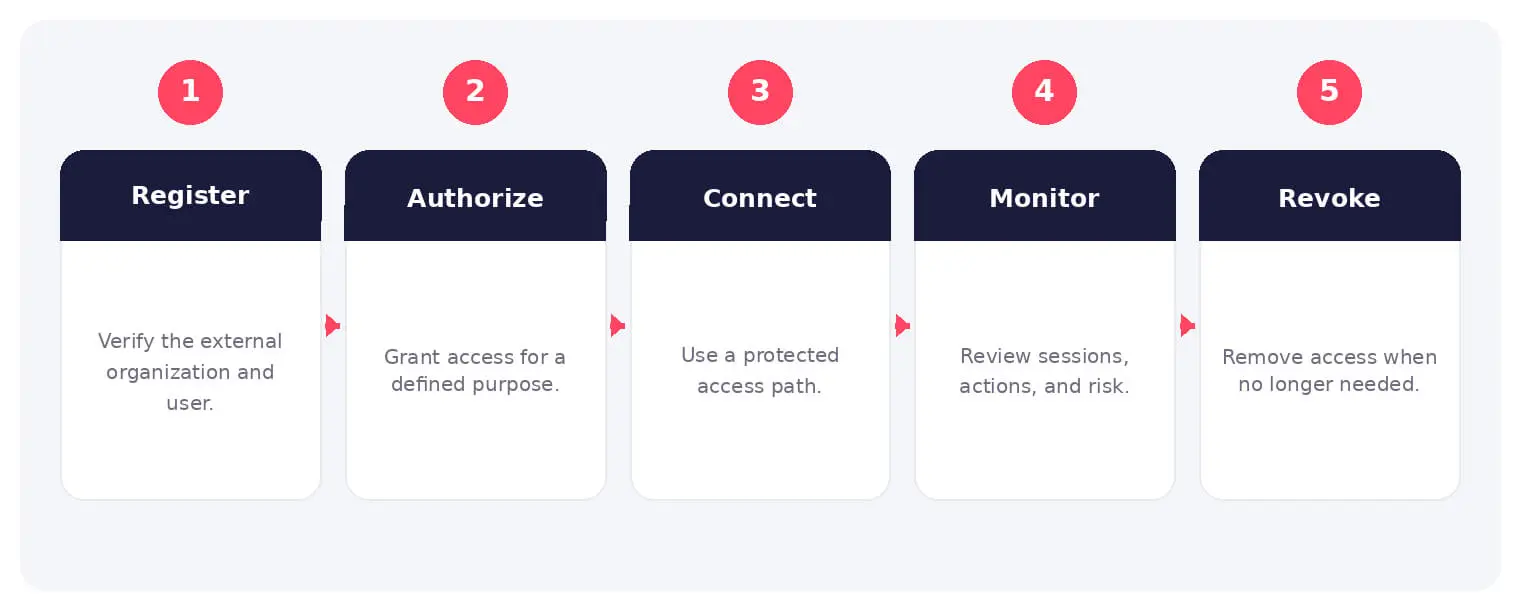
The operating flow above turns the concept into observable steps. Exact implementations vary, but each stage needs accountable ownership, trusted inputs, documented policy, and evidence that analysts can use during investigation and review.
An extranet extends controlled access beyond the internal workforce. Security depends on verified identities, scoped authorization, managed trust, segmentation, monitoring, and rapid removal of access when the relationship or business need ends.
Common Types and Capabilities
- Partner portals and supplier access
- Customer self-service applications
- Contractor and support access
- Business-to-business application integration
Security and Business Risks
- Orphaned third-party accounts
- Excessive privileges and shared credentials
- Compromised partner identities
- Lateral movement into internal systems
Warning Signs and Detection
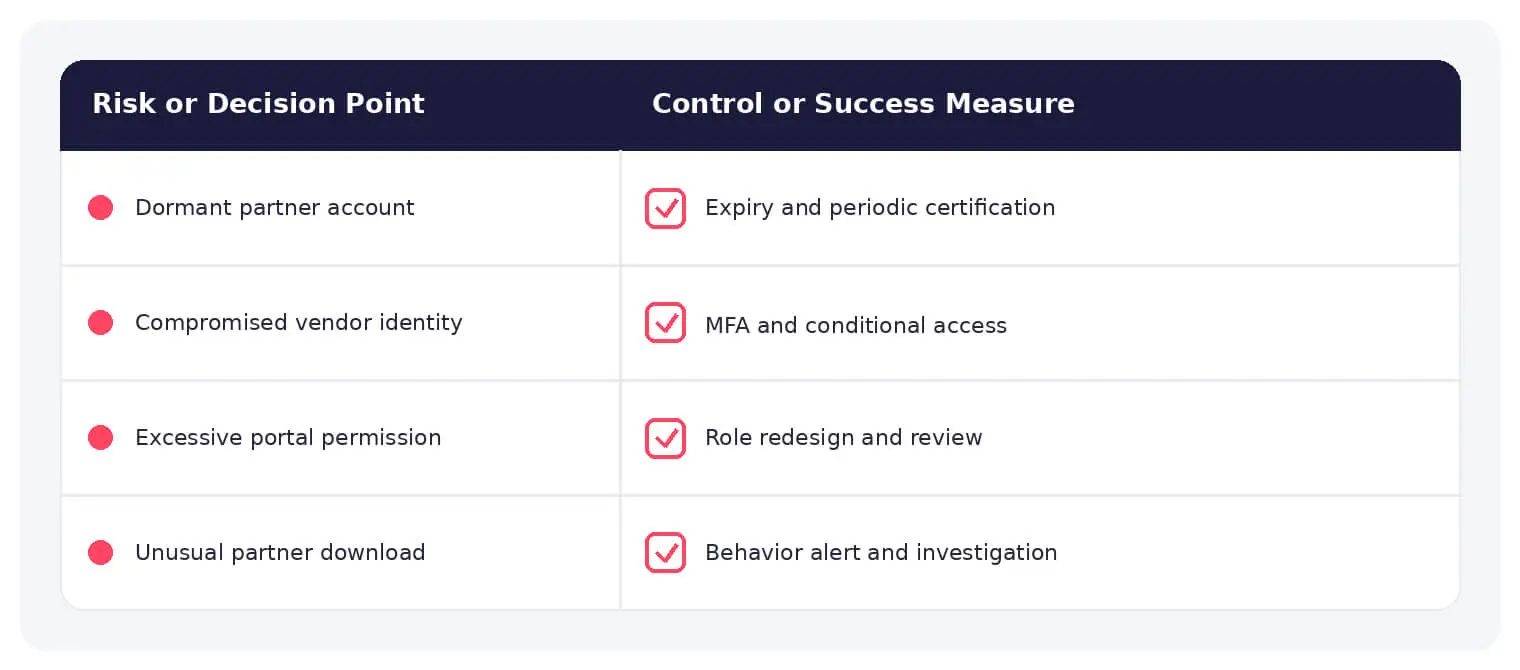
Monitor dormant accounts, repeated authentication failures, unusual locations, new devices, privilege changes, bulk downloads, access outside contract periods, unmanaged service accounts, and unexpected resource use.
Best Practices
Federate identity where practical, require phishing-resistant MFA, use least privilege and segmentation, set access expiry, prohibit shared accounts, review entitlements, log activity, and maintain partner offboarding.
How SOCRadar Can Help
SOCRadar adds external visibility, threat intelligence, exposure context, and continuous monitoring to help teams validate and prioritize risks related to extranet access control. This context complements internal endpoint, identity, and network controls.
Explore SOCRadar Supply Chain Intelligence or request a demo to strengthen threat-informed prevention and response.
Frequently Asked Questions
What is the main purpose of extranet access control?
Extranet access control governs how external parties such as suppliers, customers, contractors, and partners reach selected organizational resources.
What is a common security risk?
Orphaned third-party accounts.
What should security teams monitor?
Monitor dormant accounts, repeated authentication failures, unusual locations, new devices, privilege changes, bulk downloads, access outside contract periods, unmanaged service accounts, and unexpected resource use.
What is the first practical step?
Federate identity where practical, require phishing-resistant MFA, use least privilege and segmentation, set access expiry, prohibit shared accounts, review entitlements, log activity, and maintain partner offboarding.

Oct 27, 2026
Australia’s Annual Cyber Threat Report 2025-26 Shows Cyber Incidents Up 20%
Australia’s cyber security authority responded to 1,524 cyber security incidents in the 2025-26 financial year, a 20% increase from the previous year…

Oct 27, 2026
PHP2Shell Weaponized After Japanese Real Estate Extortion
An exposed server ties an extortion wave on about 20 Japanese property sites to an operator who later weaponized PHP2Shell (CVE-2026-109618, CVE-2026-109619)…

Oct 27, 2026
Wasmtime Sandbox Escape Flaws Patched in Cranelift
Two critical Wasmtime sandbox escape flaws, CVE-2026-115889 and CVE-2026-115893, let a crafted WebAssembly (Wasm) module push the Cranelift compiler into generating unsafe…
Intelligence in your inbox every Thursday.
Join 30,000+ security professionals reading SOCRadar research.
Subscribe